ADU Solar Panel Requirements: U.S. Guide with California Examples
The same ADU design can cross a state line and get a different solar answer before anything on the floor plan changes. There is no single nationwide rule to settle it. State energy codes and local amendments determine whether panels are required, while the permit date and utility interconnection rules shape how the system is approved. Construction type matters too: a new detached ADU may follow a different path from an attached addition or a garage conversion, even when the units are similar in size.
ADU solar requirements in California show how those distinctions play out in a permit application. Its code sets out PV sizing methods and lists the exceptions that may apply. Against the broader U.S. framework, those provisions explain why the same ADU design can lead to a different solar requirement, permit path, project cost, or backup-power decision from one location to the next.
Are Solar Panels Required for an ADU?
The answer starts with the project’s construction type and the energy code in effect where the ADU is located.
When New ADUs Require Solar Panels
Not every ADU falls under a solar requirement. Whether a new detached ADU does depends on state and local codes. California’s 2025 Energy Code generally requires PV for newly constructed detached residential buildings unless a listed exception applies.
New Construction vs. Additions and Conversions
A new detached ADU is a newly constructed building under California’s Energy Code. An attached ADU or the conversion of an unconditioned garage or storage area is generally an addition, while converting existing conditioned space is an alteration.
Attached vs. Detached ADU Requirements
Under California’s 2025 Energy Code, an attached ADU is an addition, which puts it outside the new-construction PV requirement, while a newly built detached ADU is generally subject to it. That distinction determines whether solar panels are required for an ADU in California and should not be treated as a nationwide rule.
Solar Rules for Garage Conversions and JADUs
A converted garage and a JADU both begin inside something that already stands. Converting an unconditioned garage into living space adds conditioned floor area and may trigger additional requirements for insulation, HVAC, lighting, and electrical work, while a JADU inside an existing home is reviewed according to the scope of work. Its size alone does not create an automatic solar exemption.
What Codes Determine ADU Solar Requirements?
Solar compliance is only one part of the permit review. The building code, the electrical code, fire access, zoning, and the utility connection are all reviewed alongside it, and any of them can change the final design.
State Energy Codes and Local ADU Requirements
Two levels of government both have a say. State energy codes set the main performance or prescriptive requirements, but the permit itself stays local, and that review reaches structural conditions, zoning, and site constraints. Even California’s own guidance is split in two, with the Department of Housing and Community Development maintaining an updated ADU Handbook and the California Energy Commission publishing separate ADU energy-code guidance.
Residential Building and Electrical Codes
Two rulebooks meet on the same roof. Building rules cover roof structure, wind, seismic forces, snow loads, and fire access, while electrical rules cover panels, conductors, disconnects, grounding, and overcurrent protection. A new detached ADU in California may also have to meet battery-energy-storage-ready requirements, depending on electric-service capacity.
Permit Dates and Applicable Code Editions
An estimate written last year may rely on outdated requirements. The rules that apply typically depend on local effective dates and the project’s stage in the permitting process. Before relying on an older estimate, confirm the applicable requirements with the local authority having jurisdiction.
Utility Interconnection and Metering Requirements
A building permit does not authorize a grid-connected solar system to operate. That approval comes from the utility, which may require an interconnection application on file and a system diagram to match it, send an inspector out to the site, and change the meter before it grants permission to operate. A separate ADU meter can also affect billing, load calculations, and any shared solar arrangement.
How ADU Solar Rules Vary by State
The rules stop at the state line. States may adopt different energy codes, different amendments, and different solar-ready provisions, and even a model document like the 2021 IECC solar-ready appendix is not mandatory unless the relevant jurisdiction has adopted it. No rule of thumb, including one based on ADU solar requirements in California, replaces a state and local code check.
How Is the Required ADU Solar System Size Calculated?
Sizing an ADU system means answering three separate questions. The code minimum answers one, the array that offsets daily energy use answers another, and the battery answers a third.
ADU Energy Use and Conditioned Floor Area
Many code calculations start from conditioned floor area, but none of them stop there. California also reads the climate zone, counts the dwelling units, and measures the solar access roof area. Even then the state’s minimum PV calculation may be built on a mixed-fuel home, so an all-electric ADU can carry loads the model never saw.
Climate, Sunlight, and Solar Production
Climate shows up twice, once in the code calculation and once in annual production. That is why two ADUs with the same floor plan may need different designs in Arizona, in Washington, and on the California coast. It is also why an installer should model the orientation and tilt, work out where the shade falls through the year, pull local weather data, subtract inverter losses, and project production season by season.
Solar Access Roof Area and Available Space
California’s SARA method is not limited to the ADU roof. Qualifying roof areas, carports, covered parking, and other structures on the lot can all count. Under the 2025 Energy Code, the SARA calculation uses 18 watts per square foot for steep-sloped roofs and 14 watts per square foot for low-sloped roofs.
How Many Solar Panels Does an ADU Need?
The required DC size and the wattage of the chosen solar panels set the panel count between them. At 400 watts per panel, a 2 kW array needs about five panels, a 3.2 kW array about eight, and a 4 kW array about ten. Roof layout, shading, setbacks, and inverter design can all move the final count.
What Is a Typical Solar System Size for an ADU?
A small ADU often needs fewer panels than the main home, but floor area alone cannot determine the correct system size.
Code-Minimum vs. Actual Energy Needs
The code minimum satisfies a regulatory calculation. Actual energy use depends on how many people live in the unit, how well it is insulated, and how much power the HVAC, water heating, cooking, laundry, and plug loads draw. A lightly occupied studio may use less energy than a larger all-electric ADU with a heat pump and induction range.
Solar Sizing for a 400–600 Sq. Ft. ADU
A 400 to 600 square foot ADU may start in a rough 2 to 4 kW planning range for early budgeting. That is not an official code minimum. A shaded roof, limited SARA, efficient equipment, or a high-use all-electric design can each move the result.
Solar Sizing for a 600–1,000 Sq. Ft. ADU
When household loads increase, a 600 to 1,000 square foot ADU may begin in a rough 3 to 6 kW planning range. Treat this as a design conversation, not a permit rule. The final answer on how to size a solar system should come from the applicable code model and an annual production estimate.
ADU Solar Sizing Example
Suppose a 550 square foot detached ADU comes back with a 3 kW design result. Eight 400-watt panels would provide 3.2 kW of module capacity, but only if the roof can accommodate them after shading, vents, setbacks, and fire-access paths are considered. The installer must compare roof capacity with the code result.
Choosing Battery Capacity for Backup Power
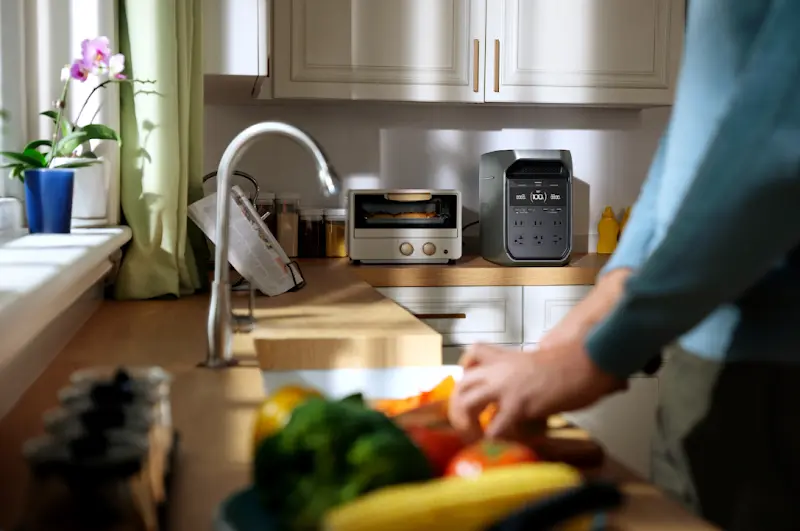
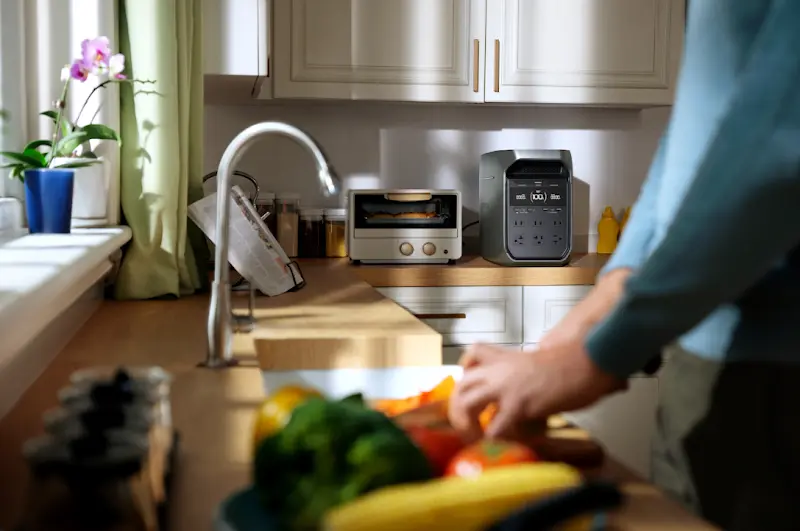
The PV array required for an ADU and the battery needed during an outage should be sized separately. A smaller ADU whose critical loads come down to a refrigerator, lights, Wi-Fi, and chargers may suit the EcoFlow DELTA 3 Max Plus, which offers 2,048Wh, 3,000W output, app-based Smart Output Priority, and expandable capacity from 2 to 10kWh.
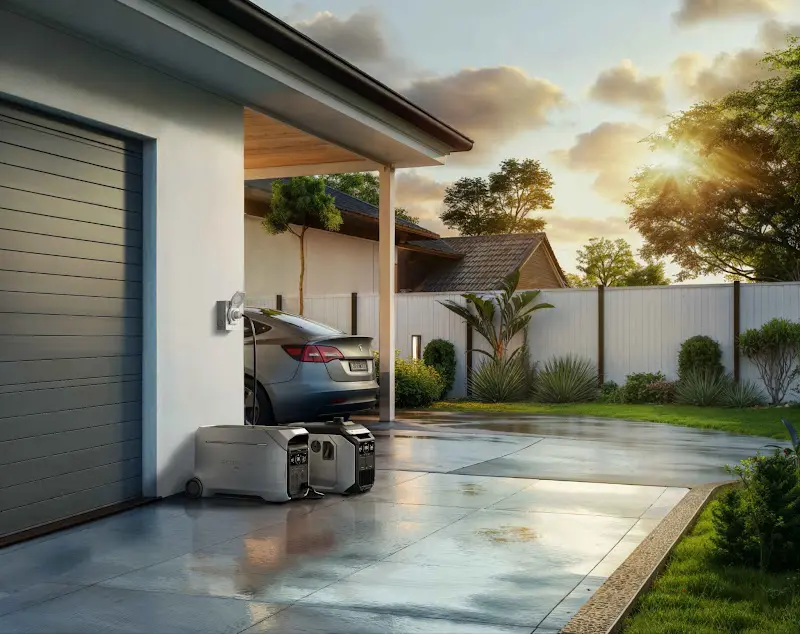
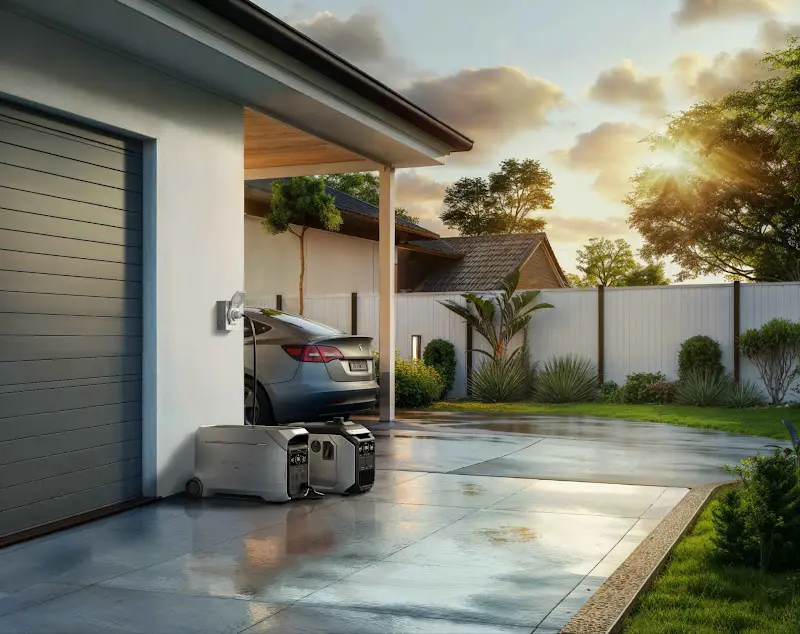
An all-electric ADU with higher-demand appliances may need more output and longer runtime.The DELTA Pro 3 starts at 4kWh and supports 120V/240V output, with system configurations expandable up to 48kWh. In both cases a qualified electrician should confirm transfer equipment, circuit connections, permits, and utility requirements. Neither product automatically replaces required PV or BESS compliance.
What Exceptions May Apply to ADU Solar Requirements?
Every exception in the code has a number or a document behind it, and a roof that merely looks difficult is not one of them. Even a granted exception does not automatically remove every building, electrical, or utility obligation.
Small ADUs and Minimum PV Requirements
Size by itself gets nobody out of the requirement. Under the 2025 Energy Code the two openings are numerical, one at qualifying SARA below 80 contiguous square feet and the other at a calculated minimum system size below 1.8 kWdc. Both are California numbers, and neither should be presented as a nationwide ADU rule.
Limited Solar Access and Roof Shading
Shade is the exception people expect to qualify for. California does exclude qualifying roof areas with less than 70 percent annual solar access under the applicable conditions, and shading may reduce the required array. But the authority having jurisdiction must accept the calculation during permit review, so a homeowner is better off documenting the trees, nearby structures, and other shade sources than assuming that a shaded roof qualifies for an exemption.
Structural Limits, Snow Loads, and Roof Conditions
Snow is the other calculated exception. California allows one when the enforcement authority determines that the required PV system cannot meet ASCE 7-16 snow-load provisions, and the roof still has to carry the panels and racking safely either way. Ordinary trouble is a different matter, so old roofing, weak framing, or water damage may still have to be repaired before installation.
Historic Properties and Local Planning Restrictions
The last exception is not a calculation at all. Historic districts and local design rules can affect panel placement, visibility, and roof changes, but historic status by itself does not automatically cancel a solar requirement. Confirm any exception or alternate location with the planning department and building official before finalizing the permit set.
.jpg)
.jpg)
How Much Does an ADU Solar System Cost?
Two quotes for the same ADU can differ on far more than panel count. Roof access, the electrical work, permitting, interconnection, and storage all sit on the same page, and most of them barely move when the array gets smaller. A small system still carries significant fixed costs.
ADU Solar Panel and Installation Costs
A national benchmark is the easiest number to reach for. The U.S. Department of Energy’s 2024 benchmark lists $3.15 per watt for a representative 8 kWdc residential PV system and $5.19 per watt for an 8 kWdc system paired with 13.5 kWh of storage. Those are national Q1 2024 benchmarks in 2023 dollars, not ADU quotes.
Electrical Panel, Meter, and Wiring Upgrades
The array is rarely the part that surprises anyone. An ADU may need a larger service, and behind that come the subpanel, the dedicated meter, the longer conductor run, the trench it sits in, and the transfer switch at the end of it. None of that shows up in a price per watt, so ask for an itemized quote covering PV equipment, structural work, panel upgrades, meter work, wiring, permits, inspections, and utility fees.
ADU Solar Battery Costs
Two solar batteries with the same headline capacity can cost very different amounts, because the price follows usable capacity, continuous output, the transfer equipment, the installation, and the number of circuits the system has to support. A portable power station may suit selected essential loads, while a permanently integrated system may be the better answer where automatic whole-ADU backup is the goal. Either way, product specifications must be checked against the actual circuit design.
Federal Tax Credits and Local Incentives
The federal credit has a closing date on it. The IRS states that the Residential Clean Energy Credit covered 30 percent of qualifying property placed in service from 2022 through December 31, 2025, and it is not available for qualifying property placed in service after that date. Rental-property eligibility and local incentives are separate questions, and each needs its own confirmation.
Conclusion
Most of the trouble in an ADU solar project comes from answering three questions as if they were one. Code compliance, daily energy use, and outage backup each have their own answer. Classify the project first, confirm the applicable code edition, calculate PV from the local rules, size storage from the critical loads, and get the utility and electrical approvals in hand before ordering equipment.
FAQs
Will ADU Solar Panels Work During a Power Outage?
A grid-tied array usually goes dark the moment the grid does. The shutdown is deliberate, since it keeps voltage off the lines while crews are working on them, and solar keeps supplying power only where compatible storage, inverter controls, and approved transfer equipment are in place. A portable power station is backup equipment, not a replacement for a permitted grid-tied PV system.
Can an ADU Use the Main Home's Existing Solar System?
It may be possible where the wiring, the meters, the utility tariff, and the permit all allow it. In California, existing PV alone cannot satisfy the prescriptive requirement for a newly constructed detached ADU, although new modules may be added to an existing system on the same lot when the utility allows it.
Can an ADU Tenant Receive Credit for Solar Energy?
Solar credits usually follow the utility account and tariff connected to the system, which is not always the tenant’s. A tenant may still benefit through a lease, a meter-aggregation program, or a shared billing structure, but the agreement should be written clearly and confirmed with the utility.
How Long Do ADU Solar Panels Last?
Residential solar panels commonly last about 20 to 25 years, while complete PV systems may have a 20 to 30 year performance period. Neither number is a cliff, though. Output declines gradually across that span, and some inverters may need replacement before the panels do.
What Maintenance Does an ADU Solar System Require?
Solar panels have no moving parts, so maintenance usually stays light. Monitor production, inspect the array after severe weather, keep it clear of heavy debris, and arrange a professional check if output drops unexpectedly or the inverter reports an error.
For press requests or interview opportunities, reach out to our media team
media.na@ecoflow.com