AC Not Working? Common Causes and How to Fix It
The thermostat says Cool, but the house keeps getting warmer. Before you pay for an emergency service call, spend a few minutes on the checks that don’t require tools or access to live electrical parts. A thermostat setting, lost power, a clogged filter, or yard debris around the condenser may be all that is wrong.
There is a limit to useful DIY troubleshooting. Home air conditioners contain high-voltage components and refrigerants under pressure, so the goal isn’t to take the system apart. Rule out the ordinary problems, recognize the unsafe ones, and give the technician a clear account of what happened.
How Do You Quickly Troubleshoot a Household AC Unit?
If you are asking “Why is my AC not working?”, start by separating a settings or power problem from an airflow or equipment problem.
Check Thermostat Settings and Power
Thermostat settings get changed by accident, especially in a busy household. Confirm that the mode is Cool and set the target temperature below the room temperature. Leave the fan on Auto. The On setting keeps the indoor blower running between cooling cycles, so air from the vents may feel warm even when nothing is broken.
If the screen is blank, replace the batteries if that model uses them. Some thermostats are powered by the HVAC system instead, which means a blank display can point to a power or control problem. Do not pull wires from the wall to investigate.
Check for a Household Power Outage
If your AC is not working after a power outage, first check a few lights and major appliances. Look outside, too. A dark street or silent neighborhood usually settles the question quickly: the AC may be fine, but the grid is down. Use cellular service to view the local utility outage map and see whether a restoration estimate has been posted. For longer outages, a properly sized home battery can help keep compatible household loads powered until grid service returns.
Central air is one of the larger loads in a home, so backup power has to be matched to the actual equipment. The EcoFlow DELTA Pro Ultra Whole-Home Backup Power can support compatible central AC systems in an appropriately configured setup while supporting selected household essentials, but that doesn’t make every central unit automatically compatible. Starting demand and the home connection both matter. Test the setup before summer weather takes out the grid.
Inspect the Main Circuit Breaker
Find the breaker marked A/C, Condenser, or Heat Pump. A tripped handle often rests halfway between ON and OFF. Move it fully to OFF, then back to ON.
One reset is enough. If the breaker trips again, leave it off and arrange service. Repeatedly resetting it can keep applying power to an electrical short, a failing motor, or a compressor problem. Stay away from any panel that is wet, hot, buzzing, or smells burned.
Check the Outdoor Disconnect Switch
The disconnect is usually mounted on the wall close to the outdoor unit. A technician may have switched it off during maintenance and forgotten to restore it. If yours has a clearly labeled external switch, verify its position.
Pull-out disconnects and fused boxes are different. Don’t open one or reach inside unless the manufacturer’s instructions identify a check intended for the homeowner. An outdoor unit that remains silent with power available may have a bad fuse, contactor, capacitor, control, or wire. That is where the quick inspection ends.
What Are the Most Common Reasons Your AC Stops Working?
What the system does next offers useful clues. Weak air at the vents suggests a different problem from a humming condenser or water around the air handler.
When the AC is not working in the house, note whether the indoor blower, outdoor condenser, or both have stopped; that distinction helps narrow the cause.
| Component/Issue | What You May Notice | What It Can Lead To | Usual Next step |
|---|---|---|---|
| Clogged Air Filter | Weak airflow, warmer rooms, ice on a refrigerant line | Poor cooling and a frozen indoor coil | Replace the filter |
| Frozen Evaporator Coil | Frost, very weak airflow, or water after the ice melts | No cooling and possible water overflow | Shut off cooling and investigate |
| Dirty Outdoor Condenser | Long cycles without much temperature change | Poor heat release and higher energy use | Clear light exterior debris |
| Clogged Drain Line | Water near the unit or an unexplained shutdown | Float-switch trip or water damage | Clear only if safely accessible |
| Faulty Capacitor | Clicking, humming, or a fan that does not start | Fan or compressor startup failure | Call an HVAC technician |
Dirty or Clogged Air Filters
Filters fail quietly. The system still runs, but less air moves across the indoor coil and out through the vents; rooms take longer to cool, and a badly restricted system may eventually freeze the coil. Slide the filter out and look at it in decent light. A gray surface alone doesn’t always mean it is blocked, but a heavy mat of dust and little visible light are good reasons to replace it. If airflow improves afterward, you have learned something. If it doesn’t, the filter was not the whole problem.
Frozen Evaporator Coils
Ice is a warning, not evidence that the AC is working especially hard.
Switch cooling off and let the coil thaw on its own. Never chip the ice or keep lowering the thermostat. While it thaws, check for a dirty filter and closed supply or return vents. A blower fault or low refrigerant can also freeze a coil, so recurring ice belongs on a technician’s schedule. Water may appear beneath the unit as the ice melts; watch the drain pan, particularly when the air handler sits in an attic or above finished space.
Dirty Outdoor Condenser Coils
Walk around the condenser. Grass clippings stuck to the cabinet, cottonwood fluff across the coil, or shrubs growing against the sides can all restrict airflow. With nowhere to send the heat collected indoors, the AC runs longer and cools less effectively. Loose debris is a maintenance issue. Crushed fins, a wobbling fan, or buildup inside the cabinet is repair work, and there is no advantage in dismantling the unit to clean a place you cannot safely reach.
Blocked Condensate Drain Lines
A drain clog can look like an electrical failure. As water backs up, a float switch may stop the system before the pan spills over. The thermostat may still appear normal while the air conditioner refuses to start.
Look for standing water, a full secondary pan, or moisture around the PVC drain. In an attic installation, respond quickly; a small overflow can become a stained ceiling downstairs. Turn off the AC until the line is clear and the source of the water is understood.
Faulty Capacitors or Compressor Failure
Humming tells you that something is trying to start; it doesn’t tell you which part has failed. A capacitor is one possibility, but a motor, contactor, control board, or compressor may produce a similar sound. Leave the electrical cover in place. A capacitor may retain a dangerous charge after the disconnect is off, and online tricks involving a screwdriver or a stick near the fan are not safe diagnostic methods.
How Do You Safely Fix Simple AC Issues Yourself?
Keep the DIY boundary narrow: filters, loose outdoor debris, and a drain that was designed for homeowner access. Refrigerant lines and electrical compartments stay closed.
Replace a Clogged Air Filter
Turn the system off at the thermostat. Before removing the filter, take a quick photo showing its size and the direction of the airflow arrow; that prevents a surprisingly common mistake when the new filter goes in. The arrow should point toward the furnace or air handler. Use the size and filter type recommended for the system. A denser filter isn’t necessarily an upgrade if the blower cannot move enough air through it. Close the grille or access door completely, then mark the installation date on the frame.
A seasonal home maintenance checklist can make filter checks easier to remember before peak cooling demand begins.
Clear a Blocked Condensate Drain
Locate the drain outlet and any cleanout near the indoor unit. If the equipment instructions allow homeowner maintenance, a wet/dry vacuum at the outside end may remove a small clog. A damp rag around the hose can help form a seal.
Do not pour an improvised mixture into a pipe you have not identified. Some manufacturers permit vinegar or a specified drain treatment; others give different directions. Stop and call for help if the pan is overflowing, the line disappears into an inaccessible wall, or the water returns soon after cleaning.
Clean the Outdoor Condenser Unit
First shut off cooling at the thermostat and disconnect power to the condenser. Pick up leaves and twigs, cut back nearby growth, and brush away loose material without pressing on the fins. Keep hands clear of the fan and electrical compartment. If the owner’s manual permits a rinse, use an ordinary garden hose with low pressure; a pressure washer can fold over the aluminum fins. Let the area drain before restoring power.


When Should You Call a Professional HVAC Technician?
Some symptoms are not troubleshooting invitations. They are reasons to switch the equipment off.
Electrical Burning Smells or Sparks
The smell of hot plastic, scorched insulation, or ozone should not be monitored overnight. Shut the AC down at the breaker if the panel is safe to approach, and do not restart it to see whether the odor returns.
Smoke or visible arcing is an emergency. Leave the home and call 911. A motor or wire can cool after power is removed and still fail again the moment the system starts.
Suspected Refrigerant Leaks
Recurring ice, weak cooling, oily residue near a fitting, or a hiss from a refrigerant line can suggest a leak, but none of those signs proves one. The sealed circuit needs to be tested by an EPA Section 608-certified technician, who must also handle refrigerant recovery and charging. Simply adding refrigerant doesn’t explain where the old charge went. A proper repair identifies the leak or failed component first, then restores the system according to the equipment requirements.
Loud Grinding or Screeching Noises
Normal startup produces a click, followed by the sound of the fan and compressor. Grinding, sharp screeching, or repeated metal clanking is different. Shut the unit off before a loose or worn part causes more damage. From a safe distance, note whether the noise comes from the indoor blower or the condenser outside and whether it begins at startup or continues through the cycle. A short recording can help the technician, provided you don’t approach moving or energized equipment to make it.
How Do You Stay Cool While Waiting for AC Repairs?
During the first real heat wave of summer, a service appointment may not happen the same day. Concentrate on the rooms people are using and keep an eye on indoor temperature. Older adults, infants, pregnant people, and those with certain health conditions or medications may need cooler shelter sooner. For broader heat wave preparedness, decide in advance where household members can go if indoor temperatures become unsafe.
Block Direct Sunlight and Indoor Heat
Close curtains or blinds before direct sun reaches the glass, especially on west-facing windows. Move everyone to the coolest part of the house if one floor or room is noticeably better. A basement, where available and dry, often stays cooler than an upstairs bedroom.
Run the dishwasher and clothes dryer after the outdoor temperature falls.
Avoid the oven and long stovetop cooking; choose food that adds little heat to the room.
Lights, gaming computers, and other equipment add heat as well. Turn off what no one is using.
Use Fans to Improve Airflow
Fans cool skin. They do not cool the room.
Set ceiling fans to turn counterclockwise in summer so air moves downward. If the evening becomes cooler outside and local air quality is good, a window fan can help exchange hot indoor air for cooler outdoor air.
There is a point when moving hot air is no longer enough. The CDC recommends using fans should be used only when indoor temperatures are below 90°F. If the house keeps heating up, leave for an air-conditioned library, cooling center, hotel, or another home. Do not wait for dizziness or nausea to make that decision.
During an outage, a portable power station can keep selected fans, phones, and small devices running; match the load and runtime to the unit’s rated capacity.
Use a Portable Air Conditioner
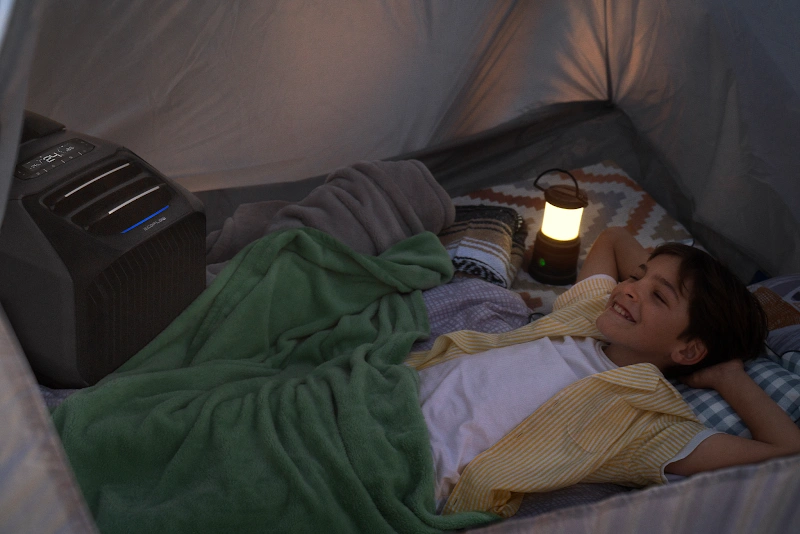
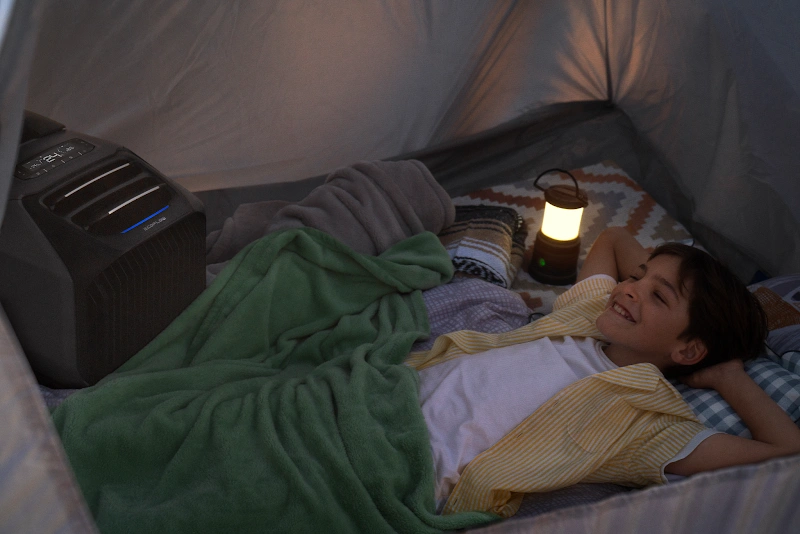
A portable AC can cool the bedroom, office, or living area that is actually occupied while the central system is down. Close the door to that room and follow the exhaust and drainage instructions; sending warm exhaust back into the same space defeats the purpose. The EcoFlow WAVE 3 Portable Air Conditioner is an option for temporary cooling without permanent installation, though it still requires the setup described for the room and conditions in which it is used. Treat it as spot cooling for a defined area, not as a substitute for central air throughout the house.
Conclusion
Start with what you can verify safely. Check the thermostat, confirm that the home has power, reset the AC breaker once, and inspect the filter and the space around the condenser. Those few steps solve some failures and give useful context for the ones they do not.
Repeated breaker trips, smoke, refrigerant problems, capacitors, and harsh mechanical noises require a qualified HVAC technician. Until the repair is complete, keep sunlight and indoor heat under control and cool the rooms people are using. When the indoor temperature is no longer safe, the right move is to leave for air conditioning elsewhere.
FAQ
How Do I Reset My Air Conditioner?
Start by turning the AC off at the thermostat. If the manufacturer’s instructions specify a reset procedure, follow those steps before restarting the system. If a tripped AC breaker is the problem, reset it once by moving it fully to OFF and then back to ON. If it trips again, leave it off and call a qualified HVAC technician.
What Does It Mean if the AC Only Works Sometimes?
Intermittent cooling can have several causes, including a condensate float switch, an overheating component, a control or electrical problem, or an evaporator coil that freezes and later thaws. Note when the system stops and whether the indoor blower or outdoor unit is still running. If the problem keeps returning, have an HVAC technician diagnose the cause.
How Many Years Should an AC Last?
A properly maintained central air conditioning system generally lasts between 12 and 15 years, although units operating in harsh, humid coastal climates or those subjected to deferred maintenance may begin failing around the 10-year mark.
What Are Signs of a Bad AC Compressor?
A compressor problem may cause poor cooling, unusual noises from the outdoor unit, difficulty starting, or repeated breaker trips, but these symptoms can also come from other electrical or mechanical faults. Because the compressor cannot be diagnosed reliably from these signs alone, shut the system down if it repeatedly trips the breaker or makes harsh mechanical noises and have an HVAC technician inspect it.
For press requests or interview opportunities, reach out to our media team
media.na@ecoflow.com