3000W Inverter: What It Can Actually Run, and the Best Options
A 3000W inverter sits right at the size most homeowners actually need. It's big enough for a fridge and several other devices, but not so big that you're paying for capacity you'll never use. The number on the box only tells part of the story. What matters more is how that continuous rating holds up against your actual combination of appliances, and how long a battery can sustain it. This guide breaks down what a 3000W inverter can run, what the rating actually means, and where EcoFlow's lineup lands in this output class.
Can a 3000W Inverter Run a Fridge?
Yes, comfortably. A standard residential refrigerator draws roughly 150 to 400W while running, according to Champion Power Equipment's generator wattage chart. That same chart lists a startup surge of 800 to 1,200W when the compressor kicks on. Both figures sit well within what a 3000W inverter can absorb, even alongside other loads.
The fridge itself is rarely the limiting factor at this output class. Refrigeration makes up only about 7 percent of a typical U.S. home's electricity use, according to the U.S. Energy Information Administration. The real question is what else is running at the same time. A 3000W ceiling gets used up fast once a microwave, coffee maker, or space heater joins the fridge on the same circuit.
Fridge size and age both affect how much a specific unit actually draws more than most people expect. Older models can pull noticeably more power than a newer, efficient one draws while cycling on and off.
A quick way to check your own math is to add up the running watts of a few common household items alongside the fridge:
Microwave: roughly 600 to 1,200W while running
Coffee maker: roughly 600 to 1,000W while brewing
Box fan: roughly 50 to 100W
Laptop charger: roughly 30 to 65W
Space heater: roughly 750 to 1,500W, often the single largest draw in the mix
Stack a fridge, a coffee maker, and a space heater together and you're already close to 2,000W before anything else joins in. That's still under a 3000W ceiling, but it shows how quickly a handful of ordinary appliances can add up.
With that specific question answered, it's worth being precise about what "3000W" actually measures before comparing products.
What a 3000W Inverter Rating Actually Means
The 3000W figure refers to continuous, or rated, output. That's the power a unit can sustain indefinitely. Most 3000W-class inverters also list a separate surge rating, often double the continuous figure, for the brief spike a motor or compressor needs to start.
A unit's continuous rating determines whether it can run a given combination of appliances at once. The surge rating only matters for the split second a motor-driven appliance switches on, not for how long that appliance can keep running afterward.
Picture a refrigerator's compressor kicking on while a microwave is already running. For that brief moment, combined demand can spike well above what the fridge and microwave draw once both settle into steady operation. A 3000W-class unit with a 6000W surge rating absorbs that instant without tripping, then settles back down to drawing from its continuous capacity.
EcoFlow's X-Boost technology can push a system's effective output above its base continuous rating for specific high-draw appliances. It works through intelligent voltage management rather than by changing the unit's core continuous rating. That means it operates within the existing hardware rather than around it.
Manufacturers list continuous and surge figures separately because conflating them leads to undersized purchases. A shopper who buys based on the surge number alone can end up with a unit that can't sustain their real combined load.
With that distinction clear, here's where EcoFlow's lineup actually lands in this output class.
The Best EcoFlow Options in the 3000W Class
Three EcoFlow systems cover this output range, from an exact 3000W match to models with room to grow beyond it.
DELTA 3 Max Plus's 2048Wh battery is expandable from 2 to 10kWh. It charges 0 to 80% in about 64 minutes on a standard wall outlet. It's the direct 3000W match, built specifically for this output tier.
DELTA Pro and DELTA Pro 3 both sit a step above. They suit households who'd rather have extra headroom than run right at the ceiling. DELTA Pro's 3.6kWh base capacity expands to 25kWh with additional batteries and a smart generator. DELTA Pro 3's 4,096Wh capacity expands to 12kWh on a single unit, and further across a multi-unit system.
Comparing the three side by side against the rest of the DELTA lineup makes the tradeoffs clearer. Output, battery capacity, and charging speed don't always scale together across every model.
Output capacity is one half of the picture. How long that output actually lasts is the other, and it's usually the more common follow-up question.
How Long Will a 3000W Inverter Last?
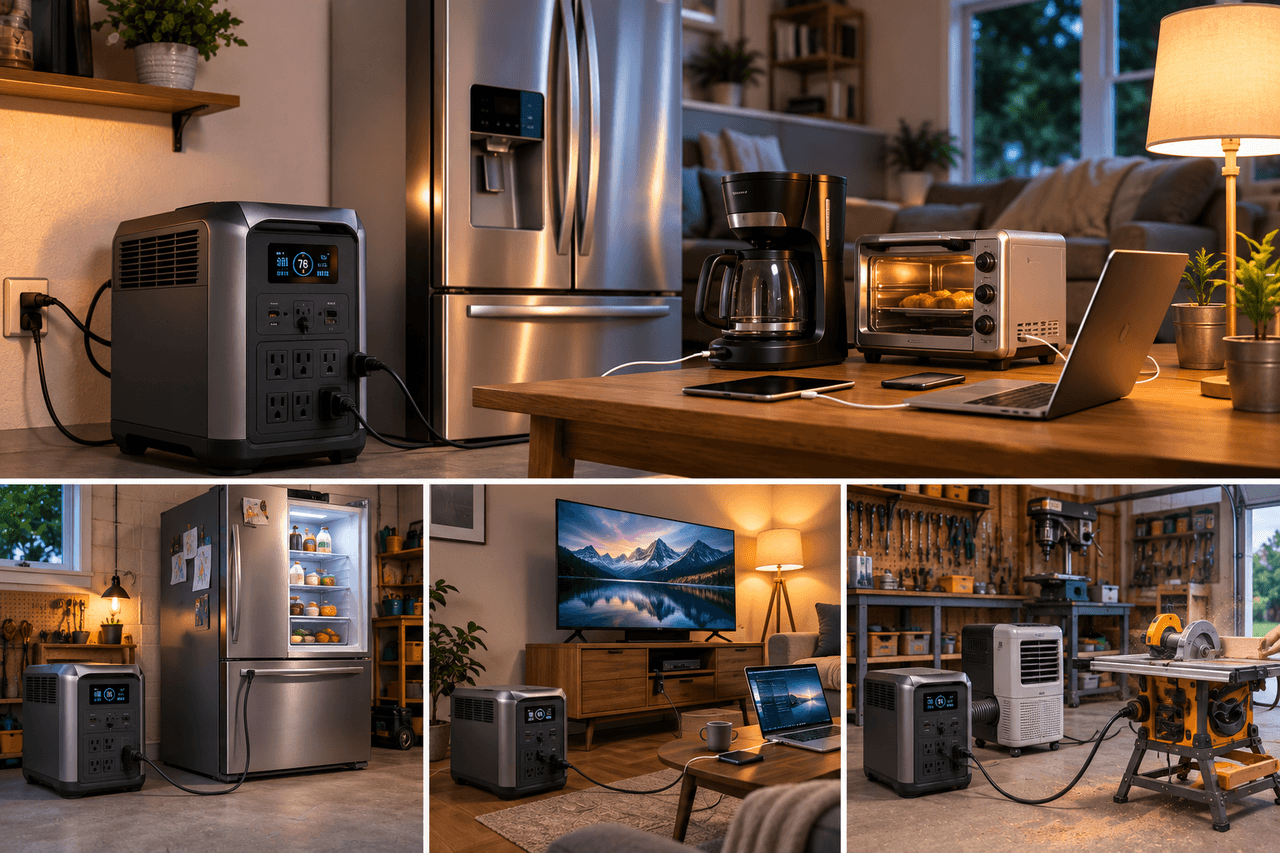
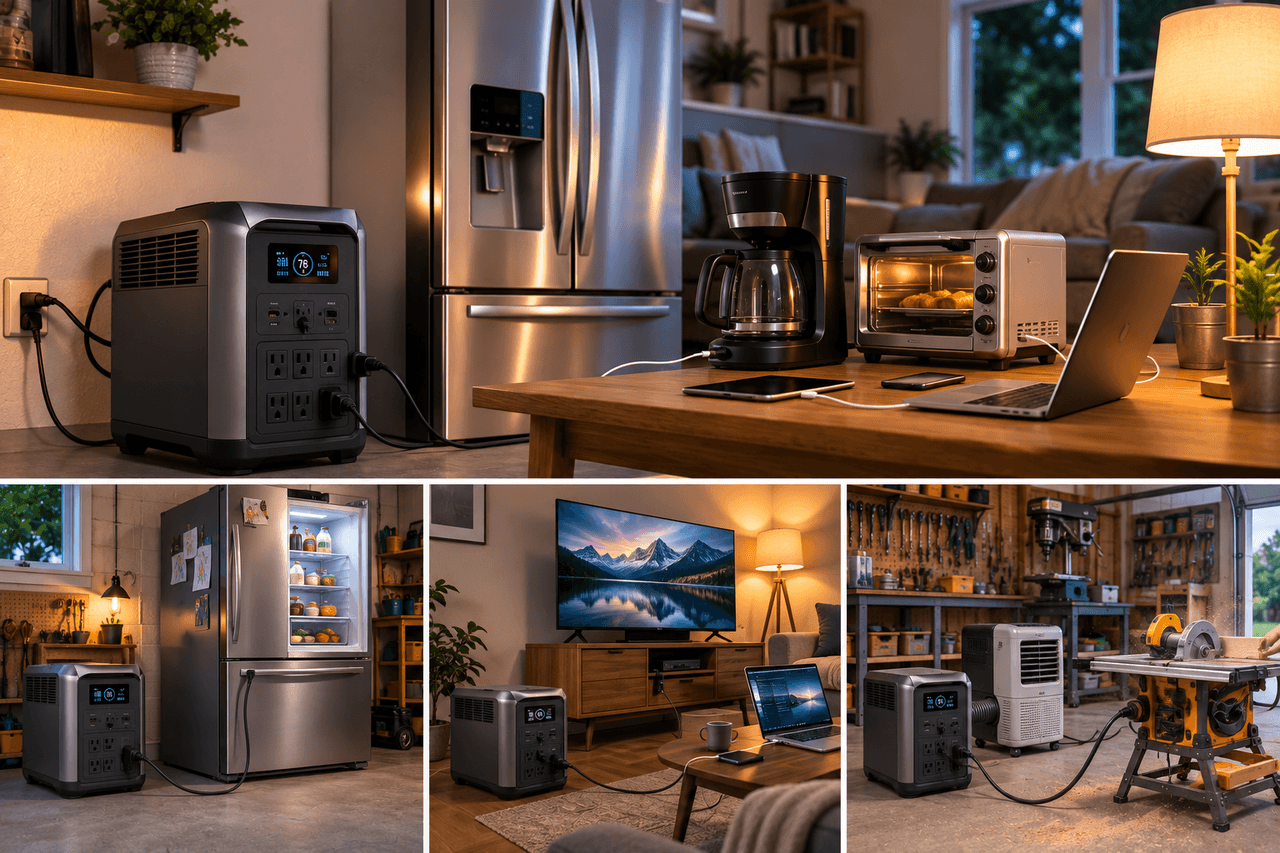
Runtime depends on battery capacity in watt-hours divided by your actual load in watts, not the inverter's rated output. A 2048Wh battery running a combined 300W load, a fridge plus a few small devices, lasts roughly 5 to 6 hours before efficiency losses. That same battery running close to its full 3000W ceiling drains in well under an hour.
A rough runtime table makes that math easier to picture on a 2048Wh battery:
Light load, around 300W (fridge plus small devices): roughly 5 to 6 hours
Moderate load, around 1,000W (fridge, TV, and a laptop charging): roughly 1.5 to 2 hours
Heavy load, near 3,000W (multiple large appliances at once): well under an hour
Add solar input or a larger expandable capacity and those windows stretch considerably, especially for a multi-day outage rather than a short one.
Working through the fuller runtime math across different load scenarios shows how quickly that number shifts. Adding even one more appliance to the mix changes it fast. A single space heater or hair dryer can cut a multi-hour runtime down to a fraction of that almost immediately.
Spec-sheet runtime numbers assume ideal conditions that rarely match a real household. Testing your power station's actual runtime before an emergency is the better move. It shows what you can genuinely count on when the grid goes down, rather than just trusting the number on the box.
Runtime numbers change fast once you're running more than a fridge. It's worth sizing for your actual combination of loads rather than one appliance at a time.
Sizing Beyond a Single Appliance
Add up the running watts of everything you'd realistically use at once. Then add the single highest startup surge among them, not every appliance's surge stacked together, since they rarely all start at the same moment.
FEMA's guidance on power outage preparedness makes a similar point for homeowners planning any kind of backup power. You likely won't be able to run everything at once, so prioritizing which loads matter most comes first. That same planning logic applies whether you're sizing a whole-home generator or a single portable inverter.
A typical example: a fridge at 300W, a modem and router at 30W, phone chargers at 20W, and a box fan at 75W. That adds up to about 425W running. The highest single startup surge in that mix, likely the fridge compressor, adds roughly 800 to 1,200W on top for that first instant. Even at the high end, the total lands comfortably under 3000W.
If your realistic combined total regularly pushes close to 3000W, it's worth sizing up to DELTA Pro or DELTA Pro 3. Running an inverter consistently near its ceiling shortens runtime and leaves no room for an unexpected extra load, like a second fridge kicking on mid-cycle.
Seeing a broader comparison across output classes is worth doing if 3000W turns out to be more, or less, than your actual household needs.
Conclusion
A 3000W inverter comfortably runs a refrigerator plus several other everyday devices at once. Its real limit is the combined load of everything running simultaneously, not the fridge specifically. Runtime depends on battery capacity divided by actual draw, not the rated output figure alone. Add up your realistic combined load first. Then choose between DELTA 3 Max Plus's exact 3000W match and the extra headroom of DELTA Pro or DELTA Pro 3.
FAQs
Can a 3000W inverter run a refrigerator?
Yes. A standard residential refrigerator only draws 150 to 400W while running, with a brief startup surge of 800 to 1,200W. That leaves plenty of headroom on a 3000W inverter for other devices at the same time.
How long will a 3000W inverter last on a full charge?
That depends entirely on your actual load, not the inverter's rating. A 2048Wh battery running a light combined load, like a fridge and a few small devices, can last 5 to 6 hours. That same battery running close to the full 3000W ceiling drains in well under an hour.
What's the difference between continuous and surge output on a 3000W inverter?
Continuous output is what the unit can sustain indefinitely. It's the number that matters for running a combination of appliances at once. Surge output is a brief, higher spike reserved for the split second a motor or compressor starts.
How many appliances can I run at once on a 3000W inverter?
It depends on their combined running watts plus the single highest startup surge among them. A fridge alone leaves plenty of capacity, but adding high-draw devices like a microwave or space heater fills that 3000W ceiling quickly.
Is a 3000W inverter enough for a whole home, or just select appliances?
It's generally sized for select priority appliances rather than an entire home at once. A modular platform like EcoFlow's DELTA Pro series lets you start at this tier. You can add capacity later if your needs grow closer to whole-home coverage.
For press requests or interview opportunities, reach out to our media team
media.na@ecoflow.com