2026 Guide to Green Energy Tariffs and Home Savings
- What is a green energy tariff?
- How do green energy tariffs work in the UK?
- Types of green energy tariffs
- Which is the best green energy supplier for me?
- How to maximise savings with your green tariff
- Green energy solutions for your home
- How much might I save if I switch to a green energy tariff?
- Conclusion
- FAQS
What is a green energy tariff?
A green energy tariff is an electricity plan where your supplier guarantees that all or part of the energy you use comes from renewable sources such as wind, solar, hydro, or biomass. While the electricity delivered to your home is the same as standard power, the supplier offsets your consumption by feeding an equivalent amount of renewable energy into the grid.
Green tariffs help households support the transition to low-carbon energy and reduce their environmental impact. When paired with a home solar battery, renewable electricity—whether generated on-site or supplied through the grid—can be stored and used when needed, further reducing reliance on fossil-fuel power and improving overall energy efficiency.
How do green energy tariffs work in the UK?
Green energy tariffs in the UK work by ensuring that a supplier purchases or generates renewable electricity equivalent to your household's consumption. While the physical electricity delivered to your home comes from the national grid, suppliers use schemes like Renewable Energy Guarantees of Origin (REGOs) to prove that the same amount of electricity has been produced from renewable sources such as wind, solar, or hydro.
The energy mix and transparency vary between tariffs. Some plans provide 100% renewable-backed electricity, while others may only partially offset usage with REGOs or other certificates. Understanding these differences helps households choose green energy tariffs UK that genuinely support clean energy, ensuring that your electricity consumption contributes to reducing carbon emissions and promoting renewable generation.
Types of green energy tariffs
Green energy plans come in different forms to suit households with varying priorities and budgets. Choosing the right one can help you support renewable energy while potentially saving on electricity bills. Here are the main types of green energy tariffs:
1. 100% renewable tariff
A green energy tariff that guarantees all the electricity you use is matched by renewable generation from sources like wind, solar, or hydro. This is ideal for households aiming to maximise environmental impact and reduce their carbon footprint.
Feature | Details |
Renewable share | 100% renewable energy |
Typical sources | Wind, solar, hydro |
Cost level | Medium to high |
Best for | Eco-conscious households prioritising sustainability |
Savings potential | Limited direct savings, strong environmental benefits |
2. Partial renewable tariff
These plans supply only a portion of electricity from renewable sources, with the rest coming from conventional generation. Partial renewable tariffs can be a more affordable way to support clean energy while maintaining cost-effective rates.
Feature | Details |
Renewable share | Partial (e.g., 20–50%) |
Cost level | Low to medium |
Environmental impact | Moderate |
Best for | Budget-conscious households wanting greener energy |
Savings potential | Similar to standard tariffs |
3. Offset or certificate-based tariff
Some tariffs use renewable energy certificates or guarantees of origin to offset your consumption. A green electricity tariff of this type ensures your home's usage is balanced by clean energy fed into the grid, even if your direct supply comes from standard sources.
Feature | Details |
How it works | Uses certificates to offset usage |
Physical supply | Standard grid electricity |
Cost level | Low to medium |
Transparency | Depends on supplier certification |
Best for | Households seeking an easy green option |
4. Fixed vs. variable pricing tariff
Green tariffs may have fixed rates, giving certainty for a set period, or variable rates that change with market conditions. Understanding the structure helps households choose the best green energy tariffs for stability or potential savings.
Pricing type | Key characteristics | Best for |
Fixed-rate | Price locked for 12–24 months | Budget planning and stability |
Variable-rate | Prices change with the market | Flexibility and potential savings |
Risk level | Fixed: low / Variable: higher | Depending on household preference |
5. Premium or Green Plus Tariffs
Certain tariffs offer added benefits, such as supporting local renewable projects or integrating with smart home energy tools. These premium options are slightly more expensive but provide additional sustainability and environmental impact.
Feature | Details |
Added benefits | Local projects, smart tools, carbon tracking |
Cost level | Higher than standard green tariffs |
Environmental impact | High |
Best for | Sustainability-focused households |
Extras | Community support or innovation funding |
Which is the best green energy supplier for me?
Choosing the best green energy supplier depends on your priorities, usage patterns, and budget. Look beyond just whether a tariff claims to be renewable; check how the supplier sources its electricity, how much of it is backed by REGOs or direct renewable generation, and whether the tariff is fixed or variable. Comparing options allows you to balance cost, certainty, and the level of environmental impact you want to support.
Suppliers with a strong track record in transparency and renewable investment can offer greater confidence that your payments actually help expand clean energy. Using comparison tools for green energy tariff comparison to evaluate unit rates, standing charges, customer service ratings, and green credentials will help you find the best green energy tariffs in the UK suited to your household needs.
Factors to consider before switching
Switching to a green energy tariff can save money and support renewable energy, but it's important to evaluate all aspects carefully. Making the right choice ensures you get real value while contributing to a cleaner energy system. Below are some key factors to consider:
Check fuel mix disclosure
Always review the supplier's fuel mix to see the proportion of renewable versus non-renewable energy. This shows how much of your electricity consumption genuinely supports green energy. Understanding the fuel mix ensures that the green energy tariff you choose has a measurable environmental impact.
Understand exit fees
Some tariffs charge penalties for leaving before the contract ends. Knowing any exit fees helps you avoid unexpected costs if you need to switch suppliers. This ensures you can move to a better deal in the future without financial penalties.
Compare fixed vs. variable tariffs
Fixed tariffs lock in rates for a set period, offering price certainty, while variable tariffs fluctuate with market conditions. Comparing both helps you decide whether you prefer stable bills or the potential for savings when electricity prices drop.
Evaluate price vs. green credentials
Cheaper tariffs aren't always the most sustainable. Make sure the green electricity tariff is backed by verified renewable energy or certificates like REGOs. This guarantees that your electricity consumption is genuinely offset by clean energy production.
Assess supplier reputation
Check customer reviews, reliability, and transparency in renewable claims. A reputable supplier ensures accurate billing and proper use of renewable certificates, giving you confidence that your switch supports both savings and environmental goals.
How to maximise savings with your green tariff
Switching to a green energy tariff is just the first step; making the most of it requires smart energy habits and tools. By using electricity efficiently and timing high-energy activities for off-peak periods, households can reduce bills while supporting renewable energy. Here's how to maximise savings with your green tariff:
Shift usage to off-peak hours
Run appliances like washing machines, dishwashers, and EV chargers during cheaper or off-peak hours. Timing energy-intensive tasks to periods of lower demand helps you take full advantage of your green energy tariff while lowering costs.
Use energy-efficient appliances
Invest in appliances with high energy efficiency ratings. Efficient devices consume less electricity, which means your renewable tariff stretches further and reduces both bills and environmental impact.
Combine with solar or battery storage
Pairing a green tariff with solar panels or home battery storage systems, such as EcoFlow STREAM Ultra X, Ultra, or STREAM AC Pro, allows you to store cheap or self-generated electricity. This maximises self-consumption and reduces reliance on grid electricity during peak times.
Monitor and adjust consumption
Use smart meters or energy monitoring apps to track usage patterns. Understanding when and how you consume electricity enables you to adjust habits, avoid waste, and get the most value from your green energy tariffs in the UK.
Choose the right tariff type
Evaluate whether a fixed, variable, or premium green plan best fits your household's usage and financial goals. Picking the right tariff ensures stability, potential savings, and genuine support for renewable energy.
Green energy solutions for your home
EcoFlow's STREAM series provides advanced solutions for storing and optimising renewable electricity at home. By pairing high-efficiency solar panels with smart energy storage, households can reduce dependence on the grid, maximise self-consumption, and power key appliances reliably. During the day, the solar panels capture sunlight and convert it into power that flows straight into the home, running lights, appliances, and other daily essentials just like normal mains electricity. Any extra energy is stored in the battery for later use. This day-to-night energy flow is especially useful for UK homes on green energy tariffs, helping families use more clean energy while keeping electricity costs under control.
Ideal for larger households: 450W Rigid Solar Panel + STREAM Ultra X
The 450W Rigid Solar Panel + STREAM Ultra X setup is designed for larger homes with substantial electricity use and frequent appliance demand. At its core, the EcoFlow STREAM Ultra X offers a robust 3.84 kWh battery capacity and 1,200 W AC output, capable of powering essential appliances such as refrigerators, lighting, electronics, and washing machines on eco or cold cycles, especially during peak electricity periods or when grid prices are high.
The included 450W rigid solar panel delivers high solar output with up to 23% conversion efficiency, producing more electricity per square metre than many traditional panels. Its durable, weather-resistant design ensures stable performance even in variable UK weather conditions.
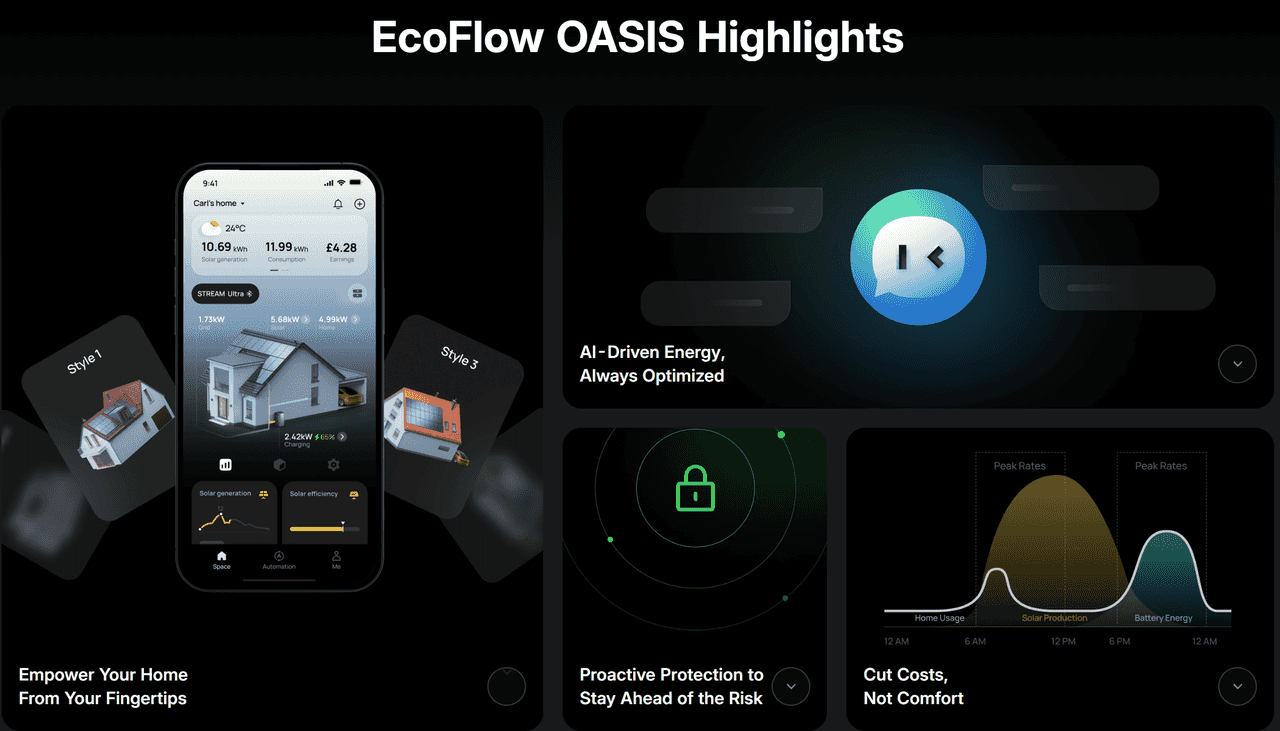
Integration with EcoFlow's OASIS Home Energy Management System provides AI-driven monitoring. The system tracks solar generation, electricity tariffs, and household consumption, automatically charging the batteries when energy is cheapest and discharging when needed. This maximises efficiency, lowers energy bills, and increases self-sufficiency.
Perfect for high-demand homes: 450W Rigid Solar Panel + STREAM AC Pro + STREAM Ultra
For households with higher energy consumption, the 450W Rigid Solar Panel + STREAM AC Pro + STREAM Ultra bundle provides a complete solar generation and storage solution. The system offers 3.84 kWh of combined storage capacity and a 2,300 W output, efficiently powering larger devices such as ovens, dishwashers, space heaters, home offices, and daily essentials.
The STREAM Ultra serves as the primary battery with a built-in inverter, while the STREAM AC Pro supplements storage and output to meet higher loads. Together, they optimise solar energy use and increase self-consumption, reducing reliance on the grid and cutting electricity costs.
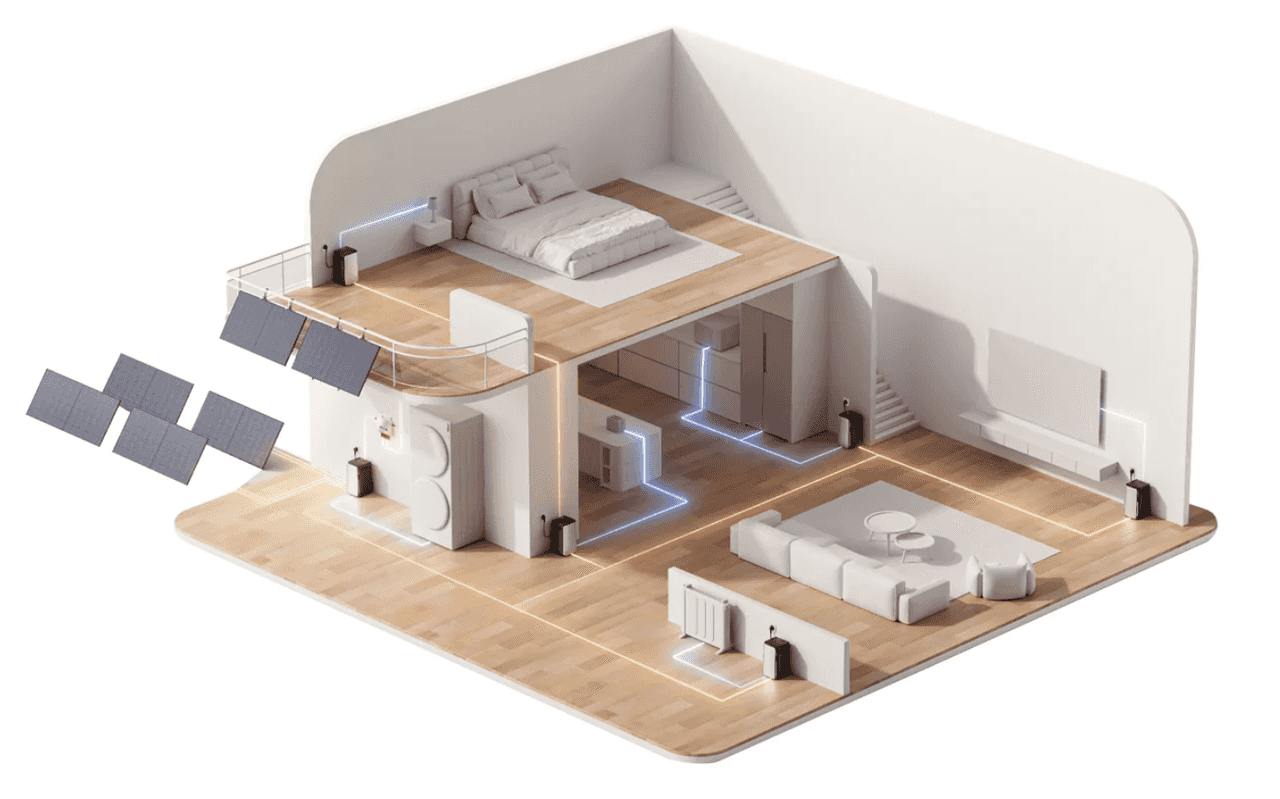
One of the standout features of this bundle is its scalable and distributed placement. STREAM systems support up to six batteries in parallel, allowing you to place units in different areas of your home, such as the garage, utility room, or living space, rather than stacking them. This flexibility ensures the system fits your home layout while optimising energy delivery where it's needed most.
Using EcoFlow's AI-driven app, the system monitors energy production and consumption, automatically storing electricity when tariffs are low or solar output is high and deploying it during peak-demand periods. This intelligent management ensures maximum savings and reliable power for all household appliances.
How much might I save if I switch to a green energy tariff?
The amount you can save by switching to a green energy tariff depends on your current energy plan, household usage, and the tariff you choose. When you compare green energy tariffs, many green tariffs are competitively priced, and in some cases, choosing a plan with lower unit rates and standing charges can reduce your annual electricity costs.
Households can maximise savings by combining a green tariff with energy-efficient habits, such as using high-rated appliances, shifting energy use to off-peak hours, or pairing with home energy storage solutions. Products like EcoFlow STREAM Ultra X or STREAM AC Pro + STREAM Ultra allow you to store low-cost or self-generated solar electricity and use it during peak rates, effectively lowering reliance on the grid and boosting overall savings.
By evaluating your consumption and integrating smart storage solutions, you can both save money and support cleaner, greener energy in your home.
Conclusion
Switching to a green energy tariff in the UK is a practical way to support renewable energy while potentially lowering your electricity bills. By understanding different tariff types, comparing suppliers, and considering factors like fuel mix, exit fees, and fixed versus variable rates, you can make an informed choice that benefits both your wallet and the environment.
Maximising savings becomes even easier when you pair your green tariff with smart energy habits and storage solutions. EcoFlow's products, such as the STREAM Ultra X and STREAM AC Pro + STREAM Ultra, enable you to store solar or off-peak electricity, use it during peak periods, and reduce reliance on the grid. These systems make it simple for households to enjoy reliable, cost-effective, and eco-friendly energy, bringing your home closer to true energy independence.
FAQS
Who has the cheapest energy tariff in the UK?
The cheapest energy tariff varies depending on your location, usage, and whether you choose a fixed or variable plan. Comparing suppliers regularly using official comparison tools or websites helps you find the most cost-effective option. Many green energy tariffs in the UK also offer competitive rates, allowing you to support renewable energy while keeping costs low. Switching to a plan that suits your household usage can significantly reduce annual electricity bills.
What runs your electric bill up the most?
High-energy appliances like electric heating, hot water systems, washing machines, dishwashers, and ovens contribute the most to your electricity bill. Standby power consumption from TVs, chargers, and other devices also adds up over time. Pairing energy-efficient appliances with smart usage habits, like running appliances during off-peak hours or using timers, can help lower overall energy costs.
Does leaving a kettle plugged in use electricity?
Yes, leaving a kettle plugged in can use a small amount of standby electricity, which accumulates over time. While modern kettles are designed to minimise energy draw when idle, unplugging or using smart plugs ensures no unnecessary energy consumption. Combining this habit with energy-saving tools, such as EcoFlow home energy storage systems, can further reduce reliance on the grid and optimise household electricity use.