When Do Summer Gas Prices Peak? What to Expect in 2026 and How to Spend Less
- When Gas Prices Typically Peak in Summer and Why It Happens
- What Could Shape 2026 Summer Gas Prices in the US
- How to Time Fill-Ups and Reduce Your Cost per Mile
- Cut Fuel Use at Home During Outages and Peak-Demand Days
- Frequently Asked Questions
- Save Money Now and Stay Prepared for Whatever 2026 Brings
Each year, gas prices follow a predictable seasonal pattern, rising from late winter through early summer before they ease in the fall. However, this year, there’s an added layer of uncertainty due to current geopolitical disruptions in 2026 that have pushed crude oil prices well above the preseason forecasts.
Knowing why these prices spike and when the peaks occur can help you plan your fill-ups accordingly, adjust your driving habits, and decide whether backup power makes sense for your home.
When Gas Prices Typically Peak in Summer and Why It Happens
Gas prices always start to climb in the first and second quarters of the year, driven by:
- Refinery maintenance season
- The federally mandated switch to summer blend gas
- Seasonal growth in driving demand
Refinery operators have a May 1st deadline to switch from the winter blend to summer blend gas, but this transition often begins a few months before that to provide time for the oil to move through the pipeline.
California and other West Coast states often see prices rise first because they switch to the summer blend earlier than other states. Most gas stations are held to a June 1st deadline, but higher prices can be seen well before that.
Because gas generators rely on the same fuel that cars do, gas generator owners are subject to these same fluctuations and increases each summer. It's one of the many pros of natural gas generators, which aren't directly impacted by oil price spikes, and are rather more closely related to regional and weather influences.
However, solar whole-home generators aren't impacted by any seasonal changes, making them a consistently affordable option.

What Could Shape 2026 Summer Gas Prices in the US
The 2026 summer outlook is more volatile than usual. The Strait of Hormuz, through which nearly 20% of global oil supply flows, has been effectively closed since late February following military action in the region. The EIA's April 2026 Short-Term Energy Outlook reports
Brent Crude averaged $103 per barrel in March, with daily prices briefly reaching $128 on April 2. The EIA revised its U.S. retail gasoline forecast to nearly $4.30 per gallon in April, with a full-year average of $3.70, up from $3.10 in 2025.
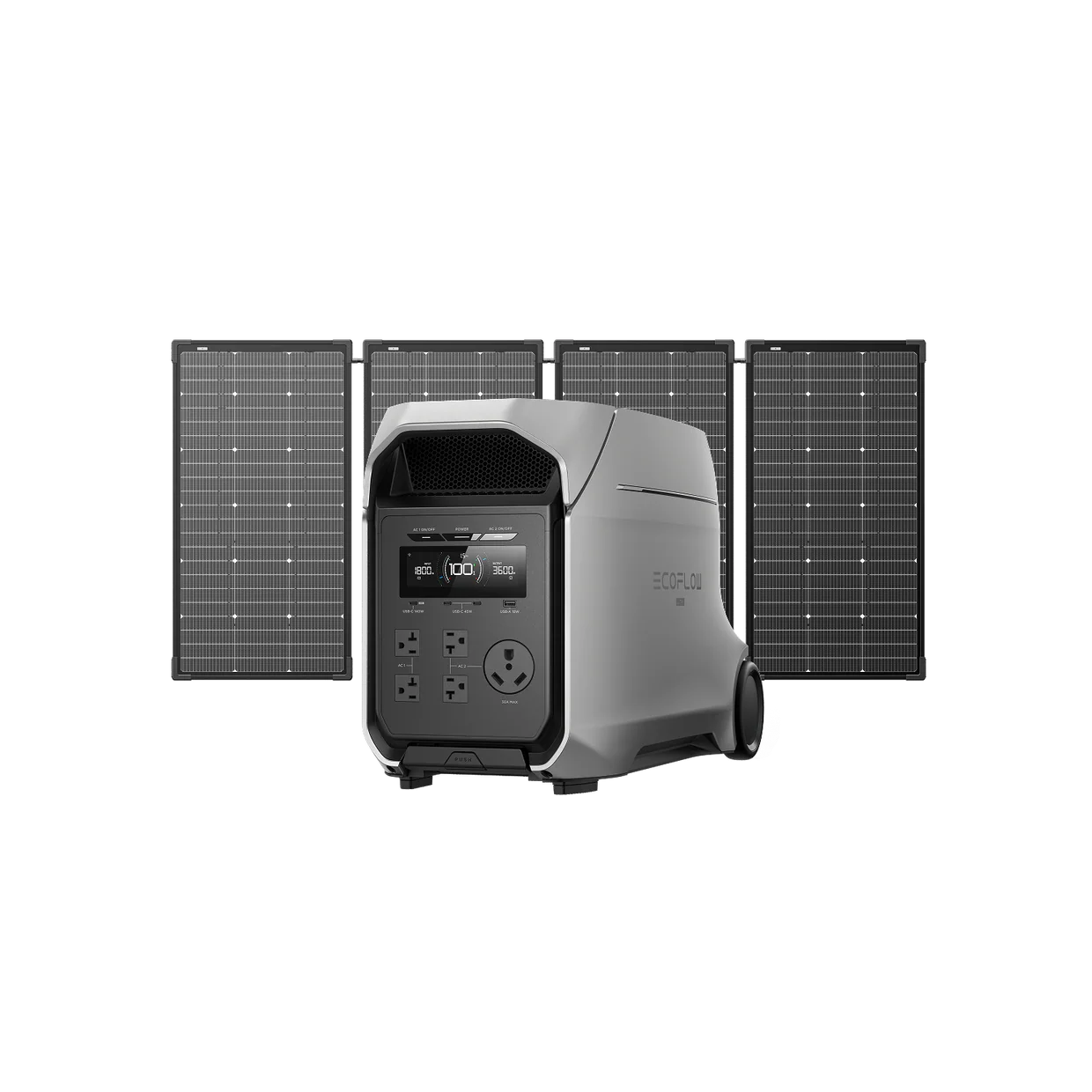
How summer unfolds depends on how quickly tanker traffic and regional production recover. For homeowners deciding between gasoline and solar backup, the EcoFlow DELTA 3 Ultra Plus + 500W solar panel removes fuel price volatility from the equation entirely.
How to Time Fill-Ups and Reduce Your Cost per Mile
You can time your fill-ups to pay less at the gas pump. If you want to save money, plan to hit the gas station on Sundays. You’ll save as much as $0.04—$0.09 per gallon vs. if you filled up your tank on higher-cost days (Weds-Fri). But in states that have price cycles, such as Florida, Texas, Michigan, and Ohio, the difference can be as much as $0.15—$0.45.
Fine-tuning your driving habits and minimizing fuel use at home are other ways to reduce your fuel costs during gas price spikes. Keep your highway speed steady, avoid hard acceleration, and keep your tires properly inflated to improve your fuel economy. Knowing exactly how much gas your generator uses before outage season also allows you to plan these purchases the same way, by buying when prices are lower, rather than when you urgently need fuel.
Cut Fuel Use at Home During Outages and Peak-Demand Days
Running a gasoline generator during a summer outage adds fuel costs on top of already elevated pump prices. Battery-based backup systems use no fuel. Paired with solar, they recharge during daylight and supply power through the night with no ongoing fuel cost, and no storage, refueling, or ventilation requirements.
When shopping for a portable generator for summer, right-size your load to extend the runtime of priority circuits and appliances like refrigeration, lighting, fans, and communication devices.
Frequently Asked Questions
What Month Do Gas Prices Usually Peak in the Summer?
Prices typically peak between late May and July, when summer-blend fuel costs, increased travel demand, and supply constraints converge. The exact month varies year to year. In 2026, geopolitical disruptions shifted the peak earlier and higher than typical seasonal patterns alone, with elevated prices expected through at least the second quarter.
Are Gas Prices Cheaper on Certain Days of the Week?
Yes, Sunday is the most consistently affordable day in most U.S. states, while Wednesday through Friday tend to be the most expensive. Savings from timing your fill-up range from 4 to 9 cents per gallon in most markets, and up to 45 cents in price-cycling states.
Does Using Premium Gas Improve Mileage Enough to Justify the Cost?
Generally, no. AAA testing found no meaningful improvement in horsepower, fuel economy, or emissions when premium is used in vehicles designed for regular. For cars that recommend but don't require it, modest gains under extreme conditions don't offset the roughly 20 to 25% price premium. Use the octane grade your owner's manual specifies.
How Can I Reduce Gasoline Use During Power Outages in the Summer?
Use battery backup systems instead of gas generators to eliminate fuel dependency entirely. Solar-paired units can recharge during the day without grid power. Prioritize your essential loads, like refrigeration, lighting, fans, and phone charging, to reduce your total draw and extend runtime. If you have a gas generator, calculate its consumption in advance so you can buy fuel at lower pre-summer prices.
Save Money Now and Stay Prepared for Whatever 2026 Brings
Summer 2026 gas prices are running higher than most forecasts anticipated, shaped by the annual seasonal climb and an active period of global supply disruption.
The approach to saving is consistent regardless: fill up on lower-cost days, use a price-tracking app, drive efficiently, and plan generator fuel purchases before the peak.
One effective way to save on fuel costs is switching from a gas generator to a solar backup solution like the EcoFlow DELTA 3 Ultra Plus + 500W solar panel that only requires the fixed upfront cost and allows you to avoid the spikes in crude oil markets entirely.
For press requests or interview opportunities, reach out to our media team
media.na@ecoflow.com