What Appliances Actually Qualified for the Energy Tax Credit?
- Federal Energy Tax Credits Overview: Section 25C vs. Section 25D (Status as of 2026)
- Home Battery Backup Still Makes Sense, With or Without the Tax Credit
- What Appliances are Qualified for Energy Tax Credit Savings Through 2025
- Did Battery Storage Systems and Whole-Home Power Qualify?
- What's Still Available in 2026
- How to Claim Energy Appliance Tax Credits on IRS Form 5695 (For 2025 Installations)
- Conclusion
- FAQs
For years, federal energy tax credits made it cheaper to upgrade your home with efficient appliances. The Inflation Reduction Act expanded those credits through 2025, covering everything from heat pumps to home battery storage. Then the One Big Beautiful Bill Act (OBBBA), signed into law in mid-2025, ended those credits early for anything placed in service after December 31, 2025.
Timing matters here. If you installed qualifying equipment before the end of 2025, you likely still have a credit to claim. If you're planning an install for 2026 or later, the federal credit is off the table, and the smarter question becomes what still makes sense without it.
This guide covers both sides: exactly what qualified through the 2025 deadline, and what's realistically worth pursuing now that the federal piece is gone.
Federal Energy Tax Credits Overview: Section 25C vs. Section 25D (Status as of 2026)
Two separate federal credits covered energy upgrades, and they worked differently.
Credit | What it covered | Value | Status |
|---|---|---|---|
Energy Efficient Home Improvement Credit (Section 25C) | Energy Star appliances, HVAC upgrades, insulation, and other energy property | $1,200 to $2,000 in annual limits, depending on category | Expired for property placed in service after Dec 31, 2025 |
Residential Clean Energy Credit (Section 25D) | Solar PV systems and standalone battery storage of 3kWh or more | Uncapped 30% of project cost | Expired for property placed in service after Dec 31, 2025 |
If you installed on or before December 31, 2025, you can still claim the credit on your 2025 tax return. Install in 2026 or later, and neither credit applies at the federal level anymore.
It's also worth separating tax credits from rebates. Tax credits reduce what you owe the IRS and are non-refundable, which is exactly why the OBBA's changes, covered in more depth in our breakdown of how the One Big Beautiful Bill affected the Residential Clean Energy Credit, closed them outright rather than just scaling them back. Rebate programs, run at the state level through the HOMES and HEAR frameworks, are a different mechanism entirely, and many are still active. More on those below.
With the federal credit gone, the practical question shifts: does battery backup still make sense without that 30% write-off?
Home Battery Backup Still Makes Sense, With or Without the Tax Credit
The credit disappearing doesn't erase the reasons people wanted battery backup in the first place. Electricity rates keep climbing, outages are more frequent in storm-prone regions, and state or utility incentives (covered later) can still offset part of the cost. Backup power is still worth it on its own merits, tax credit or not.
Neither purchase comes with a federal tax credit attached anymore. Both still solve the same underlying problem: keeping the lights, fridge, and essential circuits running when the grid doesn't.
Understanding what changed at the federal level is one thing. Knowing exactly what qualified before the cutoff still matters if you're filing a 2025 return.
What Appliances are Qualified for Energy Tax Credit Savings Through 2025
Section 25C covered a specific list of upgrades, each with its own cap. Here's how it broke down for anyone who installed before the deadline.
Appliance / Upgrade | Qualifying Criteria | IRS Section | Max Annual Credit | Window |
|---|---|---|---|---|
Heat pumps & heat pump water heaters | Energy Star certified | 25C | Up to 30% of cost, capped at $2,000/year | Through 12/31/2025 |
Central air conditioning & furnaces | Energy Star certified, high-efficiency models | 25C | Capped at $600/item | Through 12/31/2025 |
Standard kitchen & laundry appliances (fridges, dishwashers, dryers, stoves) | Never federally eligible | N/A | Not applicable | Never qualified |
Electrical panel upgrades (200A+) | Installed alongside a qualified heat pump or solar system | 25C | Up to $600 | Through 12/31/2025 |
A few things worth flagging directly:
Standard kitchen and laundry appliances never had a direct federal credit path, regardless of the OBBBA timeline. Some high-efficiency models may still qualify for state-level rebates, which is a separate program entirely.
The panel upgrade credit only applies when paired with a qualifying heat pump or solar installation, not as a standalone upgrade.
All of these numbers apply only to equipment placed in service on or before December 31, 2025.
Battery storage had its own, separate set of rules under Section 25D, and it's the category most relevant to whole-home backup, so it's worth covering on its own.
Did Battery Storage Systems and Whole-Home Power Qualify?
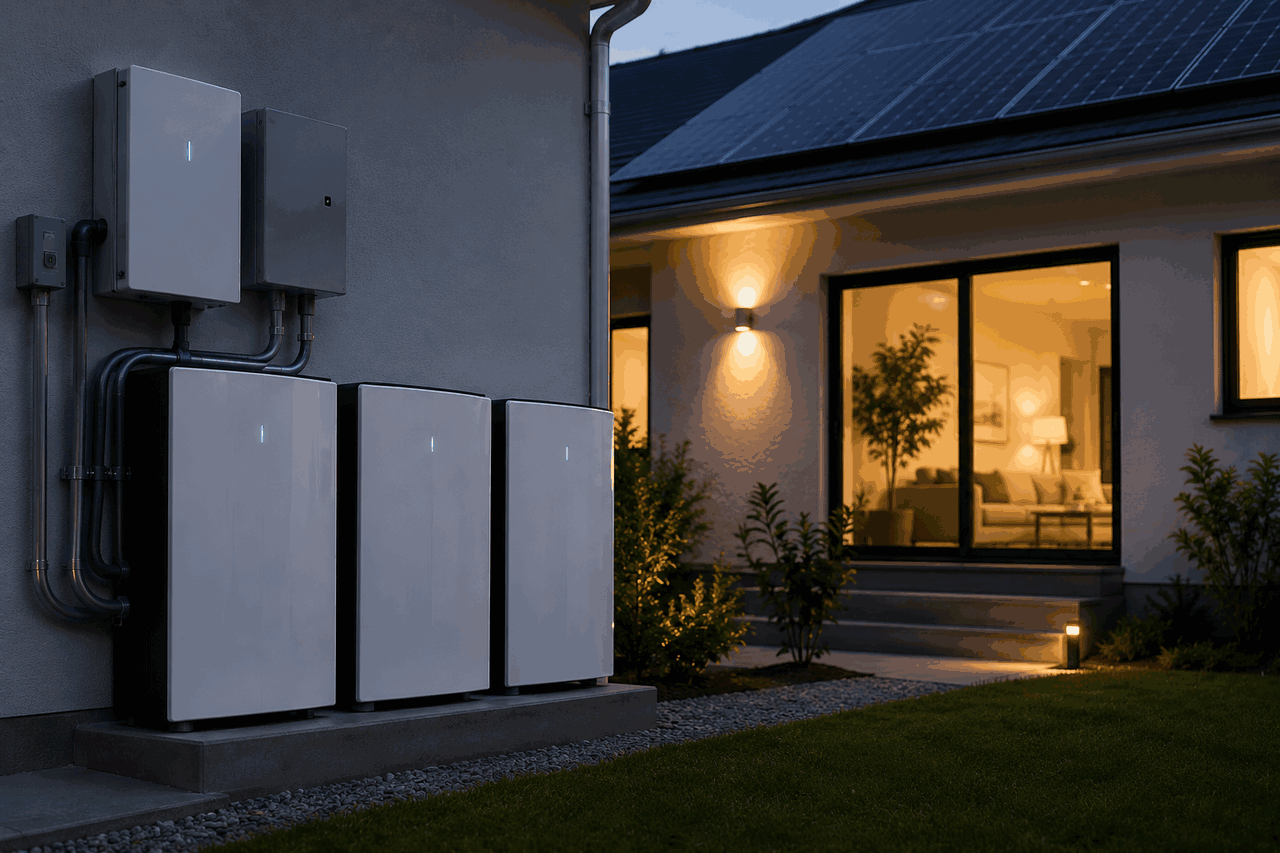
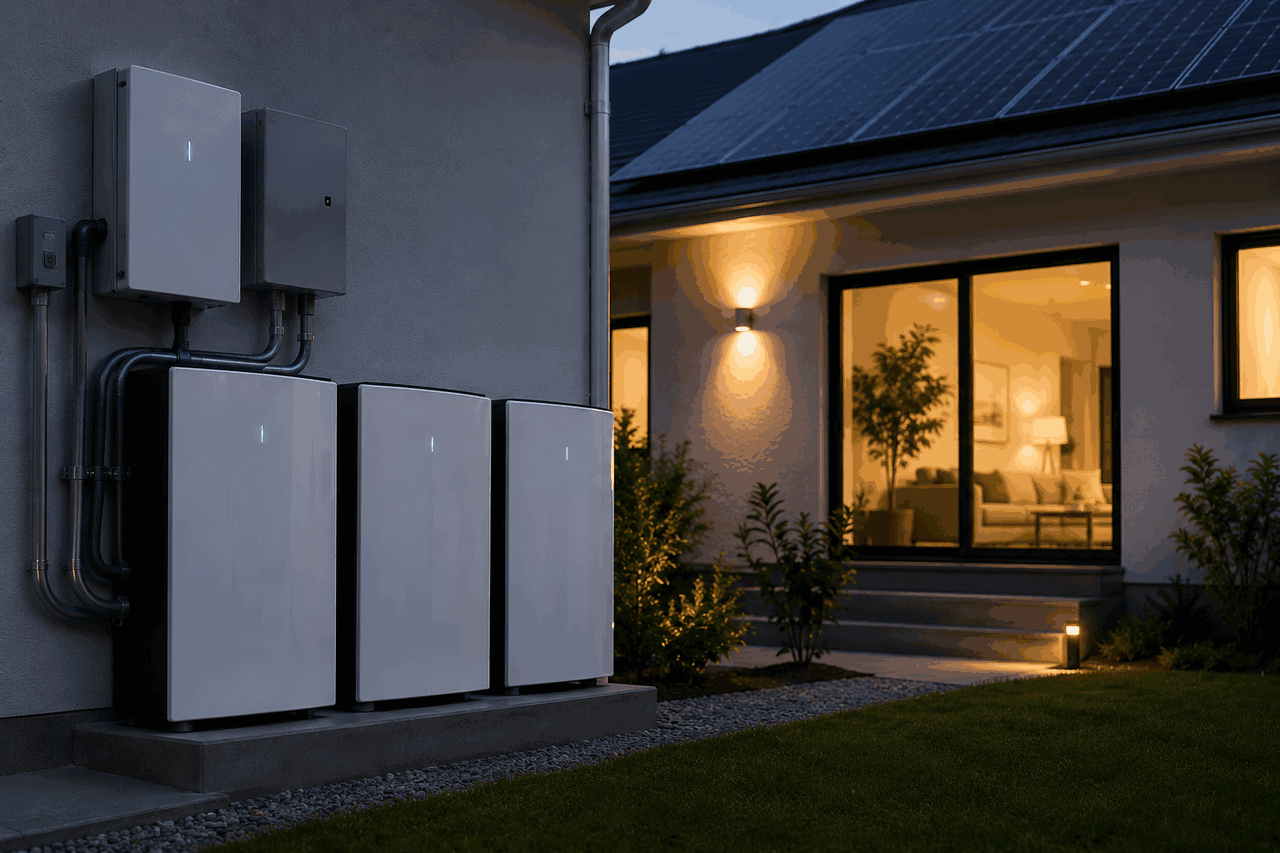
Standalone battery energy storage systems of 3kWh or more qualified for the 30% Residential Clean Energy Credit under Section 25D, for installations completed through December 31, 2025. That window has now closed.
A few details that tripped people up while the credit was active:
No solar requirement. Home battery systems never needed to be paired with solar panels to qualify. A standalone battery met the 3kWh threshold on its own.
Eligible costs went beyond the unit itself. Labor, electrical panel integration, wiring, and other balance-of-system hardware all counted toward the 30% calculation, as long as the installation was completed before the deadline.
30% was uncapped, unlike Section 25C's per-category dollar limits, a distinction covered in more detail in the federal solar tax credit guide, which walks through how battery-only eligibility worked before the window closed.
With the federal picture settled, it's worth covering what's actually still available in 2026, because there's more on the table than the expired federal credit alone.
What's Still Available in 2026
The federal tax credit is gone, but it wasn't the only incentive on the table. A few paths are still worth checking before writing off battery backup as too expensive:
State-level incentives. Coverage varies widely by state, but many still offer rebates, low or no-interest loans, or sales and property tax exemptions for battery and solar installations.
Utility rebates and Virtual Power Plant (VPP) programs. Some utilities pay ongoing incentives for letting your battery participate in grid support programs, not just a one-time rebate at installation.
IRA-funded HOMES and HEAR rebates. These point-of-sale rebate programs are administered at the state level and remain active in many states even though the separate federal tax credit expired, a shift walked through state by state in our 2026 update on residential clean energy tax credits.
One of the largest state programs still running is California's SGIP, which pays out a per-kWh rebate on qualifying battery installs; SGIP battery rebate guide covers how to apply and what it's currently worth.
For anyone who installed qualifying equipment before the deadline, the federal credit is still very much worth claiming.
How to Claim Energy Appliance Tax Credits on IRS Form 5695 (For 2025 Installations)
If your equipment was placed in service on or before December 31, 2025, the claim process hasn't changed:
File IRS Form 5695 (Residential Energy Credits) alongside your federal Form 1040 for the 2025 tax year.
Keep your documentation. Hold onto purchase receipts, installer invoices, and the manufacturer's Certification Statement for each product.
Check your installation date, not purchase date. Eligibility runs on when equipment is placed in service, which is why the December 31, 2025 cutoff matters so precisely. A unit bought in November but installed in January 2026 falls outside the window.
Conclusion
The federal energy tax credits under Section 25C and Section 25D ended for anything placed in service after December 31, 2025, cut short by the One Big Beautiful Bill Act. This guide covered what qualified through that deadline and what's realistically still available now.
If you installed before the cutoff, claim your credit on your 2025 return using Form 5695. If you're installing it in 2026 or later, shift your focus to state and utility incentives instead of the now-expired federal credit, and evaluate battery backup on its own merits: outage protection, rate savings, and long-term reliability.
Whether you're sizing up a whole-home setup or a smaller entry point, the EcoFlow DELTA Pro 3 and EcoFlow DELTA 3 Ultra Plus both cover real backup needs today, independent of what the federal tax code does next.
FAQs
Do Energy Star refrigerators or dishwashers qualify for a federal energy tax credit?
No. Standard kitchen and laundry appliances like refrigerators, dishwashers, and dryers never qualified for a direct federal tax credit, regardless of Energy Star certification or the 2025 expiration.
What was the maximum dollar amount you could claim for energy-efficient home improvements?
Section 25C capped annual credits between $1,200 and $2,000 depending on the category, with heat pumps eligible for up to $2,000/year. Section 25D offered an uncapped 30% for solar and battery storage, both through December 31, 2025.
How do I claim the 30% clean energy credit for a home battery backup system installed in 2025?
File IRS Form 5695 with your 2025 Form 1040, and keep your purchase receipts, installer invoices, and manufacturer certification statement on hand in case of a review.
Do battery storage systems still qualify for a federal tax credit in 2026?
No. Section 25D expired for anything placed in service after December 31, 2025. Systems like the EcoFlow DELTA Pro 3 still deliver real backup value, just without the federal write-off.
Can renters claim tax credits for energy-efficient appliances?
The federal credit has expired regardless of renter or owner status. Prior to expiration, Section 25C energy-efficiency improvements generally required homeownership, though Section 25D clean energy equipment (like solar or battery storage) was available to renters for their primary residence.
For press requests or interview opportunities, reach out to our media team
media.na@ecoflow.com