How Long Do Solar Panels Last? Lifespan and Degradation
- How Long Do Solar Panels Last on Average?
- Do Solar Panels Degrade Over Time?
- What Causes Solar Panels to Degrade?
- What Factors Affect How Long Solar Panels Last?
- How Can You Extend the Life of Your Solar Panels?
- What Happens When Solar Panels Reach the End of Their Warranty?
- When Should You Replace Your Solar Panels?
- Frequently Asked Questions
- High-Quality Solar Panels Provide Reliable Power for Decades With Minimal Degradation
Solar panels, also called photovoltaics, are an excellent long-term investment, but nothing lasts forever. Most modern photovoltaics have a useful lifespan of 25 to 35 years, after which their efficiency noticeably starts to decline. But why does their efficiency decline, and how can you extend the lifespan of your photovoltaics?
Here's what you need to know.
How Long Do Solar Panels Last on Average?
Some solar panels installed as far back as the 1980s are still generating power today. How long your solar panels will last depends on the model, the manufacturer, and your local conditions. But, on average, they’ll last about 25 to 35 years.
This doesn’t mean that at 35 years they simply stop working. Instead, their output declines gradually, and at around 25 to 35 years you may start noticing it.
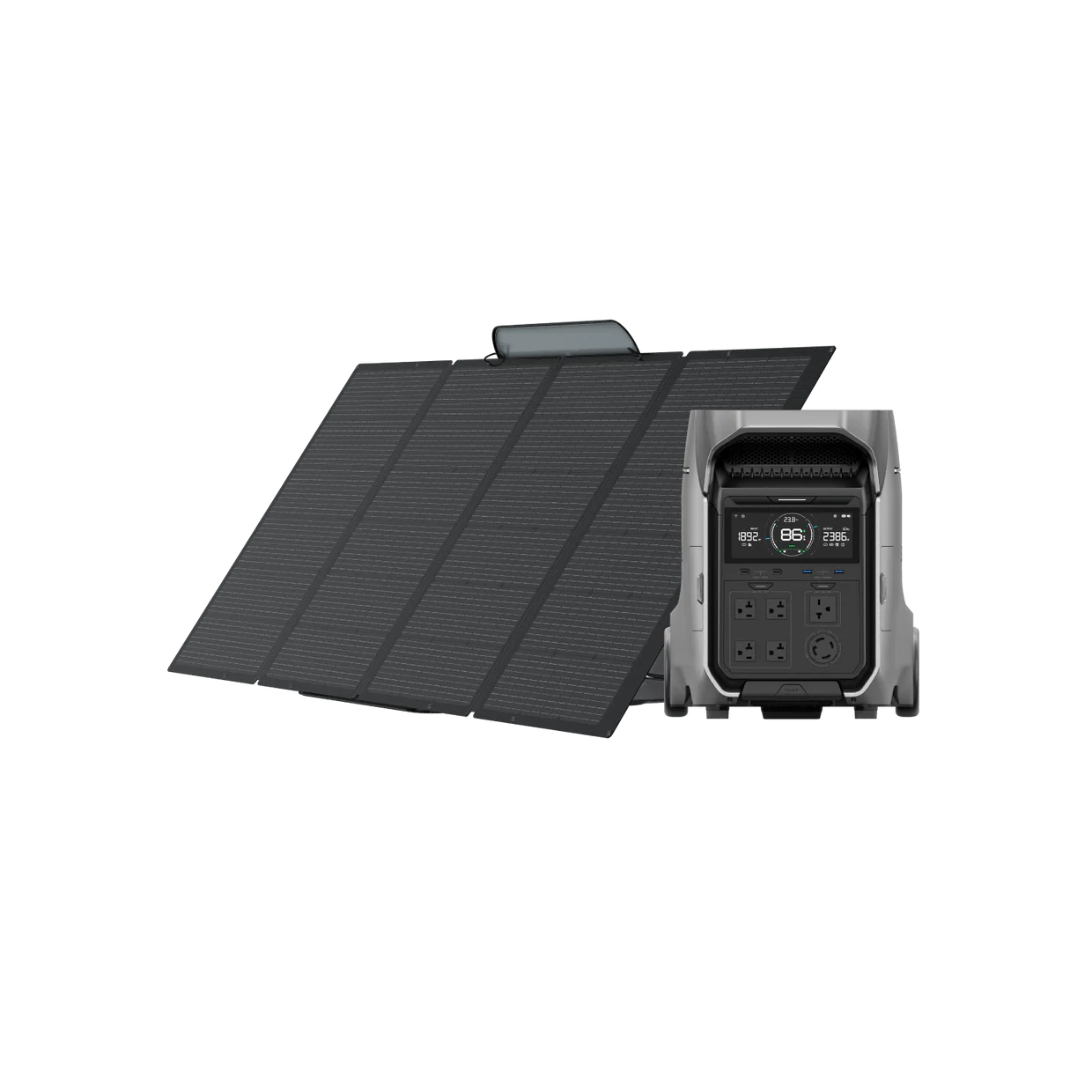
But this means that when you purchase a quality system like the EcoFlow DELTA Pro 3 + 400W Solar Panel, you’ll enjoy clean energy for many, many years.
Do Solar Panels Degrade Over Time?
Yes, all solar panels naturally degrade slowly over time.
What Is a Normal Solar Panel Degradation Rate?
According to research by Energy Solutions Intelligence, modern photovoltaics degrade at an average rate of 0.5% annually. Older panels typically degraded faster — closer to 1.1% per year — but manufacturing improvements over the past decade have cut that rate roughly in half.
However, newer N-type TopCon panels often degrade more slowly, about 0.35% to 0.5% annually. After 30 years, they may retain roughly 87.6% to 89.8% of their original generating capacity.
What Causes Solar Panels to Degrade?
Degradation is a natural process caused by a combination of factors.
Light-Induced Degradation (LID)
Light-induced degradation occurs when photovoltaics are first exposed to sunlight. In P-type silicon cells, photons create boron-oxygen complexes, a primary driver of LID loss, which typically ranges from 1% to 3%. LID is significantly reduced in N-Type models.
Potential-Induced Degradation (PID)
Potential-induced degradation occurs when high system voltage creates leakage between the cells and the grounded frame, which can significantly reduce performance. P-type cells require anti-PID coatings to prevent this effect, while N-type cells are inherently more resistant to it.
Thermal Cycling and Microcracks
Thermal cycling is a natural process that occurs when cells, solder joints, and other components expand when they warm and contract when they cool. Over time, that produces microcracks, which can reduce efficiency.
What Factors Affect How Long Solar Panels Last?
Panel Quality and Manufacturing
Choosing quality products with robust warranties typically ensures a better financial investment.
The type of solar panel also affects lifespan. Older polycrystalline models were less efficient and often didn’t last as long. Now, newer monocrystalline cells are lasting even longer, but how long still depends on quality manufacturing.
Installation Quality
When photovoltaics are improperly installed with poor-quality mounts, less-than-ideal locations, and shoddy electrical connections, they can degrade more quickly.
Climate and Location
Regions with moderate temperatures show moderate degradation rates. On the other hand, desert locations are more prone to thermal stress, while humid climates accelerate PID and increase corrosion.
Location also matters. Avoid placing your photovoltaics where falling branches or debris from trees could strike the array, and keep them in full, unobstructed sun exposure wherever possible.
How Can You Extend the Life of Your Solar Panels?
You can extend the life of your panels by choosing quality systems backed by good warranties, using professional installers, and placing them in a safe location away from things that can physically damage them.
Quality panels are also built to handle the elements: the EcoFlow 400W Rigid Solar Panel, for example, carries an IP68 waterproof rating. Even so, a semi-annual wipe-down helps clear dirt, pollen, and debris that can reduce efficiency over time.
Next, regular maintenance checks and cleaning are crucial. Once or twice a year, depending on your location, wash your panels with softened water or according to your manufacturer’s directions.
Also, visually inspect your electrical connections and mounting brackets to ensure everything is secure and there has been no storm or animal damage.
Keeping an eye on performance is just as important. If you're on a grid-tied system, watch for unusual spikes in your utility bills; if you're using an off-grid setup, an app like EcoFlow's lets you track output directly and catch drops in productivity early.
What Happens When Solar Panels Reach the End of Their Warranty?
Reaching the end of a warranty period doesn’t mean your photovoltaics have reached the end of their useful life, just that the contractual warranty coverage has ended. Photovoltaics may continue operating for years longer, albeit at a slowly declining rate, but you become responsible for repairs or replacement.
If your output no longer meets your energy requirements, you can recycle solar panels at specialized e-waste and solar recycling facilities where available.
When Should You Replace Your Solar Panels?
Photovoltaics rarely fail outright. Replacement is usually a gradual decision based on declining output. However, after 25 to 35 years, if your output has declined to the point that it no longer meets your energy needs, it may be time for an upgrade, depending on the panels, climate, and installation.
If your panels are old, low-efficiency models to begin with, a modern replacement may be a sensible idea if you want a whole home generator for reliable emergency backup power.
Frequently Asked Questions
What Is the Average Lifespan of a Solar Panel?
The average lifespan of solar panels is about 25 to 35 years, as they slowly degrade and lose about 0.5% of their output each year. While they still can work for many years, that decline typically starts to become noticeable after roughly 25 years.
What Is a Good Degradation Rate for Solar Panels?
A good degradation rate for solar panels is around 0.5% or less for crystalline silicon modules. Older models sometimes degraded faster, up to 1.1% per year, but newer photovoltaics should degrade more slowly. Premium N-type panels, like TopCon models, often perform even better, staying below 0.4% degradation annually.
Can You Recycle Old Solar Panels?
Yes, solar recyclers and some specialty e-waste handlers will recycle old panels. Since photovoltaics last so long (25+ years) and are still relatively new, recycling facilities are limited in some areas, so you may need to do some research to find the nearest facility.
High-Quality Solar Panels Provide Reliable Power for Decades With Minimal Degradation
While all photovoltaics experience slow degradation over time, modern systems are built to better withstand the elements and provide reliable clean energy for 25 to 35 years. You can do your part by ensuring professional installation, carefully considering placement, and performing annual maintenance to catch problems before they cause serious damage.
If you’re ready to invest in a power solution built to last, you can power your home with confidence today and for years to come using the EcoFlow DELTA Pro 3 + 400W Solar Panel.
For press requests or interview opportunities, reach out to our media team
media.na@ecoflow.com