Road Trip Games and Activities for Kids: Ideas by Age & Charging Tips
Long family drives go much smoother with a solid plan for entertainment and power. Spending hours on the highway can quickly lead to restlessness in the backseat if children run out of things to do. Packing a balanced mix of classic road trip games for kids, screen-free toys, and digital activities helps keep boredom away from departure to arrival. However, even the best entertainment setup falls apart when tablets and audio players lose battery. Keeping dependable portable power stations in the vehicle ensures electronics stay charged throughout the journey, making the ride quieter and much more enjoyable for everyone.
What Actually Keeps Kids Happy on a Road Trip
Children need variety during long stretches in the car. Relying on just one activity often leads to restlessness. A successful road trip setup usually includes three core elements:
Interactive verbal games that involve the whole family.
Independent hands-on toys that do not require constant adult help.
Digital entertainment like movies, audiobooks, and educational apps.
Whatever keeps kids happy, whether screens, activity bins, or a mix, none of it works if the devices and gear run out of power halfway through the drive. That's worth sorting out before diving into game and activity ideas.
Keeping Devices Charged for the Whole Drive with EcoFlow
Keeping electronics running from departure to arrival requires a battery source that operates independently of the car's auxiliary outlets. This prevents vehicle battery drain and keeps charging cords easily accessible in the backseat.
Calculating the total power draw of travel electronics helps prevent running out of juice on the highway. Reviewing how to size battery capacity by device watt-hours makes it simple to match battery size to family travel needs.
With power sorted, here are the games that don't need a single device or any gear at all.
Classic Road Trip Games That Need Zero Gear
Verbal games pass the time quickly and take up zero packing space in the trunk. They also encourage fun family conversation along the highway.
Game | Best For | Core Rule |
|---|---|---|
I Spy | All Ages | Guess object by visual clue |
License Plate Game | Ages 6+ | Spot all 50 state plates |
20 Questions | Ages 5+ | Guess person/place in 20 turns |
Alphabet Game | Ages 6+ | Find letters A to Z on signs |
Story-Building | All Ages | One person adds one sentence |
I Spy: One person chooses an object inside or outside the car and gives a simple clue. Everyone else takes turns guessing the item.
The License Plate Game: Passengers scan passing vehicles to spot license plates from different states, tracking them on a notepad or mentally.
20 Questions: A player thinks of a person, place, or thing. Others ask up to twenty "yes or no" questions to solve the puzzle.
The Alphabet Game: Players look at billboards, road signs, and buildings to find words starting with each letter of the alphabet in sequential order.
Story-Building: Someone starts a story with a single sentence. Each passenger adds one sentence at a time to build a funny narrative.
Games for Preschoolers
Younger children need simple rules and fast results to stay happy in their car seats. Great road trip activities for preschoolers include simplified color-spotting or shape-spotting games that do not require reading skills. Asking a toddler to find three red cars, a large yellow truck, or two round speed signs matches short attention spans and keeps the pace moving. You can also play easy animal-sound guessing games or spot-the-dog contests to break up long stretches of open road without causing any frustration.
Games for School-Age Kids and Tweens
Older children enjoy healthy competition and harder challenges that make the hours fly by. Trivia rounds, word association games, and road-trip bingo sheets keep school-age kids and tweens engaged for hours at a time. You can print custom bingo cards before leaving home, featuring specific road signs, farm animals, or unique vehicles to check off. For verbal challenges, try the "movie title chain" game where each person names a movie that starts with the last letter of the previous title.
Zero-gear games cover the gaps, but a stash of hands-on activities and toys rounds out the rest of the drive.
Hands-On Activities and Toys by Age
Matching toys to a child's developmental stage prevents frustration in the backseat. Success depends on attention span, fine motor skills, and mess tolerance.
Age Group | Recommended Toys | Why It Works |
|---|---|---|
Ages 2 to 4 | Sensory boards, lacing cards, sticker books | Low mess, builds motor skills |
Ages 5 to 8 | Activity binders, magnetic games | Matches growing focus, no loose pieces |
Ages 9+ | Puzzle books, travel journals, audiobooks | Supports independent focus |
Ages 2–4
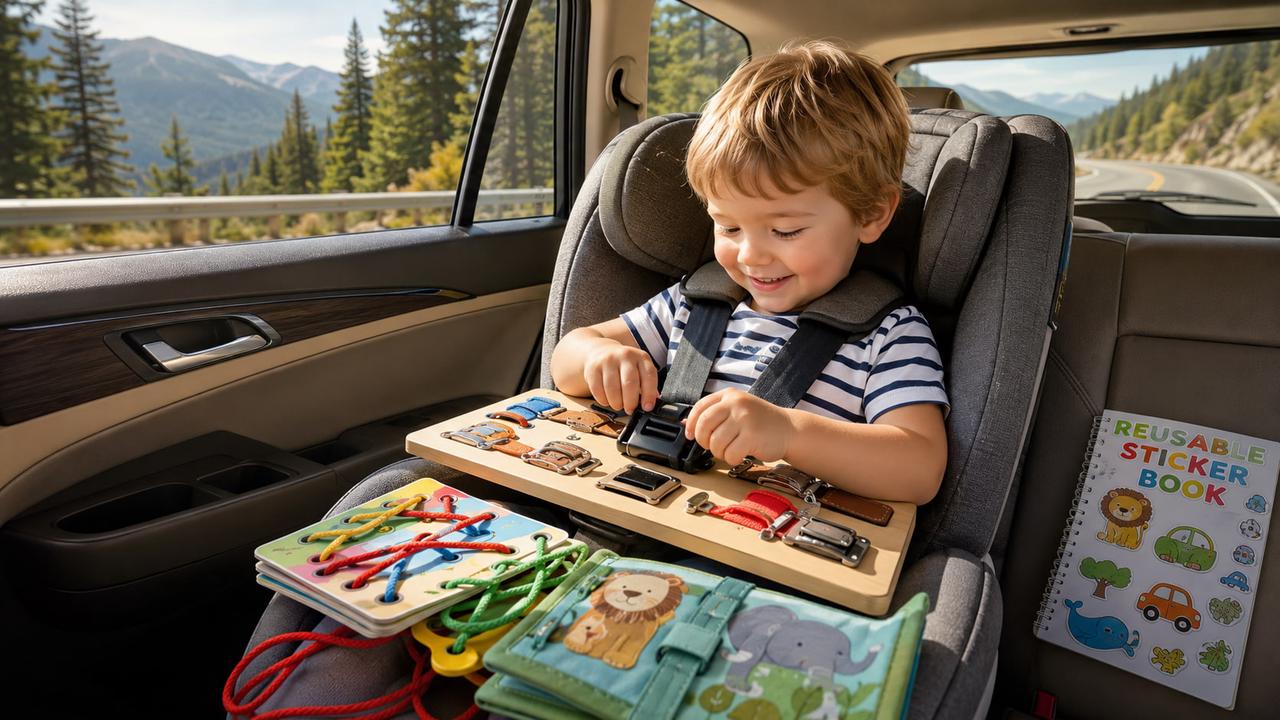
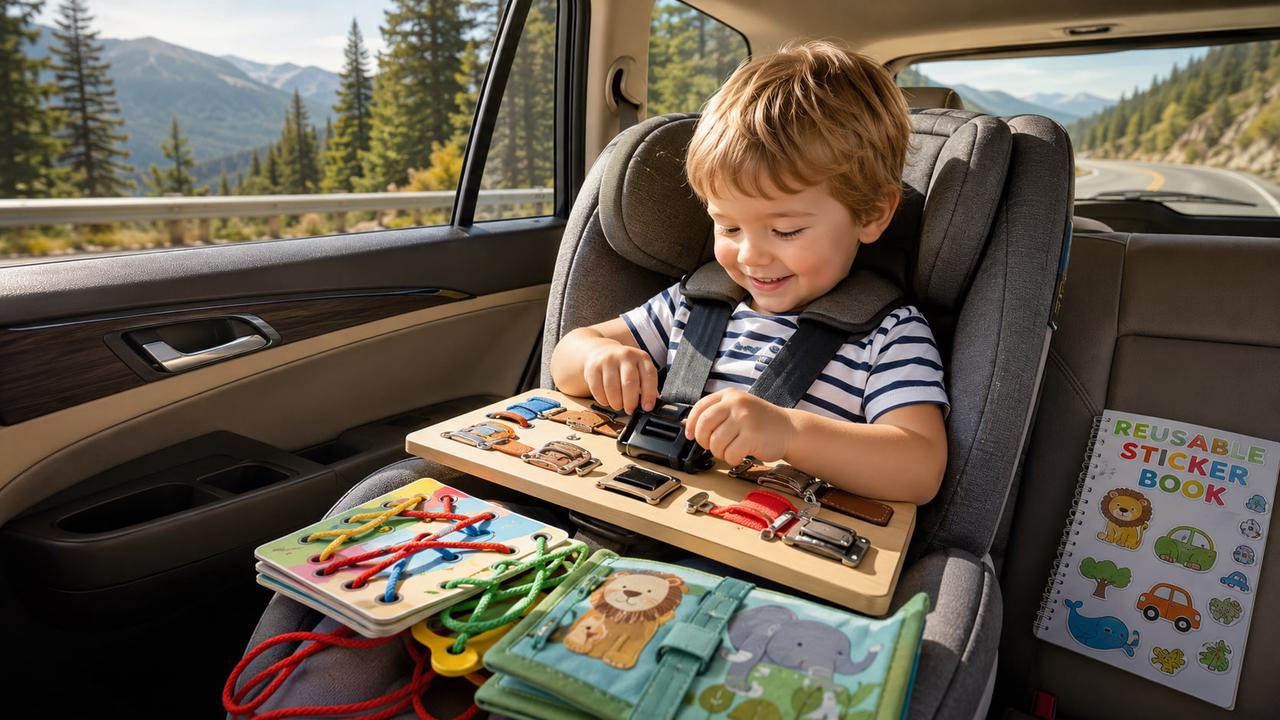
Toddlers need tactile objects with zero loose pieces that could roll under front seats. Useful car activities for kids in this age bracket include buckles on sensory boards, colorful lacing cards, and reusable sticker books featuring animals or vehicles. These items hold attention while supporting developing motor skills and keeping the back seats clean. Soft fabric busy-books with zippers and buttons also work wonderfully because they make zero noise and can be easily washed after a messy snack break.
Ages 5–8
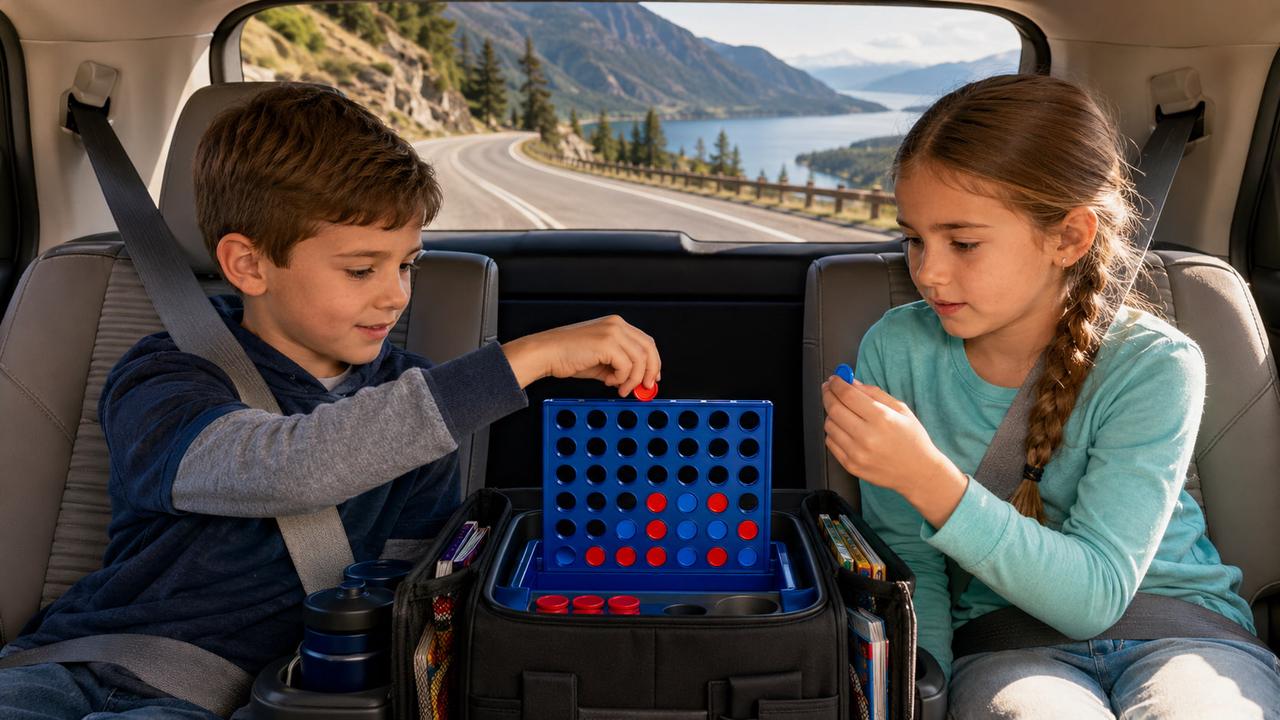
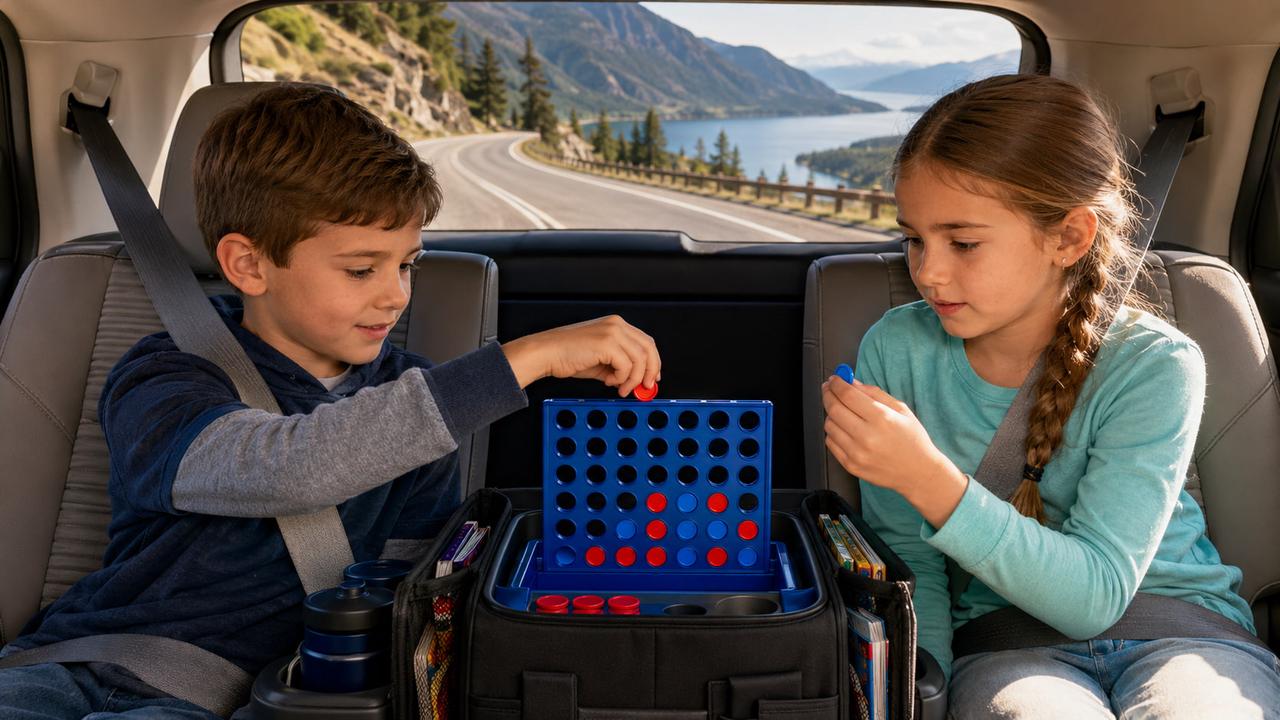
Elementary-age children can focus on structured tasks for longer periods without adult help. Practical travel activities for kids between five and eight involve custom activity binders, magnetic board games, and audiobooks paired with drawing pads. Magnetic pieces stay attached during bumpy rides, preventing meltdowns over dropped parts. Adding dry-erase markers and laminated mazes or word searches to their binders gives them an activity they can complete, wipe clean, and play again throughout the day.
Ages 9+
Older kids prefer self-directed entertainment that respects their growing independence. Logic puzzle books, travel journals, and independent podcast playlists work well for this group. Giving tweens control over their own entertainment choices reduces complaints on long stretches of highway. Encouraging them to track the journey in a blank sketchbook by drawing landmarks or recording interesting highway stops helps them stay connected to the trip without staring at a screen the entire time.
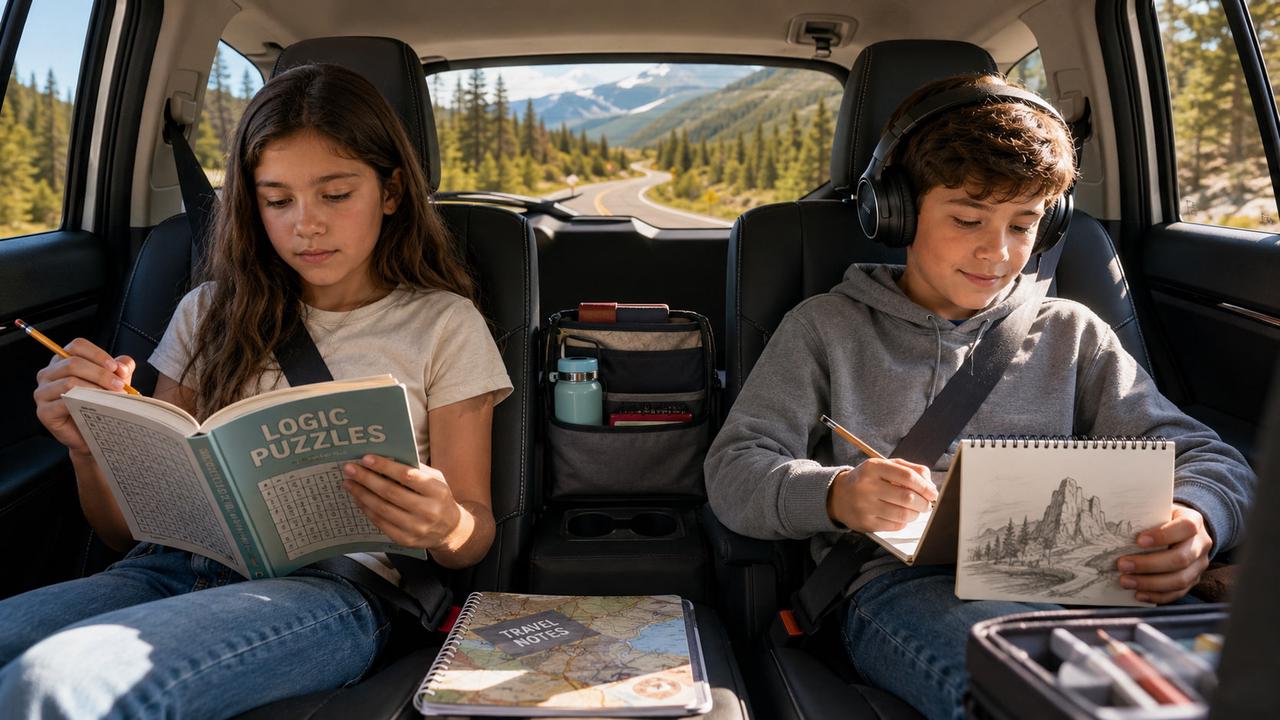
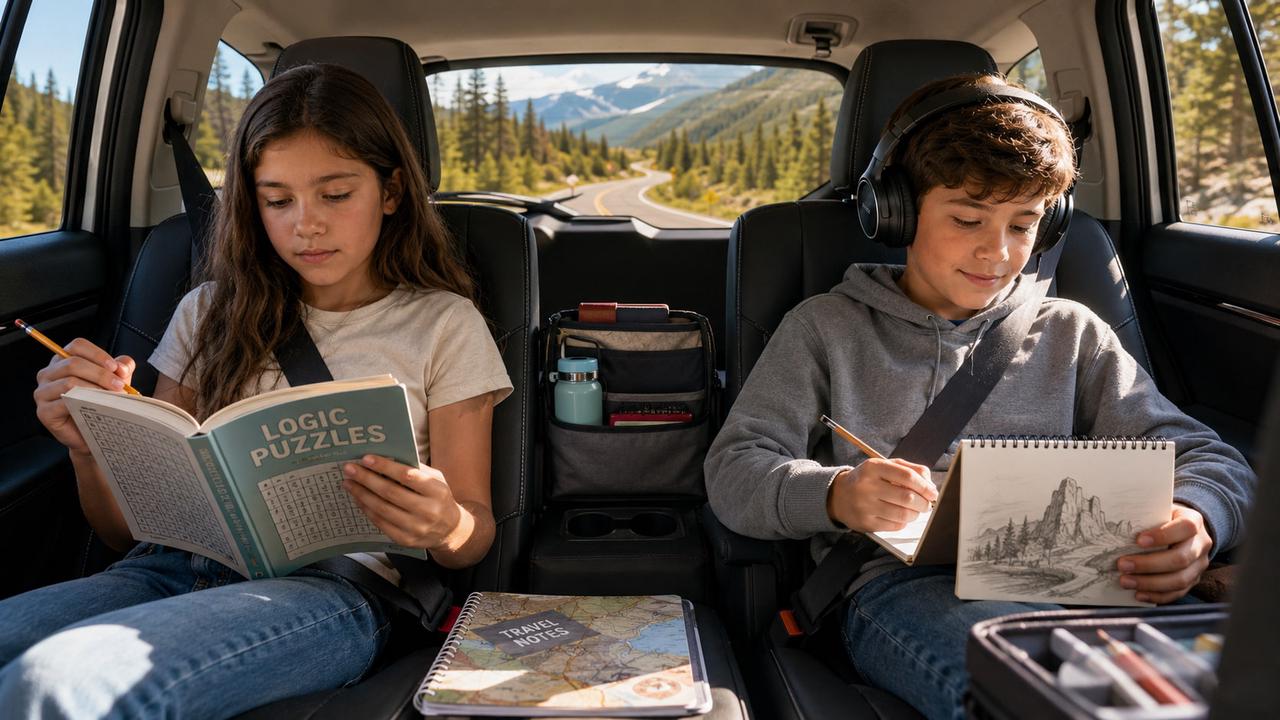
Games and activities are only half the battle, and keeping all of it and the charging gear within reach is what keeps the car from turning into chaos.
Organizing the Car So Everything's Within Reach
A tidy backseat prevents constant stops to retrieve dropped items. Storage organizers keep toys, snacks, and electronics accessible to children strapped into seatbelts.
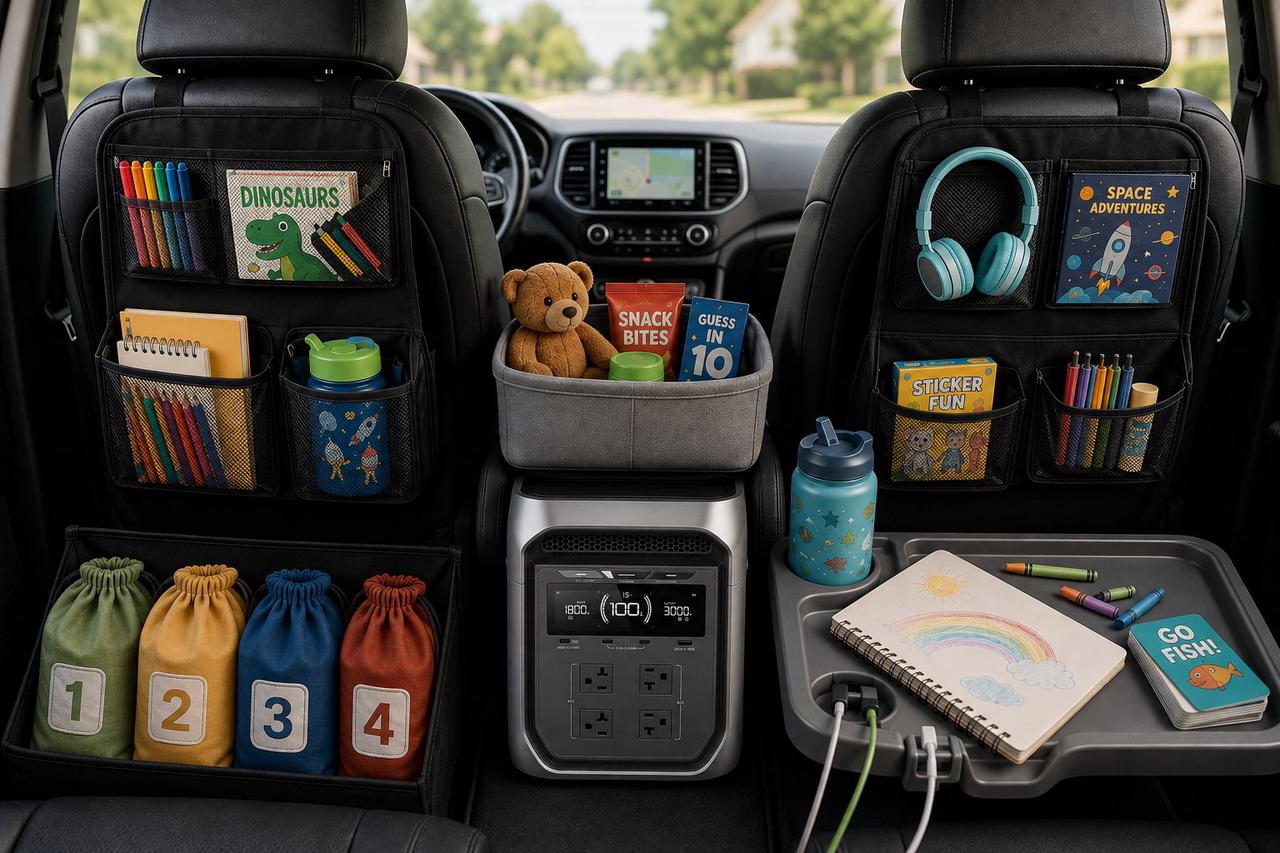
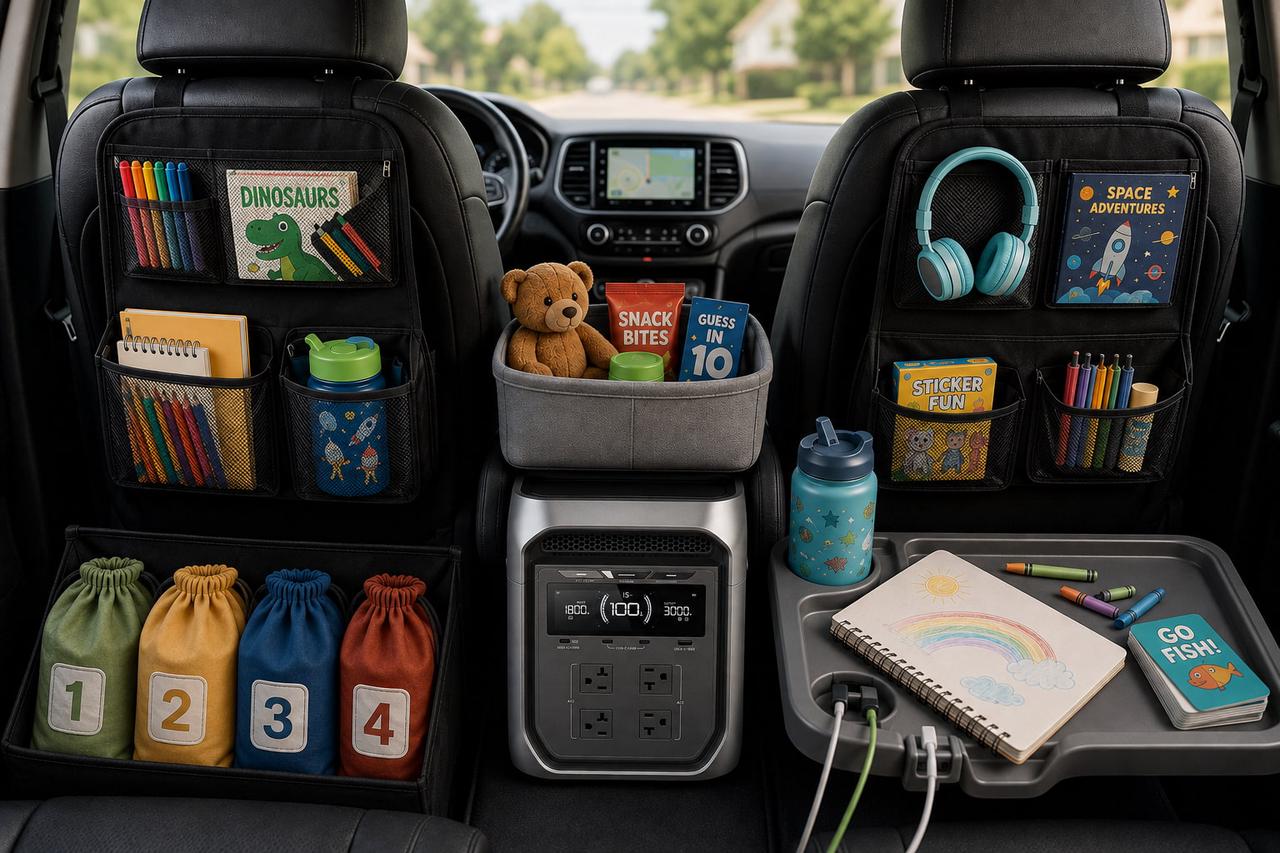
Seat-Back and Console Organizers for Activity Bins
Hanging organizers over the front seat backs creates individual compartments for art supplies and books, keeping everything off the floorboards. Placing a shared fabric bin on the middle seat provides a common area for larger games and shared snack pouches. Using clear pockets helps kids see exactly where their favorite coloring book or headphone case is stored without needing to unbuckle and search through deep backpacks.
Where to Stash a Power Station Safely
A portable battery should sit securely on the floorboards behind the front seats or in the rear cargo area, where it cannot tip over. Keep cables routed neatly along the floor mats to prevent tripping or entanglement when passengers climb in and out. Reviewing a proper car charging station setup helps maintain a safe, hazard-free cabin layout that keeps heavy hardware secure during sudden stops.
Cup-Holder Trays for Small Pieces and Charging Cables
Expanding cup-holder trays provide a flat surface for snacks, card games, and small toys right next to a child's seat. Many models feature built-in cable slots that hold charging cords in place so they never fall onto the floorboards when unplugged. These sturdy trays also double as mini desks for coloring pads, keeping crayons from rolling away while the vehicle is in motion.
Building a Rotation System So Kids Don't Get Every Toy at Once
Handing out every toy at the start of the drive shortens their novelty. Packing items into numbered bags and introducing a new bag every two hours creates fresh excitement throughout the journey. This strategy makes simple road trip ideas for kids feel like special rewards.
This setup works well for a single day on the road, while longer trips add a few more variables worth planning for separately.
For Longer Trips: Overnight Stops and Multi-Day Drives
Multi-day drives require planning for overnight battery recovery and food preservation. Extended travel means managing power across hotel stays, campsites, and rest stops.
Recharging Devices Overnight Without a Hotel Outlet
Hotel rooms rarely have enough accessible outlets for every phone, tablet, and power bank. Bringing a high-capacity power station indoors allows multiple family devices to charge from a single wall plug. Using methods for topping off power stations between stops also ensures the main battery stays full while the vehicle is in motion.
Powering a Cooler or Mini Fridge for Longer Legs
12V electric coolers keep sandwiches, string cheese, and drinks fresh without messy ice bags leaking water into the trunk. Connecting the cooler directly to a portable power station prevents strain on the vehicle's electrical system during long parking breaks. This allows families to enjoy healthy roadside lunches at scenic overlooks without worrying about warm food or draining the car battery while the engine is off.
The RV and Campground Crossover
A versatile power unit serves dual purposes on camping road trips. The same battery that charges tablets during the drive can power campsite lights, fans, and inflatables after arrival. Checking comprehensive campsite packing lists ensures no critical cables or adapters get left behind.
Planning Charging Stops Alongside Rest Stops on Multi-Day Routes
Aligning family bathroom breaks with vehicle and battery recharging stops saves valuable travel time on multi-day itineraries. A thirty-minute lunch stop provides enough time to stretch legs, walk the dog, and give portable power stations a quick top-up. Mapping out rest areas with picnic tables and open grass allows kids to burn off physical energy while electronic gear recovers battery life for the next driving leg.
Conclusion
A successful family road trip comes down to balance and preparation. Combining zero-gear word games, age-appropriate toys, and digital entertainment keeps children engaged across long stretches of highway. Keeping snacks, activity bins, and cables organized prevents clutter in the backseat. Most importantly, having an independent power source ensures that tablets, phones, and travel coolers stay running from the start of the drive to the final destination. With the right mix of activities and reliable charging on hand, long hours in the car turn into an enjoyable part of the family vacation.
FAQs
What car games work for kids with absolutely no toys or props?
Spoken games like I Spy, 20 Questions, the Alphabet Game, and collaborative storytelling require no toys. These games rely entirely on observation and imagination, making them perfect for sudden traffic delays.
What age should parents start road trip games with kids?
Simple interactive games can begin around age two. Toddlers respond well to basic color-spotting games and sing-alongs, while structured word games work better starting around age five.
What activities work best for toddlers on long car rides?
Toddlers benefit most from low-mess, hands-on items like silicone sensory boards, painters tape strips, reusable window stickers, and audiobooks accompanied by soft toys.
How long can a portable power station keep kids' tablets and audio players charged on a road trip?
A compact 1000Wh power station can recharge a standard kids' tablet roughly 30 times and smaller audio players over 50 times. This provides several days of continuous power for multiple children.
How do parents keep multiple kids' devices charged at once without draining the car battery?
Using an independent portable power station inside the cabin allows multiple tablets, handheld consoles, and headphones to charge simultaneously without pulling electricity from the car battery. Many families also look for fresh road trip activities for kids to balance screen time with unplugged fun.
For press requests or interview opportunities, reach out to our media team
media.na@ecoflow.com