Portable Refrigerator for Truck & RV: Best 12V Options for Off-Grid Living
Trying to preserve raw meat and cold drinks when you are parked out past the reach of shore power is an uphill battle. While throwing a couple of plastic bags of ice into an old chest can scrape you through a short weekend, dealing with lukewarm water pools, cramped interiors, and constant stops for ice refills quickly takes the joy out of cross-country hauls and remote camping treks.
An independent 12V portable refrigerator eliminates those daily logistics by providing continuous cooling straight from your electrical loop. If you are a commercial driver navigating a sleeper cab, a boondocker camping on open public lands, or a family customizing a trailer, upgrading your cooling setup makes life on the road significantly more sustainable.
This breakdown covers the baseline engineering behind mobile compressor refrigeration, the technical specifications you need to look out for, a practical review of the top road-tested units, and how to configure an off-grid battery loop.
Why Choose a Portable Refrigerator Instead of a Traditional Cooler?
Trying to keep food cold while logging long hours on American highways is a constant battle. Standard ice chests are a massive logistical hassle because they force you to sacrifice over half your usable storage space just for ice bags, leaving your expensive groceries floating in a pool of lukewarm, murky water. Shifting to a 12V compressor fridge gives you a self-sustained setup that locks in an exact digital temperature, keeps your supplies dry, and utilizes every square inch of the cabinet for actual food. For longer stops away from shore power, pairing your fridge with a reliable portable power station can help maintain cooling when your vehicle’s engine is turned off.
Portable Refrigerator vs. Ice Cooler
The choice comes down to efficiency and cleanliness. Relying on an ice cooler means you are constantly plotting your driving routes around gas station ice runs, which breaks your momentum and ruins your food. A 12V portable fridge completely bypasses that mess by using a miniaturized mechanical cooling loop to maintain crisp, dry interior conditions without a single drop of moisture.
Benefits for Truck Drivers and RV Travelers
For long-haul truckers and remote overlanders, a mobile fridge means a massive upgrade in daily nutrition and massive savings for your wallet. Instead of blowing your cash on greasy, high-sodium fast food at highway exits, you can pack fresh meat, vegetables, and prepped meals straight from your home kitchen. For boondockers, it removes the ticking clock on your campouts, allowing you to stay off-grid for longer periods without relying on frequent ice runs.
How to Choose the Best Portable Refrigerator for Truck & RV
Tracking down the right 12V unit means balancing the tight physical dimensions of your rig against your actual travel habits. Knowing how to choose an RV refrigerator that fits your available space and power setup can help you avoid costly layout mistakes down the road. Pay close attention to these core mechanical elements before dropping cash on a new unit.
Choose the Right Capacity
Sizing a mobile fridge depends entirely on the volume of interior real estate you can spare and your headcount. If you operate out of a tight sleeper berth or a small overland rig, a modest 20 to 30-quart locker slides into place easily without choking your floor layout. Multi-day camping duos generally find the sweet spot around 40 to 50 quarts, whereas long-haul boondocking operations or traveling families will need to scale up to a heavy-duty 60-quart platform or bigger.
Single Zone vs. Dual Zone Refrigerator
Opting for a single-zone build means the entire internal cavity operates under a uniform temperature setting, working efficiently as either a full fridge or a standalone freezer. On the flip side, dual-zone systems isolate the interior space into two distinct compartments with separate digital thermostats, giving you the luxury of keeping frozen items solid on one side while chilling beverages and dairy on the other.
| Feature | Single Zone Refrigerator | Dual Zone Refrigerator |
|---|---|---|
| Temperature Control | One compartment with a single temperature setting | Two compartments with separate temperature controls |
| Fridge & Freezer Use | Can work as either a refrigerator or a freezer, but not both at the same time | Can run one compartment as a fridge and the other as a freezer simultaneously |
| Storage Flexibility | Best for simple food and drink storage needs | Ideal for longer trips that require fresh food and frozen items |
| Energy Consumption | Typically uses less power due to simpler operation | Usually consumes more energy because it runs two cooling compartments |
| Size & Weight | More compact and easier to fit in small trucks, vans, and RVs | Larger footprint, better suited for families and extended off-grid travel |
| Best For | Solo truck drivers, weekend campers, and short trips | RV travelers, families, and long-term boondocking |
If your meal planning revolves mostly around fresh produce and quick roadside lunch stops, a standard single-compartment layout provides maximum efficiency. But if your goal is long-term exploration where keeping proteins frozen alongside fresh food is important, the flexibility of a dual-compartment box can make a significant difference when choosing the best 12 volt refrigerator for RV.
Compressor vs. Thermoelectric Cooling
Make it a priority to invest in a true compressor system rather than a thermoelectric style. Thermoelectric coolers typically provide limited temperature reduction compared with compressor refrigerators and may struggle to maintain cold temperatures in hot environments. Compressor-driven fridges function identically to a standard residential home unit, pulling internal temperatures down to zero even when the cabin or truck interior climbs past 90°F.
| Feature | Compressor Refrigerator | Thermoelectric Cooler |
|---|---|---|
| Cooling Performance | Provides consistent cooling and can reach freezer temperatures | Usually cools only 20-30°F below ambient temperature |
| Hot Weather Use | Performs well in high temperatures | Cooling drops significantly in hot conditions |
| Temperature Control | Precise temperature settings for fridge or freezer use | Limited temperature adjustment |
| Power Efficiency | Better for long-term cooling and off-grid use | Uses less power but may run continuously |
| Best For | RVs, trucks, camping, and extended trips | Short trips, picnics, and basic cooling needs |
For the vast majority of commercial drivers and independent campers, a compressor-based cooling system is the preferred option for a portable refrigerator for camping, as it can maintain true refrigeration performance in changing outdoor conditions.
Power Compatibility
Make sure the refrigerator supports both 12V/24V DC vehicle power and standard AC household outlets. Having both options lets you run the machine off your home garage circuit to bring the temperature down before loading it into your vehicle.
Battery Protection & Energy Efficiency
To guard against getting stranded out in the backcountry with dead ignition cells, select a unit with variable low voltage sensor cutoffs. This integrated system monitors your starting battery and automatically shuts down when voltage drops below a preset level to help protect your vehicle’s starter battery.
Durability and Portability
Traveling along off-grid backroads puts a lot of stress on hardware. Your portable refrigerator should feature impact-resistant casing corners, sturdy carry handles, secure latches, and a durable compressor system designed to handle vibrations, uneven terrain, and extended outdoor use.
Best Portable Refrigerators for Truck & RV in 2026
The ideal 12V fridge depends entirely on your rig layout, storage needs, and power budget. Here is a direct look at the top choices handling American roads right now.
| Model | Best For | Key Highlights |
|---|---|---|
| EcoFlow GLACIER Classic | Best Overall for Off-Grid Travel | Fast cooling, fridge/freezer capability, optional battery, smart app control |
| Dometic CFX5 Series | Premium RV & Overlanding | Rugged ExoFrame design, excellent insulation, premium build quality |
| ICECO VL Series | Off-Road Adventures | Durable construction, Secop compressor, built for rough terrain |
| BougeRV Portable Refrigerator | Budget-Friendly Camping | Affordable price, efficient cooling, easy digital controls |
| Alpicool CF Series | Compact Spaces | Slim design, lightweight, ideal for truck sleepers and small rigs |
EcoFlow GLACIER Classic: Best Overall for Ultimate Off-Grid Independence
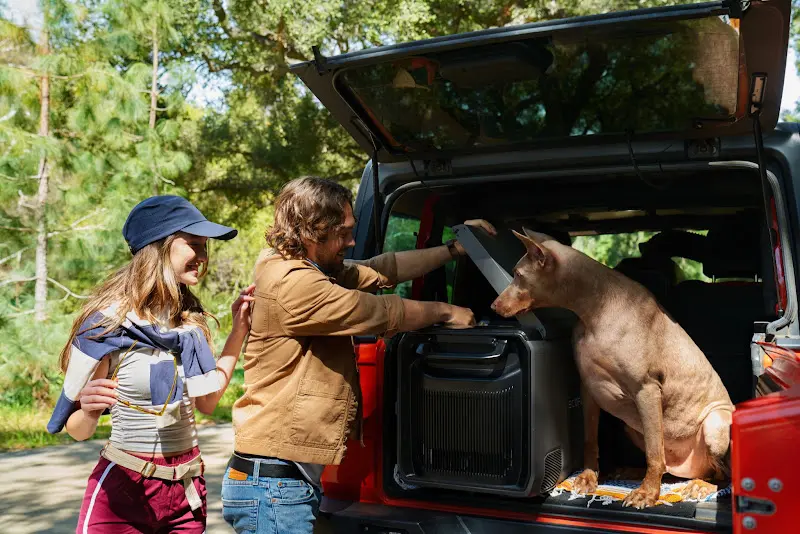
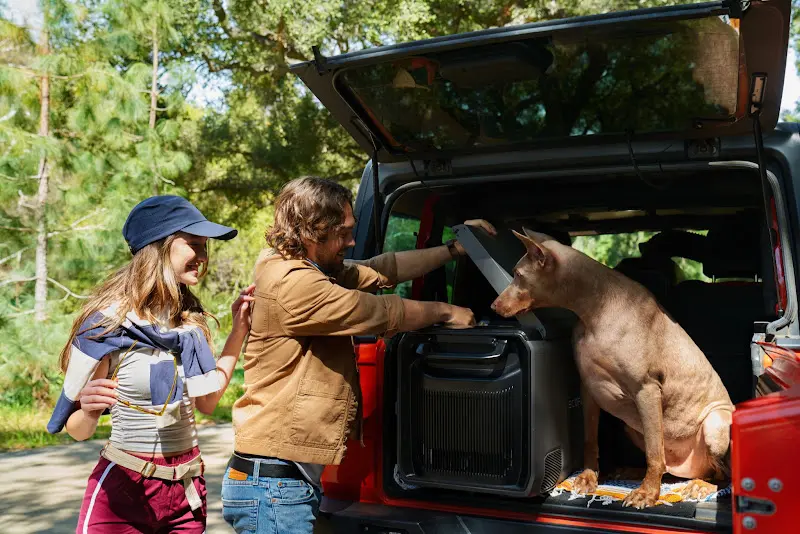
For American travelers hitting long stretches of highway, embarking on cross-country RV treks, or heading out for a weekend in the backcountry, a portable fridge needs to do more than just “stay cool.” It needs to survive brutal washboard dirt roads, scorching cab temperatures, and days away from a power hookup without letting your food spoil. The EcoFlow GLACIER Classic Portable Fridge Freezer offers flexible cooling configurations, with dual-zone options and an optional battery for longer off-grid use.
Ditching the old gas station ice runs for this compressor setup gives you complete control over your supplies. It cools down to sub-zero temperatures incredibly fast, supports an optional detachable battery so it can run completely wireless away from your vehicle, and connects to a clean smartphone app so you can alter your cooling configurations straight from the driver’s seat.
Dometic CFX5 Series: Best Premium Heavy-Duty Choice
Dometic holds a long-standing reputation within the commercial camper industry, and their CFX5 line showcases heavy structural design built for difficult travel profiles. Protected by a reinforced exoskeleton framework and shielded bumper trim, it operates quietly while maintaining high thermal retention. The main drawback is the substantial upfront cost, making it a targeted investment for professional operators and full-time overlanders.
ICECO VL Series: Best for Rugged Off-Road Durability
If your route regularly crosses harsh washboard tracks or steep mountain trails, the ICECO VL Series provides exceptional physical protection. Built inside a thick sheet-steel enclosure and utilizing a commercial-grade Secop compressor, this unit has earned a loyal following among remote explorers for its robust mechanical design and an extended 5-year compressor warranty.
BougeRV Portable Refrigerator: Best Budget-Friendly Option
For travelers entering the off-grid scene without wanting to clear out a savings account, BougeRV offers a practical entry level alternative. It delivers fast mechanical cooling speeds, conservative electrical consumption, and simple digital controls without the steep price tag of legacy brands. While the lightweight plastic exterior demands gentler handling, it holds up fine for weekend camping or light highway duties.
Alpicool CF Series: Best Compact Option for Tight Spaces
When interior real estate inside a cabin or small camper van is down to the inch, the slim footprint of the Alpicool CF Series becomes incredibly valuable. The narrow dimensions allow it to tuck neatly into custom storage sliders or behind a seat. Even with the downscaled frame, it runs on a true compressor core to keep daily rations and beverages consistently cold.
How to Power a Portable Refrigerator Off the Grid
Operating away from electrical hookups means managing your energy consumption is just as vital as choosing the fridge itself. Mobile travelers commonly combine three distinct power paths to sustain their cooling loops over extended periods.
The right energy configuration lets you push deeper into remote territories while simultaneously keeping ancillary electronics, camp lighting, and small appliances up and running.
Option 1: Running From Your Vehicle’s 12V Cigarette Lighter
The most direct way to get your fridge running is by plugging it straight into the vehicle’s standard 12VDC accessory port. This setup is highly effective when your engine is running because the alternator continuously feeds power into the circuit. Another thing: leaving the machine connected to a basic starting battery while you are parked for long stretches risks draining your primary cell, which can leave you stranded in remote backcountry.
Option 2: Pairing with Solar Panels for Daylight Charging
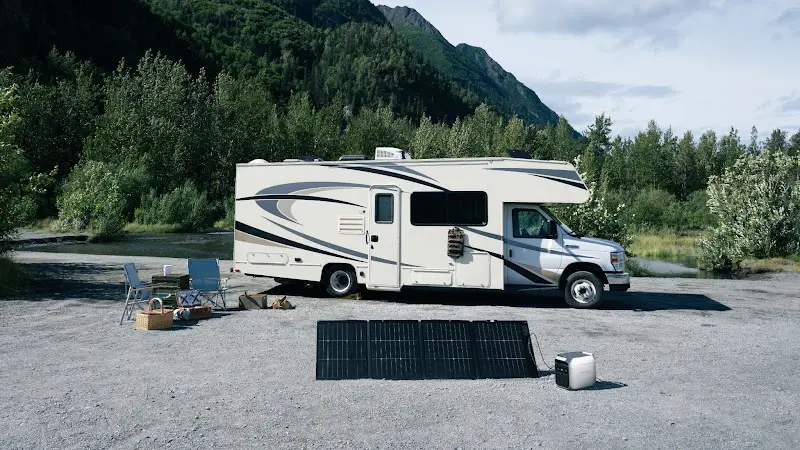
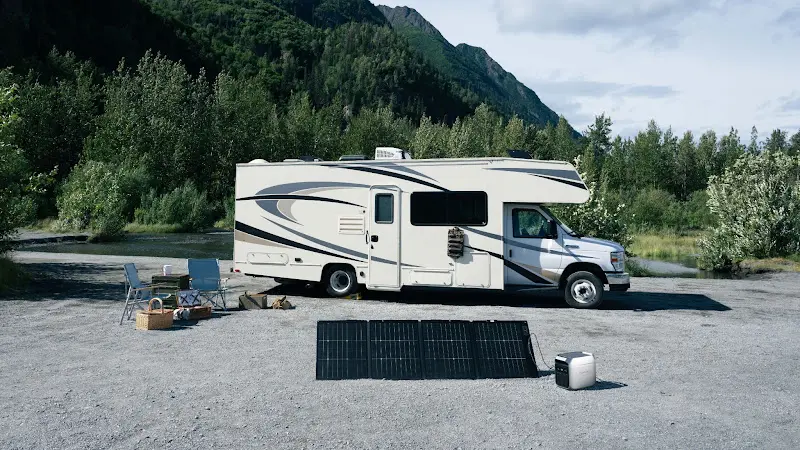
Solar panels present a completely silent, fuel-free energy option that boondockers rely on heavily. By mounting rigid solar modules to your roof or setting up folding ground arrays, you can capture midday sun to power your appliance through an inline charge controller. The bottom line is that solar production drops to zero during nighttime hours or overcast storms, making a dedicated storage battery necessary.
Option 3: Using a Dedicated Portable Power Station
For anyone who decides to camp past the reach of pavement and standard utility connections, a reliable power system becomes an important part of your mobile setup. Relying only on your vehicle’s starting battery or unpredictable weather conditions can quickly limit how long you stay off-grid. A portable solar power system like the EcoFlow DELTA 3 Plus + 220W Solar Panel, provides a flexible way to support essential devices during remote trips, from 12V refrigerators and lights to phones, laptops, and other camping gear.
This setup provides reliable portable power for everyday off-grid needs. It can help support compressor fridges during overnight stays while providing enough output for common camping devices such as laptops, lights, TVs, and personal electronics. Instead of relying on a noisy gas generator that can disrupt the quiet of a remote campsite, you can recharge your power supply with solar energy during suitable daylight conditions. It is a flexible energy solution that helps extend your off-grid trips with a more convenient and dependable power setup.
What Affects Battery Runtime?
Your actual operational window fluctuates heavily based on immediate environmental conditions. Extreme summer heat, blocked ventilation grills, constant lid opening, loading the bin with warm food, and running the internal motor on high performance settings rather than energy-conservation mode will all accelerate your overall power consumption.
Conclusion
Upgrading from a messy ice chest to an integrated 12V compressor refrigerator completely alters the dynamics of long haul travel. By eliminating soggy groceries and the constant search for fuel stations with ice, these tools unlock genuine off-grid capability. When you combine an efficient fridge with advanced power setups like the EcoFlow GLACIER Classic and the EcoFlow DELTA 3 Plus, you can confidently navigate remote environments with fresh supplies always on hand.
FAQ
Will a 12V Portable Refrigerator Drain My Vehicle Battery?
A 12V portable refrigerator can drain your vehicle battery if it runs for too long while the engine is off. However, many models include low-voltage protection that automatically shuts down the compressor when battery levels drop too low, helping reduce the risk of losing starting power.
Can a Portable Refrigerator Run While Driving?
Yes, these units are specifically engineered to run continuously while your rig is bouncing down the highway. The internal mechanical elements are shock-isolated to withstand road vibrations and steep trail inclines without interrupting the cooling cycle.
What Size Portable Refrigerator Is Best for an RV or truck?
A compact 20 to 30-quart refrigerator is often a practical choice for solo drivers who need to maximize limited sleeper cab space. Couples and small families traveling in RVs or vans may prefer a 40 to 50-quart model, while larger units of 60 quarts or more are better suited for extended trips that require additional food storage capacity.
Can a Portable Refrigerator Be Used Indoors?
Yes, you can run these appliances inside any building by connecting them to a standard 110V AC wall outlet using the included power brick. This makes them highly useful as secondary drink fridges or as an emergency food storage option during residential grid failures.
Do Portable Refrigerators Make a Lot of Noise?
No, modern 12V micro-compressor units run remarkably quiet, generally producing between 38 and 45 decibels of sound. The output is a muted, low frequency hum that easily fades into background noise, meaning it won’t keep you awake inside a quiet camper or truck cab.
For press requests or interview opportunities, reach out to our media team
media.na@ecoflow.com