Off-Grid Living Power Guide: How to Run Your Home or Cabin Completely Off the Grid
- What Off-Grid Living Really Means for Your Home, Cabin, or Homestead
- The Building Blocks of Reliable Off-Grid Power
- How to Size an Off-Grid System without Guesswork
- Benefits, Tradeoffs, and Costs to Plan for Before You Disconnect
- Choosing a Scalable Solar-Plus-Storage Setup for Modern Off-Grid Living
- Frequently Asked Questions
- Reliable, Scalable Off-Grid Power You Can Live On
When you live off the grid, you have to generate and manage your own energy entirely outside the public utility network. At a minimum, you're covering electricity, but you'll often need to cover water and waste as well.
More people are moving off-grid, driven by their sustainability goals and the promise of energy independence. They may choose a permanent homestead, rural cabin, RV, or tiny home in areas that are not yet connected to power.
Here's how solar and battery storage are the key to running your home or cabin completely off the grid with confidence.
What Off-Grid Living Really Means for Your Home, Cabin, or Homestead
Off-grid, in terms of energy, means you'll have no connection to the public electrical grid. In some cases, the term is also extended to include self-managed water using a private well and waste using septic or composting systems. Off-grid communities in the US range from remote rural homesteaders to suburban households using solar plus storage to operate independently of the grid.
Solar is the most common and cost-accessible energy generation method. You'll also need battery storage to supply power at night and during low production periods. Without storage, you won't have reliable power.
The EcoFlow DELTA Pro Ultra X with a solar array handles whole-home off-grid loads and scales from 12 kWh to 180 kWh as your needs grow.

The Building Blocks of Reliable Off-Grid Power
The core components of an off-grid solar power system include:
Solar panels for generation
Charge controller to regulate the flow of energy from the panels to the battery
Battery bank for storage
Inverter to convert stored DC energy to AC for household use
A whole home backup power solution integrates all of these components into a single managed system, simplifying your setup and monitoring, compared to sourcing all the components individually.
The key difference between on-grid and off-grid solar systems is what happens with excess power. Grid-tied systems export excess power back to the utility, providing no backup during outages. Off-grid systems, however, store the excess power in a battery bank so you can use it when the sun is not shining.
How to Size an Off-Grid System without Guesswork
Step 1: Build a load table by listing every appliance, its wattage, and its estimated daily runtime in hours. Then, multiply each to get the watt-hours per day per device, and find the sum for a daily total.
Step 2: Size your system to your worst-case month, rather than your average. For example, winter has the fewest peak sun hours and the highest heating loads. If you size your system for summer, it will run short in January.
Step 3: Divide the daily Wh total by average peak sun hours for your location using the winter figure to get the minimum solar array size in watts. Always add a 20% efficiency margin for inverter inefficiency and wiring losses.
Step 4: To size your battery bank, multiply daily kWh by days of autonomy you'd like, divided by the depth of discharge.
Some common mistakes to avoid when building your system are:
Undersizing your battery bank
Forgetting to account for surge loads
Skipping winter sun hour data
Benefits, Tradeoffs, and Costs to Plan for Before You Disconnect
The primary financial benefit is eliminating your monthly utility bills. After the solar payback period, which is around 7–10 years, your energy costs will approach zero for the remaining 15–20 years of the panel's life. You'll also reduce carbon and cut your grid-derived emissions to near zero for electricity consumption. Another benefit is indifference to grid outages, because your home will operate independently.
As for the trade-offs, you'll pay a significant upfront cost for the storage system and solar array. You may also have to pay for private well installation, a septic system, and any equipment repairs down the line.
Choosing a Scalable Solar-Plus-Storage Setup for Modern Off-Grid Living
When disconnecting from the grid, start small and expand as your needs grow. Begin with a system that's sized only for essential loads and add capacity as your budgets and needs change.
Look for modular systems with expandability so you can add extra batteries. LiFePO4 batteries are the preferred choice for daily cycling off-grid systems. They provide a long cycle life (8–15 years), 80–100% usable depth of discharge, and 95%+ charge efficiency.
Solar panel warranties typically run about 25 years for performance, though inverters often last 10 to 15 years and may need one replacement over a system's life.
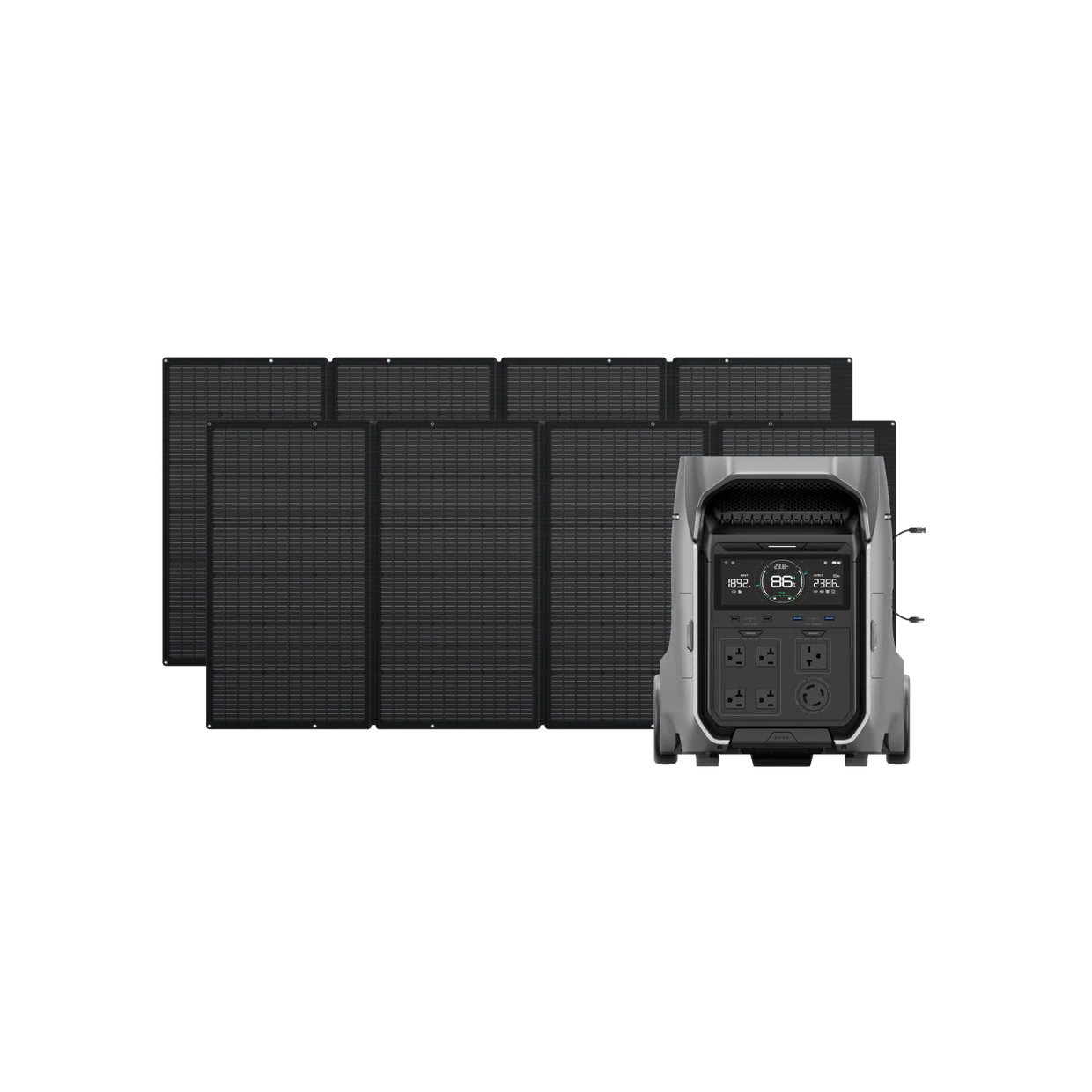
The EcoFlow DELTA Pro 3 Solar Generator bundles a 4-kWh power station with solar input in a portable and expandable package. It suits cabins or part-time off-grid setups before committing to a permanent whole-home install.
Frequently Asked Questions
What Size Solar System Do I Need for Off-Grid Living?
Solar system size is determined by your daily energy consumption, your area's average peak sun hours, and how many days of battery autonomy you need. Always add a 20–25% margin over your above-calculated minimum to account for efficiency losses and unexpected load increases.
Can Solar Alone Power an Off-Grid Home Year-Round?
Solar can power a home year-round if it's paired with adequate battery storage and sized to your lowest production winter months. Ensure you have enough generator backup for extended cloudy periods of five-plus days, especially in northern climates.
What Battery Chemistry is Best for Off-Grid Power Systems?
LiFePO4 batteries are recommended for daily off-grid use because they have a higher usable capacity, a longer lifespan, offer faster charging, and produce no off-gassing, compared to lead-acid alternatives. Lead acid batteries require replacement 3–4x sooner than LiFePO4 over a 10-year period.
How Much Maintenance Does an Off-Grid Power System Need?
Clean your solar panels 1–4 times per year. You should also visually check for damage every six months to catch issues early. LiFePO4 batteries require minimal maintenance beyond terminal inspection and state of charge monitoring. Inverters and charge controllers should be professionally inspected every 5–10 years.
Reliable, Scalable Off-Grid Power You Can Live On
Don't view off-grid power as a product purchase. What you're investing in is long-term infrastructure. The key to great performance year after year is proper sizing, quality components, and realistic load planning. After the solar payback period, most households reach free energy for the back half of their panel warranty, making it a compelling option if you plan to stay long term.
The EcoFlow DELTA Pro Ultra X is built for exactly that, as it is a whole-home off-grid system with modular capacity from 12 kWh to 180 kWh, so it scales as your infrastructure does.
For press requests or interview opportunities, reach out to our media team
media.na@ecoflow.com