The Safest Non-Electric Heaters for Indoor Use (and Alternatives)
During major winter storms, Arctic cold snaps, or sudden utility blackouts, keeping warm in the home is an immediate emergency priority. As interior temperatures fall rapidly, homes become vulnerable to sub-zero conditions, health hazards, and frozen pipes. To heat their living spaces without utility power, many homeowners turn to off-grid backup systems or non-electric heaters such as portable propane units, kerosene convection heaters, or vent-free gas appliances. However, because non-electric heaters range from indoor-rated models to outdoor-only equipment, it is critical to select a unit that is explicitly safe and approved for indoor use.
Non-electric heaters are not dependent on utility power, but it’s important to understand that "works without electricity" doesn’t necessarily equal "safe for indoor use" Heating equipment is a leading cause of residential fires, serious injuries and hazardous carbon monoxide exposures during severe cold weather. This guide covers the main types of non-electric heaters, details their stringent indoor safety requirements, compares their practical trade-offs, and describes an all-electric backup alternative for homeowners focused on winter outage resilience rather than avoiding electrical appliances altogether.
What Counts as a Non-Electric Heater?
Traditional electric space heaters depend on a steady flow of power from the grid to energize resistive heating coils or ceramic elements. In contrast, a non-electric heater generates heat without relying on grid electricity, typically through fuel combustion or a chemical reaction. Because they run without being plugged into an electrical outlet, they continue to function fully during power grid failures.
The primary categories of non-electric heaters include:
Portable Propane Heaters: These units are commonly used for emergency backup and outdoor activities and connect directly to small 1 lb propane cylinders or larger 20 lb propane tanks using high-pressure hoses and regulators.
Kerosene Heaters: Modern radiant or omnidirectional convection kerosene heaters are a staple of traditional emergency preparedness, offering a high heat output, but requiring dedicated liquid fuel storage and emitting distinct start-up and shut-down odours.
Catalytic Heaters: These units use a platinum-catalyzed chemical reaction to burn fuel without an open flame. While flameless, this is still a form of fuel combustion that consumes oxygen and produces emissions including carbon monoxide and moisture requiring proper indoor ventilation, even though it operates at lower surface temperatures than conventional flame burners.
Wood-Burning Stoves: Wood stoves are permanent installations that require dedicated masonry or metal flues. Wood stoves provide total off-grid heating independence, but the equipment and installation costs are high.
Vent-Free Natural Gas Heaters: These appliances are attached to interior walls and plumbed directly into the residential gas supply lines providing continuous zone heat without the need for an exterior chimney flue or power connection.
These options all work independently of grid electricity, but the heating performance, installation requirements, and indoor combustion safety need to be carefully distinguished before one is brought into your home.
An Electric Alternative Worth Knowing About
If your main purpose during a power outage is to keep your room warm, safely, without open flames, liquid fuel storage or exhaust fumes in living spaces, a high-capacity portable power station with an efficient electric space heater is an attractive option. Modern battery power stations deliver completely silent, zero emission heat directly into closed bedrooms and living spaces.
Is a Non-Electric Heater Safe to Use Indoors?
When burning combustible fuels in an enclosed space, the most dangerous risk is the build-up of carbon monoxide (CO). Carbon monoxide is an invisible product of incomplete burning of fuel. As CO is a colorless, odorless and tasteless gas, deadly concentrations can build up undetected in sealed living quarters, causing carbon monoxide poisoning or asphyxiation.
Observe these important safety rules for using combustion heating equipment in living areas:
Verify Explicit Indoor Ratings: Buy and run only heaters that are designed, tested and certified for indoor residential use by recognized safety laboratories (such as CSA or UL). Outdoor camping stoves and patio heaters don’t have the necessary emergency shutoff valves, and should never be used inside homes, garages or enclosed tents.
Insist on Low-Oxygen Sensors (ODS): All indoor propane or gas heaters should have a built-in Oxygen Depletion Sensor (ODS). An ODS can shut off the fuel supply when oxygen levels fall below the device's specified safety threshold (typically around 18% oxygen concentration).
Maintain Continuous Fresh Air Ventilation: Never use a fuel-burning heater in a sealed room. Always adhere to the manufacturer’s specifications for fresh air intake, which require leaving a window cracked open at least one to two inches for continuous air exchange.
Install Battery-Operated CO Detectors: Install battery-powered, dedicated carbon monoxide alarms on every level of your home and outside sleeping areas. Regularly test these alarms to see that they give immediate warning if gas levels go up.
Respect Clearance Distances: Use heaters on hard non-flammable flooring a minimum of three feet from furniture, bedding, drapes and other combustible materials to prevent accidental fires.
To learn more about monitoring indoor air quality and mitigating atmospheric risks during winter emergencies, read detailed guide on Hidden Dangers: Carbon Monoxide in Winter Emergencies. Once you have the basic safety rules covered, you can start to consider specific configurations of non-electric heaters that are suitable for indoor use and figure out the best heating plan for your home’s layout.
Best Types of Indoor-Safe Non-Electric Heaters
When choosing a non-electric heat source, homeowners can find the safest combination of heating efficiency and certified indoor protection in certain appliance designs:
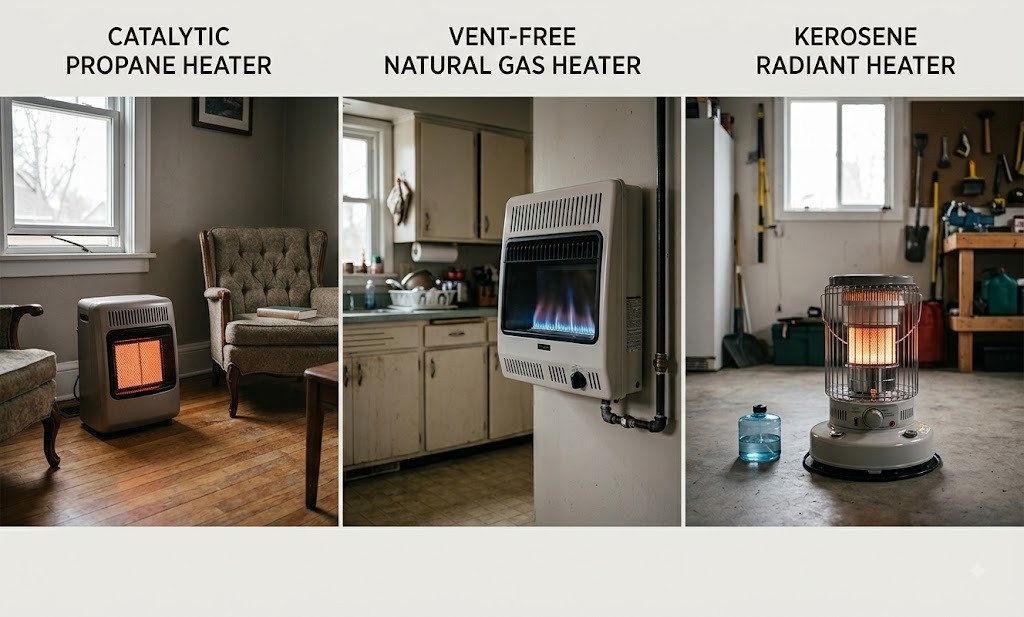
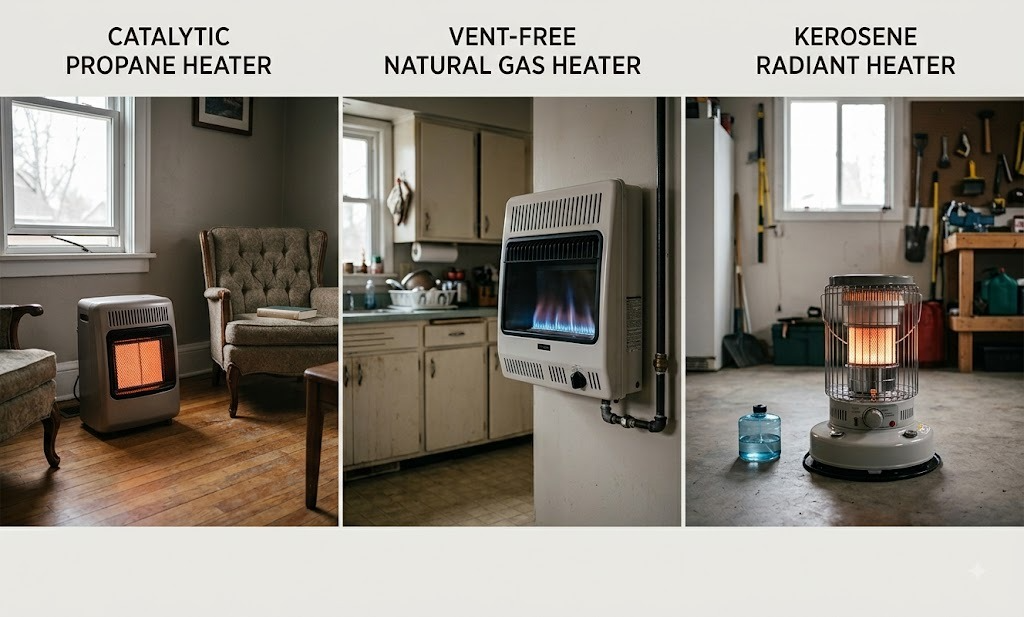
Indoor-Rated Catalytic Propane Heaters: Catalytic heaters are flame-less, burning fuel on a platinum catalyst matrix, so they produce far less carbon monoxide than standard open-flame burners. If used in properly sized rooms with recommended ventilation, they deliver efficient directional heat.
Vent-Free Natural Gas Wall Heaters with ODS: Vent-free gas heaters are permanently mounted to interior walls and are connected to utility gas pipelines, providing reliable heat that is independent of the grid in the event of electric blackouts. Today's certified units include integral ODS safety shutoffs, precision thermostats and flame-failure protection.
Certified Indoor Kerosene Radiant Heaters: Today's indoor certified kerosene heaters include improved burner stacks, automatic tip-over shut off switches, battery operated spark igniters, and protective wire guards. If you use clear, high-grade 1-K kerosene, you will have less soot, smoke and unburned fuel odors when you are operating.
Always check the actual metal serial plate on the manufacturer’s appliance, not vague retail marketing terms, to verify safety certifications before operating any fuel combustion appliance inside your home. Adhering to these indoor standards ensures proper carbon monoxide safety and highlights the advantages of using clean gas generator alternatives for emergency backup power.
When comparing fuel-powered non-electric heaters to battery-powered electric models, there are notable distinctions in ongoing operating expenses, indoor safety considerations, and ease of use.
Non-Electric vs. Electric Heating: Which Should You Choose?
A more traditional heater that uses a fuel source or one of the more recent battery-electric heaters. Your budget, indoor space, preferences for fuel handling and safety tolerance all play a role in the decision.
Feature / Metric | Non-Electric Combustion Heaters | Electric Heater + Portable Battery Backup |
Upfront Cost | Low to Moderate ($50 – $300 for portable units) | Moderate to High ($500 – $2,500+ depending on battery capacity) |
Ongoing Fuel Cost | Recurrent expense of purchasing propane cylinders or kerosene fuel | Low to free (recharge via standard wall outlet or solar panels) |
Indoor Safety Profile | Requires constant ventilation, clearance, & active CO monitoring | Zero fumes, zero emissions, zero open flames, zero carbon monoxide |
Runtime & Refueling | Dictated by fuel tank size; requires manual fuel handling & storage | Runtime depends on battery capacity and heater power; runtime can be extended with solar input or additional batteries |
Portability & Setup | Highly portable equipment, but requires transporting heavy fuel tanks | Plug-and-play simplicity; clean operation directly inside bedrooms |
Maintenance Needs | Regular wick replacement, fuel filter cleaning, & burner inspection | Virtually maintenance-free; periodic battery health checks |
For a detailed breakdown of long-term fuel expenses compared to solar recharging efficiency, explore our full comparison guide on Propane vs. Electric Heater: Power Costs Compared. Evaluating your specific home layout, emergency backup goals, and comfort with handling fuel makes deciding between combustion heat and clean battery-powered backup straightforward
Conclusion
Non-electric combustion heaters are a good source of emergency heat in winter power outages, allowing homes to stay warm without electricity from the grid. But the use of fuel-burning appliances in living spaces demands careful safety practices, proper fresh-air ventilation, safe fuel storage and constant carbon monoxide monitoring. For homeowners who want to avoid indoor combustion, fuel storage, and carbon monoxide from fuel-burning heaters, an electric heater powered by a portable power station can be an alternative.
If you have any fuel-burning appliances, always check for indoor safety certifications, maintain proper clearances and ensure CO monitors are functioning on each level of your home. If you need a safe, fume-free way to heat your home during an emergency, consider the EcoFlow WAVE 3 portable climate control system and the high-capacity EcoFlow DELTA 3 Ultra power station to keep your family warm and your home protected through any winter power
FAQs
Can you use a propane heater indoors safely?
Yes, but only when the unit is specifically rated and certified for indoor residential use by an accredited testing agency and includes an integrated Oxygen Depletion Sensor (ODS). Even if certified for indoor use, you still need to follow the manufacturer's instructions for proper ventilation to the outdoors, and install active battery-powered carbon monoxide detectors near the unit.
Should we be very careful when sleeping time using a heater?
There is no single non-electric heater that is universally safest for every bedroom. Only use a fuel-burning heater that is specifically approved for indoor use and for the intended room/application, and follow all manufacturer and local-code requirements. For homeowners who want to avoid indoor combustion during outages, an electric heater powered by a properly sized battery system is an alternative
Do non-electric heaters need a carbon monoxide detector?
Yes, for sure. All fuel-burning heat sources (indoor-rated propane, kerosene, wood and natural gas heaters) give off trace amounts of combustion gasses during operation. A working carbon monoxide alarm is a must-have safety item when using fuel-burning heaters indoors.
Can a portable power station run an electric heater during an outage?
Yes, high-capacity portable power stations like the EcoFlow DELTA 3 Ultra (3,072Wh) can provide enough continuous wattage output to power standard space heaters, radiant panels, or specialized climate systems like the EcoFlow WAVE 3. Additional battery modules or folding solar panels can be added to the power station for longer heating runtimes during multi-day grid blackouts.
Is a catalytic heater safer than a regular propane heater?
Yes, generally. Catalytic heaters do not have an open flame, but they burn fuel in a flameless catalytic oxidation process on a platinum catalyst. This results in less carbon monoxide emission and lower surface temperature than a traditional open flame propane heater, but still requires proper ventilation in the surrounding area.
For press requests or interview opportunities, reach out to our media team
media.na@ecoflow.com