Metal Roof vs Shingles: Which One Actually Protects Your Home?
- Metal Roofing vs. Asphalt Shingles: The Basics
- How Each Material Holds Up in Severe Weather: Metal Roof vs Shingles
- The Roof Isn't the Only Storm Decision: Backup Power
- Metal Roof vs Shingles Cost: What the Numbers Actually Show
- Maintenance and Installation, Realistically
- Which Roof Fits the Home?
- Conclusion
- FAQs
Choosing between shingles or metal for your roof usually starts as a question about looks and budget, then turns into something bigger once you price it out. A roof is one of the few home upgrades tested directly by wind, hail, and fire, and the material you pick affects how the house holds up when weather turns rough. This guide covers how each material is built, how it performs in severe weather, what it costs over decades of ownership, and how much upkeep it demands, plus a decision often made at the same time: whether the home has reliable backup power for the outages that tend to follow the same storms a good roof is built to survive.
Metal Roofing vs. Asphalt Shingles: The Basics
Type | Metal Roofing | Asphalt Shingles |
Common materials | Steel, aluminum, copper, zinc | Fiberglass mat, asphalt coating, mineral granules |
Installation style | Interlocking panels, fewer/larger pieces | Overlapping layered shingles |
That layered, granule-covered design is why shingles are lighter and quicker to install, while metal panels rely on fewer, larger pieces and tighter seams to keep water out. There's also a hybrid option: metal roofing shingles, shaped to mimic asphalt's look while keeping metal's durability, though less common than standing-seam installs. How well either material is anchored to the structure underneath matters just as much as the material itself, which is where hurricane straps and sealed decking come into the picture, as covered in Coastal Home Defense Against Hurricane, Flood, and Wind.
Lifespan Side by Side
Metal roofing: 40–60 years with proper installation
Asphalt shingles: 20–30 years before a full replacement is needed
That gap is the main reason metal costs more upfront but can work out cheaper per year of ownership over a long enough timeline, since a roof also needs to keep performing through repeated storm seasons without failing, the same durability question that shows up in Domestic Batteries and Hurricane Season: Reliable Power.
Lifespan numbers only tell part of the story, though. How each material actually holds up once severe weather hits is what determines whether that lifespan holds up in the real world.
How Each Material Holds Up in Severe Weather: Metal Roof vs Shingles
%20(1).PNG)
%20(1).PNG)
Wind and Impact Ratings (Hail, High Wind)
Type | Metal Roofing | Asphalt Shingles |
Wind rating | Often rated above 140 mph when properly installed | Typically 60–130 mph depending on product class |
Hail/impact resistance | Generally strong; thinner panels can still dent | Prone to cracking, tab loss, and granule loss |
Metal's wind and hail numbers hold up well on paper, but real-world storm data backs it up too. FEMA's Hurricane Michael damage assessments specifically flagged asphalt shingles as an area of concern for wind performance in hurricane-prone regions, and the agency recommends special installation methods for shingles anywhere design wind speeds exceed 90 mph.
Fire Resistance
Both materials can reach a Class A fire rating, the highest available, but they get there differently:
Metal is naturally noncombustible, so its fire resistance comes from the material itself.
Asphalt shingles need a fire-rated underlayment or specific manufacturing to hit the same rating.
Worth confirming the rating on the specific product you're considering rather than assuming every shingle line performs the same way.
Snow, Ice, and Heavy Rain Performance
Metal's smooth surface sheds snow and rain faster than asphalt, which reduces structural load during heavy snowfall and lowers the risk of ice dams forming at the roofline. Asphalt holds snow longer and can be more prone to ice dam formation in colder climates, though attic insulation and ventilation make a bigger difference here than roofing material alone. The EPA's ENERGY STAR attic ventilation guidance notes that keeping the attic cold through proper ventilation is one of the more effective ways to cut ice dam risk, regardless of which roofing material sits on top.
Roof performance during a storm only answers half the resilience question. The other half is whether the house still has power once the storm passes, which is covered in more depth on the Whole-Home Backup Power Solutions page.
The Roof Isn't the Only Storm Decision: Backup Power
Why Roof Material and Home Backup Power Get Chosen Around the Same Time
Homeowners in storm-prone regions often price out a new roof and a home backup system in the same season, and for good reason: both respond to the same risk. A roofing upgrade protects the building; a backup power system protects everything that depends on electricity once the grid goes down, including refrigeration, medical equipment, water pumps, and communication.
What a Whole-Home System Covers That a Generator or Nothing Can't
A gas generator covers part of that gap, but it comes with fuel storage, noise, exhaust fumes that require it to run outdoors, and a manual startup in the middle of a storm. A battery-based whole-home system removes most of that friction:
EcoFlow TITAN Plus | EcoFlow TITAN | |
Battery capacity | 5kWh base, expandable up to 30kWh | 5kWh base, expandable up to 30kWh |
Solar input | 8kW across two 4kW MPPT channels | 4kW, single MPPT |
AC output | 7.2kW from the battery; up to 10kW only when compatible solar is connected and producing | 7.2kW, 120V/240V split-phase |
Switchover | 20ms, with Smart Home Panel 10 | Automatic, with Smart Home Panel 10 |
Storms that test a roof often cut power too. The EcoFlow TITAN Plus delivers 7.2kW from the battery and, with Smart Home Panel 10 installed by a qualified electrician, switches up to 10 selected circuits to backup in 20ms. It is rated IP20 for indoor installation only; enclosure ratings are explained in NEMA 3R vs. NEMA 1: Outdoor Panels for Home Energy Design.
Households that plan a smaller solar array can choose the standard EcoFlow TITAN. It keeps the 7.2kW of 120V/240V split-phase output and the 5kWh base that expands to 30kWh, with a single 4kW solar input in place of two.
None of this means every roofing project needs a battery system attached to it. But for a household already spending on wind- and impact-rated materials because of what the local climate throws at it, backup power is the other half of the same conversation, and it often gets priced out alongside the roofing quote.
Metal Roof vs Shingles Cost: What the Numbers Actually Show
Cost per sq. ft. (installed) | |
Asphalt shingles | $4–$7 |
Metal roofing (steel) | $7–$14 |
That upfront gap is the biggest reason budget-conscious homeowners lean toward shingles even when they know metal will likely outlast them. Metal type also moves the price:
Steel — the most budget-friendly and most common residential choice
Aluminum — costs somewhat more, resists corrosion better near the coast
Copper and zinc — sit at the top of the range, chosen more for longevity and looks than cost efficiency
Anyone comparing a tin roof vs shingles price today is really comparing steel to asphalt: "tin roof" is still used informally to describe steel roofing, even though true tin roofing is largely a thing of the past.
Run the math over a 20 to 30 year window and the picture shifts. A shingle roof installed today will likely need a full replacement within that span, while a metal roof installed at the same time may still have decades of service life left. Once that second shingle replacement is factored in, metal's higher upfront cost often closes the gap with, or comes in under, the cumulative cost of asphalt over the same period.
Sticker price and long-term cost are one thing. Day-to-day upkeep is the part that shows up after the purchase decision is already made.
Maintenance and Installation, Realistically
Type | Metal Roofing | Asphalt Shingles |
|---|---|---|
Annual upkeep | Periodic seam, fastener, and coating checks | Inspect for cracked/curling/missing shingles, clear debris |
Repair cost per incident | Higher, but needed far less often | Lower, since individual shingles can be swapped |
Installation timeline | Longer; needs a metal-specialist contractor | Faster; handled by most general roofing contractors |
The pattern across all three rows is the same: metal asks for less frequent attention but costs more each time it's needed, while shingles are cheaper and faster to touch up but need that attention more often.
Which Roof Fits the Home?
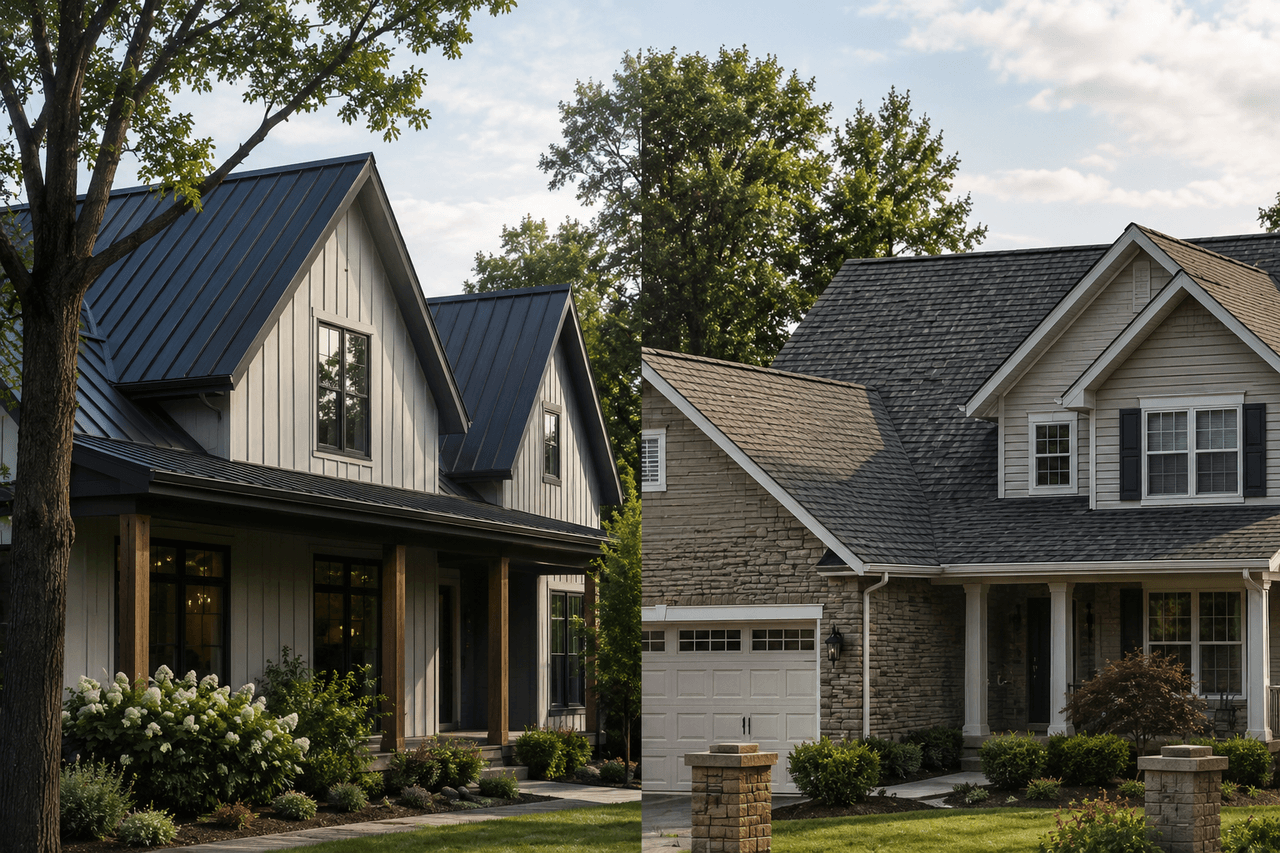
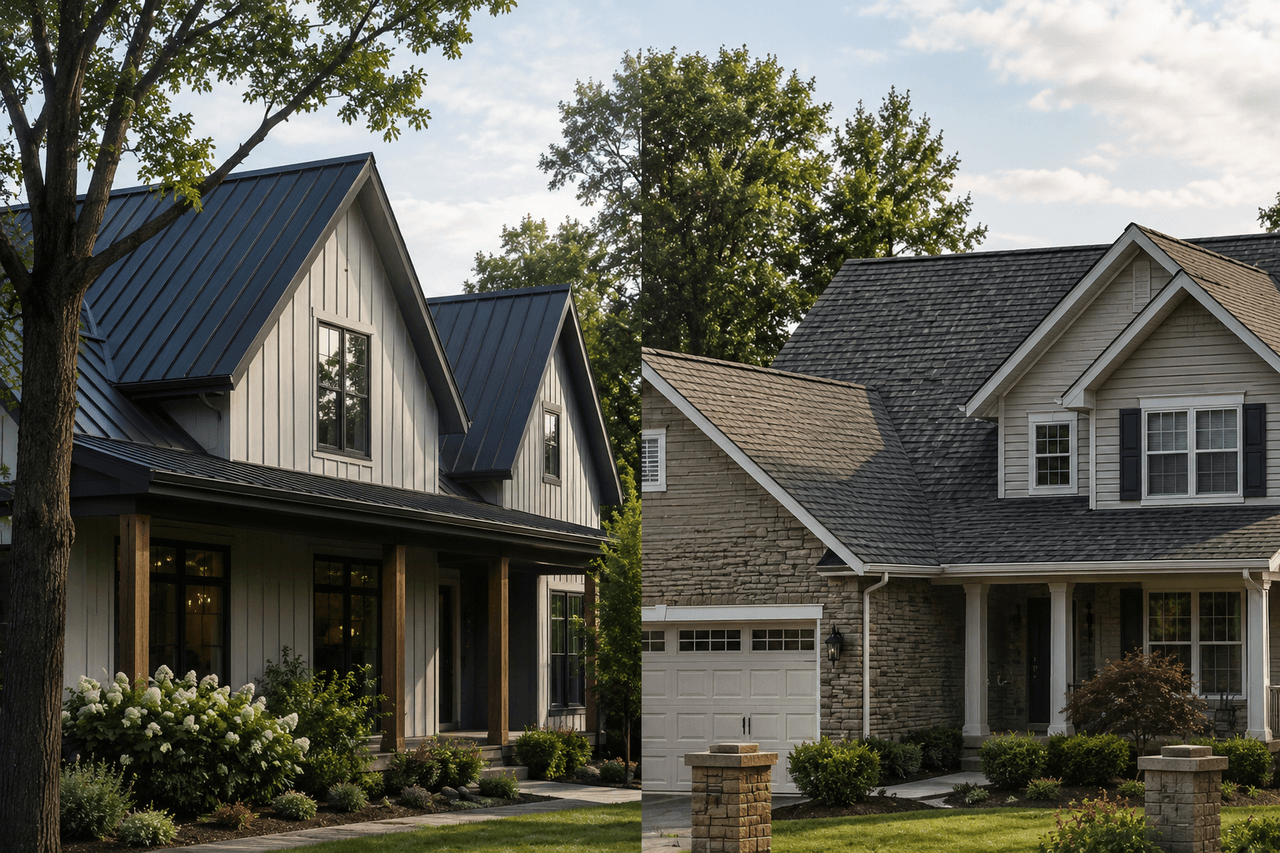
Choose asphalt shingles if:
Keeping upfront costs down is the priority
The home is expected to change hands within the next decade or two
Easy, section-by-section repairs matter more than long-term durability
Choose metal roofing if:
The home is in a region that regularly sees hurricanes, hail, or wildfire risk
The plan is to stay long term
Lower insurance premiums and fewer replacements outweigh the higher upfront cost
Pairing that kind of roof upgrade with reliable whole-home backup power addresses both halves of the same storm-season risk.
Conclusion
Whichever roofing material fits your budget and climate, pairing it with backup power closes the gap a roof alone can't cover once the grid goes down. The EcoFlow TITAN and EcoFlow TITAN Plus scale with a household's needs, from a 5kWh base up to 30kWh, so it's worth exploring which one lines up with your home's power demands before storm season arrives. Whether you're leaning toward the EcoFlow TITAN's single 4kW solar input or the EcoFlow TITAN Plus's 8kW dual-input solar capacity, both back up to 10 selected circuits through Smart Home Panel 10, installed by a qualified electrician.
FAQs
Is a metal roof cheaper than shingles in the long run?
Often, yes. Metal costs more upfront, but its 40 to 60 year lifespan usually means one installation outlasts two or more shingle replacements, narrowing or closing the long-term cost gap.
How long does a metal roof last compared to asphalt shingles?
Metal roofs typically last 40 to 60 years. Asphalt shingles usually last 20 to 30 years, so most homes need at least one shingle replacement before a comparable metal roof needs its first.
Does a metal roof lower home insurance costs?
In many storm-prone markets, yes, since metal's wind and impact resistance can qualify homeowners for lower premiums. Confirm specifics with your insurer, since discounts vary by location and policy.
Can a metal roof actually survive a hurricane better than shingles?
Generally, yes. Metal roofing is often rated for winds above 140 mph and handles wind-driven debris better than shingles, which are more prone to lifting, cracking, or losing granules in the same conditions.
Should whole-home backup power be installed at the same time as a new roof?
It's worth considering together. Both address storm resilience, and pairing a durable roof with a system like the EcoFlow TITAN or TITAN Plus covers both the structure and the power a home needs to ride out the outage that often follows.
For press requests or interview opportunities, reach out to our media team
media.na@ecoflow.com