How to Charge a Bluetooth Speaker: Complete Power Solutions Guide
- Bluetooth Speaker Power Requirements Explained
- Traditional USB Cable Methods
- Power Bank Solutions for Portable Charging
- Portable Power Station Advantages
- Vehicle-Based Charging Techniques
- Solar Panel Charging for Sustainable Power
- Wireless Charging Technology Options
- Battery Health and Maintenance Tips
- Common Charging Problems and Solutions
- Keep Your Music Playing Anywhere
Indeed, Bluetooth speakers have turned out to be one of those accessories that every music enthusiast cannot live without. Knowledge on different ways you can recharge your device is one way of ensuring it is charged any time you need it. Whether you are at home, camping, or traveling, it is essential that you know how to recharge your speaker.
Bluetooth Speaker Power Requirements Explained
The amount of power required by each speaker differs with each model. This is dependent on the speaker's size and power rating. Portable devices will require 5-20 watts. This is relatively low. The devices can be used for personal play and for parties. The devices are portable. They only require basic chargers.
Mid-range speakers will have a power rating between 30-100 watts. The speakers will yield adequate sound that can fill a room without compromising mobility. They will require a fairly powerful source for charging. This will especially be the case compared to small speakers.
High-power models with 200-500 watts are for serious audiophile listeners and partygoers. Professional models above 1000 watts are for events and businesses. Understanding your speaker's power rating will help you identify which charger for bluetooth speakers you will need and for how long it will take for each charge.
Traditional USB Cable Methods
Wall Adapter Connections
The common means for charging devices for use with Bluetooth speakers is via USB connectivity. Presently, micro-USB, USB-C, and mini-USB ports are common in modern speaker devices. These can easily be charged by USB charging cables. USB-C connectivity is gaining popularity due to faster charging speeds and its reversible design.
Wall adapters will be your best resource for power. All you have to do is plug your Bluetooth speaker's cable to a wall adapter appropriate for your device's specifications. Most small Bluetooth speakers will require 5V/1A or 5V/2A adapters. If you have a larger Bluetooth speaker, you will require adapters with higher current.
Computer and Laptop Ports
USB ports found on computers can prove useful for charging devices if one is not close to a power source. The normal USB 2.0 ports have only a limited current. This is considered to be slow with respect to charging. USB 3.0 is faster than USB 2.0. However, it is still not enough compared to a wall adapter.
Power Bank Solutions for Portable Charging
Standard Capacity Options
The development and use of portable power banks have improved the process of recharging devices such as Bluetooth speakers. The devices have made it convenient for one to have power anywhere. This means that one can recharge his/her Bluetooth several times using a 10,000mAh power bank.
Capacities and outputs will both have to be taken into consideration when shopping for a power bank. Your power bank should have enough capacity to meet, if not fulfill, the charging needs for your speaker. 2.1 amps and above is ideal for any average Bluetooth speaker. If you have more advanced power banks with multiple ports, you can charge multiple devices.
High-Performance Power Banks
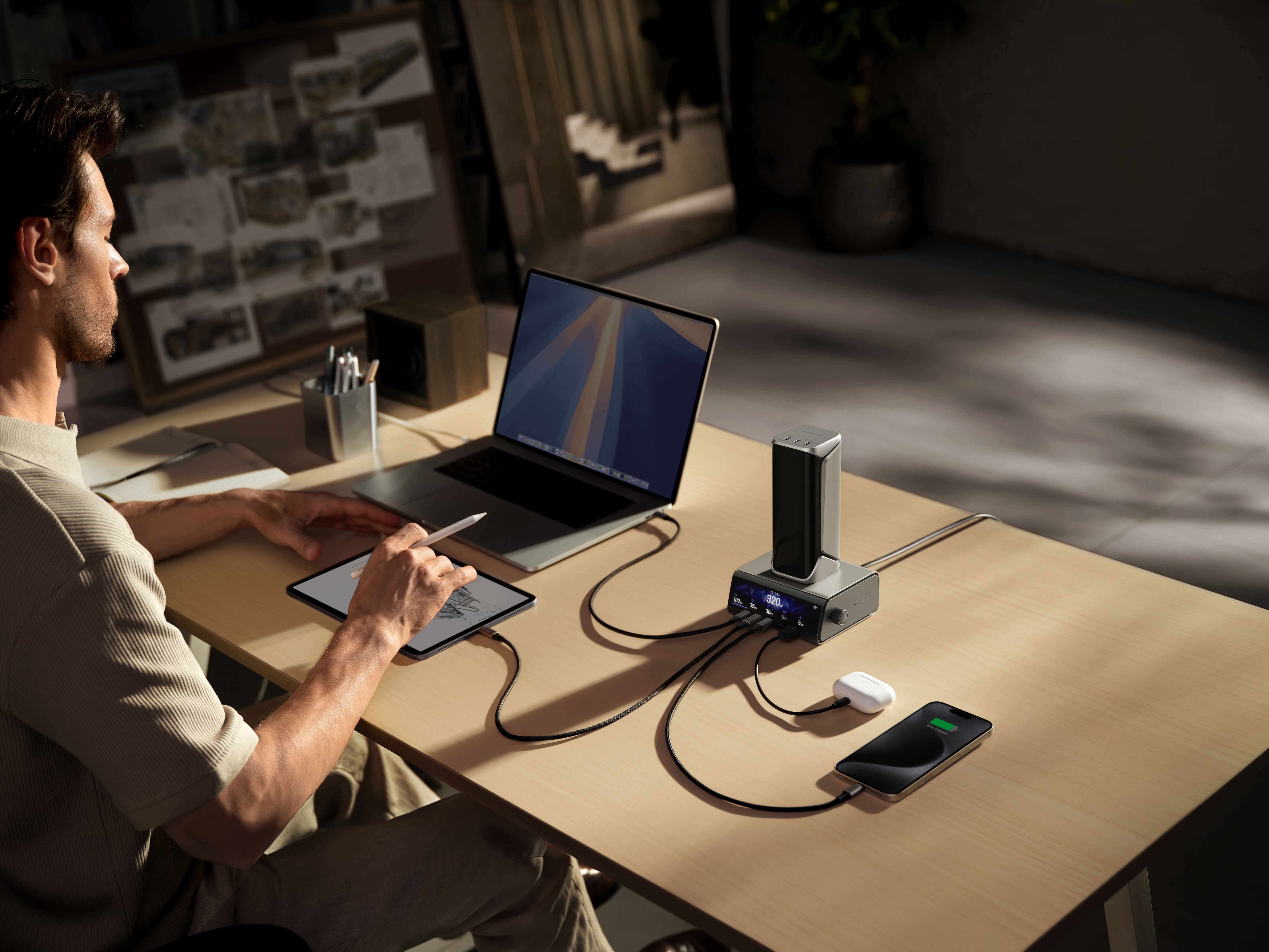
Those looking for serious charging power will appreciate the flexibility that comes with high-power models such as the RAPID Pro Power Bank. These models, which have 27,650mAh power and 300W outputs, can even charge demanding bluetooth speakers. Their built-in cable with 140W power is convenient for providing fast charging for devices.
Quality is a critical consideration when it comes to portable chargers. Low-quality portable chargers might have fluctuating abilities or even shut down prematurely. Ensure that you purchase your power bank and speaker with built-in protection features such as overcharge protection, short-circuit protection, and temperature control.
Portable Power Station Advantages
Capacity and Versatility
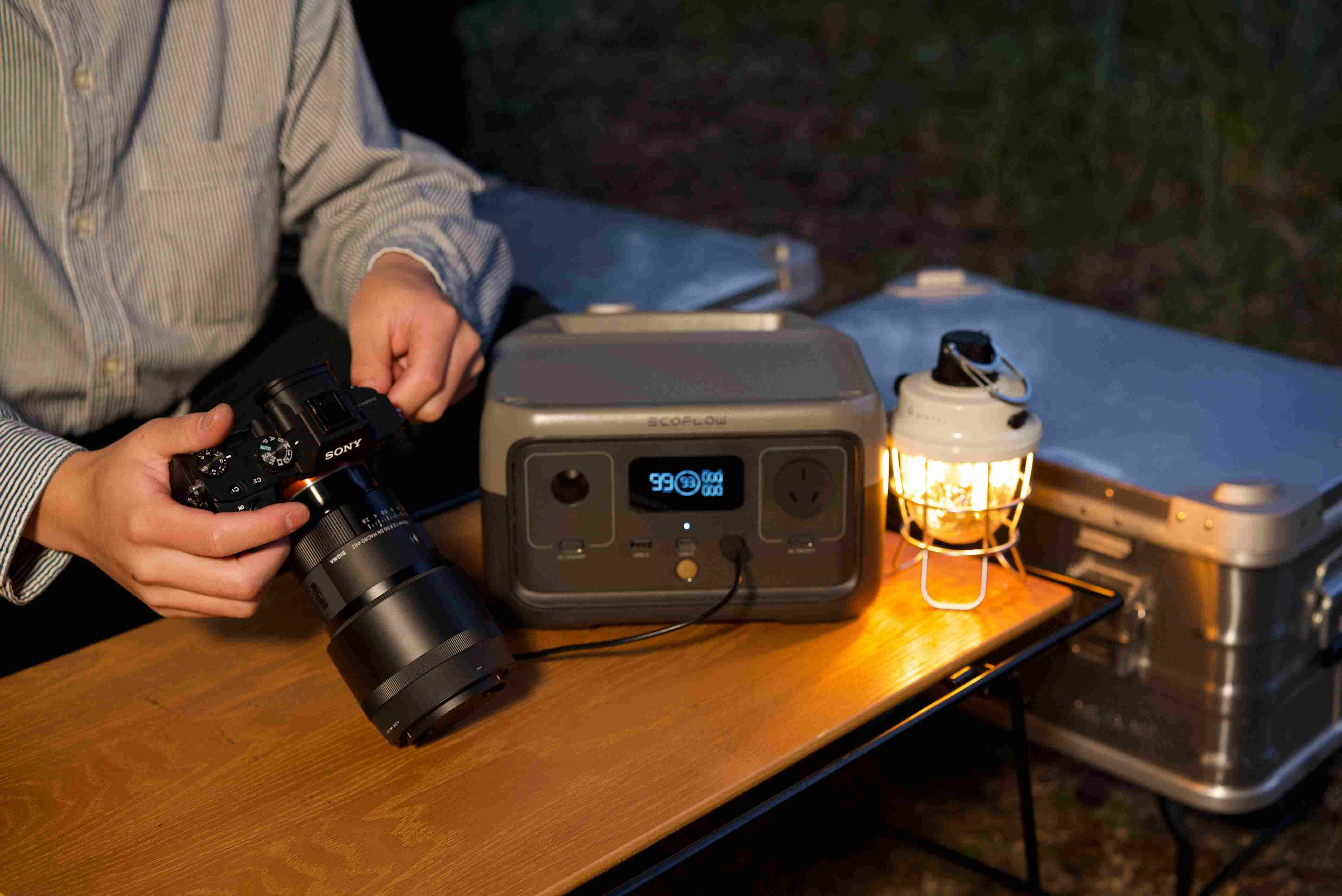
Portable power stations can be considered a major improvement over regular portable power banks. These powerful chargers have AC sockets, USB ports, and even DC ports. Such devices are especially useful for those who engage in camping, picnics, or other events conducted in remote areas.
The average capacity of a portable power station can vary between 150-2000 watt-hours. Such a high capacity means that these devices can power loudspeakers with high wattages for several hours. Most models come with pure sine wave inverters for safe power supply to sensitive devices.
Outdoor and Emergency Applications
These models shine in outdoor events where there is a need to charge several devices. With this station, you can charge your speaker and other devices such as your phone, tablet, and camera. One model that falls under this category is the RIVER 2 Portable Power Station, which has a 256Wh capacity.
The solar panel compatibility is another unique factor which allows for renewable energy charging. Also, power stations are useful for providing backup in emergency situations. During natural disasters such as earthquakes, power outages occur. This is where a charged power station comes in handy because it will keep your communication devices working.
Vehicle-Based Charging Techniques
Built-In USB Ports
Vehicle charging provides excellent flexibility for travelers and commuters. Most modern cars feature USB ports integrated into the dashboard or center console. These ports typically provide adequate power to charge bluetooth speaker devices during drives, making them convenient for road trips and daily commutes.
Cigarette Lighter Adapters
Car charger adapters which can be connected to 12V ports or cigarette lighter sockets allow for enhanced charging performance. These adapters have multiple USB ports and intelligent charging technology. They can also have quick-charge functionality for corresponding speakers.
DC to AC Inverters
If you have bigger speakers that require more power, DC-AC inverters will ensure your 12V car circuit is converted to household current. These inverters will enable you to power your speaker with its original wall adapter. All you have to do is ensure your inverter rating is above your speaker rating.
Solar Panel Charging for Sustainable Power
Solar charging offers a sustainable option for outdoor lovers and eco-sensitive consumers. Solar panels in combination with power banks or portable power stations allow for autonomous battery charging. The solar panel and power bank combination is great for camping adventures, beach excursions, or disaster preparedness.
The efficiency rate of solar panels varies with solar intensity and angle. They are capable of producing 15 to 100 watts or even higher. Solar panels with ports allow for easy charging. They can be folded for convenient carrying. USB ports are built for easier charging. Weather is another factor that affects solar charging efficiency. Charging efficiency is low on cloudy days, but it is best on a sunny day. Plan your charging schedule by starting it during peak sun hours.
Wireless Charging Technology Options
Although this is not obvious with regular speakers, there are high-end models that can now have wireless charging features. These types rely on Qi wireless charging technology. They can simply be placed on top of a wireless charging pad without any need for physical connectivity via cable.
Wireless charging is done by means of electromagnetic induction between the charging pad and receiver coil in your speaker. Align your device properly on top of the pad for efficient charging. If done improperly, it will not work or decrease efficiency.
This is best suited for overnight charging or any scenario in which speed is not a concern. Wireless does not affect the ports used for charging, and there is no cable to manage. Heat is a byproduct of wireless charging compared with traditional charging.
Battery Health and Maintenance Tips
Optimal Charge Levels
Appropriate charging practices can greatly improve your speaker's battery life. Do not let your battery run all the way down before you recharge it. Lithium ion batteries in your speaker have optimal performance capabilities if charged between 20% and 80% capacity.
Temperature Considerations
Temperature can affect both the efficiency of charge and battery maintenance. Please charge your speaker in temperatures between 50°F and 95°F. Freezing temperatures will slow down the chemical process in your battery, whereas overheating can deteriorate it faster. Never leave your charging speaker in direct sunlight or a closed car during summer.
Correct Charger Selection
Using the right charger for your bluetooth speaker will avoid any possibility of damage. Wrong voltage or current levels can be detrimental to battery cells or charging components. We would advise you to only use recommended models or buy copies with equal specifications.
Common Charging Problems and Solutions
Connection Issues
At times, the speakers might not charge even if everything is properly connected. First, check your cable for any damage or if it is properly connected. Damaged cables or improperly connected cords are common reasons for failure in speaker charging.
Port Maintenance
Dust buildup in ports can prevent proper connections. Compressed air can be used for cleaning ports. Be careful about using metal objects for cleaning to avoid damaging ports. Routine maintenance is useful for avoiding problems related to charging.
Slow Charging Diagnosis
If your speaker is charging slowly, check if your power source is supplying enough current. Wall adapters charge faster than computer ports or low-current power banks. Also, your speaker might have a protective mode if your battery is depleted. This means you have to wait several hours before it comes to life.
Keep Your Music Playing Anywhere
Mastering how to charge bluetooth speaker devices ensures uninterrupted entertainment wherever life takes you. From traditional wall charging to innovative solar solutions, multiple methods accommodate different situations and preferences. Understanding your speaker's power requirements and selecting appropriate charging methods protects your investment while maximizing performance and battery longevity for years of reliable use.
For press requests or interview opportunities, reach out to our media team
media.na@ecoflow.com