How Much Power Does One Wind Turbine Make? (US Home Equivalents)
A modern wind turbine can generate millions of kilowatt-hours of electricity in a year. How much actually depends on its size, location, and wind conditions. A 3 MW onshore wind turbine, for example, can produce roughly 9.2 million kWh annually at a 35% capacity factor. These numbers are hard to relate to, so to put it into perspective better, we’ll relate it to average home usage. The average U.S. home uses about 10,791 kWh of electricity per year. Using that benchmark, one 3 MW turbine could generate enough electricity to power roughly 850 average U.S. homes under typical operating conditions.
This guide explains how wind turbine capacity translates into overall energy production. It will describe different turbine sizes and how many homes they can support on an annual basis, and what factors affect output.
How Much Electricity Does One Wind Turbine Generate?
Understanding how much power does a wind turbine produce requires looking at both its maximum rated capacity and its actual long-term output. Let’s look at how rated capacity translates into kilowatt-hours of consumption.
Wind Turbine Capacity Ratings
Every wind turbine comes with a nameplate rating, expressed in megawatts (MW). Think of this rating like the top speed on a car’s speedometer. It represents the maximum power output the turbine can deliver once wind speeds reach its rated wind speed, typically around 25–35 mph for many utility-scale turbines. Commercial onshore turbines installed in the U.S. today are in the range of 2.5 MW to 4.5 MW. The massive offshore models have ratings that exceed 12 MW to 15 MW.
Utility-Scale Wind Turbine Output
The wind doesn’t blow at optimal speeds all day long, so a turbine rarely operates at full nameplate capacity for very long. On average, a standard modern 3 MW utility-scale onshore wind turbine operating in a good wind corridor produces around 8 to 10 million kilowatt-hours (kWh) of electricity each year. That’s enough electricity to supply hundreds of typical households with year-round power.
Annual Wind Turbine Energy Output
A turbine’s total annual energy output is calculated first by multiplying its rated capacity by 8,760 hours/year and then applying a capacity factor. This factor adjusts for real-world environmental conditions. A standard 3 MW turbine operating at a realistic 35% capacity factor produces:
3 MW × 8,760 hours/year × 0.35 (capacity factor) ≈ 9,200 MWh/year
How Many US Homes Can One Wind Turbine Power?
When you convert wind power into the amount of energy used per household, it makes the scale of wind power much easier to appreciate. Here are some metrics for how wind turbine output relates to typical American residential energy consumption.
Wind Output vs. U.S. Home Energy Use
According to data from the U.S. Energy Information Administration (EIA), the average American household consumes approximately 10,791 kWh of electricity per year. When evaluating household energy needs, pairing renewable inputs with a home battery helps bridge the gap during periods of low generation. This is an average of 899 kWh per month, but power consumption varies significantly by month, geography and lifestyle. An air-conditioned single-family home in Phoenix during July uses far more electricity than a home in coastal Oregon.
Homes Powered by Turbine Sizes
Turbine capacities vary widely between land installations and offshore projects, and so the number of homes they can power varies accordingly. The table below outlines how many average U.S. homes different turbine sizes can support annually.
| Turbine Type & Rating | Average Capacity Factor | Annual Electricity Output (MWh) | Avg. US Homes Powered / Year |
|---|---|---|---|
| Small Residential (10 kW) | 10–15% typical (15–20% in excellent sites) | 13 – 17 MWh | 1 – 1.5 Homes |
| Commercial Onshore (2.5 MW) | 30% – 35% | 6,500 – 7,600 MWh | 600 – 720 Homes |
| Modern Onshore (3 MW) | 35% – 40% | 9,200–10,500 MWh | 850–970 Homes |
| Offshore Giant (12 MW) | 45% – 50% | 47,000 – 52,500 MWh | 4,400 – 5,000 Homes |
Note: For small residential turbines (e.g., 10 kW), actual capacity factors are heavily dependent on siting, tower height, and surrounding terrain. In standard residential or suburban environments where trees and buildings cause ground friction and turbulence, realistic capacity factors often drop to 10%–15%. Achieving a 15%–20% range typically requires an open rural site (such as farmland or prairie) with an elevated tower.
Average Homes Powered Per Turbine
A single typical modern onshore wind turbine (3 MW) can power roughly 800 to 1,000 average American homes every year. As a key source of clean energy, wind power helps offset fossil fuel generation and can reduce carbon emissions compared to conventional grid sources. That amount of electricity can offset the use of fossil fuel-based generation and reduce carbon emissions compared with conventional power sources.
What Factors Determine Wind Turbine Energy Output?
It is common that two identical turbines located in different states generate completely different amounts of electricity. This is due to their environment and design variables.
Wind Speed and Location
It is no wonder that wind speed is by far the single most critical factor in power generation. This is especially true based on the cubic relationship between wind speed and energy generation. Doubling the wind speed can increase wind power output eightfold because wind power is proportional to the cube of wind speed (2³ = 8). This is why developers locate wind turbines in open plains like Kansas and Iowa or offshore locations where winds remain strong and uninterrupted.
Turbine Size and Rated Capacity
Height and length matter immensely in capturing wind energy. Taller towers reach stronger, smoother air currents that are less disturbed by ground friction, trees, or structures. Also, the longer rotor blades can sweep a much larger circular area, capturing significantly more airflow with every rotation.
Capacity Factor and Actual Output
The capacity factor is used to estimate the actual energy available relative to the theoretical maximum possible over a given period. Most land-based turbines operate at a capacity factor between 30% and 45%. Because wind generation varies, many off-grid users combine localized turbines with a solar generator to maintain backup power during calm stretches. Weather patterns, routine maintenance downtime, and grid curtailments mean that no turbine can run even close to 100% capacity.
How Do Onshore and Offshore Wind Turbines Compare?
Wind technology has been developed based on two primary operational environments, i.e. land based and off-shore wind turbines. They both have distinct design tradeoffs and performance metrics.
Onshore Wind Turbine Characteristics
Land-based turbines are easier and significantly cheaper to install, service, and connect to existing power grids. However, there are still constraints due to geographical terrain, and transportation logistics that limit how large of onshore blades and towers can be installed.
Offshore Wind Turbine Advantages
Offshore turbines benefit from vast, open ocean expanses where winds are consistently stronger and less turbulent. Size is not limited by roads and bridges, so marine turbines are built very large, some even taller than major city office towers. These can generate dramatically higher amounts of electricity.
Project Size and Cost Differences
Installing wind turbines at sea requires massive upfront capital for specialized installation vessels, underwater foundations, and corrosive saltwater protection. These projects still have good payback compared to onshore facilities because they have higher capacity factors and offshore winds are generally stronger and more consistent.


How Can Wind Energy Be Integrated Into Home Energy Systems?
Large scale wind turbine farms power the utility grid, but can a smaller scale wind turbine power your own property? Using wind energy at the residential level does offer some energy independence, but it requires smart system design.
Small Wind Turbines for Homes
Homeowners in rural areas with sufficient land and consistent wind resources often install small residential turbines (typically rated from 2 kW to 10 kW). For properties with strong, unobstructed air currents, choosing to build a wind turbine for home use can offer a valuable source of self-generated power. A small wind turbine can offset a big portion of your monthly electric bill, but how much will depend on local wind patterns and location. Residential installations will require a large open space and enough tower height to clear surrounding structures. It works best with an unobstructed wind flow, otherwise, energy output will drop significantly.
Battery Storage for Small Wind Systems
Actual power generation for homes using small wind turbines varies constantly with seasonal weather shifts and varying winds. Your turbine’s output won’t always match with your household power demands. You may have strong winds at night, but don’t use much power. This is why many homeowners pair small wind turbines with a battery storage system to capture excess electricity for later use. Power produced during windy periods can be stored in reserve for calmer days or unexpected utility grid blackouts.
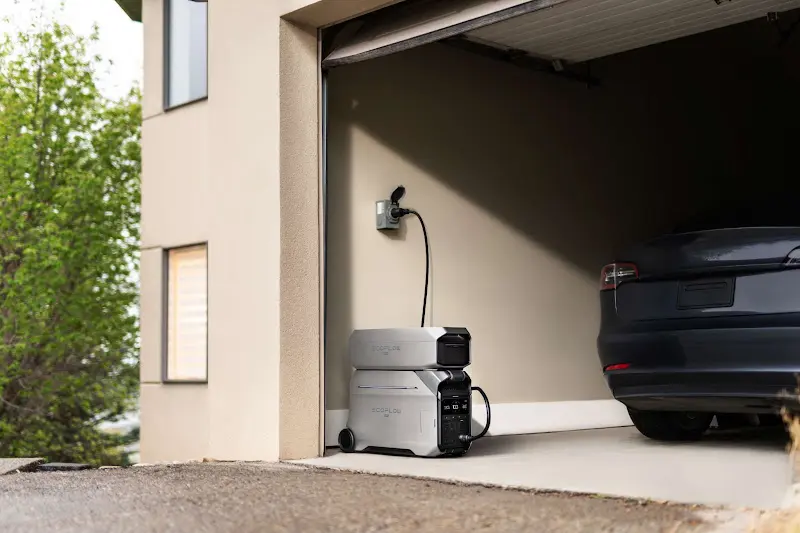
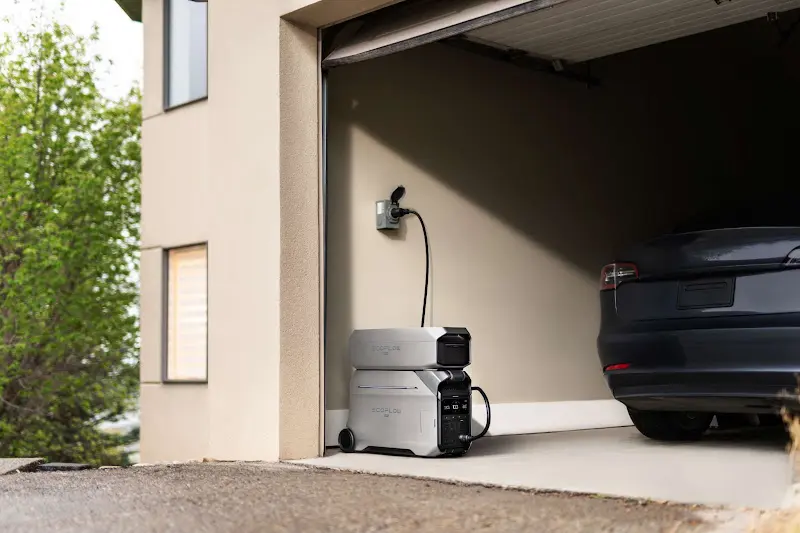
For rural properties, remote homesteads, and homes frequently exposed to severe weather power outages, the EcoFlow DELTA Pro 3 Portable Power Station serves as a high-output portable backup power solution for home use. When paired with compatible renewable energy inputs and a proper charging setup, the EcoFlow DELTA Pro 3 can store excess electricity for later use. The system can also provide backup power for essential household loads such as refrigerators, well pumps, lighting, and many central air conditioning systems, depending on their power requirements. With the EcoFlow DELTA Pro 3, you can maintain reliable backup power during grid outages.
Combining Wind, Solar, and Storage
For off-grid cabins and remote homesteads across America, relying on just one source of renewable energy may not meet your full-time power needs. This is because small wind turbines depend on constant wind patterns, and solar panels rely on daylight and clear skies. Combining wind power and solar energy into one hybrid system gives you a balanced setup. The wind turbine generates power during stormy or winter nights, and solar panels take over during bright summer days.
In a hybrid renewable setup, the EcoFlow DELTA 3 Max Plus Solar Generator can store energy from compatible renewable sources for later use. It can then deliver reliable backup power during calm nights, extended overcast periods, or unexpected grid outages.
Conclusion
One of today’s utility wind turbines generates around 8 to 10 million kilowatt-hours annually. This is enough clean electricity to supply roughly 800 to 1,000 standard American homes. These large scale utility turbines continue to add renewable energy to the national grid. On a smaller scale, rural residential properties can also harness localized wind power. When you combine small wind turbines with solar arrays and versatile battery storage like EcoFlow solutions, you can achieve clean power to be completely off-grid or for emergency backup needs.
FAQ
What Is the Biggest Problem with Wind Turbines?
Intermittency is the primary operational challenge with wind turbines because power generation relies entirely on fluctuating weather patterns. Without pairing wind assets with large-scale battery storage or backup generators, utilities must maintain alternative supply sources for calm days.
What Is the Lifespan of a Wind Turbine?
The operational lifespan of a modern wind turbine is typically 20 to 25 years with routine maintenance. After this period, key mechanical components are either overhauled, or the entire structure is repowered with updated blades and generators.
How Much Power Does a 2.5 MW Wind Turbine Produce?
A 2.5 MW wind turbine produces roughly 6,500 to 7,600 MWh of electricity per year under average land conditions. This output is enough to power roughly 600 to 720 standard American households annually.
How Many Years Does a Wind Turbine Take to Pay for Itself?
A commercial, utility-scale wind turbine generally reaches financial payback within 6 to 12 years, depending on local wholesale electricity rates and federal tax incentives (like the US Production Tax Credit). In contrast, smaller residential wind systems take longer—typically 12 to 20 years—due to higher per-kilowatt equipment costs and lower capacity factors in residential settings.
Beyond financial ROI, wind turbines excel in energy payback: a commercial wind turbine produces enough clean energy to offset all the energy used in its manufacturing, transport, and installation within just 6 to 9 months of operation.
Do Wind Turbines Have High Maintenance?
No, wind turbines require regular preventive maintenance, with inspection and servicing schedules varying by turbine model, operating conditions, and manufacturer recommendations. On-site maintenance teams routinely inspect gearboxes, lubricate moving parts, and evaluate blade integrity.
What Size Wind Turbine Would Power a House?
A 5 kW to 15 kW residential wind turbine is generally required to fully power an average U.S. home with typical energy consumption. The precise size depends heavily on your region’s average local wind speeds and household electricity usage.
For press requests or interview opportunities, reach out to our media team
media.na@ecoflow.com