Best Glamping in Northern California for a Comfortable Outdoor Getaway
You want a night under the redwoods without hauling a tent and a tangle of poles across a dark parking lot. That gap is what glamping fills. Northern California packs old-growth forest, rugged coastline, granite peaks, and wine country into one long drive. A growing number of properties let you sleep in the middle of all that on a real bed. This guide covers the best glamping Northern California has to offer, plus what to pack, when to go, and how to choose.
Best Glamping Spots in Northern California
There is no single winner here. The region covers a lot of ground. A foggy bluff above the Mendocino coast and a warm Sierra canyon near Yosemite are both glamping in Northern California, and they feel nothing alike.
Searches like glamping California northern turn up dozens of properties. The ones below are grouped by setting rather than ranked.
Accommodations vary more than people expect. Canvas tents, yurts, cabins, restored Airstreams, and treehouses all sit under the same heading, at very different prices. If the term is new to you, this explainer on what glamping actually includes is a good start.
Mendocino Grove, Mendocino
If the coast is a draw, start here. Mendocino Grove sits on 37 acres just off Highway 1, minutes from Mendocino village and the headlands. Guests stay in safari-style Classic and Family tents with real beds, down comforters, and wool blankets.
The property leans comfortable rather than rustic. On site you get hot outdoor showers, a sauna, fire pits, hammocks, bocce, and a private hiking trail. Canoe rentals on nearby Big River are easy to arrange. It suits couples and families who want the coast without booking an inn.
AutoCamp Russian River, Guerneville
Redwoods and wine country in one weekend is a specific kind of trip, and this property is built for it. It sits between the Russian River and the town of Guerneville, under tall redwoods in Sonoma County.
Lodging runs from 31-foot Airstream suites to canvas Adventure Tents and compact Happier Camper units. Each Airstream has a sitting room, private bathroom, and kitchenette. Premium accessible cabins are available too. Armstrong Redwoods, river kayaking, and dozens of tasting rooms sit close by.
AutoCamp Yosemite, Midpines
Lodging inside Yosemite books months ahead, so many travelers stay just outside the park. This property sits on Highway 140 in the Midpines at about 2,600 feet, on one of the lower elevation routes into the valley.
Choices include Airstream suites, modern and family cabins, and Adventure Tents. BaseCamp units pair an Airstream with a canvas tent and sleep six. On site there is a pool, a clubhouse, and EV charging. Check the Yosemite current conditions page first, since road and entry rules shift by season.
Other Northern California Glamping Options
A few more are worth a look if those three are full or you want a different setting.
Safari West, Santa Rosa. Elevated canvas tents imported from Africa on a working wildlife preserve in Sonoma County. Guided tours are the main draw.
Camp Richardson Resort, South Lake Tahoe. Historic cabins and lakeside lodging on the California side of Lake Tahoe, steps from the beach and open year-round.
Giant Redwoods RV & Cabin Destination, Myers Flat. Cabins and campsites among old-growth trees on the Avenue of the Giants, in Humboldt County.
What Should You Bring for Glamping in Northern California?
Here is where people get tripped up. Glamping covers most of the camping basics, so you are not packing a stove or a sleeping pad. What it does not cover varies by property. Assuming it is how you end up cold at 2 a.m. Read the listing, then pack for the gaps. A full glamping packing list is a useful cross-check.


Clothing and Outdoor Gear
Northern California weather changes by the hour near the ocean. A 75-degree afternoon in Guerneville can turn into a 45-degree night, and coastal fog rolls fast. Pack for both ends of the day.
Layers you can add and shed, including a fleece or insulated jacket
A rain shell, even in summer, for the coast and the redwoods
Closed-toe shoes with grip for damp trails and gravel paths
Sun protection: hat, sunglasses, and sunscreen for inland heat
A headlamp or lantern, since paths between tents are often unlit
Food and Personal Essentials
What you bring depends on the kitchen situation. Airstreams and cabins usually include a kitchenette, so groceries and a few basics are enough. Canvas tents often share a communal cooking area, which means bringing your own pot, utensils, and dish soap.
Some properties run a cafe or include breakfast, and a few offer on-site dinner too. Either way, bring more water than you think you need, plus snacks, a first aid kit, and any medication. Cell service drops off fast once you leave the highway.
Portable Power for Glamping
Think about how many devices you are actually charging. Phones, a camera, a laptop, string lights, a speaker, and a camping fan all draw from somewhere, and a long weekend adds up. Many glamping properties already supply electricity, so a portable power station is not something every trip needs.
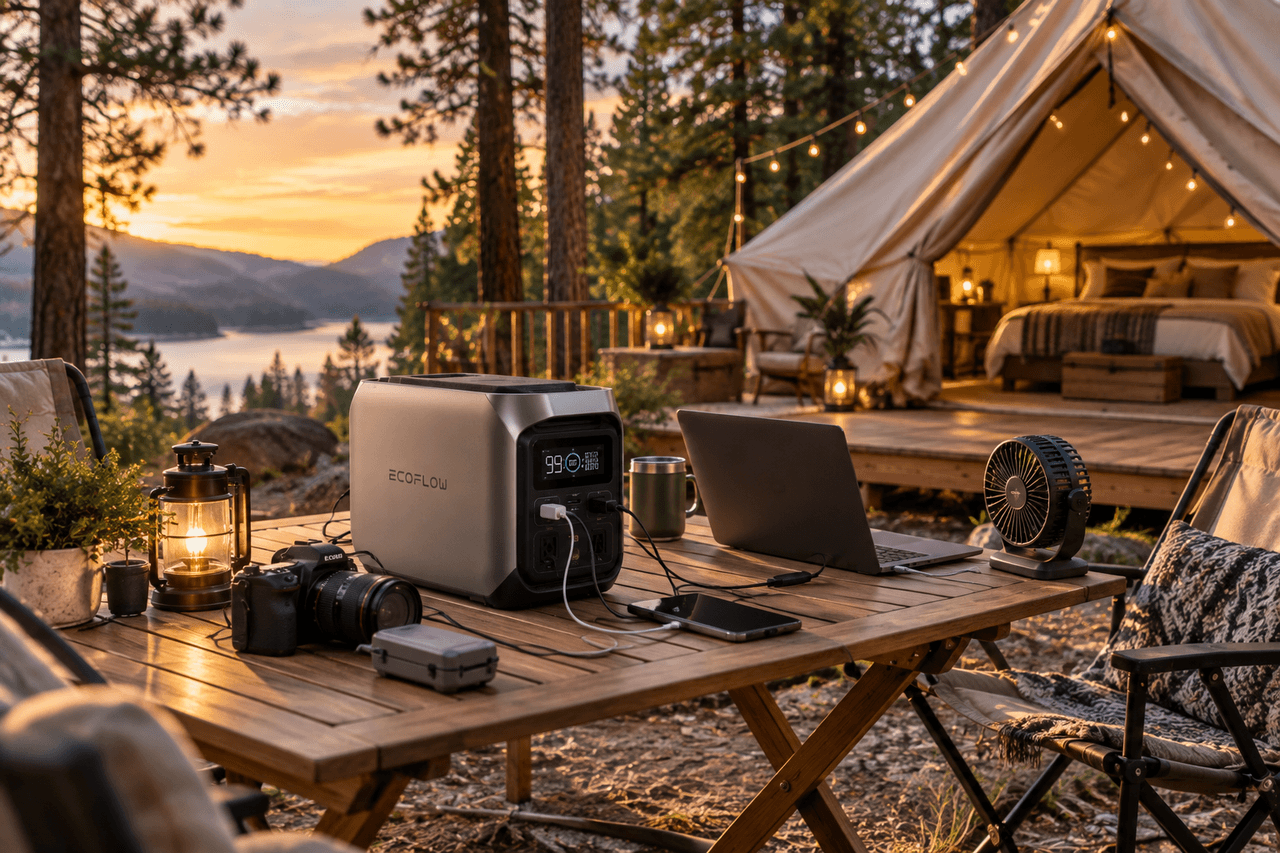

It earns its space when outlets are limited, awkwardly placed, or missing. Canvas tents in particular often have one outlet, or none. If you are comparing sizes, this guide to portable power stations for camping covers capacity and output in plain terms.
EcoFlow DELTA 3 Plus
For longer stays, or trips where several people charge at once, the useful feature is room to grow. Being able to add capacity later means you are not stuck guessing your total needs before the first trip.
EcoFlow DELTA 3 Classic (1024Wh)
Not every trip calls for that much flexibility. Two nights with a phone, a camera, and a string of lights is a much smaller load, and about 1kWh of capacity covers it.
Sizing either one is easier once you know what you plan to run. The EcoFlow portable power station lineup is worth scanning side by side first.
How to Choose a Northern California Glamping Destination
Once you know what you need to pack, the next question is which property fits. Most disappointing stays come down to a gap between expectations and the listing. Run through these before you book.
What to check | Why it matters |
Location and travel distance | A four-hour drive changes what a two-night trip feels like |
Accommodation type | Airstream, cabin, yurt, and canvas tent are very different stays |
Privacy and views | Some sites are spaced far apart, others sit close together |
Electricity and other amenities | Outlet count, heating, and Wi-Fi vary widely by unit |
Bathroom and shower access | Private bath versus a shared bathhouse is a real difference |
Cooking options | Kitchenette, shared camp kitchen, on-site dining, or none |
Nearby outdoor activities | Trails, beaches, rivers, and tasting rooms within reach |
Pet and family policies | Not every property takes dogs or young children |
Seasonal availability | Many coastal and mountain sites close part of the year |
Price and minimum stay | Weekend two-night minimums are common in peak season |
When Is the Best Time to Go Glamping in Northern California?
Timing matters more here than in most states. The coast, the redwoods, the mountains, and the inland valleys run on different calendars. A perfect August weekend in Mendocino can be a 100-degree slog two hours inland.
Season | Coast and redwoods | Mountains and inland |
Spring | Green, quiet, and often wet | Snow lingers at elevation; waterfalls peak |
Summer | Cool and foggy, especially mornings | Hot and busy; book far ahead |
Fall | Clear, mild, and the local favorite | Warm days, cool nights, thinner crowds |
Winter | Heavy rain; some properties close | Snow, chain controls, limited access |
Coastal parks stay mild and damp all year. The Redwood parks weather guide notes 60 to 80 inches of rain between October and April. Summer fog keeps the coast cool.
Inland is the opposite problem. Summer heat in the Central Valley and the Sierra foothills is serious, so read the National Weather Service heat safety page before an August trip.
Two more factors are easy to overlook. Wildfire can affect air quality and access from late summer into fall, and the Cal Fire active incident map shows what is burning. Winter routes toward Tahoe and Yosemite often require chains, so check the Caltrans highway conditions tool first.
Tips for a Better Northern California Glamping Trip
A good trip comes down to a few small habits rather than one perfect booking.
Book popular properties well ahead, especially for summer and holiday weekends.
Check exactly what your accommodation provides before you start packing.
Prepare for a wide temperature swing between afternoon and night.
Bring layers and rain protection, even when the forecast looks clear.
Reserve nearby activities and park entries before you arrive.
Download offline maps if you are heading somewhere remote.
Fully charge your electronics and any power station the night before you leave.
Read the property rules on campfires, cooking, pets, and generators.
Conclusion
Northern California covers an unusual range for one region, from safari tents on a Mendocino bluff and Airstreams under Sonoma County redwoods to cabins near the Yosemite gate and lakeside lodging on the California side of Tahoe. The right pick comes down to accommodation type, driving distance, the amenities you care about, what you plan to do nearby, and the season. For longer trips or several devices, the EcoFlow DELTA 3 Plus adds flexible charging and expandable capacity, while the EcoFlow DELTA 3 Classic suits simpler setups and shorter stays. Whichever you book, read the listing closely, check the forecast and road conditions, and pack for the weather you might get.
FAQs
What is the best place to go glamping in Northern California?
It depends on the setting you want. Mendocino Grove is the pick for the coast, AutoCamp Russian River covers redwoods and wine country, and AutoCamp Yosemite is the easiest base for the park. For wildlife, Safari West in Santa Rosa stands alone.
What is the best month to go glamping in Northern California?
September and early October are hard to beat. Coastal fog thins, inland heat backs off, crowds shrink after Labor Day, and most properties are still open. May and June are a good second choice, though the coast stays gray.
How much does glamping cost in Northern California?
Rates vary widely by property, season, and unit. A basic canvas tent sits at the low end, while Airstream suites and private cabins run well above it. Summer weekends cost the most, and two-night minimums are common.
What should I bring to a glamping trip?
Start with layers, rain protection, sturdy shoes, sun protection, and a headlamp. Add toiletries, medication, water, and snacks. Then fill the gaps your property does not cover, which often means cooking gear for a shared kitchen and a way to charge devices.
For press requests or interview opportunities, reach out to our media team
media.na@ecoflow.com