The Environmental Impact of AI Data Center Growth
- What Are Data Centers and Why Are They Expanding Rapidly?
- The Growing Backlash Against Data Centers
- Why Environmental Groups Are Calling For a Moratorium
- Are Data Centers the Only Reason Energy Bills Are On the Rise?
- The Future of AI, Energy, and Affordability
- Final Thoughts: A New Energy Debate in the AI Era
Artificial intelligence is everywhere in our lives, whether we know it or not. It’s transforming the way we work, communicate, get information, and manage our energy. But across the U.S., there is a growing backlash against data center growth because of how much energy and water they consume. As utility bills continue to rise, these facilities are increasingly the focus of public concern. Let’s learn what’s driving this debate and what you can do to make your home more resilient.
What Are Data Centers and Why Are They Expanding Rapidly?
A data center is a large building or a cluster of buildings that houses computers, servers, and networking equipment to store, process, receive, and transmit digital information.
The Role of AI, the Cloud, and Crypto
Prior to AI, cloud storage and cryptocurrency prompted significant data center growth across the USA. Every time you store photos or documents on the cloud, stream videos, or engage in crypto mining or transactions, you use data centers.
However, artificial intelligence (AI) is the single biggest driver of growth today because AI continuously processes large datasets across thousands of processors. This makes AI more energy-intensive than crypto transactions or cloud storage.
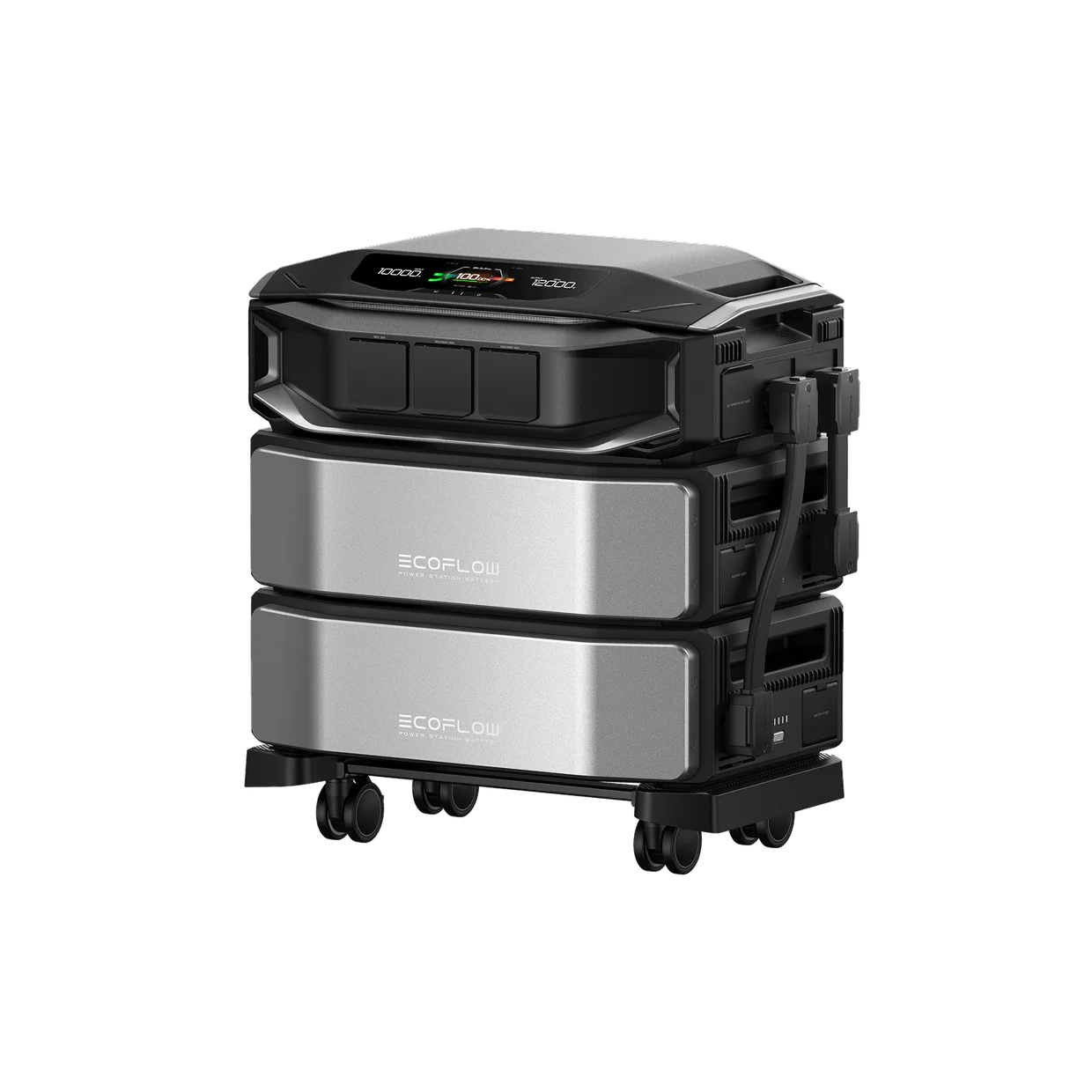
As energy-hungry workloads strain the grid, homeowners are increasingly turning to systems like the EcoFlow DELTA Pro Ultra X to protect their homes from outages, price volatility, and rising demand driven by the digital economy.
.png)
The Scale of Growth in the U.S.
The U.S. is currently positioning itself to become a global center for this data infrastructure, encouraging more growth. Tech companies like Meta, Google, and OpenAI plan to invest hundreds of billions of dollars in new facilities, primarily to meet the growing demand for AI.
According to McKinsey research, data centers worldwide need a $6.7 trillion investment by 2030 to meet growing demand, with $5.2 trillion of that directly allocated to handling AI processing loads.
While all of this can yield strong economic returns for investors, it places increasing pressure on the environment and an already unstable grid.
The Growing Backlash Against Data Centers
Electricity prices across the U.S. continue to soar despite expected cuts in energy costs. According to the Guardian News, almost half of Americans on both sides of the political spectrum say the cost of living in the U.S. is the worst they can remember.
Now, the backlash is growing as people look for who’s to blame for their rising power bills. AI is an easy target, since the cost of building new power plants and infrastructure to accommodate these data centers is not borne by tech companies but rather spread across all customers. As a result, at least 16 new data centers, worth ~$64 billion combined, are being delayed or halted by local opposition, primarily over rising electricity costs.
Why Environmental Groups Are Calling For a Moratorium
Environmental groups are also concerned about the environmental costs. The Department of Energy reports that data centers consumed about 4.4% of total U.S. electricity in 2023, and that figure is expected to climb to 12% by 2028. At the current growth rate, they could add 44 million tons of carbon dioxide to the atmosphere by 2030, worsening the climate crisis.
While some companies recycle the water used for cooling, others don’t. Some large data centers require up to 5 million gallons of water daily for their cooling systems, about the same amount as a town with ~30,000 people. This is a heated issue in areas with already costly or scarce water supplies.
As a result, a coalition of over 230 environmental groups has urged Congress to put a moratorium on new data centers. They accuse their unregulated growth of threatening our economic, environmental, climate, and water security.
If you want energy security amidst such uncertainty, use a battery-powered, indoor-safe EcoFlow Whole-Home Backup Generator. When paired with solar panels, you’ll reduce your carbon footprint and never have to worry about rising costs again.
Are Data Centers the Only Reason Energy Bills Are On the Rise?
While people are quick to blame rising power bills on AI, it’s more complex than that.
Our aging electrical infrastructure is undergoing major upgrades nationwide, driving up costs as customers have to foot the bill. Costs are also increasing due to extreme weather events that damage infrastructure.
Another major factor is the volatility of fossil fuel markets. Natural gas rose 56% in 2025 compared to 2024, and the U.S. gets about 43% of its electricity from natural gas.
Finally, electrification is also driving demand as we switch to electric appliances and drive EVs, alongside growing industrial electrification. However, electrification can provide cleaner energy and less dependence on market forces when your energy is renewable. The cleanest and most affordable energy today comes from solar generators, which provide free energy for years after the solar payback period.
The Future of AI, Energy, and Affordability
With electricity demand expected to nearly triple over the next decade, rates are unlikely to decline.
While AI can be a power drain, it also enhances household efficiency using smart thermostats, smart appliances, and apps that help you optimize electricity use. It’s also becoming an integral part of optimizing energy and stabilizing the grid on an industrial scale. This will become even more important as we incorporate more small-scale power plants to meet growing demand.
Finally, tech companies are already investing in renewable energy to power their operations. For instance, Google is now the largest corporate buyer of renewable energy.
Final Thoughts: A New Energy Debate in the AI Era
While AI-driven data center growth is not the sole cause of economic and environmental instability, its high energy demand is definitely adding pressure. Still, AI itself plays an important role in enhancing energy efficiency, and it may even help solve the very energy challenges it creates through better efficiency, grid management, and optimized energy use. Whether progress is delayed or not, the next step forward lies in cleaner, more affordable power sources. We can do our part to help protect the grid and the environment by achieving greater energy independence at home using EcoFlow Solar Generators to meet our energy needs.
For press requests or interview opportunities, reach out to our media team
media.na@ecoflow.com