Regional Differences in Electricity Pricing: A State-by-State Comparison in 2026
- What U.S. Electricity Rates Look Like Right Now
- States with the Highest Electricity Rates
- States with the Cheapest Electricity Rates
- How Electricity Rates Compare Across All 50 States
- How Much Have Electricity Rates Risen Since 2025?
- Residential vs. Commercial Electricity Rates: What Is the Gap?
- Why Electricity Rates Keep Going Up Across the Country
- Take Control of Your Electricity Costs
- Frequently Asked Questions
- Sources
Millions of American households opened their electricity rates statements in early 2026 and found the numbers higher than a year ago. That reaction is grounded in hard data. According to the U.S. Energy Information Administration (EIA), the national average residential electricity rate reached 17.45¢ per kWh in January 2026, up 9.5% from January 2025. The gap between the most and least expensive states keeps widening. Here is what the latest numbers actually show.
What U.S. Electricity Rates Look Like Right Now
Here is the full national snapshot from January 2026.
| Sector | January 2026 | January 2025 | Change |
| Residential | 17.45¢/kWh | 15.94¢/kWh | 0.095 |
| Commercial | 13.64¢/kWh | 12.82¢/kWh | 0.064 |
| Industrial | 9.29¢/kWh | 8.34¢/kWh | 0.114 |
| All Sectors | 14.17¢/kWh | 13.09¢/kWh | 0.083 |
For residential customers, the jump was the steepest: nearly 1.5¢ per kWh in twelve months. That may sound small. But a typical household using 863 kWh per month paid roughly $13 more each month. That is over $150 a year, for doing nothing differently.
And this is not a one-year event. Residential rates have climbed steadily for four consecutive years, and the numbers keep moving in the same direction.
States with the Highest Electricity Rates
Not every household feels this equally. Where you live sets your starting point, and the spread across states is wider than most people expect.
| State | Residential Rate (January 2026) |
| Hawaii | 39.79¢/kWh |
| Massachusetts | 31.16¢/kWh |
| Maine | 30.73¢/kWh |
| California | 30.29¢/kWh |
| Rhode Island | 30.14¢/kWh |
| Connecticut | 28.30¢/kWh |
Hawaii, California, and the New England states cover a substantial share of the U.S. population. They also carry the country's highest electricity rates by state by a considerable margin.
Why Hawaii Pays Over Twice the National Average
Hawaii's residential rate of 39.79¢/kWh is the highest in the nation. It is not close. The state relies heavily on imported oil for electricity generation, so every shift in global energy markets lands directly on household bills. Physical isolation from the mainland grid means Hawaii cannot draw on cheaper power from neighboring states. Build anything on an island and the cost is higher. Electricity infrastructure is no different.
What Drives California Electricity Rates So High
California electricity rates averaged 30.29¢/kWh for residential customers in January 2026, nearly 74% above the national average. Several forces stack on top of each other here. The state's aging transmission network requires continuous capital investment, and those costs pass through to ratepayers. Utility wildfire mitigation programs add billions in annual spending. California also relies on natural gas to balance its renewable generation, and gas price swings move directly into electricity bills.
New England tells a similar story. Massachusetts (31.16¢), Maine (30.73¢), and Rhode Island (30.14¢) share dense aging infrastructure, high labor costs for maintenance, and heavy natural gas dependency. The bills reflect all of it.
States with the Cheapest Electricity Rates
On the other end, the cheapest electricity rates in the country are concentrated in the South and Central Plains. The gap compared to coastal states is not marginal. It is structural.
| State | Residential Rate (January 2026) |
| North Dakota | 10.92¢/kWh |
| Nebraska | 11.76¢/kWh |
| Idaho | 12.07¢/kWh |
| Louisiana | 12.46¢/kWh |
| Oklahoma | 12.62¢/kWh |
| Texas | 15.69¢/kWh |
Why Texas Electricity Rates Stay Below the National Average
Texas electricity rates came in at 15.69¢/kWh for residential customers in January 2026, below the national average of 17.45¢. Texas runs its own independent grid through ERCOT, which gives the state flexibility in how it builds and prices generation capacity. Abundant natural gas reserves, large-scale West Texas wind, and competitive retail electricity markets all push rates down relative to states with heavily regulated utilities.
North Dakota, Nebraska, and Iowa sit even lower. Cheap coal and wind generation, combined with low population density and minimal transmission congestion, keep their rates well under the national floor. For households with high energy consumption, the annual cost difference compared to California or Massachusetts is not a rounding error. It is hundreds of dollars.

How Electricity Rates Compare Across All 50 States
When you compare electricity rates across all states, the pattern is clear: geography is the single biggest predictor of what you pay. The table below covers every state, grouped by region, using official EIA data for January 2026. The national residential average of 17.45¢/kWh is the baseline.
New England
Regional average: 29.36¢/kWh (+68% vs. national average)
| State | Residential (Jan 2026) | Residential (Jan 2025) | YoY Change |
| Massachusetts | 31.16¢ | 30.07¢ | 0.036 |
| Maine | 30.73¢ | 26.13¢ | 0.176 |
| Rhode Island | 30.14¢ | 31.66¢ | -4.80% |
| Connecticut | 28.30¢ | 30.02¢ | -5.70% |
| New Hampshire | 26.32¢ | 23.40¢ | 0.125 |
| Vermont | 23.29¢ | 21.74¢ | 0.071 |
Middle Atlantic
Regional average: 23.68¢/kWh (+36% vs. national average)
| State | Residential (Jan 2026) | Residential (Jan 2025) | YoY Change |
| New York | 28.37¢ | 25.34¢ | 0.12 |
| New Jersey | 23.13¢ | 19.68¢ | 0.175 |
| Pennsylvania | 20.19¢ | 17.56¢ | 0.15 |
South Atlantic
Regional average: 15.64¢/kWh (+12% vs. national average)
| State | Residential (Jan 2026) | Residential (Jan 2025) | YoY Change |
| District of Columbia | 23.72¢ | 18.83¢ | 0.26 |
| Maryland | 20.61¢ | 18.24¢ | 0.13 |
| Delaware | 16.51¢ | 15.53¢ | 0.063 |
| Florida | 15.92¢ | 14.42¢ | 0.104 |
| Virginia | 15.87¢ | 13.94¢ | 0.138 |
| South Carolina | 15.41¢ | 13.88¢ | 0.11 |
| West Virginia | 14.77¢ | 14.47¢ | 0.021 |
| Georgia | 14.46¢ | 13.50¢ | 0.071 |
| North Carolina | 13.68¢ | 12.51¢ | 0.094 |
East North Central
Regional average: 17.45¢/kWh (equal to national average)
| State | Residential (Jan 2026) | Residential (Jan 2025) | YoY Change |
| Michigan | 19.52¢ | 18.48¢ | 0.056 |
| Wisconsin | 18.20¢ | 17.36¢ | 0.048 |
| Ohio | 17.59¢ | 15.62¢ | 0.126 |
| Illinois | 16.36¢ | 15.78¢ | 0.037 |
| Indiana | 16.19¢ | 14.55¢ | 0.113 |
East South Central
Regional average: 14.34¢/kWh (-18% vs. national average)
| State | Residential (Jan 2026) | Residential (Jan 2025) | YoY Change |
| Alabama | 16.06¢ | 15.09¢ | 0.064 |
| Kentucky | 14.27¢ | 12.43¢ | 0.148 |
| Mississippi | 14.24¢ | 12.74¢ | 0.118 |
| Tennessee | 13.10¢ | 12.58¢ | 0.041 |
West South Central
Regional average: 14.64¢/kWh (-16% vs. national average)
| State | Residential (Jan 2026) | Residential (Jan 2025) | YoY Change |
| Texas | 15.69¢ | 14.67¢ | 0.07 |
| Oklahoma | 12.62¢ | 11.03¢ | 0.144 |
| Louisiana | 12.46¢ | 11.10¢ | 0.123 |
| Arkansas | 12.35¢ | 11.28¢ | 0.095 |
Mountain
Regional average: 14.50¢/kWh (-17% vs. national average)
| State | Residential (Jan 2026) | Residential (Jan 2025) | YoY Change |
| Colorado | 16.44¢ | 14.93¢ | 0.101 |
| Arizona | 15.61¢ | 14.72¢ | 0.06 |
| New Mexico | 14.70¢ | 13.66¢ | 0.076 |
| Nevada | 13.98¢ | 13.88¢ | 0.007 |
| Utah | 12.88¢ | 12.11¢ | 0.064 |
| Wyoming | 12.85¢ | 11.69¢ | 0.099 |
| Montana | 12.86¢ | 11.38¢ | 0.13 |
| Idaho | 12.07¢ | 10.82¢ | 0.115 |
West North Central
Regional average: 12.92¢/kWh (-26% vs. national average)
| State | Residential (Jan 2026) | Residential (Jan 2025) | YoY Change |
| Minnesota | 14.98¢ | 14.51¢ | 0.032 |
| Kansas | 14.29¢ | 13.36¢ | 0.07 |
| South Dakota | 13.60¢ | 12.08¢ | 0.126 |
| Iowa | 12.83¢ | 11.99¢ | 0.07 |
| Missouri | 11.80¢ | 11.21¢ | 0.053 |
| Nebraska | 11.76¢ | 10.53¢ | 0.117 |
| North Dakota | 10.92¢ | 9.95¢ | 0.097 |
Pacific Contiguous
Regional average: 23.27¢/kWh (+33% vs. national average)
| State | Residential (Jan 2026) | Residential (Jan 2025) | YoY Change |
| California | 30.29¢ | 30.28¢ | 0.0003 |
| Oregon | 14.66¢ | 14.47¢ | 0.013 |
| Washington | 13.81¢ | 11.78¢ | 0.172 |
Pacific Noncontiguous
| State | Residential (Jan 2026) | Residential (Jan 2025) | YoY Change |
| Hawaii | 39.79¢ | 40.51¢ | -1.80% |
| Alaska | 25.52¢ | 24.73¢ | 0.032 |
The electricity cost per kWh in New England runs 68% above the national average. The West North Central region sits 26% below it. That gap represents hundreds of dollars per year for an average household, and it has nothing to do with how much electricity you use.
Within the West, the contrast is particularly sharp. California's 30.29¢ exists alongside Idaho's 12.07¢ in the same broad geography. State-level policy, generation mix, and grid ownership structures explain most of that difference. Your region sets your baseline. And for the large majority of Americans, that baseline rose again in 2026.
How Much Have Electricity Rates Risen Since 2025?
The one-year comparison in the January 2026 EIA data is where the trend becomes hard to ignore.
National residential electricity rates rose from 15.94¢/kWh in January 2025 to 17.45¢/kWh in January 2026. Industrial rates climbed 11.4%. At the state level, several markets saw increases that go well beyond the national average:
Washington, D.C.: 18.83¢ to 23.72¢, up 26%
Maine: 26.13¢ to 30.73¢, up 17.6%
Pennsylvania: 17.56¢ to 20.19¢, up 15%
Virginia: 13.94¢ to 15.87¢, up 13.8%
Ohio: 15.62¢ to 17.59¢, up 12.6%
A small number of states bucked the trend. Connecticut dropped from 30.02¢ to 28.30¢. Rhode Island fell from 31.66¢ to 30.14¢. Both likely reflect renewable energy additions and demand-side adjustments. But these were genuine exceptions. For the large majority of Americans, January 2026 brought the highest residential electricity rates on record. For a household using 863 kWh per month, that additional 1.51¢ per kWh adds up to about $156 more per year compared to January 2025. It adds up quietly, bill by bill.
Residential vs. Commercial Electricity Rates: What Is the Gap?
Households pay the highest rate of any customer class. The numbers make that plain.
Customer Type | January 2026 Rate |
Residential | 17.45¢/kWh |
Commercial | 13.64¢/kWh |
Industrial | 9.29¢/kWh |
Residential electricity rates run 28% above commercial rates and nearly double what large industrial customers pay. The reason is straightforward: commercial and industrial customers use electricity in larger, more predictable volumes. That lowers the cost to serve them. They can also participate in demand-response programs, agreeing to reduce load during peak periods in exchange for lower rates.
Standard residential customers have no equivalent arrangement. You buy power at the full retail rate, which bundles together generation, transmission, distribution, and system overhead. That structure has not changed. And it means every time rates rise, households absorb the sharpest end of the increase.
Why Electricity Rates Keep Going Up Across the Country
There is no single explanation. The costs are structural, stacked, and largely invisible until they show up on your bill.
Natural gas price volatility. A large share of U.S. electricity still comes from gas-fired generation. When spot prices surge, as they have in recent years, those costs reach utility customers within months.
Grid infrastructure investment. Much of the U.S. transmission and distribution network was built decades ago. Utilities are spending heavily to replace aging equipment, harden systems against extreme weather, and handle new interconnection demands. Capital costs flow directly into rates.
Rising electricity demand. Data center construction accelerated sharply in 2024 and 2025. Electric vehicle adoption added load across many regions. Growing demand on a grid that is not expanding at the same pace keeps upward pressure on prices.
Extreme weather and resilience spending. Hurricanes, wildfires, and winter storms have prompted major utility investment in grid hardening and backup capacity. That spending is recovered through rates.
For households already paying above-average rates in states like California, Massachusetts, or Connecticut, these forces compound each billing cycle. The bill going up is a structural reality, not a temporary blip.
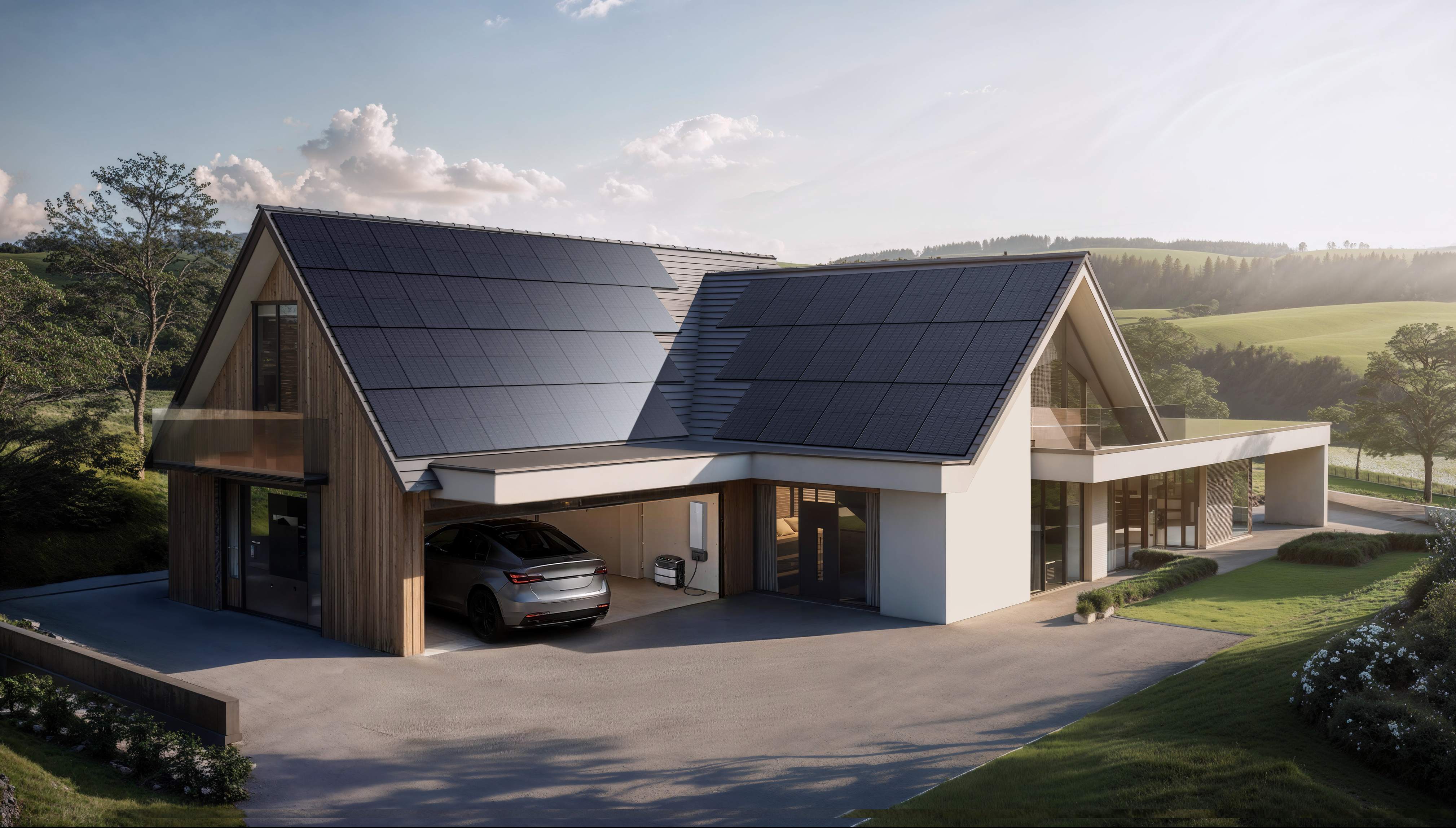
One practical response is pairing home battery storage with time-of-use (TOU) rate management. The EcoFlow DELTA Pro Ultra X, bundled with the Smart Home Panel 3, lets you charge from the grid during off-peak, lower-rate hours and draw from stored power during the expensive peak window. The Smart Home Panel 3 gives you real-time control over up to 32 individual circuits, so you decide which loads get priority and when. With 12kWh of base capacity, expandable to 180kWh, and a 20ms auto-switchover that keeps your home running through outages, the system puts the timing of your grid consumption back in your hands. This works best in utility markets that offer time-of-use pricing, which is increasingly available across California, the Northeast, and other high-rate states. In those markets, that kind of control has direct dollar value.
Take Control of Your Electricity Costs
Electricity rates across the U.S. rose 9.5% in a single year, and the underlying causes show no sign of reversing. If you live in California, New England, or another high-rate state, the gap between what you pay and what the national average is will likely keep widening. Managing your exposure to peak pricing and grid dependency is now a practical financial decision. EcoFlow builds the tools that make that possible for American homeowners.
Frequently Asked Questions
Q1: Which state has the cheapest electricity rates in 2026?
North Dakota holds the lowest residential cheapest electricity rates in the continental U.S. at 10.92¢/kWh as of January 2026. Nebraska (11.76¢), Louisiana (12.46¢), Iowa (12.83¢), and Oklahoma (12.62¢) also rank among the least expensive. These states share abundant domestic energy resources, primarily coal, natural gas, and wind, combined with low population density that keeps per-customer transmission costs down relative to coastal regions.
Q2: Why are California electricity rates so much higher than the national average?
California electricity rates reached 30.29¢/kWh in January 2026, nearly 74% above the national average. The gap reflects multiple compounding costs: aging transmission infrastructure, mandatory wildfire mitigation spending by investor-owned utilities, high labor and construction costs, and continued dependence on natural gas for grid balancing. California has expanded solar and wind capacity, but integrating that generation reliably requires expensive storage and grid upgrades that ratepayers ultimately fund.
Q3: Are Texas electricity rates deregulated?
Yes. Texas electricity rates operate under a deregulated retail model through ERCOT, the state's independent grid operator. Most Texas residents can choose their electricity provider and select fixed or variable-rate contracts, which generally keeps rates competitive. The tradeoff is that prices can spike sharply during extreme weather events when demand briefly overwhelms available supply. Comparing plans from multiple providers before signing a contract can result in meaningful annual savings.
Q4: What is the difference between residential and commercial electricity rates?
Residential customers paid 17.45¢/kWh nationally in January 2026, while commercial customers paid 13.64¢/kWh, a gap of roughly 28%. Commercial accounts consume electricity in larger, more consistent volumes, which reduces the per-unit cost to serve them. They also qualify for demand-response programs that reward reducing load during peak periods. Residential customers do not have access to equivalent arrangements through standard utility agreements, which is a key reason households pay the highest rate of any customer class.
Q5: How can I reduce my electricity bill when rates keep going up?
A few targeted steps make a real difference. Shifting high-consumption tasks like laundry, dishwashing, and EV charging to off-peak hours cuts costs directly if your utility offers time-of-use pricing. Auditing your three largest loads (typically HVAC, water heating, and electric dryers) identifies where consumption is highest. A home battery system that stores cheaper off-peak power for use during expensive peak hours adds another layer of control. Reducing dependence on peak-rate grid power is the most direct way to limit the impact of rising electricity rates on your monthly bill.
Sources
U.S. Energy Information Administration (EIA). Table 5.6.A. Average Price of Electricity to Ultimate Customers by End-Use Sector, by State, January 2026 and 2025. Electric Power Monthly, March 2026. https://www.eia.gov/electricity/monthly/epm_table_grapher.php?t=epmt_5_6_a
U.S. Energy Information Administration (EIA). 2024 Average Monthly Bill — Residential. Electric Sales, Revenue, and Average Price, Table 5A. https://www.eia.gov/electricity/sales_revenue_price/pdf/table_5A.pdf
U.S. Energy Information Administration (EIA). Electricity Use in Homes. https://www.eia.gov/energyexplained/use-of-energy/electricity-use-in-homes.php
For press requests or interview opportunities, reach out to our media team
media.na@ecoflow.com