How Is Electricity Generated in the US and Why 2026 Is a Record-Breaking Year
- How Is Electricity Generated in the US Right Now?
- What Does 86 GW of New Electricity Generation Actually Mean?
- How Much Electricity Does Solar Energy Produce?
- Where Is New Electricity Generation Being Added?
- What's Driving the Record Growth in US Electricity Generation?
- How Does This Electricity Generation Shift Affect Your Home?
- Take Control Before the Grid Does It for You
- FAQs
The US power grid is set to grow faster in 2026 than at any point in the past two decades. Developers plan to add 86 gigawatts of new utility-scale electricity generation capacity this year, nearly double what came online in 2025. That number matters for everyone who pays an electric bill, and it tells a clear story about where American energy is heading.

How Is Electricity Generated in the US Right Now?
The short answer: through a mix of sources that has shifted dramatically over the past ten years.
The Traditional Sources: Fossil Fuels and Nuclear
For most of the 20th century, coal and natural gas dominated US electricity generation. Coal once supplied half of all American power. Today, natural gas holds the largest share of generation at roughly 40%, while nuclear contributes about 18%. Coal stood at around 17% in 2025 and continues to shrink as older plants retire.
These sources share one trait: they burn or react a fuel to spin a turbine, which drives a generator that produces alternating current. That current travels through transmission lines to homes and businesses.
The New Grid: Renewables Step Into the Lead
Wind and solar now supply about 18% of total US electricity, and that share is rising fast. In 2025, developers added 53 gigawatts of new capacity to the grid, the largest single-year build since 2002. In 2026, the planned additions are 86 gigawatts. That would be the largest single-year addition on record. Renewables and battery storage account for the vast majority of all new generating capacity being added this year.
What Does 86 GW of New Electricity Generation Actually Mean?
That headline figure is easy to misread, and the difference between capacity and actual output changes how the whole story lands.
Capacity vs. Generation
86 gigawatts is a capacity figure, not an output figure. Capacity measures the maximum a plant can produce under ideal conditions. Actual output depends on how many hours per year those conditions exist.
A natural gas plant runs about 55% of the time on average. A solar panel, because the sun only shines part of the day, runs roughly 25% of the time. That gap matters. Solar makes up 51% of 2026's planned additions, but its real contribution to total electricity produced will be smaller than that share suggests. The 51% figure refers to capacity, not output. Solar's actual contribution to total electricity produced will be smaller than that share suggests.
The 2026 Technology Breakdown: Solar, Storage, Wind, and Gas
Here is how the 86 gigawatts break down by technology:
| Technology | Share | Planned Capacity |
| Solar | 51% | 43.4 GW |
| Battery Storage | 28% | 24.0 GW |
| Wind | 14% | 11.8 GW |
| Natural Gas | 7% | 6.3 GW |
Battery storage is not a generation source. It stores electricity produced by solar and wind and releases it when demand peaks. Its rapid growth is what makes large-scale solar and wind practical on a grid that needs power at night and during calm weather.
How Much Electricity Does Solar Energy Produce?
How much electricity solar energy produces depends heavily on the type of installation, and the numbers look very different at the utility level versus on a residential rooftop.
Utility-Scale Solar vs. Rooftop Solar
A utility-scale solar farm spans hundreds of acres and uses commercial-grade panels optimized for maximum output per square foot. A rooftop system on a typical American home might cover 400 to 600 square feet and produce 8,000 to 12,000 kilowatt-hours per year, enough to cover most of that household's consumption, but a fraction of what a grid-scale project delivers.
A large share of utility-scale battery storage is built directly alongside solar arrays. That pairing solves a practical problem: solar produces its peak output between 10 a.m. and 2 p.m., but grid demand peaks in the early evening. Batteries store the midday surplus and discharge it when people get home from work.
Solar Generation Is Forecast to Grow 21% in 2026
The US Energy Information Administration tracks actual solar output, not just capacity. In 2025, utility-scale and small-scale solar combined produced approximately 290 terawatt-hours. According to EIA's January 2026 Short-Term Energy Outlook, solar power is forecast to supply the largest increase in US electricity generation in 2026, with output projected to rise by 21%. That growth reflects real energy delivered to real homes and businesses, not just capacity on paper.
Where Is New Electricity Generation Being Added?
The 86-gigawatt build is not spread evenly across the country. Texas is the single largest destination for new capacity in 2026, set to host 40% of all new utility-scale solar additions and 53% of all new battery storage, about 12.9 gigawatts of storage in one state. Texas recently surpassed California as the leading state for installed grid-scale battery capacity.
The largest solar project coming online in 2026 is the Tehuacana Creek 1 Solar and BESS in Navarro County, Texas: 837 megawatts of solar paired with 418 megawatts of storage. The SunZia Wind project in New Mexico, at 3,650 megawatts, will become the largest onshore wind farm in the country when it reaches commercial operation this year. Arizona and California each account for roughly 6% of new solar capacity, while New Mexico, Illinois, and Wyoming together contribute close to 60% of new wind additions.
What's Driving the Record Growth in US Electricity Generation?
Three forces are pushing this expansion forward at the same time, and none of them is slowing down.
Renewables Now Cost Less Than Gas
The core driver is price. Utility-scale solar and onshore wind now cost less to build than new natural gas combined-cycle plants in most US regions. Developers are not building solar because of mandates. They are building it because it costs less.
Battery storage has followed a similar curve. The cost per kilowatt-hour of utility-scale storage has fallen sharply over the past three years, and that drop is what made the 24-gigawatt storage target for 2026 realistic.
Battery Storage Keeps Growing Regardless of Policy
Solar additions in the US dropped from 30.8 gigawatts in 2024 to 27.2 gigawatts in 2025, partly due to regulatory uncertainty around clean energy tax credits. Battery storage did not slow down. Because storage supports grid reliability regardless of policy preferences, it continued to attract investment through the same period. The planned 24 gigawatts for 2026 represents a 60% increase over the 15 gigawatts added in 2025.
Rising Demand Is Accelerating the Build
Demand growth is as important as supply growth. EIA projects that electricity demand within ERCOT will grow by roughly 7% in 2025 and 14% in 2026, driven primarily by data centers and industrial expansion across Texas. That demand growth is what gives developers confidence to commit capital to large projects. The grid is not just getting cleaner. It is getting bigger because customers need more power.
How Does This Electricity Generation Shift Affect Your Home?
A grid transformation at this scale eventually touches every household.
A Bigger Grid Doesn't Mean Fewer Outages
A record year of capacity additions does not automatically translate to a more reliable experience for individual households. New solar and wind farms are concentrated in a handful of states. Interconnection delays mean some capacity may not reach the grid on schedule. And the intermittent nature of solar and wind means that during extreme weather, exactly when demand spikes, grid stress can increase even as total installed capacity grows.
More Americans Are Choosing Home Energy Storage
A lot of people actually use both solar panels on their roofs and batteries to power their homes. When you use these two ways together, you can use solar panels to make electricity, store any extra energy in a battery, and then use the battery's energy later, either in the evening or in case of a power outage.
What to Look for in a Home Battery System
A home battery system worth buying should handle:
Whole-home output: enough wattage to run an HVAC system, refrigerator, and lights simultaneously
Sufficient capacity: measured in kilowatt-hours, not just peak watts
Solar compatibility: able to accept input from rooftop panels directly
Automatic switchover: transitions to backup power without manual intervention
Scalability: the capacity that can grow if energy needs increase
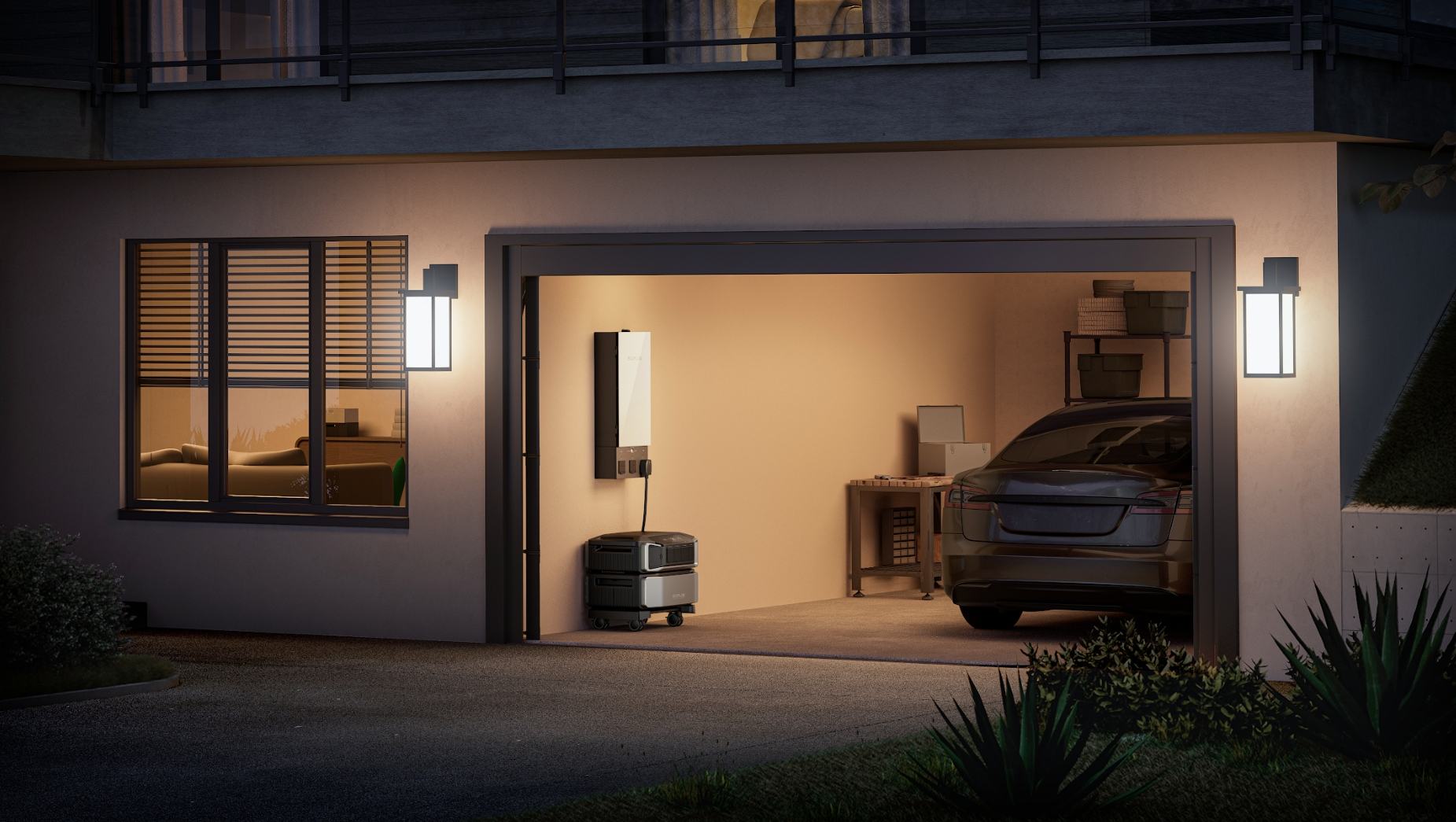
The EcoFlow DELTA Pro Ultra starts at 6 kWh and scales to 90 kWh by adding batteries, enough to run a standard home for weeks on essential loads. Its 7.2 kW output handles a central air conditioner, and it accepts up to 5.6 kW of solar input per inverter. You get automatic switchover, self-heating battery protection below 32°F, and the option to connect it to an existing rooftop solar system. For homeowners who want to pair it with panels, the EcoFlow 400W Portable Solar Panels (available in a two-panel bundle) deliver up to 23% conversion efficiency and an IP68 waterproof rating, so your home stays powered through outages that can last days, without waiting on the grid.
Take Control Before the Grid Does It for You
The 86-gigawatt rise in 2026 will really change how power is made in the United States. Systems that store energy and use solar power are no longer just extras; they are becoming the grid itself. This change, on the other hand, happens across the whole country over time. The present grid is still vulnerable to nature when it comes to individual homes. EcoFlow builds products for the gap between where the grid is heading and where it stands right now.
FAQs
Q1: How Is Electricity Generated from Solar Panels at Home?
Solar panels have solar cells that take in energy from the sun and turn it into electrons, which creates direct current. The inverter turns this DC current into AC current, which your home appliances can use. The panels will make energy when they are in the sun, which you can then use in your home. Depending on the state, any extra power you make can be used to charge your batteries or put toward your energy bill.
Q2: How Much Electricity Does Solar Energy Produce per US Household per Year?
An average American home with a solar system on the roof makes between 8,000 and 12,000 kilowatt-hours of energy a year. This depends on the size of the system, the slope of the roof, the number of sunny days in the area, and how well the panels work. About 10,500 kilowatt-hours of energy are used by the average American home every year, so this number is above or close to that amount.
Q3: What Happens to Excess Solar Power When Your Home Does Not Need It?
Surplus solar power has two common destinations. In states with net metering, it flows back to the grid and earns a bill credit at a rate set by your utility. In homes with battery storage, it charges the battery first and only exports to the grid once the battery is full. As net metering policies tighten in several states, pairing solar with storage is becoming the more reliable option for capturing the full value of what your panels produce.
Q4: Why Is Texas Adding More Solar and Battery Storage Than Any Other State?
Texas leads the nation in solar and battery storage additions primarily because of its deregulated electricity market (ERCOT), which allows developers to build and sell power with minimal bureaucratic barriers. The state's abundant flat land, intense sunlight, and strong winds make renewable energy highly cost-competitive. After the devastating 2021 winter storm (Uri) exposed grid vulnerabilities, battery storage investment surged for reliability. Additionally, low land costs, strong corporate clean energy demand, and surging electricity needs from data centers and AI infrastructure make Texas the most attractive destination for renewable developers.
Q5: Does Adding More Renewable Electricity Generation Lower Home Energy Bills?
Long-term wholesale prices are cheaper when a lot of solar and wind energy is added because these sources don't cost anything once they are added. But what you actually pay depends on how much the infrastructure costs, how much the utilities charge, and how the government regulates things. This means that even if market prices go down, it might not have an effect on your bills. If you put in solar panels and batteries at home, you will be more likely to save money because you will buy less energy.
For press requests or interview opportunities, reach out to our media team
media.na@ecoflow.com