Colorado Plug-In Solar 2026: HB 1007 Expands to 1,920W for Home Solar — Tracking the Bill
- What Does HB 1007 Change in Plug-In Solar Capacity?
- Who Does the Law Affect?
- Key Dates and Scope
- Safety, Standards, and Compliance
- Economic and Practical Impact of the 1,920W Cap
- The Smarter Solution: A Modern, Scalable Plug-In Solar Category
- Frequently Asked Questions
- Save, Simplify, Secure: How HB 1007 Unlocks Scalable Plug-In Solar
Colorado has introduced major changes for home energy with HB26-1007. Governor Jared Polis signed the bill into law on May 7, 2026, explicitly legalizing plug-in solar. With a 1,920W system limit, the bill expands access for renters, apartment dwellers, and homeowners who want a low-cost solar option. Find out what HB26-1007 is, who it affects, and how it changes the home solar landscape.
Note: This article reflects the policy at the time of writing, and regulations may change later.
What Does HB 1007 Change in Plug-In Solar Capacity?
Colorado’s HB26-1007, signed into law in May 2026, lays out the legal framework for plug-in solar, also known as balcony solar.
Prior to the law, utilities could require advance approval before installation, HOAs and landlords could ban them, and there were no statewide safety standards governing the devices. The result was a legal gray area that left consumers vulnerable and a fast-growing product in limbo.
HB26-1007 remedies these issues at once. The law formally defines plug-in solar as a distributed energy resource, sets a 1,920W system capacity limit, mandates safety certification, prohibits utilities, landlords, and HOAs from unreasonably blocking installations, and creates a pathway for meter collar adapters.
Who Does the Law Affect?
Colorado’s HB26-1007 affects renters, homeowners, property managers, and electric utility providers.
Under HB26-1007, qualifying plug-in solar systems up to 1,920W generally do not require advance utility approval. Because the law treats qualifying plug-in solar as a matter of public policy, HOA rules, lease provisions, and similar restrictions cannot unreasonably prohibit qualifying installations, although reasonable safety and property requirements may still apply.
This law is particularly significant for plug-and-play solar for renters and apartment dwellers who have been shut out of solar access entirely. Rooftop solar costs tens of thousands in Colorado, making it unavailable to those who rent. Plug-in systems cost hundreds to a few thousand dollars, serving as a much more affordable alternative.
Key Dates and Scope
Signed into law: May 7, 2026, by Governor Jared Polis.
Effective date: January 1, 2027.
PUC rulemaking deadline: The Colorado Public Utilities Commission (PUC) must revise the interconnection rule to reflect the new law’s meter collar requirements by December 31, 2026.
Scope: Applies to customers of investor-owned utilities, municipally owned utilities, and cooperative electric associations statewide.
Safety, Standards, and Compliance
UL 3700-Certified Inverters and Anti-Islanding
HB26-1007 establishes safety requirements for plug-in solar devices and requires qualifying equipment to meet applicable certification requirements from nationally recognized testing laboratories (NRTLs). As the U.S. plug-in solar market develops, UL 3700 is emerging as a leading safety standard for these systems.
A key component of UL 3700 compliance is anti-islanding protection. This feature requires that the inverter automatically shut off if it detects that the grid has gone down, preventing the system from backfeeding electricity into lines that utility workers may be servicing.
Anti-islanding protection is a standard safety feature used in grid-connected solar equipment and is expected to be a key component of qualifying plug-in solar systems.
Meter Collar Adapters, UL 414 Rules, and Size Exemptions
A meter collar adapter is a device installed between a utility’s meter socket and the billing meter. It allows a homeowner to connect solar or battery equipment directly to their home’s electrical system without a costly panel upgrade or formal interconnection application.
HB26-1007 requires the PUC to revise its interconnection rules by December 31, 2026, to explicitly authorize customer-owned meter collar adapters and establish a 60-day approval process for adapters that meet the UL 414 standard.
For municipally owned utilities and co-ops, the law requires a 90-day approval process for adapters not already on the utility’s pre-approved list. A qualifying meter collar adapter must be certified under UL 414, be physically and electrically compatible with existing equipment at the installation site, be rated adequately for the connected solar or storage equipment, and not compromise the structural integrity of the meter enclosure.
Utilities cannot require a production meter as a condition of interconnection for any customer-sited distributed energy resource with a power output of 10 kW or less. This provision eliminates a common and costly installation barrier.
Economic and Practical Impact of the 1,920W Cap
Colorado's Front Range averages around 252 sunny days per year, among the highest in the country. This makes it one of the best states for solar yield per installed watt. A fully loaded 1,920W system could be composed of four to six high-efficiency solar panels and offset a meaningful share of an average apartment’s electricity consumption.
The U.S. plug-in solar market is still developing, and product availability may vary depending on certification requirements and state regulations.
Colorado's combination of high altitude and low humidity makes it particularly well-suited for off-grid Colorado solar applications too, whether you're powering a cabin or an RV.
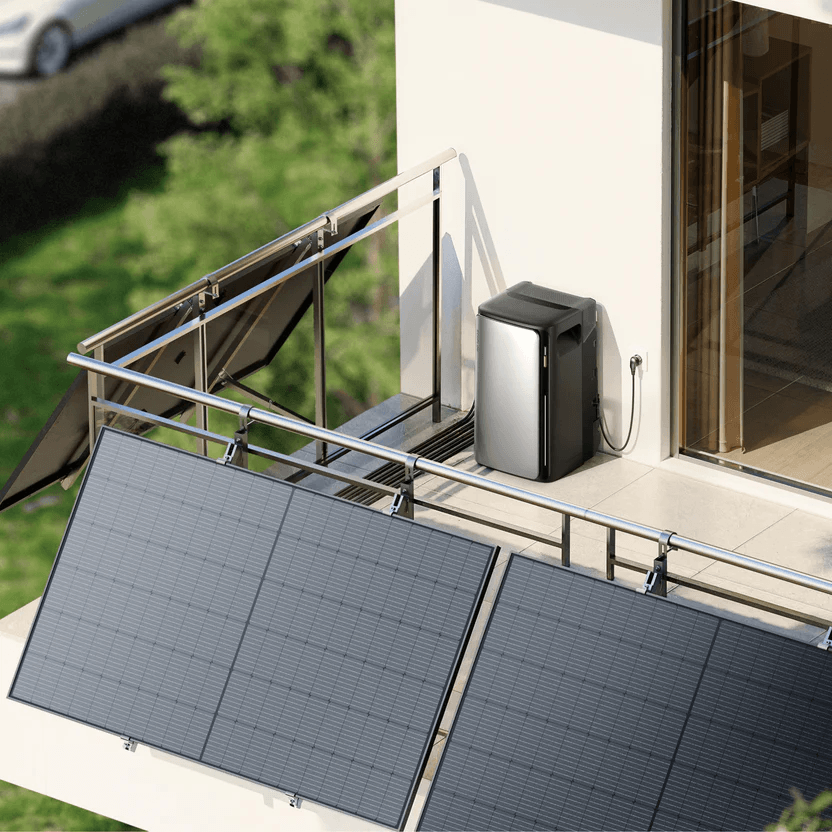
As plug-in solar regulations expand across the U.S., manufacturers are beginning to develop systems specifically designed for this emerging category. EcoFlow's STREAM ecosystem, including the EcoFlow STREAM Microinverter and EcoFlow STREAM Ultra*, is designed to help households capture solar energy and reduce grid electricity consumption.
The Smarter Solution: A Modern, Scalable Plug-In Solar Category
HB26-1007 defines plug-in solar as a category of distributed energy resource, creating a durable legal foundation that can scale with technology. The 1,920W limit accommodates four 480W panels. As panel efficiency improves and battery integration deepens, the law’s framework can support future generations of the technology without requiring fresh legislation.
Frequently Asked Questions
What Does 1,920W Mean for My Apartment or Rental?
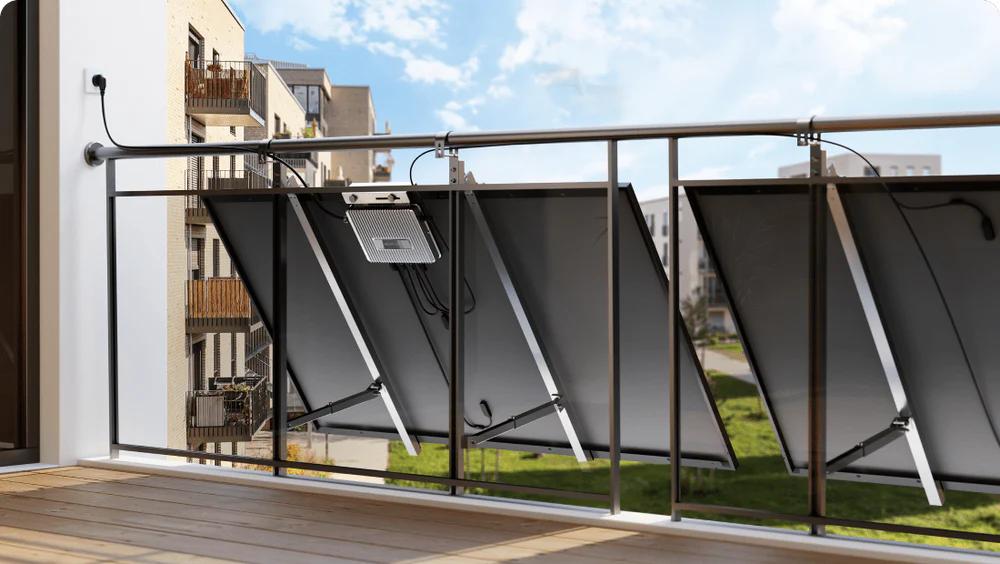
At 1,920W, a fully compliant plug-in system can consist of up to four high-efficiency panels arranged on a balcony, patio, or backyard. Depending on the equipment and installation method, qualifying systems may connect through a dedicated receptacle, an approved plug-in configuration, or other code-compliant connection method.
Do I Need a Permit or Interconnection for a Plug-In System?
No, one of the main provisions of HB26-1007 explicitly prohibits utilities from requiring customer approval or a formal interconnection agreement before installing a qualifying plug-in solar device. This provision takes effect January 1, 2027, so check your utility's current requirements if you're planning an installation before then.
Save, Simplify, Secure: How HB 1007 Unlocks Scalable Plug-In Solar
HB26-1007 changes the solar landscape for Colorado. By establishing a 1,920W limit for qualifying plug-in solar systems, limiting unreasonable HOA and lease restrictions, creating a framework for safe deployment, and streamlining meter collar interconnection, Colorado has built a legal pathway that expands solar access for renters, homeowners, and other electricity customers.
As plug-in solar adoption expands, purpose-built systems such as EcoFlow STREAM are helping households use solar energy more effectively and reduce grid consumption.
While plug-in solar is a supplementary solution that can help reduce electricity bills, it cannot replace whole-home backup power. Homeowners looking for outage protection should note that plug-in solar is primarily designed to offset energy consumption and reduce reliance on grid electricity. Whole-home backup systems serve a different purpose by providing stored energy during power outages.
*EcoFlow STREAM products are currently available only in Utah and Maryland as of June 2026 and are not yet broadly available nationwide.
For press requests or interview opportunities, reach out to our media team
media.na@ecoflow.com