How to Heat a Garage Gym for Winter Workouts: Best Tips and Equipment
Heating a garage gym doesn't have to be complicated. The key is combining proper garage insulation with the right heating equipment—whether that's a portable heater, garage heater electric system, or garage space heater. Get these basics right, and you'll have a comfortable workout space without breaking the bank on energy bills.
What Preparation Work Does Your Garage Gym Need Before Heating?
Before you go ahead and shell out the dollars on heating equipment, I think we need to talk about insulation. It's kind of like trying to pour water into a bucket with a bunch of holes in it—you’re just going to end up wasting effort and dollars.
Garage Door Insulation
The biggest culprit when it comes to losing heat is your garage door. Most garage doors come in a thin metal sheet. Adding insulation panels (or upgrading to an insulated door) can significantly cut heat loss—some studies and manufacturers report “70%+” reductions in certain setups, especially when the garage walls are also insulated. You have two options: doing the foam board installation yourself for a low-cost DIY budget or hiring the pros for insulation. The foam board installation can work for most people as long as you measure, cut, and stick using adhesives.
Wall and Ceiling Insulation Solutions
If you have bare studs on the garage walls, you're losing plenty of heat. Fiberglass batts are the inexpensive choice, while spray foam is more pricey but provides better seals. Your garage ceiling shouldn't be forgotten, since "heat rises, and an uninsulated ceiling is basically a heat escape hatch." For many garages, wall cavities often land around the R-13-ish range (2×4) while ceilings/attic areas typically need much higher R-values (often R-30 to R-60 depending on climate zone).
Door and Window Weatherstripping
Gaps around doorways and windows let cold air pour inside. Run your hand along the edges on a windy day—you’ll feel the chill immediately. Weatherstripping tape is inexpensive and quick to apply, and a rubber seal along the bottom of your garage door can block drafts right where they hit hardest.
Floor Insulation Treatment
Cold concrete draws heat out from your feet. Foam floor tiles or exercise mats provide insulation. These won’t be expensive—in the order of $1 to $2 per square foot for decent insulation.
What Heating Equipment Can You Choose for Your Garage Gym?
There is no one-size-fits-all "best" answer here—it will depend on the size of your garage, what your budget is, and how often you work out.
Portable Heater Advantages & Disadvantages
The best heaters for most garage gym enthusiasts are portable heaters. These are inexpensive (starting from $50), can be plugged into regular wall outlets, and can be moved where they are necessary. The safest option is an electric heater because there is no carbon monoxide production.
The downside is that these units heat up slowly in large spaces, and these heaters can also cause your electricity bills to escalate should you use them daily. A portable heater that consumes 1,500 watts will cost about $0.27 per hour if your electricity rate is $0.18 per kWh (1.5 kW × $0.18). Rates vary a lot by state, so treat this as a planning number.
Also: always plug a space heater directly into a wall outlet—never into an extension cord or power strip.
Fixed Garage Heater Electric Systems
When looking at ways, if you are serious about year-round training, you should consider a mounted garage heater electric unit. Such units are permanently installed and heat up much faster and more evenly distributed compared to portable units.
Such units usually run on a 240V circuit and commonly fall in the ~4,000–7,500 watt range, depending on the model and how much space you’re trying to heat.
For instance, when you have to install the heating system, you will need the services of an electrician if you do not possess the ability to do the wiring. Installation costs vary widely but can easily run several hundred to over a thousand dollars depending on your home's wiring.
Infrared Heating Equipment
Infrared heaters are different, heating people and objects, not air. Just think about standing in the sun on a cool day. You are warmed, yet the air is cool. This makes infrared heating perfect for a home gym in the garage, as you won’t be heating an empty room with wasted energy. You can get quality infrared models for about $150. They are less noisy compared to fan-forced models, and some users claim that the warmth feels better for exercising. Just keep the physics straight: a 1,500W infrared heater still uses electricity like any other 1,500W heater—the advantage is often “zone comfort,” not lower watt draw.
Gas Heaters VS Electric Heaters Comparison
Natural gas or a propane heater can warm the gym efficiently at an economic cost compared to an electric heater. The only downside to all this is that you have to install them correctly to ensure proper ventilation to get rid of carbon monoxide. In any case, if you don’t have expert installation, go for an electric heater for your gym.
| Comparison Factor | Electric Heaters | Gas Heaters |
| Initial Cost | Varies widely (unit + any electrical work needed) | Varies widely (unit + venting + gas line work if needed) |
| Operating Cost | Depends on your kWh rate and heater wattage | Depends on fuel price, heater BTU rating, and efficiency |
| Heating Speed | Moderate (depends on insulation and heater size) | Fast (depends on BTU output and ventilation) |
| Installation Requirements | Needs 240V circuit (for high-wattage models) | Needs venting duct, gas line, and professional installation |
| Safety | High (no emissions) | Moderate (requires CO monitoring and proper ventilation) |
| Maintenance Needs | Minimal (periodic cleaning) | Moderate (annual inspections, vent cleaning) |
| Humidity Impact | None (produces no moisture) | Can add indoor moisture for vent-free/unvented models; properly vented units exhaust most water vapor outside. |
| Portability | Portable models available | Fixed installation, cannot be moved |
| Suitable Applications | All garage types | Only well-ventilated large garages |
| Environmental Impact | Depends on electricity source | Direct fossil fuel combustion |
For most garage gyms, electric heaters are the smarter choice. While gas heaters offer lower operating costs and faster heating, the installation complexity, safety requirements, and maintenance demands make them less practical for typical home garages.
How to Choose the Right Portable Heater?
Let us break down the process of buying a portable heater, since having one hundred options to choose from when you go into the store is overwhelming.
Power-To-Heating Zone Match
The math is straightforward: a minimum of 8 to 10 watts per square foot to get some decent heat. A typical garage for a couple of cars will be about 400 to 600 square feet, and you're easily looking at a minimum of 3,000 to 6,000 watts. But the highest you can usually go for a typical portable heater is about 1,500 watts, and that's as long as you're using a typical outlet.
A safer rule of thumb is to treat 1,500W as “spot heat,” roughly around ~150 sq ft in many real garages (more if it’s mild and well sealed, less if it’s drafty).
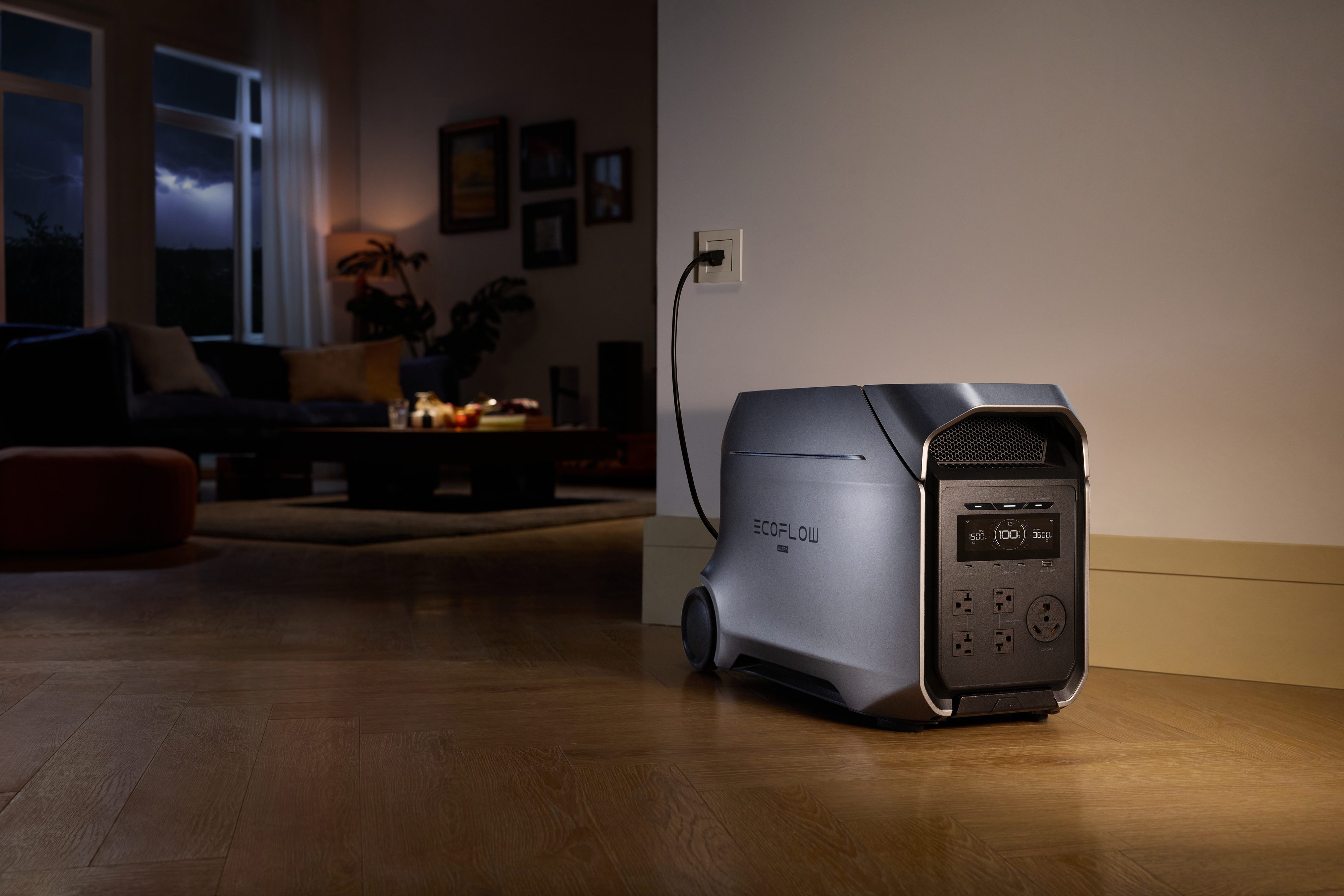
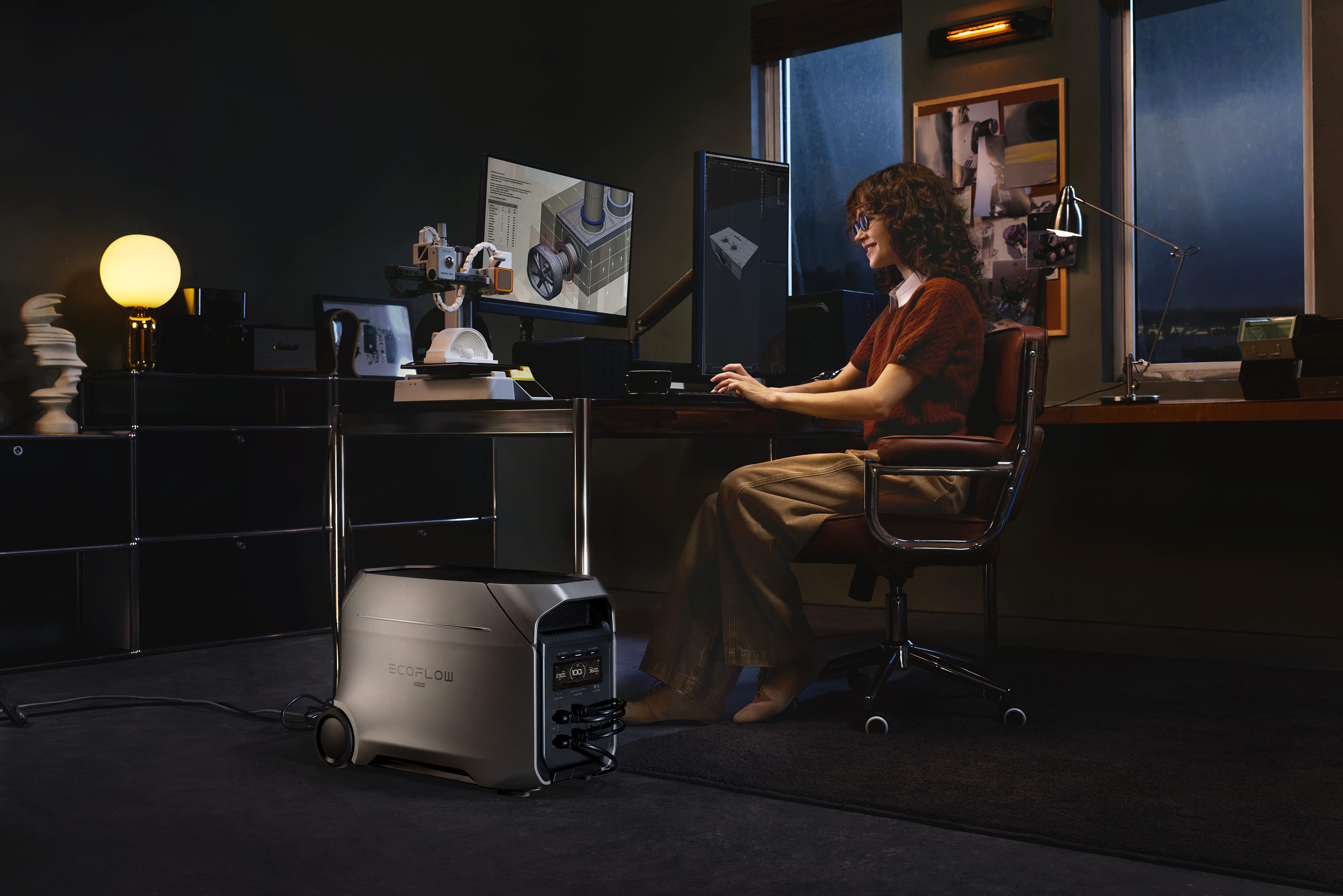
If you want the flexibility to place that 1,500W heater right next to your rack without running a long cord, using a higher-output power station—like EcoFlow DELTA 3 Ultra Plus with 3,600W rated output—can make your warm-up zone much easier to manage.
Just remember, runtime depends on battery capacity; high-watt loads drain any battery fast. If longer, steadier heater runtime is the goal, a higher-capacity option like the EcoFlow DELTA Pro Ultra X can be a better fit—it's designed for heavier loads with 12–36kW output and 12–180kWh expandable capacity, so it can handle big power draws more comfortably and keep running longer than smaller portable units.
By comparison, that same 1,500W heater is best treated as spot heat, usually covering around 150–200 sq ft, depending on insulation and drafts. If your garage is bigger than that, you’ll either need multiple heaters placed where you actually work, or step up to a higher-output garage heating setup to warm the whole space evenly.
Essential Safety Features
Never cheap out on safety. Look for:
Tip-over shut-off (turns off if tipped over)
Overheat Protection (Auto Shutoff)
Cool-touch housing (Doesn’t burn skin)
Use a GFCI-protected garage outlet (common in garages) or a portable GFCI adapter—don’t assume the heater itself has a “GFCI plug.”
Such qualities ensure the prevention of fires and injuries.
Energy Efficiency Ratings
In any case, all 1,500-watt heaters consume the same amount of electricity; physics does not change. Electric resistance heating is basically “100% at the point of use” in the sense that the electricity you feed it turns into heat in the room. So the “efficiency” claims usually come down to controls (thermostats, timers) and how the heat is delivered (fan vs radiant), not magically lower power draw.
You might find ceramic and infrared models to be more comfortable for zone heating, heating you rather than heating all the air in the room.
When it comes to interval-type training, infrared heaters are your best bet for strength training with longer rest periods between sets.
When you’re performing cardio or high-intensity intervals, your body will heat up quickly, and you could find that you need a simple ceramic heater—you may be able to turn it off after just 10 minutes.
How to Pick an Electric Garage Heater System?
But big fixed systems are a larger commitment. Let's ensure that you nail it.
Heater Size Calculation Method
Professional installers apply the following math: BTUs needed = (cubic feet × desired temperature rise × a factor for insulation/air leakage).
But here’s the trick: In a well-insulated 400 sq ft garage in a moderate climate zone, a 4,000 to 5,600 watt heater is more than adequate. In a colder climate zone, increase to a 6,000 to 7,500-watt heater. Ceiling height and air leaks can change this fast, so use manufacturer sizing charts as a double-check.
Also, if you go too small, you’re always running at full capacity and won’t ever be comfortable. You’re throwing cash at it upfront and having it cycle on/off too frequently.
Installation Requirements and Cost Budget
The majority of electric garage heater installations are tied into 240V circuits just like a clothes dryer. If that’s not already in your garage, it’ll run you $300 to $600 just to have an electrician install the wiring. Then, there’s the cost of the heater itself, ranging from $150 for basic models all the way up to $500+ for heavy-duty units.
All in, you are looking at the high hundreds or lower thousand range once everything has been set up. It sounds like a lot, but quality systems will last for many years.
Thermostat and Smart Control Features
When it comes to temperature control, no way is better than built-in thermostats. Just set the temperature, and you're all set. There are even garage heaters on the market that will let you connect to the internet via WiFi so you can turn on your heating system from your phone.
Smart functionality is typically more expensive, although it is very convenient and energy-saving.
Stay Warm and Power Your Winter Workouts
Your garage gym deserves proper heating. Start with solid garage insulation, pick the right portable heater or garage heater electric system for your space, and you'll train comfortably all winter.
If you want a plug-and-play backup option for winter workouts—especially when garage outlets (or the grid) can’t keep up—EcoFlow DELTA 3 Ultra Plus (3072Wh) is worth considering for its 3,600W rated output, 7,200W surge output, and Smart Output Priority Tech that helps you prioritize what stays powered. Just be realistic about runtime with high-watt loads like heaters.
Don't wait—get your setup dialed in now and make this your strongest training season yet.
FAQs
Q1. What’s the Fastest Way to Heat My Garage Gym Before a Workout?
The quickest way to warm up your garage gym is by turning on your electric space heater. Turn on your portable heater or your electric garage heater about 30-45 minutes before training. Close the garage door all the way and direct a space heater towards your training spot. In a well-insulated environment, 20 minutes should suffice. Infrared heaters can also be used by some for an instant heating fix as the temperature rises. Turn your ceiling fan low and reverse its direction to make the warm air fall from the ceiling. Do not stand directly in front of a heater; you’ll want to give it a good 3-4 feet of space.
Q2. Should I Use the Space Heater in the Garage While Exercising, or Should I Turn It Off?
Of course, you can use it while exercising. Lots of people turn down or turn off the temp once they’ve warmed up. Place your heater at least 3 feet away from all your equipment or where you’ll be exercising. Never set it up where it might fall over if you or your weights knock it over. Tip-over protection and cool-touch options are best for exercise rooms. Infrared heaters are preferred by people because it stays on but don’t blast all that air.
Q3. What Are the Monthly Costs for Running the Garage Heater?
This varies depending upon local electricity rates, quality of insulation, and usage. A 5,000W machine running for an hour consumes 5 kWh. At $0.18/kWh, that’s about $0.90 per hour. Assuming training sessions five days a week, 90 minutes a session with pre-heating included, you’re around 30–35 hours per month. That puts a 5,000W heater roughly in the ~$27–$32/month ballpark (5 kW × 30–35 h × $0.18). A 1,500W portable space heater consumes about $0.27 hourly at the same rate, which will translate to approximately $7–$10 a month with the same training regimen. Better air sealing and insulation often make a noticeable dent because you reach your target temperature faster and the heater cycles less.
For press requests or interview opportunities, reach out to our media team
media.na@ecoflow.com