Battery Backup for Your Air Conditioner: Is It Possible?
- Can a Battery Backup Really Power an Air Conditioner?
- How Much Power Does an Air Conditioner Use?
- What Size Battery Backup Do You Need for Your AC?
- How Long Can a Battery Backup Keep Your AC Running?
- What Are Your Battery Backup Options for Air Conditioning?
- Frequently Asked Questions
- Battery Backup Power Keeps Your Home Cool Through Any Outage
A battery backup can power your air conditioner, though it depends on the AC type. Window and portable units are a realistic battery load, while whole-home central systems need more than a single unit can typically handle.
As summer outages become more common, this guide breaks down AC power draw, sizing math, and honest runtime expectations, so you can choose backup options that actually keep you cool.
Can a Battery Backup Really Power an Air Conditioner?
A portable power station (PPS) can run an air conditioner if its rated continuous output and surge capacity exceed your AC's running and starting watts.
ACs are driven by compressors, which pull a brief surge of around two to three times the running wattage as the compressor kicks on. Your sizing math must account for that peak as well as steady-state draw.
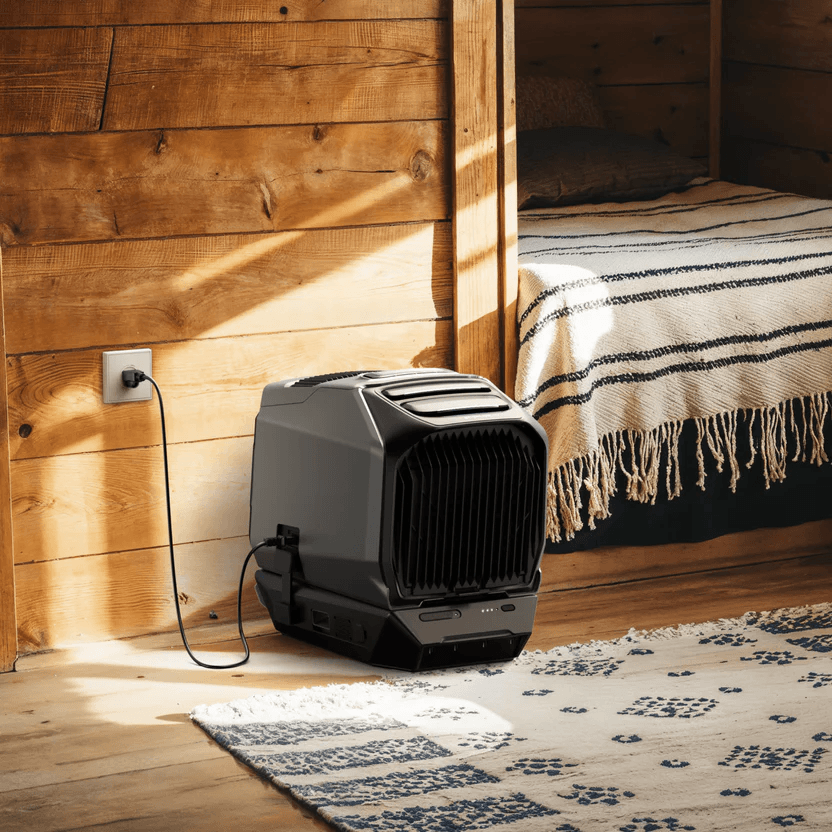
You could also look to purpose-built products like the EcoFlow WAVE 3 Portable Air Conditioner with Heater, which pairs the AC directly with a dedicated battery, so you don't have to match a separate power station to a window or portable unit.
How Much Power Does an Air Conditioner Use?
The power draw of an air conditioner varies by AC type and size and can range from a few hundred watts for a compact unit to several thousand for whole-home systems.
The two most important numbers for battery sizing are the running wattage, which measures the continuous draw, and the starting wattage, which measures the brief compressor surge.
Window and Portable AC Units
Window units typically run around 500 to 1,500 watts, depending on the BTU rating and Energy Efficiency Ratio (EER). Higher EER models draw less power for the same cooling output.
A portable AC is ideal for camping, RVs, or other spaces where permanent installation isn't an option.
However, if you're using a portable AC unit with an exhaust hose design, it typically draws somewhat more power than a window unit of a similar capacity.
The watts required for starting up a window or portable AC unit can briefly spike to two to three times the running wattage, so be sure to factor it in when sizing the battery.
Central Air Conditioners
Central AC systems are the primary cooling equipment for about two-thirds of US homes. They draw around 2,000 to 5,000 running watts, depending on tonnage. A common three-ton residential unit pulls roughly 3,000 to 3,500 watts.
The outdoor compressor/condenser is responsible for most of the essential system's draw, while the indoor handlers and blowers add a smaller but steadier load.
What Size Battery Backup Do You Need for Your AC?
The sizing process starts by verifying the AC is running watts and then adding enough surge headroom to cover the momentary starting watts without tripping your inverter.
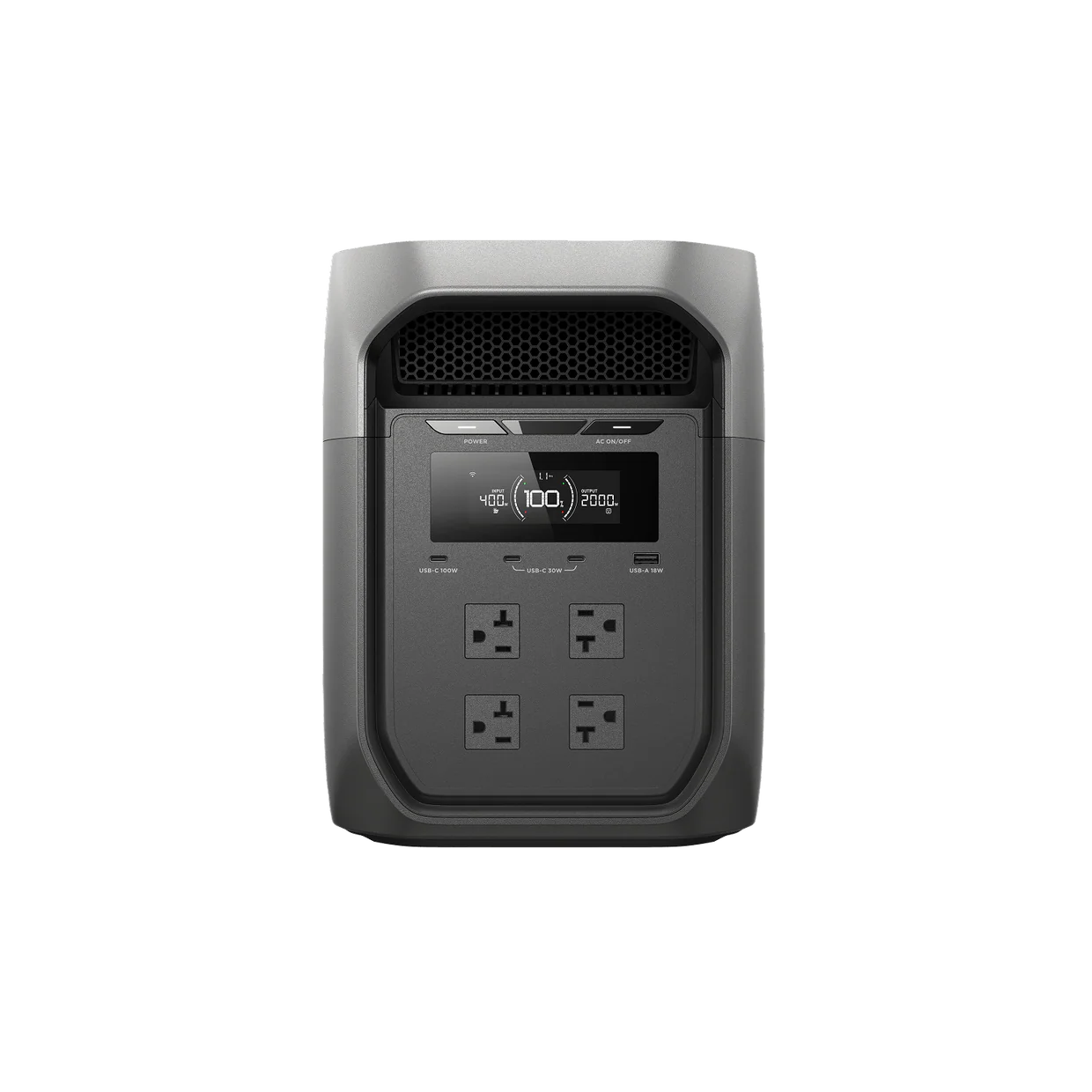
For reference, a PPS like the EcoFlow DELTA 3 Max Series Portable Power Station (2048Wh), rated for 2,400 W continuous output (with a 3,400 W X-Boost Ceiling), can cover the running and starting modes of most window and portable AC units.
Central ACs generally exceed what a single PPS can support. They often require an expandable or a whole-home backup power solution instead.
How Long Can a Battery Backup Keep Your AC Running?
The runtime formula to determine how long your battery backup can keep the AC running is:
(battery capacity in Wh / AC running watts) x .8 efficiency factor (to approximate real-world hours)
So, a 2048Wh power station running an 800W window unit would provide about 2 hours of continuous runtime before accounting for compressor cycling.
Compressors cycle on and off rather than running continuously, so the actual runtime may be longer than this continuous draw math suggests.
In extreme heat, the compressor runs almost continuously to keep up, pulling the average power draw close to its full rated wattage. But in milder conditions, it cycles off more often once the room hits temperature, lowering average draw and stretching the runtime beyond the formula’s estimate.
What Are Your Battery Backup Options for Air Conditioning?
Portable power stations are well-suited for single-room cooling loads. They also run quietly and fume-free compared to fuel generators.
If you have central AC or multiple circuits, a whole-home generator provides a higher continuous output than a single portable unit can match.
Pairing a power station with solar panels, also often known as a solar air conditioner, extends runtime by recharging the battery during daylight hours.
If you choose fuel-based generators, they need to be placed outside in a properly ventilated area to avoid carbon monoxide risk.
Frequently Asked Questions
Can a Portable Power Station Run a Window Air Conditioner?
A PPS can run a window air conditioner if the station's continuous output and surge rating exceed the window unit's running and starting watts. Most window units in the 500 to 1,500-watt range fall within the output of a midsize PPS. Check the AC's data plate for rated amps and volts to confirm compatibility before purchasing.
What Size Battery Backup Do You Need for Central Air?
Central AC systems typically need 2,000 to 5,000 running watts, plus headroom for surge power, usually requiring an expandable or full home battery setup, rather than a single portable unit. Match your unit's tonnage and SEER rating to the battery's continuous output to avoid undersizing.
How Long Will a Battery Backup Power an Air Conditioner?
Runtime depends on the battery capacity in watt-hours divided by the AC's running watts and adjusted for compressor cycling. A small portable unit using a mid-capacity power station could run for several hours, though central AC on the same battery would last a fraction of the time.
Battery Backup Power Keeps Your Home Cool Through Any Outage
Battery backup can keep your home cool through an outage, whether you're pairing a power station with the AC you already own or running an all-in-one unit.
A PPS like the EcoFlow DELTA 3 Max can power a window or portable AC unit when sized to match both the running and starting watts, while the EcoFlow WAVE 3 Portable Air Conditioner pairs the AC and battery in one unit, so there's no separate sizing math to do.
Either option beats a gas generator: no fumes, no noise, and no fueling hassle while you wait out the outage.
For press requests or interview opportunities, reach out to our media team
media.na@ecoflow.com