What Is Balcony Solar? How Apartment Residents Are Generating Their Own Power in 2026
- What Is Balcony Solar, and How Does It Work?
- Is Balcony Solar Legal in the US?
- Why Is Balcony Solar Growing So Fast in 2026?
- Who Can Use a Balcony Solar System?
- What Equipment Do You Need for a Balcony Solar Setup?
- How Much Power Can a Balcony Solar System Actually Generate?
- Frequently Asked Questions
- Lower Bills, Greater Resilience, Cleaner Urban Energy
Investing in clean energy has long been a homeowner’s game, but renters and apartment dwellers are no longer locked out of the clean energy transition. Balcony solar gives millions of people in multi-unit buildings a practical and affordable way to generate electricity from their own outdoor space.
What Is Balcony Solar, and How Does It Work?
Balcony solar, often called plug-in solar, is a compact setup designed for small outdoor spaces such as apartment balconies, patios, and backyards.
Instead of a full rooftop installation that requires permits, contractors, and landlord approval, balcony solar uses one or two portable solar panels connected to a microinverter that converts DC electricity from the panels into standard AC electricity.
The AC power feeds directly into your home’s electrical circuit through a standard outlet and offsets the power you draw from the grid. Your utility meter registers less consumption, and your bill goes down. The system doesn't store energy unless you add a battery.
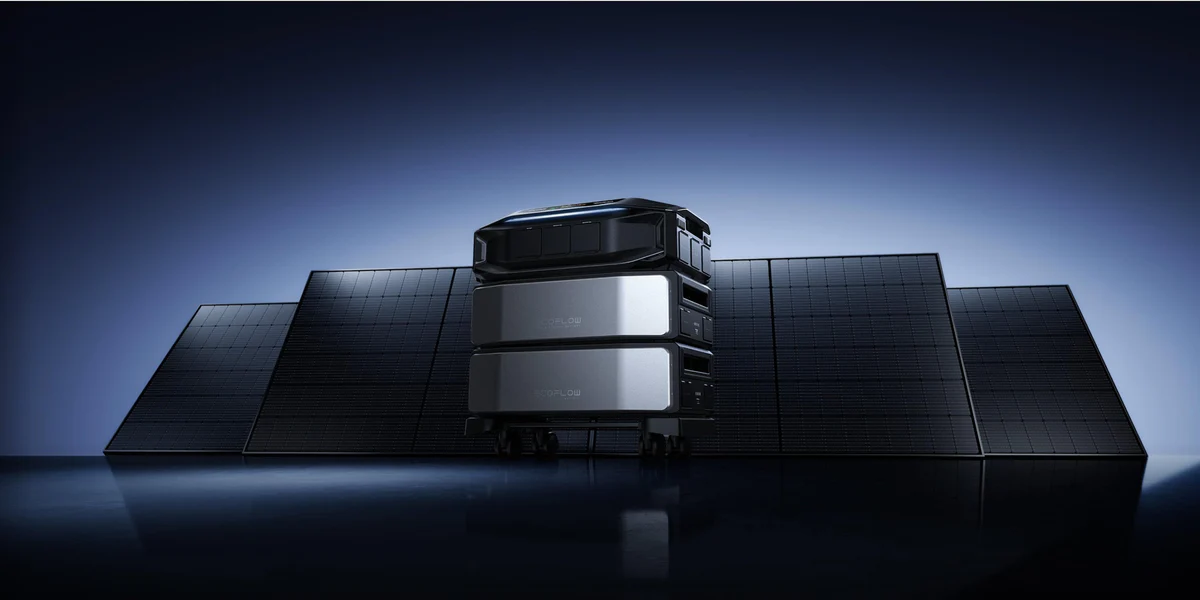
Pairing your panels with the EcoFlow DELTA Pro Ultra X solves this. It stores the energy your panels generate so you can use it at night or during an outage, giving you more control over when and how you use your own power.
Is Balcony Solar Legal in the US?
Balcony solar is legal in the U.S., though the regulatory landscape remains inconsistent. Utilities may require advance approval, HOAs and landlords can prohibit installations, and no federal safety standards currently govern the devices.
Currently, five states — Utah, Maine, Virginia, Maryland, and Colorado — have passed dedicated legislation legalizing plug-in solar systems.
In most other states, plug-in solar exists in a regulatory gray area, not explicitly illegal, but without clear protections either.
The legislative picture is expanding rapidly. As of June 2026, New York's SUNNY Act has passed both chambers of the state legislature and is awaiting the governor's signature, while California's SB 868 has cleared the Senate and is moving through the Assembly.
Note: The information above reflects U.S. state regulations as of June 2026. Plug-in solar legislation is evolving rapidly, and laws in your state may have changed since publication. Always verify current rules with your state legislature or utility before installing a system.
Why Is Balcony Solar Growing So Fast in 2026?
Several factors have come together to push balcony solar into greater demand.
Panel efficiency has improved steadily while prices have dropped, and microinverter technology has become reliable and compact enough for consumer installation without professional help.
Renters and apartment dwellers, who have been excluded from the clean energy market for not owning their roof, are now able to cut energy costs with plug-in alternatives.
The regulatory environment for balcony solar has also shifted. U.S. states have begun introducing policies creating a defined category for plug-in solar systems and exempting them from typical state interconnection agreement requirements. These laws eliminate the need for utility approval, special permits, and professional electrician requirements.
Rising electricity rates have been the final push for people to invest in clean energy. The national average residential electricity rates have risen steadily year after year. Even modest savings for balcony generation add up quickly, and payback periods for these systems are relatively short.
Who Can Use a Balcony Solar System?
Balcony solar is designed for anyone who has access to an outdoor space with reasonable sun exposure and permission to install equipment on it.
Apartment renters with south-, east, or west-facing balconies, condo owners with HOA permission, and RV dwellers looking for an easy plug-in solution can benefit from a balcony system.
You don’t need to own your home, but you do need your landlord’s permission for any permanent mounting. Many systems are designed to be freestanding or rail-mounted, making installation easy and removal simple when you move.
What Equipment Do You Need for a Balcony Solar Setup?
A basic balcony solar kit typically includes:
One or two solar panels — typically 200W to 400W each — to capture sunlight.
A microinverter to convert the panels' DC output into standard AC electricity for household use. The EcoFlow STREAM Microinverter is a purpose-built option for this type of setup, feeding solar energy directly into your home circuit through a standard wall outlet. Note that the EcoFlow STREAM Microinverter is currently only available for plug-and-play installation in Utah and Maryland; check EcoFlow's site for the latest availability as legislation expands.
A mounting bracket or railing clamp to safely secure the panels to your specific railing.
An outdoor-rated power cable.
While not required, adding an apartment solar generator battery storage unit lets you save daytime energy for evening use rather than feeding it back to the grid.
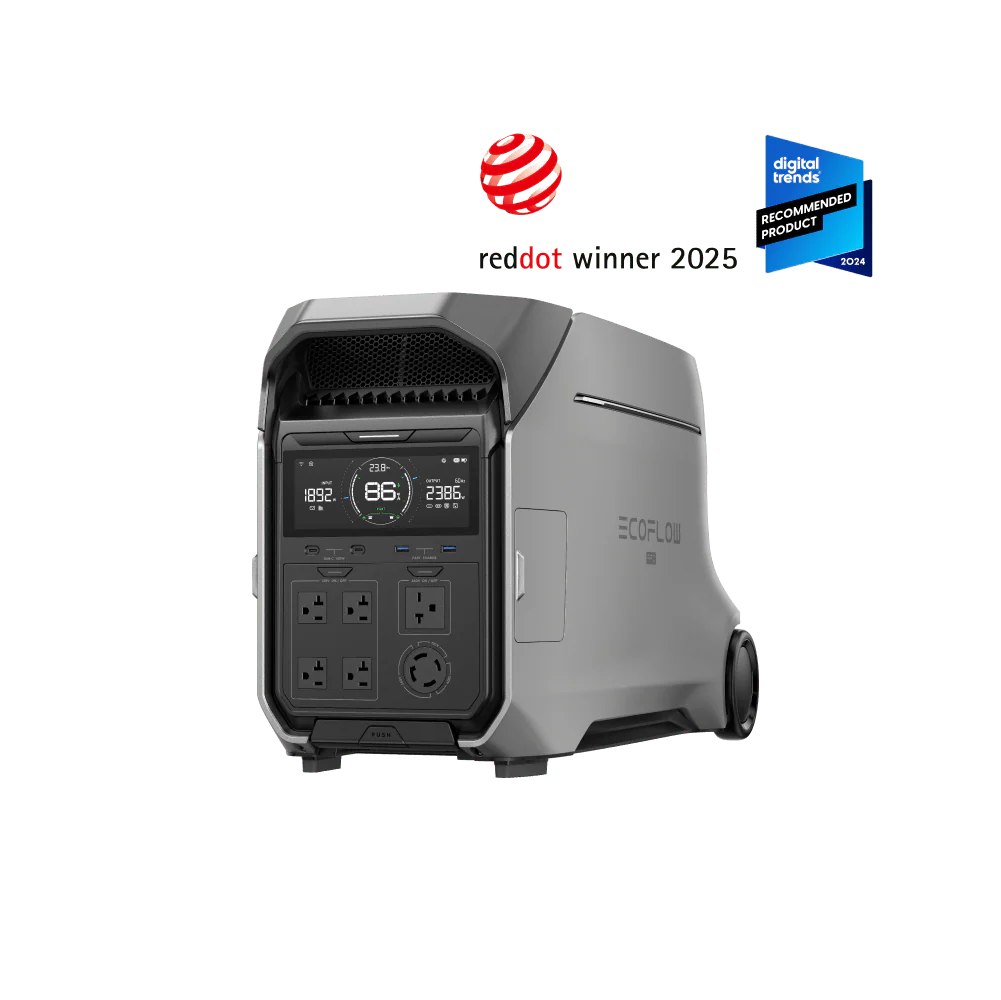
The EcoFlow DELTA Pro 3 Solar Generator, for example, is built for exactly this. It pairs with solar panels to capture and store energy your balcony system generates, so you're running on your own power long after the sun goes down.
How Much Power Can a Balcony Solar System Actually Generate?
The amount of power a balcony solar system generates depends on many factors, such as location, panel orientation and angle, shading, and system efficiency.
It's worth being clear here that balcony solar is a supplementary solution designed to reduce your baseline electricity consumption and lower your monthly bill. It's not a substitute for a whole-home backup power system.
A typical two-panel system with 800W of combined capacity will generate roughly 600–900 kWh per year in most U.S. climates — sunny states such as Florida and Arizona may see more, while cloudy states like Washington and Vermont may see less.
The average U.S. household uses around 10,500 kWh a year. A balcony system won’t replace whole-home backup power, but it can meaningfully offset the power drawn by “always-on” appliances, such as a refrigerator or router. A well-placed balcony system can cover a significant chunk of that baseline load.
Frequently Asked Questions
How Much Power Can Balcony Solar Produce?
Output depends on panel wattage, orientation, location, and shading. A single 400W panel typically produces 300–600 kWh per year in a sunny climate. A dual-panel 800W system can generate an estimated 600–900 kWh annually, depending on location, orientation, and shading.
How Much Can Balcony Solar Save on Your Electricity Bill?
Savings depend on your local electricity rate. At the national average of around $0.17 per kWh, a system generating 800 kWh per year saves roughly $144 annually. In states with above-average electricity rates, that same output can save significantly more each year.
Lower Bills, Greater Resilience, Cleaner Urban Energy
Balcony solar won’t power an entire apartment, but it can reduce your baseline consumption and lower your monthly electric bill. A plug-in setup puts clean energy generation within reach for the millions of people who rent.
If you want to go further, the EcoFlow DELTA 3 Solar Generator pairs directly with your balcony panels to capture and store the energy you generate, so you're running on your own power long after the sun goes down.
As more states legalize plug-in solar, now is a good time to understand your options and start small.
For press requests or interview opportunities, reach out to our media team
media.na@ecoflow.com