Solar Panels for Home: Maximizing Your Energy Independence
As energy costs continue to rise and environmental concerns grow, more homeowners are looking for ways to take control of their electricity use. Installing solar panels for home is not only a smart investment for reducing energy bills but also a powerful step toward achieving energy independence. Whether you want to lower your carbon footprint, protect yourself from unpredictable utility costs, or embrace a more sustainable lifestyle, solar energy offers a practical and long-term solution.
In this guide, we’ll explore why solar power is a great choice for homes, how to select the right panels, and which options on the market stand out—helping you make an informed decision to maximize your home’s energy potential.
Why Should You Install Home Solar Panels
Installing home solar panels offers multiple benefits that go beyond just reducing electricity bills.
Greater Control Over Energy Use: Solar panels let homeowners generate their own electricity, reducing reliance on volatile utility prices and giving more predictable monthly costs. Excess daytime generation can be used, stored or exported, helping households manage energy use more actively.
Environmental Benefits: Switching to solar cuts your carbon footprint by replacing grid electricity with renewable energy. For eco-conscious households, this is a practical way to lower emissions while meeting everyday power needs.
Property Value and Market Appeal: Homes with installed solar systems are often more attractive to buyers thanks to long term energy savings and a modern green image. A well sized system can increase resale value and offer faster payback for prospective owners.
Practical Outcomes: Whether your goal is to save on bills, gain energy independence or support a greener future, solar panels provide a durable and scalable solution that fits many household strategies.
How Much Do Solar Panels for the Home Cost
The cost of installing solar panels for your home largely depends on the size of your household and your energy needs. Generally, the more electricity you consume, the larger the solar system required, which influences the overall cost and potential savings.
To better understand what size system you need, you can use a solar panel calculator to estimate system capacity, potential output, and long-term savings.
Typical system sizes and who they suit:
Small family home: a 3 kW system might cost in the mid-range and suit 1 to 2 bedroom houses.
Medium home: a 4 kW system is a common fit for 2 to 3 bedroom houses and sits in a mid-price band.
Larger homes: a 6 kW system suits 4 to 5 bedroom properties and carries a higher installation cost.
Exact prices vary by country and installer so use local quotes for accuracy. Annual savings from these systems can vary: a medium-sized home may save around £1,304 per year on energy bills. By exporting surplus electricity back to the grid through the Smart Export Guarantee (SEG), additional earnings of £38–£85 per year can be achieved, increasing overall savings. Over the lifetime of the panels, a medium-sized home could potentially save more than £32,000, achieving a break-even point in about six years.
Adding a solar battery to your system can slightly increase the upfront cost but provides significant benefits, such as storing excess energy for nighttime use or peak hours. For a 3–4kW system, including a battery can bring the total to £13,000–£15,500, enhancing energy independence and further reducing electricity costs.
Ultimately, the right system size depends on your household’s energy consumption, roof space, and long-term goals. Contacting a certified local installer can provide a tailored quote, ensuring you select the best solar panel setup for your home while maximizing savings.
How to Choose the Right Solar Panel
1. Assess Your Energy Needs
Start by evaluating your household’s daily and annual electricity consumption. Larger households or homes with high electricity use may require higher-capacity panels, while smaller homes can get by with fewer panels. Understanding your energy needs ensures you choose a system that delivers adequate power without overspending.
2. Consider Roof Space and Orientation
The size, shape, and orientation of your roof will influence the number and type of panels you can install. South-facing roofs generally capture the most sunlight in the UK, but east- or west-facing roofs can also work with slightly reduced efficiency. For portable or flexible setups, adjustable panels can help optimize sunlight exposure regardless of roof direction.
3. Evaluate Efficiency and Performance
Look for panels with high conversion efficiency to get the most energy from available sunlight. Efficient panels can generate more electricity per square meter, which is especially important if roof space is limited. Consider bifacial or advanced panel designs if you want to capture additional sunlight from reflections.
4. Durability and Weather Resistance
Solar panels are a long-term investment, so choose ones that can withstand the elements. Panels with high IP ratings offer protection against dust, rain, and harsh weather conditions, ensuring consistent performance for years.
5. Installation Flexibility
Consider how easy it is to install the panels and whether they suit your preferred setup. DIY-friendly panels with multiple mounting options can be placed on flat roofs, balconies, or tiled roofs. Portable panels with adjustable stands provide additional flexibility for outdoor activities or temporary setups.
6. Smart Features and Monitoring
Modern solar panels often come with smart monitoring capabilities. Panels that can be managed via an app allow you to track energy production, optimize usage, and detect issues early. This can maximize efficiency and give you more control over your energy independence.
7. Budget and Long-Term Goals
Finally, balance upfront costs with long-term benefits. Higher-efficiency or larger panels may cost more initially but can save more money and energy over time. Consider whether you want to add battery storage or plan for future energy needs when selecting your system.
Recommended EcoFlow Solar Panels for Your Home
Choosing the right solar panel can make a big difference in maximizing energy independence and adapting to your lifestyle. These options also offer great flexibility for homeowners comparing solar panel kits for home to build a complete and efficient energy system. If you're searching for some of the best solar panels for home use, EcoFlow offers reliable solutions designed for efficiency, durability, and long-term savings.
Product Overview
EcoFlow 450W Rigid Solar Panel
For homeowners looking to power their home reliably, the EcoFlow 450W Rigid Solar Panel delivers high performance with ease of installation:
With 450W per panel and 23% conversion efficiency, these panels provide substantial energy output for daily home use.
IP68 dust and waterproof rating ensures long-lasting performance, even in rainy or harsh conditions.
DIY-friendly mounting with multiple options—perfect for flat roofs, tiled roofs, or even balcony solar panels setups.
EcoFlow 250W Rigid Solar Panel
For homeowners who want a mid-range panel that balances output and ease of installation, the EcoFlow 250W Rigid Solar Panel delivers reliable per-panel power and modern cell technology:
Rated power 250 W with high conversion efficiency (about 24.7%) using N-type cells.
Robust build and IP68 dust- and water-resistance for long service life.
Relatively light (~10 kg) and sized for multi-mounting options with pre-drilled fitting points.
Compatible with EcoFlow solar cabling and the wider EcoFlow ecosystem for simple integration into home systems.
EcoFlow 175W Rigid Solar Panel
If you need a compact, high-efficiency option for smaller arrays or to add incremental capacity, the EcoFlow 175W Rigid Solar Panel uses TOPCon N-type cells to maximise output per square metre:
Rated power 175 W with up to 25% conversion efficiency via TOPCon N-type cells for stronger low-light and high-temperature performance.
IP68 waterproof/dustproof construction and a durable rigid frame for long term reliability.
Panel weight around 9.3 kg and form factor that makes it easy to combine multiple panels into a home array.
Engineered for a 30-year lifespan to deliver dependable energy production over decades.
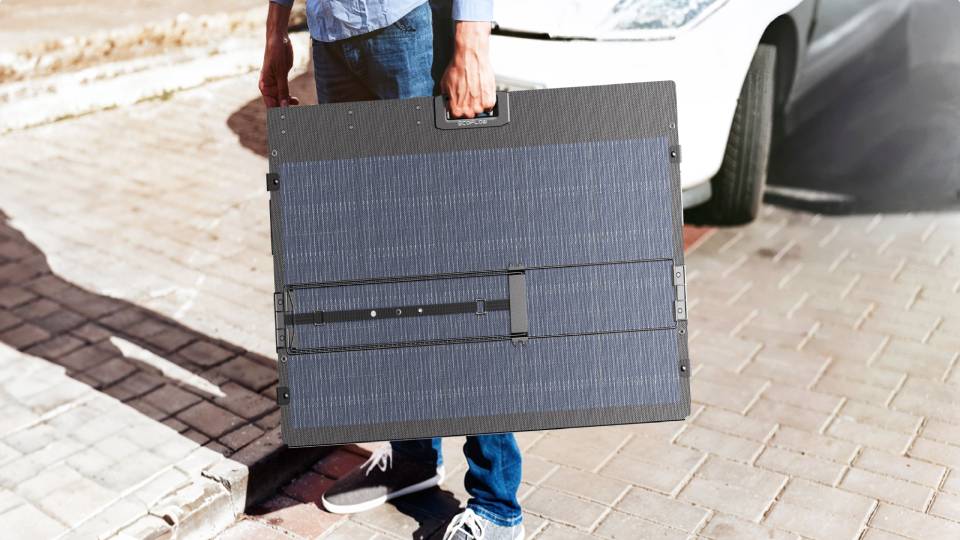
Quick Comparison Table
Comparison Criteria | 450W Rigid Solar Panel | 250W Rigid Solar Panel | 175W Rigid Solar Panel |
Rated Power | 450 W | 250 W | 175 W (±3W) |
Efficiency | Up to 23% | Up to ~24.7% | Up to ~25% |
Cell Type | Monocrystalline | N-Type | N-Type TOPCon Monocrystalline Silicon |
Weight | Approx. 22.4 kg | Approx. 10 kg | Approx. 9.3 kg |
Panel Size | 190.8 × 113.4 × 3.0 cm | 113.7 × 116.5 × 2.0 cm | 117.6 × 76.2 × 3.0 cm |
Weather Resistance | IP68 dustproof and waterproof | IP68 dustproof and waterproof | IP68 dustproof and waterproof |
Warranty/Lifespan | Up to 12-year warranty | Standard warranty | Around 30-year lifespan design |
Key Advantages | High per-panel wattage for fast charging; rugged frame and high snow/wind tolerance | Strong N-Type cell efficiency with lighter, compact form factor for easier handling and roof mounting | High efficiency in compact size, easy modular expansion |
Suitable Scenarios | Homeowners who want fewer high-output panels to maximise solar input per panel and integrate into larger on-grid or backup systems | Balanced choice for residential arrays where space and handling matter; good for mixed arrays or tighter roof layouts | Ideal for adding incremental capacity, optimising limited roof area, or building flexible (modular) home arrays |
Conclusion
Investing in solar panels for home is more than just a way to save on electricity bills—it’s a long-term strategy to gain energy independence and embrace a sustainable lifestyle. By carefully selecting the right system for your household, considering efficiency, durability, and smart features, you can ensure consistent energy production while reducing reliance on the grid.
FAQs
How many solar panels are needed to run a home?
The number of solar panels you need depends on your household’s electricity use and the wattage of each panel. Most UK homes require a 3kW–6kW system, which typically means installing 8 to 16 panels. A small home may need around 8–10 panels, while a larger family home may need 12–16. Factors such as roof orientation, shading, and panel efficiency can also influence the final number.
What is the average cost of putting solar panels on a house?
For a typical UK home, installing solar panels generally costs £5,700 to £12,000, depending on system size and installation requirements. A 3kW system is usually the most affordable, while a 6kW system costs more but generates higher savings. Prices can increase if you add a battery, but this also improves energy independence and reduces reliance on the grid.
How much is solar for a 2000 sq ft home?
A 2000 sq ft home often requires a 4kW to 6kW solar system, depending on energy use. In the UK, this would typically cost £8,000 to £12,200 including installation. With the right system size and favourable sunlight conditions, homeowners can save over £1,000 per year on electricity bills and potentially earn extra through the Smart Export Guarantee (SEG).