How Does Plug-in Solar Work? A Complete Guide for UK Homes
- How does plug-in solar work?
- How does electricity flow in a plug-in solar system?
- What happens when you plug solar into your home?
- Real-life example of plug-in solar in use
- What affects how much solar power you actually use?
- How to store and use more of your solar energy?
- When does plug-in solar work best?
- Conclusion
- FAQs
Plug-in solar is a simple way for UK households to start using solar power without a complex installation. It typically includes a compact solar system with panels and a microinverter that connects to your home's electrical setup. The solar panels capture sunlight and convert it into usable electricity, helping reduce your energy costs. It's a flexible option, especially for renters or those who want low-cost entry into solar energy. While it's not as powerful as full rooftop systems, it still makes a noticeable difference in everyday usage. To understand it better, let's look at exactly how plug-in solar works in practice.
How does plug-in solar work?
If you're wondering how plug-in solar works, the process is very straightforward. Sunlight hits the solar panel, and the panel converts that sunlight into electricity. This electricity then flows through a small inverter, which makes it suitable for use in your home. Once converted, the power goes straight into a plug socket and is used instantly by your appliances. This means your home uses solar energy first before drawing any extra electricity from the grid.
How does electricity flow in a plug-in solar system?
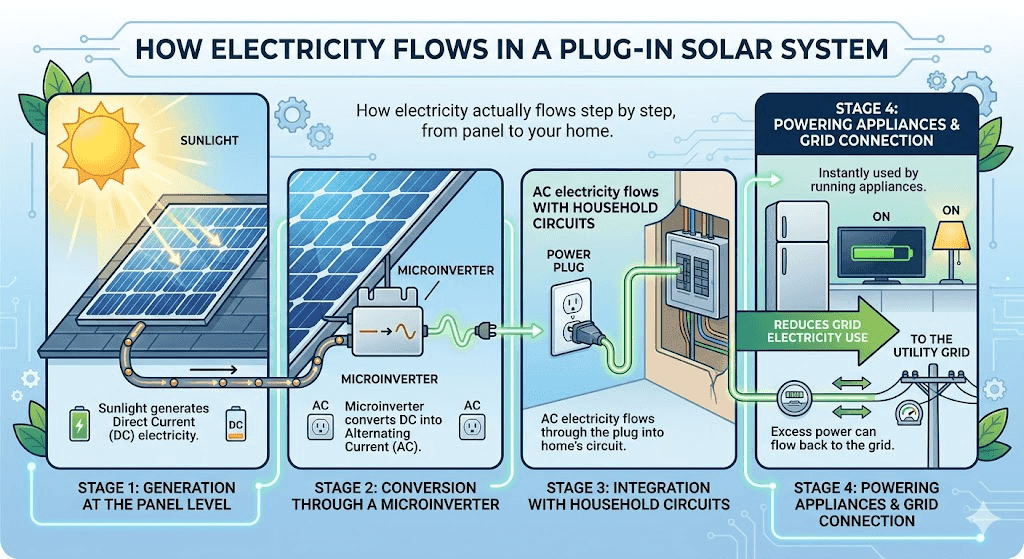
Now that you know plug-in solar sends power straight into your home, it helps to break down how electricity actually flows step by step. The process starts right at the panel and moves smoothly through a few key stages before powering your appliances. Let's walk through each stage clearly and simply.
Generation at the panel level
Everything begins with the solar panel. When sunlight hits the panel, it generates direct current (DC) electricity. This is the raw form of power produced from sunlight, but it's not yet suitable for running most household devices.
Conversion through a microinverter
The DC electricity then passes through a microinverter, which is usually attached to the panel. This device converts DC into alternating current (AC), the type of electricity your home uses every day. Without this step, the power couldn't be used by your appliances.
Integration with household circuits
Once converted, the AC electricity flows through the plug into your home's circuit. From there, it is instantly used by any appliances that are running. If your solar system is producing enough power, it can reduce the amount of electricity you need to take from the grid.
What happens when you plug solar into your home?
When you connect a solar energy system to your house, it begins to provide power straight to your home devices. This system operates with your current electricity network, assisting in lowering the amount of power you have to purchase. Here's how it all plays out in everyday use:
Solar power is used first
Whenever your solar panels produce electricity, your home uses that energy first before relying on any other power source. This means appliances like your fridge, lights, or TV will run on solar energy whenever it's available. It's an automatic process, so you don't need to switch anything manually.
Grid electricity fills the gap
If your solar panels aren't producing enough energy, like during cloudy weather or at night, your home simply pulls the extra electricity it needs from the grid. This ensures you always have a steady power supply without interruptions.
Interaction with your electricity meter
Your electricity meter records how much power you draw from the grid. Since solar energy is used first, the meter runs more slowly when your panels are generating power. In most plug-in systems, any unused solar electricity isn't exported back, so the focus is mainly on reducing your own usage.
Real-life example of plug-in solar in use
Imagine a typical afternoon at home when the sun is shining, and your plug-in solar panel is generating electricity. At that moment, everyday appliances like your fridge, Wi-Fi router, or laptop are using solar energy rather than taking power from the main grid. This helps lower your electricity usage without you even noticing a change.
Now, if you start using a larger device such as a washing machine, your solar setup will supply part of the energy, and any extra needed power will come from the electric company. Later in the evening, when it's dark, your house will automatically switch back to using only electricity from the grid. This simple system shows how plug-in solar quietly supports your daily energy needs while reducing overall costs.
What affects how much solar power you actually use?
Now that you've seen how plug-in solar works in real life, it's important to understand why the amount of solar power you use can change throughout the day. A few simple factors influence how much of that energy actually powers your home. Let's look at the key ones:
Time of day and sunlight availability
The more sunlight your panels receive, the more electricity they produce. During midday, when the sun is strongest, your system generates the most power. In the early morning, evening, or on cloudy days, the output is lower, which means you'll rely more on grid electricity.
Number of active appliances
How much solar power you use also depends on what's running in your home. If you have several appliances turned on at the same time, they will consume more electricity. If your solar system can't meet that demand, the extra power will come from the grid.
System size and output
The size of your plug-in solar system plays a big role in how much energy it can produce. A larger system with more panels will generate more electricity, allowing you to power more appliances with solar energy. Smaller systems still help, but their contribution will naturally be more limited.
How to store and use more of your solar energy?
So far, plug-in solar mainly helps you use electricity as it's being generated. But if you want to get even more value from your system, it's worth looking at ways to store that energy and use it later. This is where a few simple upgrades and smart habits can make a big difference.
Benefits of adding battery storage
Adding a battery allows you to store extra solar energy instead of using it all right away. For example, if your panels generate more power than your home needs during the day, the surplus can be saved for later. You can then use this stored energy in the evening or at night, reducing how much electricity you need from the grid. Many modern solutions, such as EcoFlow home solar batteries, are designed to integrate easily with existing setups and help you manage energy more efficiently.
Flexible energy use beyond daylight
Even without a battery, you can still make better use of your solar power by adjusting when you use certain appliances. Running devices like washing machines or dishwashers during sunny hours helps you rely more on solar energy. With a battery, this flexibility increases, as you're no longer limited to daytime use and can benefit from solar power even after the sun goes down.
When does plug-in solar work best?
Plug-in solar panels are most effective when used under the right conditions. They're designed to supplement your home energy, not replace a full rooftop system, so understanding when they work best helps you get the most benefit. Here's when plug-in solar works best.
Daytime energy usage patterns
Plug-in solar works best during the day when the sun is shining. Homes that use electricity while the sun is out, like running a fridge, charging devices, or using computers, can make the most of the energy as it's generated. This way, you use solar power first and reduce your reliance on the grid.
Small to medium electricity needs
These systems are ideal for households with modest electricity consumption. They're perfect for powering smaller appliances or topping up your energy supply without the complexity or cost of a full solar installation. Large energy demands may still require grid electricity to fill the gap.
Users looking for a simple solar entry
Plug-in solar is a great choice for anyone wanting an easy, low-cost introduction to solar energy. It requires no major installation, making it perfect for renters or homeowners who want to test solar without committing to rooftop panels. It's simple, flexible, and gives a hands-on feel for renewable energy.
Conclusion
Plug-in solar offers a simple and practical way to start using renewable energy at home without major changes. Understanding how plug-in solar works can help homeowners see how it connects seamlessly with an existing setup and reduces electricity bills by using solar power first. While it may not replace a full solar system, it's a smart step toward more efficient energy use.
FAQs
How effective are plug-in solar panels?
Plug-in solar panels are effective for reducing small, everyday electricity use, especially for appliances that run continuously, like fridges or routers. They typically generate a few hundred watts, which can lower your energy bills over time. However, they won't power an entire home like a full rooftop system. Their effectiveness depends on sunlight, placement, and how well your energy usage matches their output.
How much do plug-in solar panels cost?
Plug-in solar panels in the UK usually cost between £200 and £800 for a small setup, depending on the size and brand. Larger or higher-output systems can be more expensive. Compared to full rooftop solar installations, they're a low-cost, entry-level way to start generating your own electricity at home. Installation is simple, often just plugging into a standard socket.
Will a 400W solar panel run a fridge?
Yes, a 400W plug-in solar panel can run a standard fridge, but it depends on sunlight and fridge size. Most small to medium fridges use around 100–200W when running, so a 400W panel can cover this during sunny periods. However, if sunlight is weak or intermittent, the fridge may still draw some power from the grid. Adding a battery can help ensure continuous operation.