Intelligent Octopus Go Explained: Smart EV Charging and Home Energy Savings in 2026
EV ownership is rising in the UK and there is a need for a more intelligent approach to managing EV charging costs. As such, many EV users are considering Intelligent Octopus Go, a tariff designed to help households charge their EVs when electricity costs are lower.
Unlike standard electricity tariffs, Octopus Intelligent Go is a smart charging technology that automatically plans charging sessions when electricity is cheaper. This can help reduce charging costs and maximize energy use throughout the house.
What Is Intelligent Octopus Go and How Does It Work?
Electricity costs are fast becoming a major concern for many EV owners. Knowing the Intelligent Octopus Go operation may help households determine if it is appropriate for their charging practices and energy goals.
Octopus Go is a smart EV tariff from Octopus Energy. It allows certain electric vehicles to charge at off-peak rates, which are lower, while providing lower cost electricity during specific off-peak periods.
The tariff automatically schedules charging times when electricity rates are lower, allowing drivers to benefit from smart technology without having to manually select charging times each day.
How does Intelligent Octopus Go work?
A key feature of how Intelligent Octopus Go works is its ability to communicate with compatible vehicles or chargers. Users input their desired charging parameters; in turn, the system selects appropriate charging windows. This automated system guarantees vehicle readiness when required and optimizes the use of more affordable electricity windows. It's a convenient way for many families to automate charging arrangements.
Why smart EV charging tariffs are becoming more popular
With growing EV adoption, many EV owners are finding ways to lower the cost of charging. Smart tariffs like Octopus Energy Intelligent Go can help households to change their electricity consumption patterns to avoid paying for peak periods.
These tariffs can also be used to reduce charging expenses and drive more comprehensive energy management plans for homes, especially those with solar power or battery storage and other smart energy solutions.
Octopus Go vs Intelligent Go: Key Differences for EV Owners
The intent of both Octopus Go and Intelligent Octopus Go is to save EV owners money on charging, but how they do so is different. Knowing these distinctions may help drivers identify the tariff that is right for them.
Charging schedules and tariff structure differences
One of the first things people compare when they research the standard Octopus Go vs Intelligent Go is charging times. Octopus Go offers a time of day when it is not busy for the charge to happen automatically at lower electricity rates.
Intelligent Octopus Go, on the other hand, is a smart charger that takes advantage of its technology to schedule charging sessions. This flexibility can enable optimisation of charging to match electricity demand and system conditions, and ensure that the vehicle is ready when needed.
Automation and smart charging capabilities
Automation is one of the greatest benefits of Octopus Intelligent Go. Users can easily set their preferences using the app instead of manually setting the charging times each day.
The system then automatically handles charging schedules. For EV charging households, this can enhance convenience and help maximize access to periods of lower cost electricity.
Which tariff may suit different driving habits?
If a driver has a predictable charging schedule, then either tariff may be appropriate. Changing household schedules and changing charging needs, however, may benefit from the flexibility of the Octopus Energy Intelligent Go.
Automatically adjusting charging sessions can be helpful to commuters, multi-car homes, and households that are using EVs in tandem with other electrical needs.
Comparing potential charging savings
Both tariffs aim to lower the cost of charging an EV as compared to electricity tariffs. Actual savings will depend on vehicle usage, frequency of charging and household electricity consumption and tariff rates at the time.
The table below highlights some of the main differences between Octopus Go vs Intelligent Go.
Feature | Octopus Go | Intelligent Octopus Go |
Charging Method | User schedules charging manually | Charging schedules are optimised automatically |
Smart Charging | Limited | Advanced smart charging |
Compatible EVs Required | No | Yes |
Compatible Charger Required | Not necessarily | Often required |
Off-Peak Electricity | Fixed off-peak period | Dynamic smart scheduling |
User Involvement | Higher | Lower |
Best For | Simple overnight charging | Automated charging optimisation |
Both tariffs can assist in reducing EV charging costs, but Intelligent Octopus Go provides more household automation and flexibility, for households with compatible chargers or vehicles.
Common Energy Challenges for EV Households
Although choosing an EV tariff can help keep electricity costs down, many households find that effective electricity management isn't just about choosing the right tariff. Electric vehicles can increase overall energy demand in a household as EVs are integrated into daily living.
Growing household electricity demand from EV charging
Regular EV charging can lead to a substantial increase in the electricity usage of a household. For some people, the total overall energy consumption increases following the transition to EV, depending on their driving patterns and the size of their cars.
This makes it more relevant to make energy planning, especially in a household with several vehicles or other energy intensive appliances.
Maximising value from off-peak electricity periods
The lower cost charging windows are valuable opportunities for electricity savings. But not every household makes full use of all the electricity available during non-peak times.
Therefore, many homeowners seek ways to take advantage of the benefits of consuming electricity at lower cost, not only for their vehicles.
Managing EV charging alongside daily home energy use
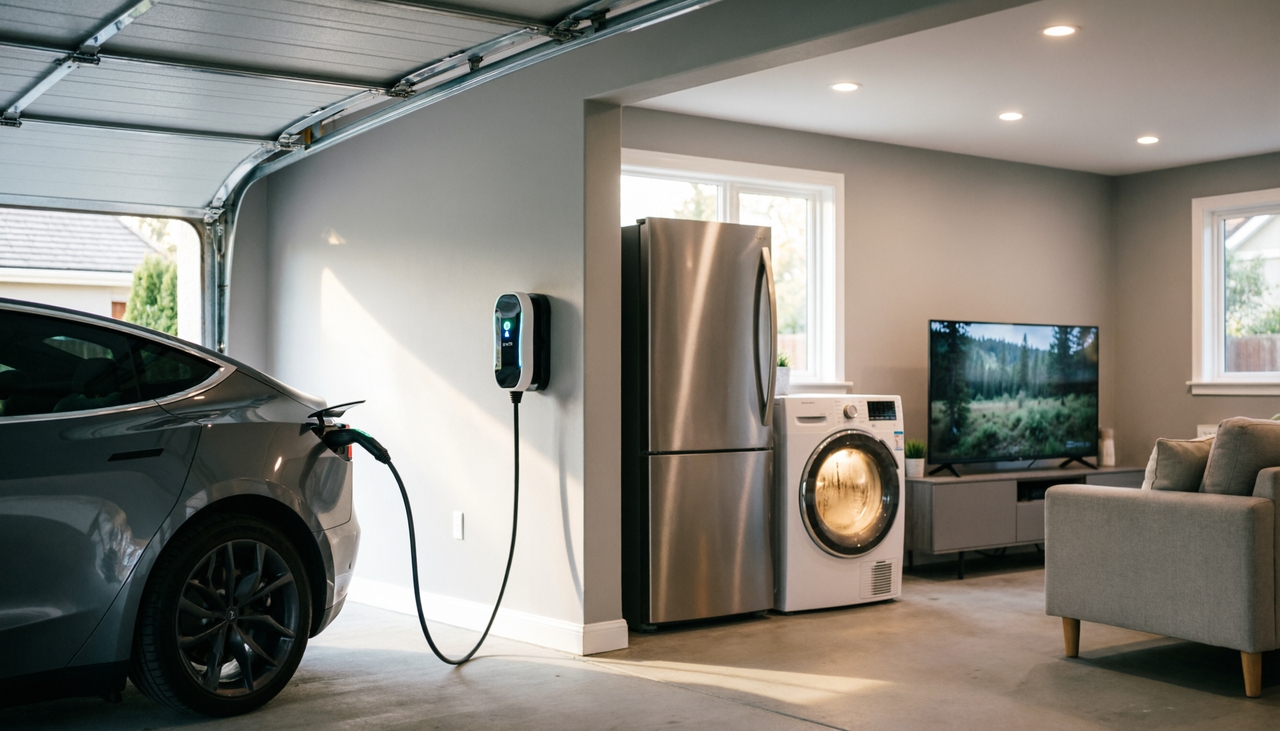
EV charging is frequently done in the same household as other appliances. Everyday electricity consumption includes heating systems, cooking appliances, entertainment devices and home offices.
These competing demands for energy can be particularly significant as more and more electric technology is introduced into the home.
Why tariff savings alone may not optimise household energy costs
Lower-cost EV tariff can lower charging costs but does not automatically optimize energy use in household. Costs for electricity can also be affected by factors like electricity storage, solar electricity generation and consumption habits.
For this reason, many homes are seeking other energy management approaches that go beyond choosing a tariff.
Smarter Home Energy Solutions for EV Owners
Tariff optimisation is just one element of successful energy management for many households, but Intelligent Octopus Go can make a huge difference in EV charging prices. With the development of EVs as a daily reality, homeowners are seeking to make more use of electricity at off-peak times, solar electricity generation, and stored electricity.
When used together with smart charging tariffs, battery storage can help households increase their flexibility, lessen their consumption of peak-rate electricity and make their energy use more efficient from a long-term perspective.
Why battery storage helps maximise off-peak EV charging benefits
A major benefit of Intelligent Octopus Go rates is lower-cost electricity during specific charging times. But home electricity needs don't necessarily coincide with these less expensive windows.
Households can use battery storage to store electricity during periods of low cost and utilize it during periods of high demand. This can contribute to overall energy efficiency and better utilization of off-peak charging times.
For homeowners interested in cutting electricity costs over the long haul, battery storage can be used for EV charging and for overall home energy management.
EcoFlow STREAM 5000 AC for existing solar and Intelligent Octopus Go users
Households with solar panels might be interested in solutions that can be integrated with existing energy systems. The EcoFlow STREAM 5000 AC is designed for homeowners seeking to expand their battery storage capacity without having to upgrade their existing solar panels.
It is retrofit-friendly, so it offers households even more flexibility to store solar energy and utilise lower cost charging times via Octopus Intelligent Go. This can help to increase self-consumption and to optimize the home energy system.
EcoFlow STREAM 5000 for homeowners starting a smarter energy journey
The EcoFlow STREAM 5000 offers a simple solution to home energy storage for households not yet solar-powered. It is easy to operate, making the adoption process easier and simplifying daily energy management and backpower requirements.
The small system is designed for homeowners who want to increase their energy flexibility, but are not willing to take on a complicated installation process. With more and more people getting interested in Octopus Energy Intelligent Go and smart energy technologies, solutions like STREAM 5000 provide a straightforward route to more energy control in the home.
Combining smart tariffs, solar energy, and battery storage for greater savings
The greatest long-term benefits often come from combining multiple energy-saving strategies rather than relying on a single solution. Households with the Intelligent Octopus Go tariff can increase this efficiency with a combined smart charging, solar generation, and battery storage.
This strategy is used to maximise the benefits of lower cost electricity, increased self-generated solar power, and to have a more resilient household energy system. With EVs dominating the automotive landscape more and more, many homeowners are seeing energy storage as a crucial component of their energy plans.
Practical Ways to Increase Long-Term EV Charging Savings
1. Charge whenever lower-cost electricity is available
The easiest way to gain from Intelligent Octopus Go is to charge vehicles when electricity is cheaper, if possible, and then to take advantage of this. Smart scheduling options can help to automate this as well as decrease demand for higher cost electricity.
2. Monitor household and EV electricity usage
Monitoring of energy use can identify potential energy efficiency savings. When using the Octopus Intelligent Go tariff, many households find that understanding electricity usage and when they use it can help them optimise both vehicle charging and their household energy consumption.
3. Combine solar generation with EV charging
Solar panels can be used to power electric vehicles, making it possible to use solar electricity to charge vehicles in homes with solar panels, thereby lowering grid electricity usage. This can be further enhanced with solar generation and battery storage, which can further increase flexibility and energy independence
4. Plan for future energy needs
Electricity demand could continue to increase as households switch to electric vehicles, heat pumps and other technologies that require energy-intensive lifestyles. With the benefits of features like Octopus Energy Intelligent Go and other smart energy solutions, selecting flexible energy solutions now can help to make it easier to adapt to future needs.
Conclusion
With the number of EV vehicles on the road in the UK continuing to rise, tariffs like Intelligent Octopus Go are designed to help drivers save on charging costs by using electricity more efficiently. Using automated charging schedules with lower cost electricity times, households can maximise efficiency and ensure vehicles are available for use day-to-day.
However, long-term energy savings often involve more than selecting the right tariff. Many homeowners are now combining smart charging with solar generation and battery storage to create a more flexible household energy strategy. Solutions such as the EcoFlow STREAM 5000 AC for existing solar users and the EcoFlow STREAM 5000 for households beginning their energy management journey can help support better use of electricity, improve energy flexibility, and complement the benefits offered by Octopus Energy Intelligent Go.
FAQs
Do I need a smart meter to use Intelligent Octopus Go?
Yes. A smart meter is normally necessary to use Intelligent Octopus Go, as this is the only way to get accurate electricity usage data that is needed to manage charging schedules and apply the right tariff rates. The automated features of the tariff can only function if the smart meter is compatible.
What happens if my car is not on the Intelligent Octopus Go compatible cars list?
Not every vehicle is currently compliant with Octopus Intelligent Go requirements for cars. Drivers can still join if the vehicle is not supported, with a compatible smart charger.
Consult the latest compatibility list from Octopus Energy.
Check out some of the smart charger options.
Make sure that before changing tariffs, they are compatible.
More EV manufacturers are rolling out smart charging features, which will likely increase the number of vehicles that qualify.
Is Intelligent Octopus Go only useful for EV owners?
Although the tariff is targeted at EV charging, households can benefit from it by leveraging lower cost electricity periods for other energy uses. This can help achieve a more energy-efficient home when used in conjunction with smart energy management practices.
Can battery storage increase the value of off-peak electricity?
Yes. Batteries enable households to store power at lower cost times and use it when demand is higher.
Save power when Intelligent Octopus Go rates are low.
Take advantage of stored energy in high price periods.
Enhance the flexibility of household energy use.
This strategy can help realize the best possible value from smart tariffs and promote energy-saving initiatives.
Should I choose Octopus Go or Intelligent Octopus Go?
It depends on your charging practices and the technology available. Some drivers may opt for automated charging using services such as Octopus Go vs Intelligent Go packages that offer intelligent scheduling, whilst others may prefer to have the charging arrangements set out manually for the off-peak hours.
Comparing tariff conditions, energy consumption habits, and convenience can assist in making the correct choice.