Canada Wildfire Smoke Map: Check Smoke Conditions Near You
Canadian summers have always been something special. Lately, though, they come with a catch: wildfire smoke. Smoke doesn’t care about provincial borders. A fire burning deep in northern Quebec or B.C. can drift into cities a thousand kilometres away. And because winds shift constantly, a perfectly clear morning can turn thick and hazy by lunchtime. The smell is unmistakable — like a campfire that’s way too close.
Checking a smoke map before you head out for a run, commute to work, or crack the windows at night has become a sensible habit. This guide explains where to find trustworthy smoke forecasts for Canada, how to read them, what the health risks actually mean, and how to set up your home for those heavy smoke days.
How Can You Check Wildfire Smoke Conditions Near You?
A smoke forecast gives you a heads-up on where a plume is travelling to. Local air quality data tells you what is happening outside your door right now. Looking at both gives you an accurate story.
Use the Canada FireWork Smoke Map
Environment and Climate Change Canada runs a great forecasting tool called FireWork. It predicts how the tiny, irritating particles from wildfire smoke (you will usually see this as PM2.5) are expected to drift across North America over the next 72 hours.
Just zoom in on your region and hit play on the hourly animation. It gives you a quick visual on whether the thickest smoke is heading your way, blowing past you, or settling in for the weekend.
Compare Forecasts With Local AQHI
Remember that FireWork is just a computer model. For real-time risks, you want the Air Quality Health Index (AQHI). This scale tells you the actual observed and forecasted health risks for specific Canadian towns and cities.
The AQHI uses a scale from 1 to 10+:
| AQHI | Health risk | General guidance |
|---|---|---|
| 1–3 | Low | Usual outdoor activities are generally suitable |
| 4–6 | Moderate | Reduce heavy activity if symptoms develop |
| 7–10 | High | Consider reducing or rescheduling heavy outdoor activities |
| 10+ | Very high | Reduce or reschedule strenuous outdoor activities. People at higher risk should avoid strenuous outdoor activities. |
Keep in mind the AQHI offers separate advice for the general public and those at a higher health risk. Always follow the specific health message for your area rather than just looking at the numbers.
Check Air Quality Alerts for Your Location
When pollution spikes, Environment and Climate Change Canada sends out official air quality alerts. These warnings tell you exactly which regions are heavily affected and offer advice based on what is coming.
You can check for alerts in your community through the government weather service website or by downloading the WeatherCAN app. Provincial health authorities and local emergency crews will often post extra updates on social media for specific neighbourhoods. If a wildfire threatens the surrounding area, review your personal emergency evacuation plan and be prepared to follow local instructions.
Review the 48- to 72-Hour Smoke Forecast
FireWork updates twice a day. Don’t just glance at the opening picture. Click through a few different forecast frames.
Think about what your family is doing later. Maybe you have a long commute, work construction, or are heading to the cottage for the weekend. The further out the forecast goes, the less certain it gets, so give the map one last look before you head out the door.


How Do You Read Canada Wildfires Smoke Map?
First things first, figure out what the map is actually showing. Check which hour is selected, and see where your town is located from the main smoke plume.
Check PM2.5 Levels and Map Colours
The term PM2.5 refers to fine particles measuring 2.5 micrometres or less. Check the map’s legend so you know what each colour means. A quick heads-up: colours aren’t the same on every website. Some maps only highlight the smoke from wildfires. Others lump in all PM2.5 sources, including highway traffic and local factories.
Select Your Location and Forecast Time
Find the regional view for your province and click on the hour that lines up with your plans. Looking at a 10 p.m. forecast won’t help you plan a morning bike ride.
Make sure you zoom in close enough to spot your specific area. Smoke levels can completely change within the same province, especially if you live near mountains or deep valleys where smog gets trapped.
Track Smoke Direction and Movement
Don’t ignore the animation feature. Watching the map shift by hour which shows you who is getting hit next and how long the bad air might stick around.
Smoke doesn’t just travel in a straight line from a fire. Shifting winds can blow it all over the place, and local geography plays a massive role. A town way off in the distance might actually get worse air quality than a community right next to the flames.
Understand Smoke Forecast Limitations
FireWork relies on estimates of wildfire emissions, upcoming weather patterns, and data on current hotspots. It does not replace local air-quality measurements.
Things change fast. A new fire could spark, it might rain, or the wind could suddenly change directions. Wildfire conditions may also disrupt local power service, so portable power stations can help keep phones, radios, and other selected devices operating during an outage. Sometimes you will look up and see a thick layer of smoke high in the sky, but the air down on the street is perfectly fine. Always check your local AQHI and official alerts to know what you are actually breathing.
How Does Wildfire Smoke Affect Your Health?
Wildfire smoke is a nasty mix of gases and fine ash. How it hits you depends on how thick the smoke is, how long you stay outside, how hard you are breathing, and your own personal health history.
Short-Term Effects of Wildfire Smoke
Health Canada lists headaches, a mild cough, mucus production, and irritation of the eyes, nose, throat, or sinuses among the more common symptoms of wildfire smoke exposure.
These symptoms can sneak up on you after mowing the lawn, going for a hike, or even just driving with the windows rolled down. The best fix is usually stepping back indoors to a space with filtered air.
Health Risks From Prolonged Exposure
Breathing wildfire smoke for days can worsen asthma and make things much harder for people with chronic obstructive pulmonary disease (COPD) or heart conditions. High levels of PM2.5 can lead to severe wheezing, shortness of breath, and reduced lung capacity.
We also often see smoke roll in during intense summer heatwaves. If shutting the windows turns your house into a sauna, turn on an air conditioner and set it to recirculate. If you don’t have AC, head to a local mall, library, or a designated community cooling centre.
Effects on High-Risk Groups
A really bad smoke day affects everyone, but certain folks need to be extra careful:
Infants, children, older adults and pregnant women
People with asthma, COPD, heart disease or diabetes
People who work or exercise outdoors
Folks living in homes without access to filtered indoor air
Households that rely on electric air-cleaning equipment can include power stations in their outage plans to keep air-cleaning equipment running during a power outage, provided its power requirements are compatible with the power station’s output and capacity. If you have an existing health condition, keep your inhalers or medications nearby and follow the plan you made with your doctor.
Signs That Require Medical Attention
Listen to your body. Chest pain, brutal coughing, struggling to breathe, severe dizziness, or a racing heart are big red flags. Call a health-care provider immediately for advice. If it feels like a medical emergency, dial 911.
How Can You Prepare for Wildfire Smoke?
The goal is very simple, keep the dirty air outside while making sure you have at least one comfortable, clean room indoors.
Protect the Air Inside Your Home
Shut your doors and windows when the air outside gets bad, as long as it doesn’t get dangerously hot inside. If you have a central HVAC system, set the fan to recirculate the indoor air. Make sure you are changing the filter based on the manufacturer’s recommendations.
Also do not do things that could make your indoor air even more polluted. For instance, frying your food, burning candles, smoking, and even running an old vacuum without a good filter can stir up particles and make things worse.
Create a Cleaner Air Room
Pick one specific room where your family can hang out when the smoke gets heavy. A living room or a bedroom with barely any windows and no exterior doors usually works best.
To purify air during a power outage, set up a portable air cleaner in that space. Just make sure the unit is actually rated for the size of the room. Keep the doors closed to seal the space off from the rest of the house. Also, Health Canada recommends staying away from air purifiers that intentionally generate ozone, since ozone can cause its own health problems.
Prepare Masks and Emergency Supplies
Keep a stash of snug-fitting N95, KN95, or KF94 respirators by the door for when you absolutely have to go out. Health Canada notes that a properly fitted respirator can help reduce exposure to fine particles in wildfire smoke, but it does not protect against the gases in smoke.
It is always smart to have a basic emergency kit packed. Yours should include:
Daily medications, bottled water, and canned or dry food
Extra filters for your HVAC system or portable air purifier
Flashlights, charging cables, and a battery-operated radio
Physical copies of emergency contacts and local evacuation routes
Maintain Cleaner Air During Short Outages
Wildfire season often brings power bumps. Even a quick outage shuts down your fans, air purifiers, and the Wi-Fi you need to check the smoke maps. If you live in an apartment or just need a temporary fix, a portable power station like the EcoFlow DELTA 3 Max Plus Portable Power Station (2048Wh) can keep a small air cleaner, a fan, and your router running. It helps keep your designated clean room safe until the grid comes back online.
Prepare for Extended Outages
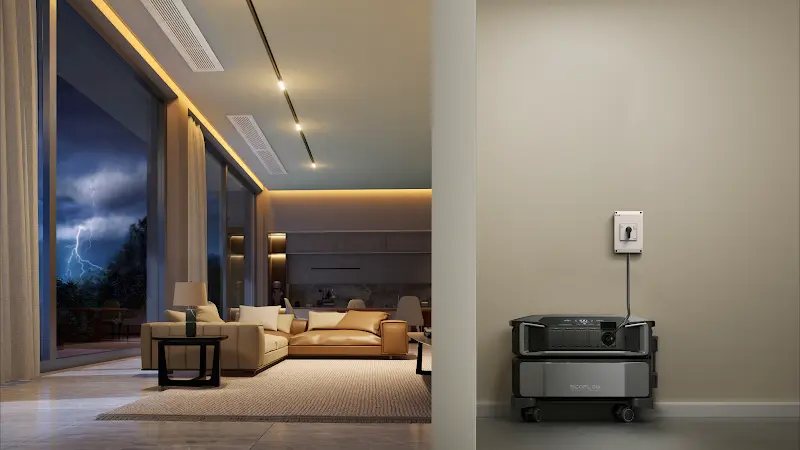
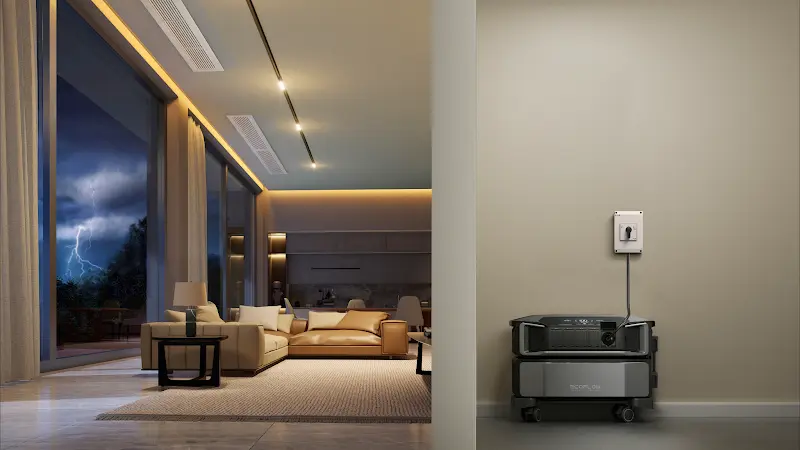
Sometimes the power stays off for days while the smoke just sits there. If you own a detached house, you might need a bigger setup to keep the fridge cold, the lights on, and the air continuously filtered. A heavy-duty home backup system like the EcoFlow DELTA Pro Ultra Whole-Home Backup Power can power your essential appliances for much longer. It buys you time and helps your house maintain adequate indoor air quality when the air is bad outside.
Follow Local Emergency Instructions
Taping up windows and running purifiers won’t save you if a fire is moving into your neighbourhood. If local emergency crews tell you to pack up and evacuate, do it immediately.
Keep your phones topped up, put important documents in a grab-and-go folder, and make sure your vehicle is ready to leave. Look up where the nearest evacuation shelters and cooling centres are located before conditions worsen.
Conclusion
The FireWork map gives you a great visual of where the smoke is headed next. Meanwhile, the local AQHI numbers tell you exactly what your lungs are dealing with today. Checking both of these tools alongside official weather alerts helps you make smarter choices about going for a run, cracking a window, or plugging in the air purifier.
Summer weather shifts fast. Check the forecast a couple of times a day, listen to local authorities, and stay safe out there.
FAQ
What Is the Most Common Reason Wildfires Start?
It is a split between lightning strikes and human mistakes. Natural Resources Canada states that lightning triggers slightly under half of our fires, but those strikes tend to happen way out in the bush, so they actually account for over 80% of the total land burned. The rest are caused by people. That includes abandoned campfires, sparking ATVs, downed power lines, and tossed cigarettes.
Which Province in Canada Has the Most Wildfires?
This changes from year to year. It also depends on if you are counting the total number of fires or the sheer amount of forest burned. B.C., Alberta, Saskatchewan, Manitoba, Ontario, and Quebec can all get hit with brutal fire seasons. Your best bet is to check with your provincial wildfire agency for the latest regional statistics.
How Accurate Are Wildfire Smoke Forecasts?
They are great for predicting the general direction and timing of a massive smoke plume. However, they can’t guarantee you the exact air quality score for your specific street. A sudden rainstorm, a shift in the wind, or a new fire will change the situation instantly. Always cross-check the latest forecast with your local, real-time AQHI reading.
What Is a Dangerous PM2.5 Level?
There isn’t one magic number that hurts everyone equally. The real danger depends on how dense the smoke is, how long you stay in it, how hard you are working out, and your own health history. Here in Canada, an AQHI score of 7 to 10 means the risk is high. An AQHI of 10+ indicates a very high health risk. People at higher risk should avoid strenuous outdoor activities and follow local health advice.
How Far South Is Canadian Wildfire Smoke?
It depends on the jet stream and how aggressive the fire season gets. During intense summers, Canadian smoke has blanketed massive stretches of the United States. In major events, the haze can travel all the way down the continent and drift completely out to sea.