Electricity Charges in Ontario: 2026 Rates, Bill Breakdown and Ways to Save
Electricity charges in Ontario depend on the selected Regulated Price Plan (RPP), how much electricity a household uses, and when it is used. Most eligible households can choose Time-of-Use (TOU), Tiered, or Ultra-Low Overnight (ULO). The total bill also includes delivery and regulatory charges and HST, less applicable credits. The sections below compare current rates, explain the main bill lines, and show how to estimate a monthly total.
What Are the Electricity Rates in Ontario for 2026?
The best fit depends on monthly use and timing. The table below compares current Ontario hydro rates across the three RPP plans.
Compare Current Electricity Rates per kWh
Each plan puts a different price on the same kilowatt-hour. TOU reads the clock, Tiered reads the month’s total, and ULO pairs very cheap overnight power with a much steeper weekday peak.
The Ontario Energy Board rates below apply from November 1, 2025, through October 31, 2026.
Pricing Plan | Period / Threshold | Rate (¢/kWh) | Typical Fit |
TOU | Off-Peak: 7 PM–7 AM weekdays; all day on weekends and holidays | 9.8¢ | Households that can run appliances in the evenings or on weekends |
Mid-Peak: shoulder hours | 15.7¢ | Households with regular daytime use | |
On-Peak: peak hours | 20.3¢ | Households able to limit use during peak hours | |
Tiered | Tier 1: first 1,000 kWh/month in winter or 600 kWh/month in summer | 12.0¢ | Steady users who cannot shift use to off-peak hours |
Tier 2: usage above the monthly threshold | 14.2¢ | Higher-use households | |
ULO | Overnight: 11 PM–7 AM daily | 3.9¢ | EV owners or households with storage that can charge overnight |
Weekend Off-Peak: 7 AM–11 PM weekends and holidays | 9.8¢ | Households that can schedule weekend use | |
Mid-Peak: weekdays, 7 AM–4 PM and 9 PM–11 PM | 15.7¢ | Households with moderate daytime use | |
On-Peak: weekdays, 4 PM–9 PM | 39.1¢ | Households able to reduce use during peak hours |
The Seasonal Electricity Rate Changes
The TOU on-peak hours shift with the season, and so does the Tiered plan's Tier 1 threshold. The per-kWh rates themselves hold for the whole annual term.
Winter (November 1–April 30): On-Peak runs 7 AM to 11 AM and 5 PM to 7 PM, and Mid-Peak runs 11 AM to 5 PM, weekdays only. The Tier 1 threshold is 1,000 kWh a month.
Summer (May 1–October 31): On-Peak runs 11 AM to 5 PM, and Mid-Peak runs 7 AM to 11 AM and 5 PM to 7 PM, weekdays only. The Tier 1 threshold drops to 600 kWh a month.
Off-Peak & Weekends: Under TOU, weekdays from 7 PM to 7 AM are always billed at the Off-Peak rate of 9.8¢/kWh, and that rate runs all day on weekends and statutory holidays. ULO periods stay the same all year.
Check When the 2026 Electricity Rates Take Effect
Ontario electricity pricing and delivery rates follow different schedules. The current RPP electricity prices took effect on November 1, 2025, and apply through October 31, 2026. The OEB normally sets new RPP prices for November 1, while local distributors may update delivery rates through separate approved rate orders. Check the OEB and your local utility before relying on a previous bill.


What Does an Ontario Electricity Bill Include?
The supply line covers the power you use, but it is one of several bill components. Delivery charges, regulatory charges, and HST add to the bill, while the Ontario Electricity Rebate reduces eligible costs. A solar panel system may reduce electricity drawn from the grid, but it does not automatically remove fixed customer or delivery charges.
Understand Electricity Supply Charges
The electricity supply charge is based on how many kilowatt-hours you use during the billing period. A smart meter logs that use in kilowatt-hours, and each kWh is priced at whichever TOU, Tiered, or ULO rate applies. On the Regulated Price Plan, the Global Adjustment is folded into that per-kWh price.
Break Down Delivery and Regulatory Charges
Delivery pays for getting power from the generators to your house, in three parts:
Transmission: Moving power across the high-voltage grid.
Distribution: Keeping local lines, transformers, and other equipment in service.
Line losses: The electricity lost as heat on the way to your house.
Regulatory charges sit alongside them, funding provincial grid management and other electricity-related programs.
The Global Adjustment and Bill Credits
The Global Adjustment is there to cover the gap between what contracted generators are owed and what revenue the wholesale market brings in. RPP customers do not get a line for it, because it is built into the per-kWh rate, as noted above. The Ontario Electricity Rebate reduces your bill instead. It shows up as a separate credit line, worked out from your eligible pre-tax charges.
Identify Fixed Charges and Applicable Taxes
There is also a monthly customer charge that varies by utility and service area but stays the same regardless of how much electricity you use. On top of that, 13% HST is charged on the subtotal of electricity, delivery, and regulatory charges; the rebate is then deducted from the total. The rebate reduces your final bill without reducing the amount used to calculate HST.
How Do You Calculate Your Electricity Bill in Ontario?
Estimating the cost of electricity in Ontario means starting with kilowatt-hours and the selected rate plan, adding delivery charges, regulatory charges, and HST, then subtracting applicable credits. The example below uses 750 kWh and the rates and 23.5% Ontario Electricity Rebate in effect through October 31, 2026. Actual utility charges vary.
Calculate Electricity Costs from Monthly kWh Usage
Under Time-of-Use, each period's kilowatt-hours are multiplied by the rate for that period. Take a household that used 750 kWh over the month:
Off-Peak (64% = 480 kWh): 480 kWh × $0.098 = $47.04
Mid-Peak (18% = 135 kWh): 135 kWh × $0.157 = $21.20
On-Peak (18% = 135 kWh): 135 kWh × $0.203 = $27.41
Total electricity supply cost: $95.65
Add Delivery Charges and Applicable Bill Credits
Next, add delivery charges, regulatory charges, and HST, then subtract the rebate.
Add delivery and regulatory charges
Say the fixed delivery charge is $45, variable transmission and line-loss charges come to about $18, and regulatory charges add another $4:
$95.65 + $45 + $18 + $4 = $162.65
These amounts are illustrative; actual charges vary by utility and service area.
Add 13% HST
HST (13%): $162.65 × 0.13 = $21.14
Subtotal with HST: $183.79
Apply the Ontario Electricity Rebate (OER)
The Ontario Electricity Rebate is an automatic provincial credit applied to eligible pre-tax charges. It is 23.5% for eligible bills through October 31, 2026. Ontario Regulation 328/26 changes the percentage to 15.7% from November 1, 2026. The example below therefore applies the 23.5% rate to the $162.65 eligible pre-tax subtotal, while HST is calculated separately:
OER credit: $162.65 × 0.235 = $38.22
Estimated Total Bill
$183.79 - $38.22 = $145.57
Estimate Your Total Bill with the OEB Calculator
The OEB Bill Calculator estimates a monthly bill using local utility rates. Select the utility and enter historical kWh use to compare estimated TOU, Tiered, and ULO bills using the rates that apply in the service area.
How Can You Lower Electricity Charges in Ontario?
Start by checking when major loads run and which plan is selected. Compare the plan with the household’s hourly use, then identify loads that can move to lower-price periods. For smaller flexible loads, a portable power station may shift some use to lower-rate hours, although savings depend on efficiency, capacity, and usage.
Shift Electricity Use to Off-Peak Hours
On TOU, on-peak power costs 20.3¢/kWh compared with 9.8¢/kWh off-peak through October 31, 2026. Moving a suitable load to after 7 p.m. on a weekday or to the weekend lowers its electricity supply charge. Scheduling appliances around these periods is one practical way to save on utility bills, subject to the other fixed and variable charges on the bill.
Choose a Rate Plan That Fits Your Usage
No single plan produces the lowest Ontario electricity prices for every household. Compare the options using actual hourly and monthly consumption:
Stay on Time-of-Use if the house is occupied off and on through the day and the heavy chores can wait for the evening or the weekend.
Switch to Tiered if you work from home and use much of your electricity during the day, and your monthly use stays under 1,000 kWh in winter or 600 kWh in summer.
Select Ultra-Low Overnight (ULO) if an electric vehicle or other flexible load can run after 11 p.m. and weekday use from 4 p.m. to 9 p.m. can be limited. Current ULO rates in Ontario pair a 3.9¢/kWh overnight price with a 39.1¢/kWh weekday on-peak price through October 31, 2026.
You can move to a different rate plan at any point in the year by contacting your local utility online or by phone.
Check Eligibility for Electricity Bill Assistance
Low-income households have two provincial programs to draw on:
Ontario Electricity Support Program (OESP): Eligible lower-income households may receive monthly on-bill credits from $35 to $75, with higher energy-intensive credits from $52 to $113 depending on household size, income, heating and other eligibility factors.
Low-Income Energy Assistance Program (LEAP): Eligible customers who are behind on electricity bills and face disconnection may receive emergency assistance of up to $650 per year, or up to $780 for homes heated primarily by electricity.
Consider Energy Storage for Electricity Cost Management
For Ontario households looking to lower electricity costs, home energy storage can work alongside time-of-use pricing and rooftop solar. Depending on the rate plan, a battery can store electricity when rates are lower and supply power when rates rise, reducing the need to draw electricity from the grid during expensive periods. Homes with solar panels can also store surplus daytime generation for use in the evening or during higher-priced periods. Actual savings depend on the rate plan, solar production, and household electricity use.
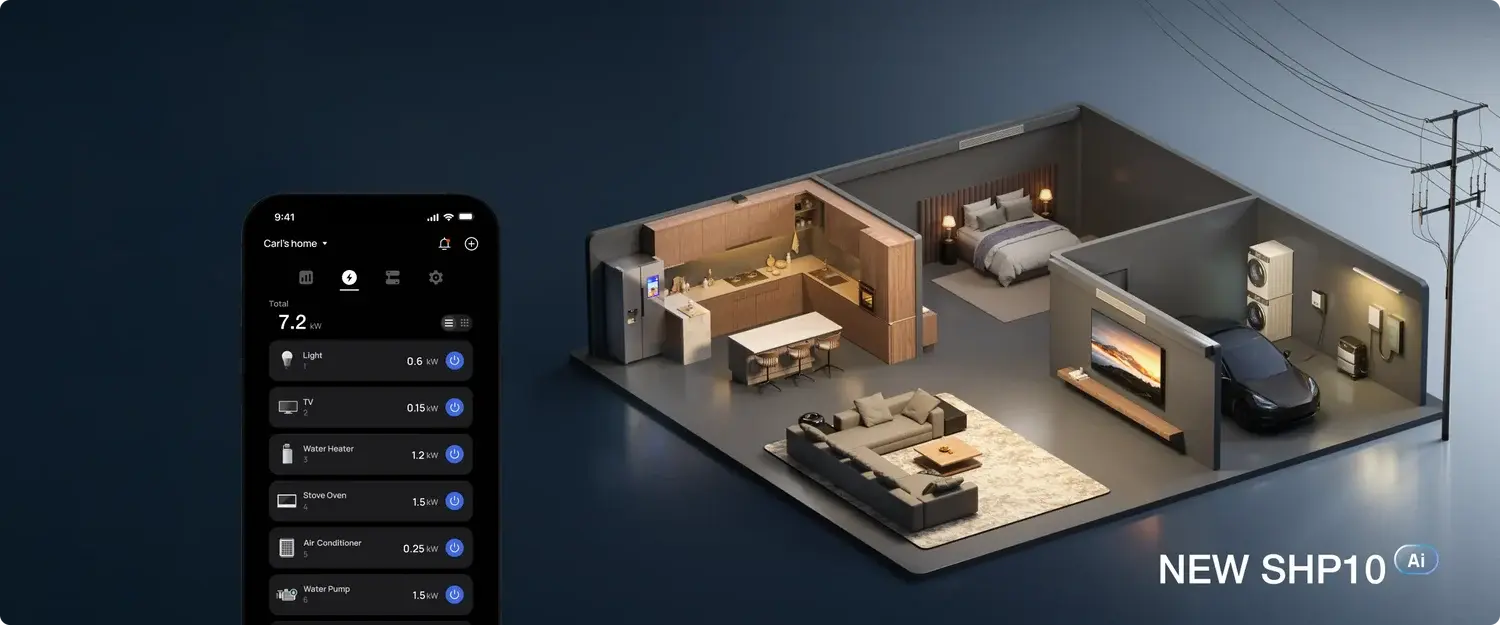
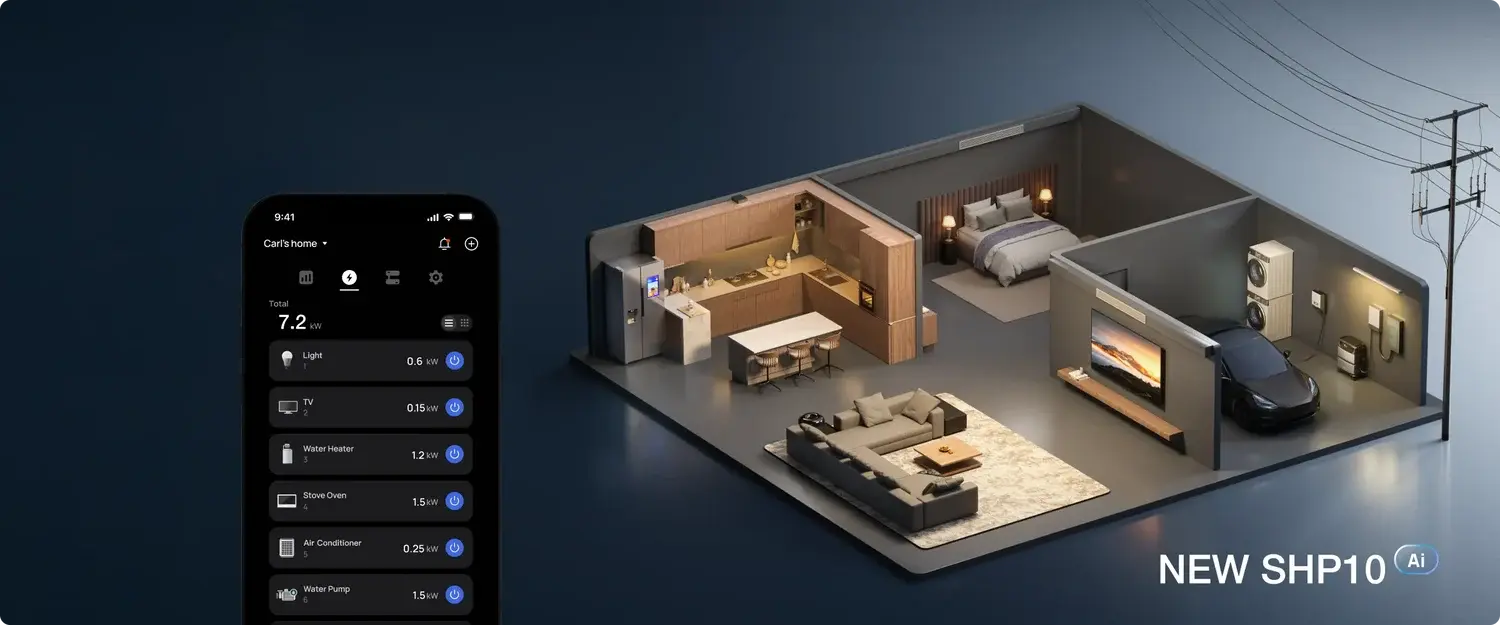
Both EcoFlow TITAN 5000 Classic Whole-Home Backup Power and EcoFlow TITAN 5000 Plus Whole-Home Backup Power can support household energy management when paired with a compatible Smart Home Panel 10. The TITAN 5000 Classic requires the 120V version, while the TITAN 5000 Plus is compatible with the 120V/240V version. Both systems support scheduled charging and discharging based on electricity rates, helping households plan when to draw power from the grid and when to use stored energy. For homes with existing rooftop solar, the TITAN 5000 Plus can also work with third-party solar inverters, making it possible to add battery storage without replacing the existing solar system.
Before choosing a system, check equipment compatibility, the available rate plans, and the household's electricity use to assess potential savings. Smart Home Panel 10 installation involves household circuit wiring and must be completed by a qualified electrician in accordance with applicable Ontario electrical codes.
Conclusion
Reading an Ontario electricity bill makes it easier to separate fixed charges from costs affected by consumption and timing. Compare the available rate plans using actual household data, confirm current prices with the OEB, and move suitable loads when doing so fits the household routine. Storage may help shift some use between rate periods, but its value depends on equipment efficiency, battery settings, installation cost, and the home’s load profile.
FAQ
Why Is My Electricity Bill So High in Ontario?
A high bill usually comes down to major appliances running during on-peak hours, a household pushed past its Tiered threshold by the extra load of heating or cooling, or the fixed delivery charges that hold steady. Fixed charges are also why the bill can look out of proportion to the kWh on the meter: the base monthly customer charge is the same in a light month as in a heavy one, and together with transmission and line-loss charges it makes up a substantial share of the total even when consumption is modest.
Who Has the Most Expensive Electricity in Canada?
Residential electricity prices vary by utility, community, rate design, subsidies, and customer type. Remote northern communities can have high underlying generation and delivery costs, while the amount billed to residents may be affected by local support programs. Compare current residential tariffs rather than treating one territory or province as uniformly the most expensive.
Which Province Has the Cheapest Electricity in Canada?
Quebec often has comparatively low residential electricity rates because of its hydroelectric system, while Manitoba and British Columbia also have substantial hydroelectric generation. Rates and fixed charges still vary by utility and customer class, so current tariff information is needed for a precise comparison.
How Much Is the Average Electricity Bill in Ontario?
An Ontario household using around 750 kWh a month may pay roughly $140 to $165 under the rates, charges and 23.5% Ontario Electricity Rebate in effect through October 31, 2026. The rebate changes to 15.7% on November 1, 2026, and new electricity prices may also apply. The total varies by rate plan, consumption pattern, delivery utility and service area.