How to Purify Air During a Long Power Outage
When the lights go out for days, your home becomes a sealed box. No HVAC system means no filtered air circulation, turning your living space into a trap for dust, cooking fumes, and bacteria. An air purifier (a device that removes pollutants from indoor air) can be your lifeline if you know how to keep it running. The solution isn't complicated: pair the right low power purifier with a portable power station, and you'll breathe clean air even when the grid fails.
Why Indoor Air Quality Matters During Power Outages
Power outages do more than kill your lights. They shut down your home's ventilation system completely.
Your HVAC system normally circulates and filters air 24/7. Without it, pollutants accumulate fast. Cooking releases smoke and grease particles. Dust settles and gets stirred up with every movement. Pet dander floats freely. Worse, closed windows during winter or wildfire season trap everything inside.
Indoor air quality (the cleanliness and safety of air inside buildings) degrades within hours. Common pollutants during outages include:
PM2.5 particles from cooking and candles
Bacteria and viruses that thrive in stagnant air
Mold spores in humid conditions
VOCs (volatile organic compounds) from household products
Health risks escalate quickly. Respiratory irritation hits first: scratchy throats, coughing, watery eyes. People with asthma or allergies suffer worse symptoms. Extended exposure weakens immune systems, especially for children and elderly family members.
An air cleaner becomes essential, not optional.
How to Choose an Air Purifier for Power Outage Situations
Not all air purifiers work well during emergencies. You need specific features that match backup power limitations.
Consider Power Consumption First
Energy efficiency determines how long your purifier runs on limited battery power.
Check the wattage label. Models between 20 to 50 watts are ideal for extended outages. Some models consume 80 to 100 watts, which drains batteries three times faster. A 40W purifier uses 480 watt hours for 12 hours of operation. Energy Star certified models often perform best.
Look for Essential Filtration Features
Your purifier needs the right filters to handle outage specific pollutants.
HEPA filters (High Efficiency Particulate Air filters that capture 99.97% of particles 0.3 microns or larger) are non negotiable. They trap smoke, dust, bacteria, and viruses effectively. Look for "True HEPA" on the label because imitations don't meet the same standards.
Add an activated carbon layer. This removes cooking odors, chemical fumes, and gases that HEPA can't catch. Pre filters extend the main filter life by catching large particles like hair and lint first.
Evaluate Portability and Coverage Area
Flexibility matters when power is scarce.
Portable air purifiers (compact units you can easily move between rooms) let you target areas where family members spend the most time. A bedroom during sleeping hours. The kitchen after cooking. This targeted approach conserves battery power better than running a large stationary unit.
Match the CADR rating (Clean Air Delivery Rate, measuring how many cubic feet of air a purifier cleans per minute) to your room size. For a 150 square foot bedroom, look for CADR 80 to 120. Oversized units waste energy while undersized ones work inefficiently.
Check Compatibility with Backup Power
Some purifiers play nicer with emergency power than others.
Models with DC power input options connect directly to 12V batteries, bypassing AC conversion losses. If your purifier only accepts AC power, verify it works with modified sine wave inverters because some sensitive electronics don't. Test compatibility before an actual outage hits.
Check the startup surge current too. Some purifiers briefly draw 2 to 3 times their running wattage when switched on, which can overload small power stations.
Backup Power Solutions to Keep Your Air Purifier Running
Even the best air purifier for home use is useless without electricity. Here's how to keep yours operational.
Estimate Your Power Requirements
Understanding your power needs helps you choose the right backup solution.
Find your purifier's wattage on the label or manual. A typical small to medium air purifier uses 30 to 60 watts. Plan for at least 12 to 24 hours of runtime during an outage. Generally, a 500Wh portable power station handles smaller purifiers while 1000Wh or more suits medium sized units for extended use.
Choose a Reliable Portable Power Station
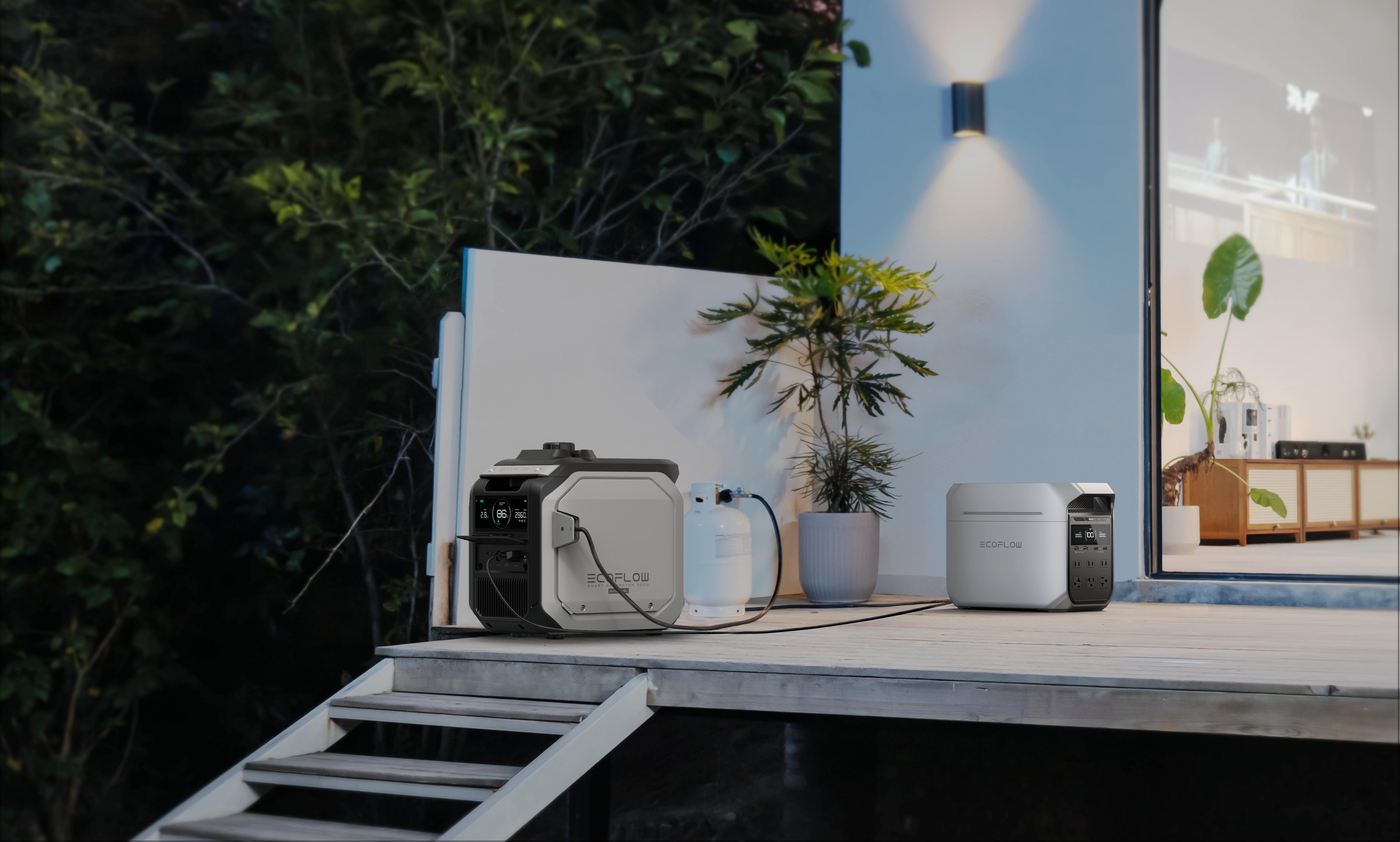
Your backup power choice determines whether your air purifier runs for hours or days. Unlike gas generators that require fuel, ventilation, and outdoor space, portable power stations work silently indoors without fumes or safety concerns. They're also far more powerful than small battery packs, which typically can't handle sustained appliance loads.
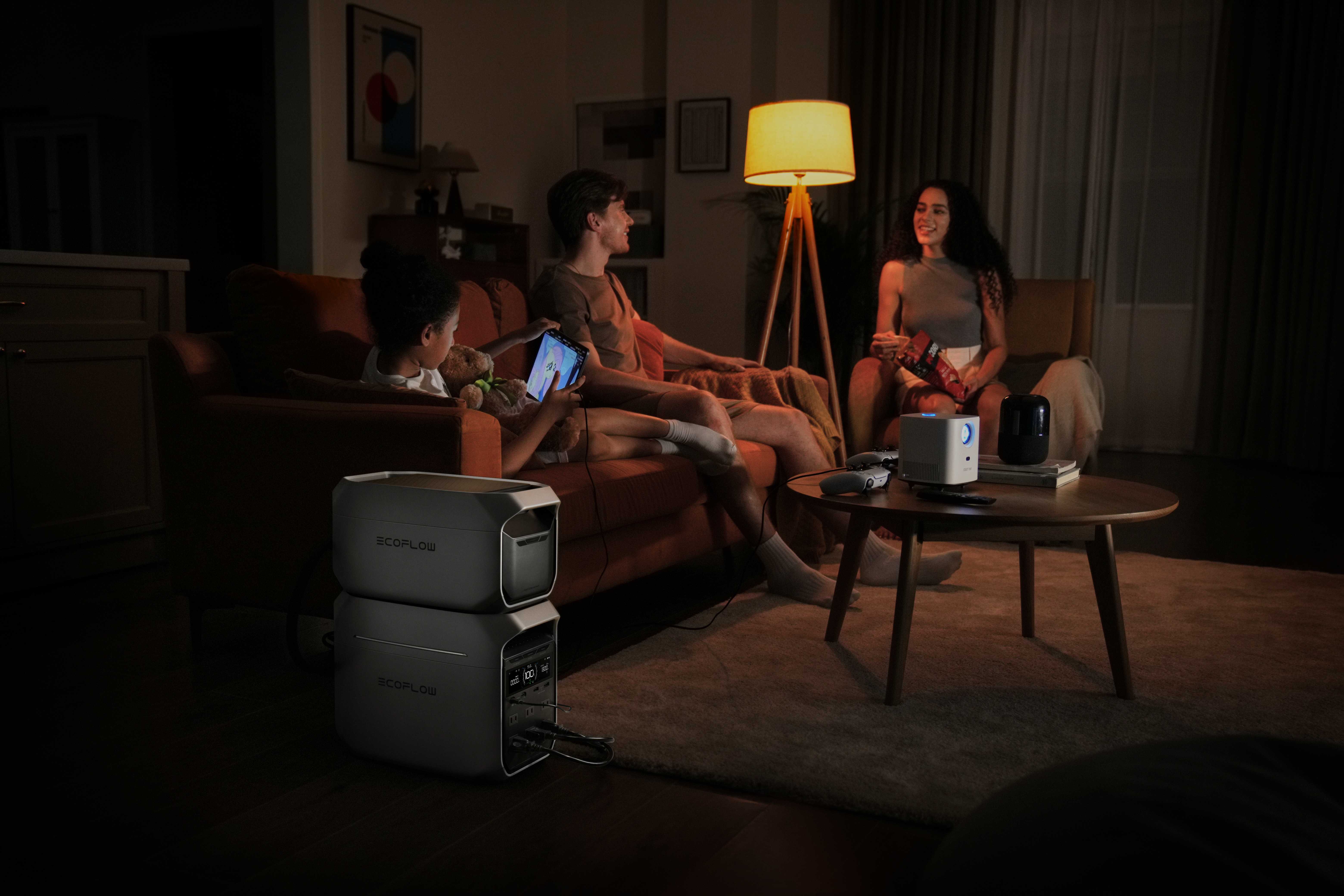
A quality portable power station provides the most practical solution for running air purifiers during extended outages. The EcoFlow DELTA 3 Plus offers 1024Wh capacity with 1800W output, enough to run typical air purifiers for over 20 hours. It recharges quickly in just 56 minutes and operates quietly at 30dB, making it ideal for overnight use while your family sleeps.
Maximize Battery Runtime
Smart operation doubles your available power. Here are proven strategies to extend runtime:
Use the lowest effective speed setting. High settings consume 2 to 3 times more power while medium or low speeds maintain clean air in sealed rooms.
Run interval cycles. Operate for one hour, then rest for 30 minutes. Air stays reasonably clean during off periods if doors stay closed.
Disable extra features. Turn off UV lights, ionizers, and air quality sensors that drain batteries without significantly improving filtration.
Focus on one room at a time. Move your portable air purifier to wherever family members are: bedroom during sleep, living room during the day.
Close doors to create smaller spaces. A purifier cleans 200 square feet much faster and more efficiently than 400 square feet.
Preparation Tips Before a Power Outage
Preparation prevents panic when darkness hits.
Charge All Backup Power Equipment
Charge your portable power station 100% before storm season or predicted outages. Check battery levels monthly because they self discharge over time, typically losing 1 to 3% per month. Set calendar reminders to test and recharge every 3 months even if unused.
Replace or Clean Air Purifier Filters
Install fresh filters now. A clogged filter forces the motor to work harder, consuming more power and reducing effectiveness. Stock backup filters if supply chains might be disrupted. Check manufacturer recommendations because most HEPA filters last 6 to 12 months, but pre filters may need monthly cleaning.
Test Your Complete Setup
Run your purifier from the power station for several hours to verify compatibility and measure actual runtime. Better to discover problems now than during an actual emergency. Document how long your setup runs on different speed settings so you can plan accordingly.
Prepare Your Home Environment
Deep clean before outages hit. Vacuum thoroughly, wipe surfaces, wash bedding. Less existing dust means your purifier works less hard during the outage.
Create a priority plan. Which rooms matter most? Typically bedrooms where people sleep 8 hours, then main living areas. Map out where you'll move your portable unit throughout the day.
Avoid adding new pollutants. Stock battery powered lights instead of candles. Prepare no cook or outdoor cook meals to avoid indoor smoke.
FAQs
Q1. Should I Run My Air Purifier Continuously or in Intervals During an Outage?
Interval operation would be more feasible in case of prolonged power outages. Use your air purifier for 50-60 minutes in an hour with a 10-minute break in order to conserve batteries. With well-sealed rooms, short downtime will not affect air quality much, and you will be able to double your operating time.
Q2. Which Filter Type Lasts Longest During Extended Outages?
A standard HEPA filter will work for 6 to 12 months in a normal usage cycle. This comprises a combination of hours when a filter is used in an intermittent power outage situation, which in total can mean hundreds of hours. Pre filters will help prolong life for your HEPA filter, which initially catches larger particles.
Q3. Where Should I Place My Portable Air Purifier During a Power Outage?
Place your air purifier in a room where your family spends most of their time, which can include nighttime in the bedroom and daytime in living rooms. Positioning your air purifier at least 3 feet from walls and furniture will provide better air circulation. Changing rooms depending on usage will allow for better efficiency and prolong battery life.
Q4. What's the Best Air Purifier Canada Residents Should Get for Outages?
A Canadian resident will benefit from an air purifier with a model evaluated for performance in cold climates and accessible in Canada for filter change. One will focus on an air purifier with a power consumption of 30-50W and a HEPA filter with a CADR of 100 or higher. Air purifiers with good dealer support in Canada will provide access to filters in case of a supply breakdown.
Protect Your Family's Air Quality
Clean air during power outages isn't luck. Preparation is what you need. Invest in a low wattage air purifier and a sufficient portable power station. Test your system before emergencies arise, and make a room priority plan. Waiting for your next wildfire or hurricane to learn your home will be uninhabitable without electricity is unnecessary. The respiratory health of your loved ones is in your hands when it comes to decisions you make today.