Sump Pump Battery Backup: How to Choose the Right Power Station for Your Pump
- What Is a Sump Pump Battery Backup Power Station?
- How Much Power Does Your Sump Pump Actually Need?
- What Factors Determine the Right Power Station Size?
- How Do You Calculate the Battery Capacity You Need?
- What Features Matter Most in a Sump Pump Power Station?
- How Do You Connect a Power Station to Your Sump Pump?
- Frequently Asked Questions
- The Right Power Station Keeps Your Sump Pump Running When Your Basement Needs It Most
A power outage during a storm is exactly when your sump pump matters most, and exactly when the grid is most likely to fail. Choosing the right backup power station means matching your pump's wattage, runtime needs, and startup surge to a unit built to handle all three, without settling for guesswork on sizing.
What Is a Sump Pump Battery Backup Power Station?
A sump pump battery backup power station is a rechargeable battery system that automatically takes over powering your pump the moment grid electricity cuts out.
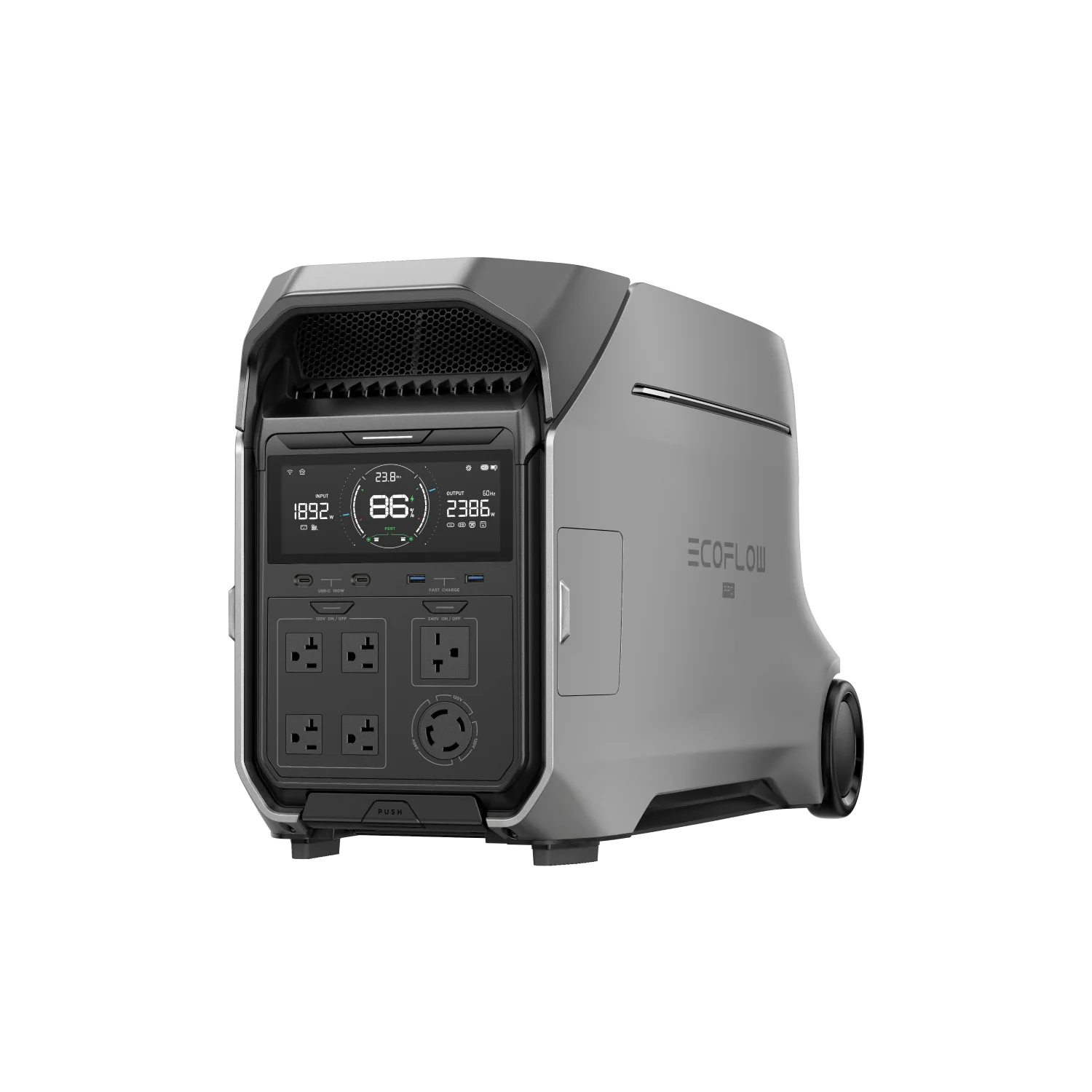
Unlike a built-in backup sold with some pump kits, a portable power station like the EcoFlow DELTA Pro 3 Portable Power Station does double duty. It runs your pump during a flood event and powers other essentials, from a fridge to medical equipment, the rest of the time.
These units store energy in a battery pack and convert it to AC power through an inverter, delivering it to your pump through a standard outlet or a direct wiring connection.
How Much Power Does Your Sump Pump Actually Need?
Before comparing power stations, you need two numbers: your pump's running watts and its surge watts.
Running watts are what the pump draws once the motor is up to speed; a mid-size residential pump might run somewhere around 1,000 watts.
Surge watts, or starting watts, are the short burst the motor pulls when it first kicks on. AC motors draw a brief inrush current well above their normal running level before settling, and sump pump motors behave the same way.
A power station sized only for running watts will fail to start the pump. You'll find both figures on the motor nameplate; if you can't locate either, horsepower gives you a reasonable estimate.
Average Running and Surge Watts by Sump Pump Horsepower
Smaller 1/3 HP pumps draw noticeably less power than 1/2 HP models, both running and at startup. Larger pumps, and any pump working harder in a home with a high water table, pull more of both. Because exact numbers vary by manufacturer, the running and surge watts on your unit's nameplate are the figures to size against.
What Factors Determine the Right Power Station Size?
Sizing the best sump pump backup battery unit comes down to more than matching wattage. Weigh your pump's surge watts against the station's surge rating, since undersizing here is the most common mistake.
Factor in how long outages typically last in your area, since longer outages call for more stored capacity, not just peak power.
Account for anything else the unit needs to run, like a freezer, since every added load draws down the same battery.
How Do You Calculate the Battery Capacity You Need?
Estimate capacity with a simple formula: running watts multiplied by the hours you need backup coverage. A 1/2 HP pump drawing 1,000 running watts that cycles 20 minutes an hour for a 12-hour outage uses roughly 4,000 watt-hours. Round up for other devices and real-world efficiency losses.
Capacity, not just peak output, is often the deciding factor. The EcoFlow DELTA 3 Max (2048Wh) delivers 2,400W of continuous output with a 4,800W surge rating, comfortable headroom for most sump pumps.
Homes running a fridge alongside the pump through a multi-day outage should look at a higher-capacity whole-home backup option.

What Features Matter Most in a Sump Pump Power Station?
Wattage and capacity get you in the right ballpark, but a few technical features determine whether a power station actually protects your basement.
Pure Sine Wave Output
Sump pump motors, like most AC induction motors, run more efficiently and with less heat buildup on pure sine wave power than on modified sine wave output.
Surge Capacity
Surge capacity is the single most overlooked spec when buyers size a backup unit. A power station rated for exactly your pump's running watts, with no headroom, may fail to start the motor. Look for a rating comfortably above your pump's starting watts.
LiFePO4 Battery Chemistry
Lithium iron phosphate (LiFePO4) batteries hold far more charge cycles than lithium-ion or lead-acid alternatives, which matters for a unit that sits charged for months before a storm calls on it. LiFePO4 also handles basement temperature swings better than most alternatives.
UPS or Auto-Switchover Mode
A built-in uninterruptible power supply (UPS) or auto-switchover mode detects a grid outage and switches the power station's output on automatically. Without this, you'd need to be home to manually plug in the pump the moment power drops.
For homes where auto-switchover needs to cover more than the sump pump, a larger whole-home backup power solution extends that same automatic protection to the fridge, furnace, and other essentials.
How Do You Connect a Power Station to Your Sump Pump?
Most portable power stations connect to a sump pump the same way they connect to any appliance, which is through a standard AC outlet, with the pump's existing plug going straight in.
For hardwired pumps or a dedicated backup circuit, a licensed electrician can wire the power station in directly, often alongside a transfer switch. A sump pump battery backup readiness guide walks through what to check before storm season.
Frequently Asked Questions
What Size Power Station Do You Need for a Sump Pump?
Most residential sump pumps need a power station rated for at least 1,500W of surge output and 1,000Wh of capacity for short outages. For 1/2 HP pumps or longer outages, look for ratings above 2,500W surge and 2,000Wh, adjusted for your pump's nameplate.
Can a Portable Power Station Run a Sump Pump During an Outage?
Yes. A power station with sufficient surge and battery capacity can run a sump pump for hours or days, depending on the unit's size and cycling frequency. Pairing it with auto-switchover means it takes over the moment grid power fails, without anyone home.
Do You Need Solar Panels to Recharge a Power Station During an Outage?
Solar panels aren't required, but they help during extended outages by letting the power station recharge in daylight without relying on the grid. This matters most in multi-day storms, where a battery alone would eventually run down.
The Right Power Station Keeps Your Sump Pump Running When Your Basement Needs It Most
Getting sump pump backup right comes down to matching surge watts, running watts, and capacity to your pump, not picking the biggest unit.
When the pump is one of several critical loads, the EcoFlow DELTA Pro 3 Portable Power Station offers the surge headroom and capacity to keep a basement dry without leaving the rest of the house dark.