Canada Carbon Tax Rebate: Program Eliminated April 2025 — Provincial Alternatives
- What Was the Canada Carbon Tax Rebate?
- What Changed on April 1, 2025?
- Who Was Affected by the End of the Rebate?
- What Provincial Carbon Pricing Still Exists in Canada?
- What Rebates and Programs Have Replaced the Consumer Carbon Rebate?
- How Can Canadian Households Manage Rising Energy Costs Now?
- Frequently Asked Questions
- Backup Power and Smart Energy Habits Help Canadian Households Offset Rising Energy Costs
Consumer-facing carbon taxes have ended across Canada, bringing the Canada Carbon Tax Rebate program to a close as well. While this tax is gone, large industries still pay carbon emission taxes in every province.
Keep reading to learn more about the previous consumer rebate, who was eligible, what emission taxes remain, and how you can manage rising household energy costs going forward.
What Was the Canada Carbon Tax Rebate?
The Canada Carbon Rebate (CCR) was a tax-free quarterly payment made to eligible Canadians. The goal was to offset raised fuel costs from the federal pollution pricing system.
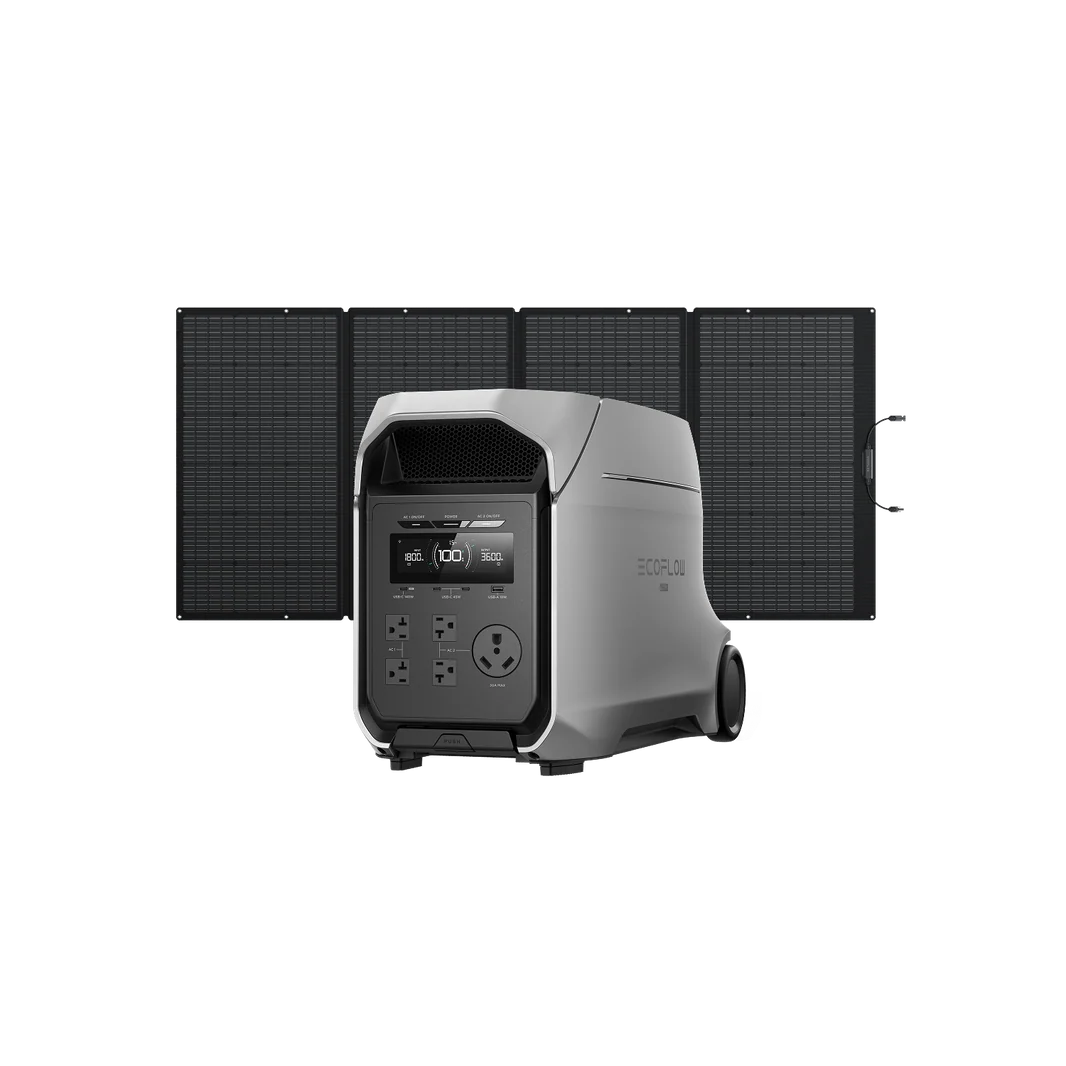
The pricing system raised fuel prices to deter Canadians from relying on fossil fuels. Many Canadians have now turned toward cleaner energy alternatives, like the EcoFlow DELTA 3 Ultra Plus + 400W Solar Panel, to cut down on grid and fuel reliance.

What Changed on April 1, 2025?
The CCR returned funds generated by the federal fuel charge directly to those affected. On April 1, 2025, the government ended the fuel charge, so the CCR program was no longer needed, and it ended too. Eligible Canadians received their last regular quarterly CCR deposit on April 22, 2025.
Who Was Affected by the End of the Rebate?
To receive the carbon rebate, you had to have been a resident of Canada, reside in a province that used the federal pollution pricing system, be at least 19 years old, and file your annual tax return.
Eligibility and payment amounts for the Canada carbon tax rebate varied by province and household size, so the end of the payments hit different households differently.
The end of the rebate impacted anyone meeting those criteria, including Canadian households in:
Ontario
Alberta
Saskatchewan
Manitoba
New Brunswick
Nova Scotia
Prince Edward Island
Newfoundland & Labrador
Qualifying small and medium businesses also stopped receiving the CCR for Small Businesses, and residents in small and rural communities lost the extra 20% rural supplement in addition to the regular CCR rebate.
What Provincial Carbon Pricing Still Exists in Canada?
Although the federal consumer carbon price ended in 2025, carbon pricing has not disappeared entirely. Large industrial emitters like oil and gas companies, cement plants, and steel mills are charged extra for greenhouse gas emissions. This fee is to encourage companies to reduce carbon emissions.
British Columbia
British Columbia operates an industrial carbon pricing system. Large industrial factories must meet emissions performance standards or pay for emissions that exceed the limit.
Quebec
Quebec has a cap-and-trade system, which is different from a direct carbon tax. The government sets a limit on the total emissions allowed by a company. If they exceed the limit, they have to purchase or trade emission allowances. Fuel distributors are included in the emission tax, and they pass that operational cost down to consumers at the pump.
Other Provinces and Territories
Most other provinces and territories also continue to price industrial emissions. Some areas like Alberta, Ontario, Nova Scotia, New Brunswick, and Newfoundland & Labrador have their own industrial pricing system. Other places like Manitoba, Prince Edward Island, and Nunavut use the federal Output-Based Pricing System (OBPS).
What Rebates and Programs Have Replaced the Consumer Carbon Rebate?
No single program has replaced the Canada Carbon Rebate's quarterly payments, and the federal government hasn't positioned any current initiative as a one-to-one substitute.
Instead, a mix of existing and expanding programs now target different parts of household affordability and energy efficiency.
The Canada Greener Homes Affordability Program provides no-cost retrofits, such as insulation and heat pump installations, for low-to-median-income homeowners and renters, and it's continuing to expand into new provinces and territories.
Separately, the Canada Groceries and Essentials Benefit provides quarterly payments to help lower-income households manage everyday costs, though it replaced the GST/HST credit, not the carbon rebate.
For businesses, the Clean Technology Investment Tax Credit offers tax credits for investments in solar, wind, and energy storage.
Provincial and utility-run programs also continue to offer localized rebates for heat pumps, smart thermostats, and solar panel installations.
How Can Canadian Households Manage Rising Energy Costs Now?
The best way for Canadians to avoid feeling the strain of rising energy costs is to build energy resilience.
Canadians can take advantage of rebates and programs offered to pay for smart home upgrades. Energy-efficient home improvements like insulation, heat pumps, and renewable energy components give homeowners more control over their energy.
Improving energy resilience with solar technology like solar panels, home batteries, and even a solar generator is the best way to rely less on the grid and more on yourself.
Solar panels generate electricity from sunlight, while home batteries can store solar electricity or grid electricity for flexible use. Solar generators combine both; a setup like the EcoFlow DELTA 3 Ultra Plus + 400W Solar Panel lets a household start building energy resilience with a ready-to-use system.
Frequently Asked Questions
Is the Canada Carbon Rebate Still Available in 2026?
No, the Canada Carbon Rebate program is no longer active. Canadians who qualified for this quarterly payment received their last one in April 2025. You can still apply for retroactive payments by filing your tax returns from 2021 to 2024, if eligible.
Does British Columbia Still Have a Carbon Tax?
No, after April 2025, British Columbia no longer imposes a consumer carbon tax and consumer carbon rebate programs have also ceased. There is a carbon tax system for large industrial carbon emitters. These factories must stay below a set limit of emissions or pay a fine.
Is Quebec the Only Province with Carbon Pricing?
Quebec isn't the only province with carbon pricing. Every province and territory maintains an industrial carbon pricing system, but it varies by province. In Quebec, fuel distributors face a carbon emission tax, which raises prices at the pump.
Backup Power and Smart Energy Habits Help Canadian Households Offset Rising Energy Costs
Canada abolished the federal consumer fuel charge in 2025, so Canadians no longer pay a carbon tax on gas or home heating. This also left many Canadians no longer receiving Canada Carbon Rebate payments. At a larger level, every province still applies carbon pricing to large industrial emitters.
The reality is, Canadians need to take steps to manage their energy sources and uses in their homes. The best first step is to invest in energy resilience. Whether you’re starting with a portable solar generator or want whole-home backup power coverage, EcoFlow’s solutions can scale to fit your household needs.
Note: This article reflects Canada's carbon pricing and rebate landscape as of August 2026. Federal and provincial carbon pricing rules, rebates, and government programs are subject to change.