Battery Sizes Explained: Types, Capacities, and How to Choose the Right One
You probably arrived here with a battery to replace or a system to size. Either way, "size" is doing double duty. It can mean the physical case, whether it fits the tray and the terminals line up. It can just as easily mean voltage, capacity, and the power a unit can deliver. The first meaning gets the battery into the compartment. The second decides whether it does the job.
This guide sorts out both meanings. The categories come first, then what ratings like Ah and kWh actually tell you, then the arithmetic for home backup, solar systems, vehicles, and RVs.
What Do Battery Sizes Mean and Why Do They Matter?
Physical fit alone does not guarantee a specific voltage, stored energy capacity, or power output. Two batteries sharing the same physical footprint can differ significantly in performance. The mismatch becomes evident later, when an engine fails to start or a backup system quits early. So before choosing anything for a car, an RV, a solar array, or a home backup setup, sort out which kind of "size" you mean.
Understand Battery Size Terminology
People in the trade use "size" for two separate specifications. The first is physical group size, or form factor: the outer dimensions of the case and the layout of its terminals, which together decide whether the unit sits properly in its designated compartment or tray. The second is the electrical rating — the energy it stores, the voltage it runs at, and the peak power it can deliver safely at a given moment to equipment like a portable power station or vehicle system.
Learn Battery Capacity Measurements
Battery labels speak in three units. Voltage (V) is electrical pressure, the push that moves current around a circuit; most consumer setups run at 1.5V, 12V, 24V, or 48V. Ampere-hours (Ah) measure charge delivered over time. Use them to compare batteries at the same voltage. On their own they say nothing about total stored energy. Roughly 1.2kWh nominal sits in a 12V 100Ah battery. Move the same 100Ah rating to 48V and the figure becomes about 4.8kWh. Same Ah rating, four times the energy. Watt-hours (Wh) close that gap. Multiply volts by amp-hours and you have the stored energy directly.
Compare Physical Size and Energy Capacity
Nothing about a bigger case guarantees more battery capacity. Take two 12V 100Ah batteries, one lead-acid, one LiFePO4. Both hold about 1.2kWh nominal. With lead-acid you deliberately use only a portion of that, because doing so limits wear and stretches service life. The LiFePO4 owner gets to use considerably more of it and carries far less weight. Standardized group numbers follow the same logic.
Group 31 fixes the case dimensions and where the terminals sit, and it promises no particular Ah or kWh rating — two Group 31 batteries from the same shelf can still differ fundamentally under the case, a deep-cycle AGM here, a lithium drop-in there at twice the price.
Identify Common Battery Size Categories
Count the batteries around you and nearly all of them, at home, in a vehicle, at a campsite, land in four classes.
The small consumer cells come first, the familiar cylindrical and button formats found in everyday electronics, AAA, AA, C, D, 9V, 18650, 21700.
Automotive starting batteries form the second class. Their group sizes come from the Battery Council International (BCI), and the design targets cranking power rather than long runtime.
The third class serves the opposite purpose. Deep-cycle marine and RV batteries meet this need with steady, hours-long output.
Then comes the fourth class: the Energy Storage System, or ESS for short. High-capacity, modular lithium systems engineered for off-grid cabins, outdoor recreation, and whole-home power continuity.


What Are the Different Types of Battery Sizes?
The details standardize quickly inside each class. Case formats, terminal layouts, and voltage levels specify physical and electrical limits. Understanding the full spectrum of battery sizes and types is easier when looking at standard specifications side by side. The following battery size chart lines the four main classes up:
| Battery Category | Standard Form Factors / Group Sizes | Typical Voltage | Typical Capacity / Rated Output | Dominant Chemistries | Primary Applications |
|---|---|---|---|---|---|
| Consumer Cells | AAA, AA, C, D, 18650, 21700, CR2032 | 1.2V – 9V | 100 mAh – 5,000 mAh | Alkaline, NiMH, Li-ion | Remotes, flashlights, power tools, small electronics |
| Automotive Starter (SLI) | BCI Group 24, 35, 48 (H6), 94R (H7) | 12V | 45 – 115 Ah (200 – 1,000 CCA), varies by BCI group | Flooded Lead-Acid, AGM | Engine ignition, standard vehicle electronics |
| Deep-Cycle Marine & RV | Group 24, 27, 31, 6V GC2 | 6V – 12V | 80 Ah – 225 Ah | FLA, AGM, LiFePO4 | Trolling motors, RV house banks, off-grid cabins |
| Energy Storage Systems (ESS) | Modular battery packs, rack-mounted units, wall-mounted systems | 24V – 48V+ | 100 Ah – 500+ Ah per battery module (5 kWh – 100+ kWh system scale) | LiFePO4 | Solar storage, home backup, off-grid power, energy management |
CCA, or Cold Cranking Amps, describes how the battery performs in that first crank.
Consumer Battery Sizes
A short list of international form factors covers most household gear.
Open a junk drawer and the AA and AAA cells spill out first. They run the headlamps, remotes, and portable radios, sold as 1.5V alkaline, 1.2V NiMH, or 1.5V lithium primaries.
C and D cells, bigger still, trade compactness for runtime. They live in lanterns and the emergency kit. Watches, key fobs, and smart sensors take button and coin cells (CR2032, LR44).
The serious end of the consumer range belongs to the 18650 and 21700 cylindrical lithium-ion cells. High-lumen flashlights, portable power packs, and most modern power tools run on them.
Automotive and RV Battery Sizes
BCI Group Sizes exist to keep the battery mounted securely, in an engine bay, in an under-seat tray, wherever the vehicle, motorhome, or boat mounts it. Outfit a boat with a trolling motor or a Canadian travel trailer and you're usually looking at Group 24, 27, or 31. Across the North American fleet, compact SUVs to light trucks, it's mostly Group 35, 48 (H6), or 94R (H7).
Deep Cycle Battery Options
A starter battery is designed for a single task: delivering a high-burst current to crank an engine. The deep-cycle battery does the opposite job, steady power for hours on end, with 6V, 12V, 24V, and 48V configurations to choose from. Where the draw is serious (marine house banks, off-grid camps, solar generator setups, communication repeaters), builders wire multiple 6V golf cart units, GC2 being the common one, or 12V batteries into series-parallel banks.
How Do You Choose the Right Battery Size for Energy Storage?
Sizing storage is arithmetic before it’s shopping. The capacity you need comes straight out of your daily consumption, adjusted for how the system behaves in practice and how portable the setup has to be.
Calculate Your Daily Energy Requirements
Start with an honest list. Every appliance goes on the list with two numbers beside it, the watts it draws and the hours you expect to run it.
Daily Consumption (Wh) = Sum of (Appliance Rated Watts × Hours Used per Day) for All Devices
That raw total isn't the battery size, though. Two things eat into it. The inverter loses energy in conversion, and every chemistry carries its own Depth of Discharge (DoD) ceiling you're meant to respect. Working both into the calculation gives the figure that matters.
Recommended Battery Capacity (Wh) = Daily Consumption (Wh) ÷ (DoD × Inverter Efficiency)
Take one concrete pass at it.
Appliance example first: a portable 45W fridge runs 12 hours; that's 540Wh right there. LED lighting adds 100Wh and laptop charging 120Wh, bringing the day to 760Wh.
System metrics next: a LiFePO4 battery at 90% DoD (0.90), an inverter at 85% efficiency (0.85). The math runs 760 ÷ (0.90 × 0.85) ≈ 993Wh.
Round up from there. That points to a nominal battery capacity of 1,000Wh (1kWh) as the realistic minimum on paper.
Select Battery Sizes for Outdoor Adventures
For camping weekends and RV trips, carry weight matters as much as stored capacity. A portable power station such as the EcoFlow DELTA 3 Max Plus Portable Power Station (2048Wh) can power a fridge, lights, phones, laptops, and other essential appliances. The right capacity comes down to which devices you intend to run and for how many hours.
Consider Battery Sizes for Home Backup
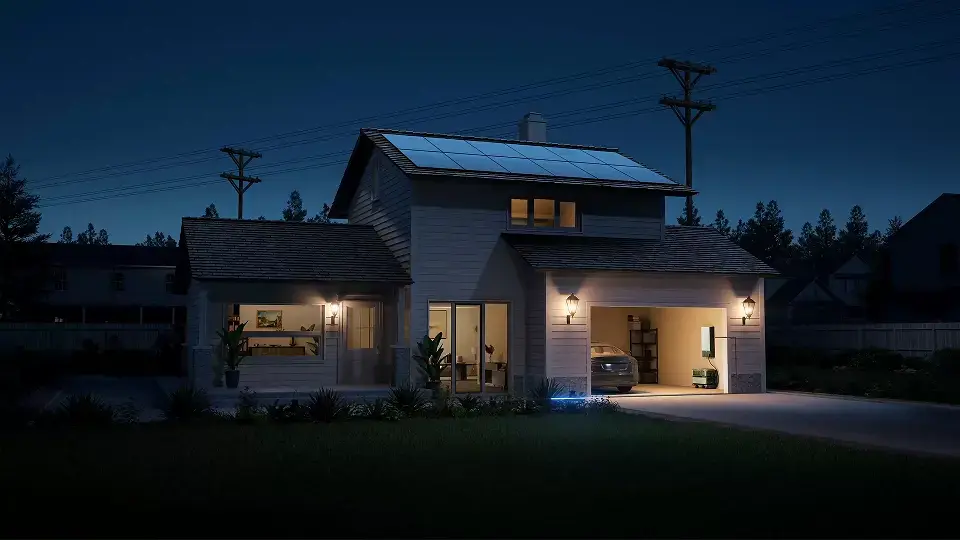
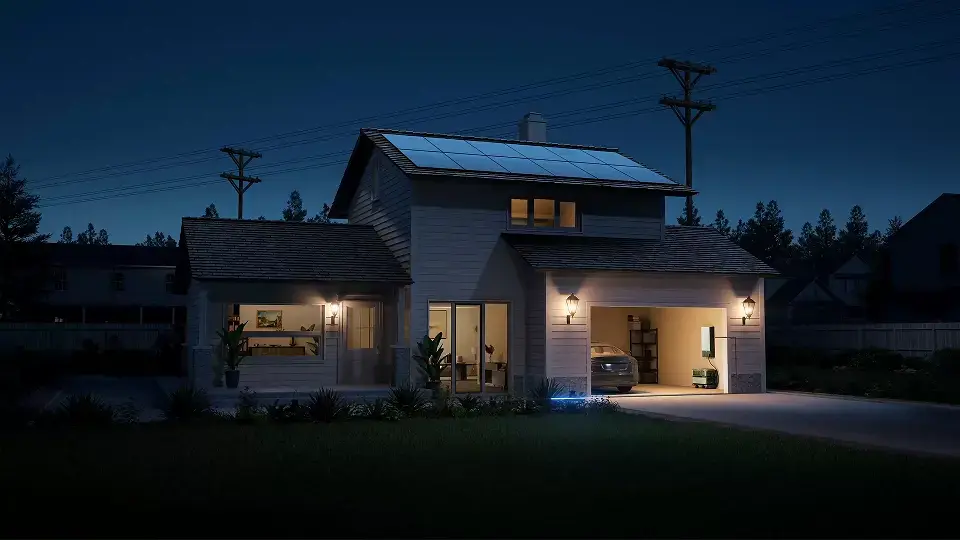
With home backup, sustained wattage and expandability both climb. For long-duration winter outages and heavy loads like well pumps or heating elements, modular platforms like the EcoFlow DELTA Pro Ultra Whole-Home Backup Power allow you to scale capacity as electrical demands grow. Before committing, check two numbers against the loads you consider essential: the system’s total energy capacity and its maximum power output.
What Factors Should You Consider Before Choosing a Battery Size?
Capacity listed on a specification sheet is only a baseline parameter. A handful of other specifications decide whether a battery performs reliably once conditions stop being friendly.
Check Power Output Requirements
How long appliances run is energy capacity, measured in watt-hours. How much a system can push at one time is power output, in watts. Motors and compressors draw extra power at startup, which adds a third number worth watching.
Continuous Output: What the inverter can put out indefinitely under its rated conditions.
Peak/Surge Output: The short burst available while an appliance starts up.
Match Battery Size With System Compatibility
A battery has to agree with everything around it. Before installation, confirm the required voltage, the inverter’s input range, the charge controller’s specifications, the connector type, and the maximum charging current. Get the voltage wrong and the system may simply refuse to run — or the mismatch quietly damages connected equipment.
Compare Battery Chemistry Options
Weight, usable capacity, and safety all come down to chemistry.
Flooded Lead-Acid (FLA): The upfront price is low; the weight is not. Makers recommend keeping discharge around 50% to protect service life, and the cells want regular distilled-water top-ups.
Absorbent Glass Mat (AGM): Sealed case, maintenance-free, decent vibration resistance. The lead plates keep it heavy, though, and cycle life stays short.
Lithium Iron Phosphate (LiFePO4 / LFP): Exceptional thermal stability, non-toxic, supports 3,000–6,000+ deep cycles at 80–100% DoD, and operates with superior energy efficiency.
Review Battery Lifespan and Maintenance
Buyers in cold climates have one more filter to apply, and that’s sub-zero behaviour. Below 0°C, keep a standard lithium-ion cell off the charger unless the pack has heating pads built in or a Battery Management System (BMS) that cuts charging off at low temperatures. Charge a frozen one anyway and lithium plating can set in for good. Temperature aside, look at the cycle-life rating, the warranty terms, and what the BMS actually guards against. Those three decide whether you’ll get predictable performance over a service life of 10 to 15 years.
Conclusion
Picking a battery well starts beyond the tape measure. The checklist is voltage, capacity in Ah or kWh, power output, then chemistry, and fit with the gear the battery has to run. For energy storage the arithmetic matters more: daily consumption, usable discharge depth, system efficiency, and how many backup days you want. Once those numbers are on paper, the right battery usually picks itself — it fits the compartment, the equipment, and the energy budget at once.
FAQ
How to Identify Battery Size?
Start with the casing. Read the label printed on the case, up top or along the side. That’s where you find the BCI Group Size, the model number, the voltage, and a Watt-hour (Wh) or Amp-hour (Ah) rating. Cylindrical consumer cells (think AA, CR2032, or 18650) have it stamped right onto the metal can or plastic wrapper.
Are Bigger Batteries More Powerful?
Not necessarily. Output is set by the chemistry inside and how fast the cell can discharge, not by outer dimensions. Set a compact Lithium Iron Phosphate (LiFePO4) pack beside a bulkier, heavier lead-acid unit. The lithium pack usually wins on both usable energy and continuous wattage.
Do Bigger Batteries Have a Longer Lifespan?
No. Calendar life comes down to chemistry formulation, discharge depth, operating temperature, and cycle ratings rather than physical dimensions. A premium lithium battery will easily outlast a much larger flooded lead-acid battery by thousands of charge-discharge cycles.
What Drains a Battery the Fastest?
The big heating and induction loads drain a battery fastest. That means electric space heaters, kettles, air conditioners, and induction cooktops. Cold works against you from the other direction. It slows the reactions inside the cell, and voltage sags sooner.
What Happens if You Use the Wrong Size Battery?
The wrong size fails in layers. Physically, you’re looking at a battery that won’t mount securely or terminals that won’t connect cleanly; electrically, a voltage mismatch can blow fuses or severely damage equipment. A battery that’s merely undersized fails more quietly, through rapid voltage sag and inverter shutdowns, which over time accelerate cell wear.