What Is Graupel? The Winter Weather Surprise That Can Disrupt Power
Heavy snow and hailstorms get most of the winter weather attention, but there's a lesser-known type of precipitation that affects much of North America and carries its own set of risks.
Graupel, often called "soft hail," is easy to crush and disintegrates when you pick it up. But don't underestimate it. Graupel creates hazardous road conditions and poses real threats to power lines and grid infrastructure.
Here's what you need to know and how to prepare.
What Is Graupel?
Graupel is a type of precipitation that’s common in regions that experience plenty of snowfall over winter. So, take note if you’re preparing for winter in New Jersey or New England. It’s often known as “soft hail,” although graupel is actually different from hail due to its composition.
Unlike hail, which describes a form of frozen precipitation, graupel consists of small pellets (typically less than 0.2 inches) that form when supercooled droplets of water freeze onto snow crystals. It’s almost similar to tiny scoops of slushy in texture, with pellets usually breaking down and disintegrating when you handle them.
How Does Graupel Form?
Graupel forms when snowflakes fall from the upper atmosphere through layers of supercooled water droplets in temperatures below freezing (32°F or 0°C).
The subzero temperature causes these tiny droplets of water to freeze onto the small snowflakes, a process called “riming.”
As they fall to the ground, they can clump and accumulate, forming tiny pellets no larger than 0.2 inches long. While it resembles small hailstones, graupel is soft and crushable.
On the surface, it may seem as if graupel is less dangerous than hail and heavy snowfall. However, as we’ll soon see, graupel poses unique risks and often overlooked hazards.
How Is Graupel Different From Hail and Snow?
Unlike hail, graupel doesn’t need severe weather conditions such as storms to form.
Hail forms when raindrops are thrust upwards by wind into freezing atmospheric conditions. After the raindrop freezes, the wind keeps pushing it back up into the freezing atmosphere, causing it to accumulate more freezing raindrops and grow in size.
When the resulting hailstone becomes too heavy for the storm to lift, it falls to Earth. Consequently, hailstones come in a variety of shapes and sizes, typically much larger than 0.2 inches.
Graupel forms when snowflakes fall from the upper atmosphere through a layer of water droplets suspended in below-freezing temperatures. Snowflakes themselves form when water vapor turns into ice without becoming droplets first, and snow typically describes aggregates of snowflakes that clump together as they fall.
Can Graupel Cause Travel and Power Problems?
As we’ve seen, graupel doesn’t require severe weather conditions to form. But that doesn’t mean it comes with no dangers and risks.
For example, unlike hail, graupel can easily accumulate and stick to surfaces, creating slippery conditions on roads. Because graupel can form unexpectedly in clear winter conditions, unlike hail, which usually requires storms, the driving risks often go overlooked.
The fact that graupel accumulates and adheres to surfaces also makes it a danger to power lines and other aspects of energy infrastructure.
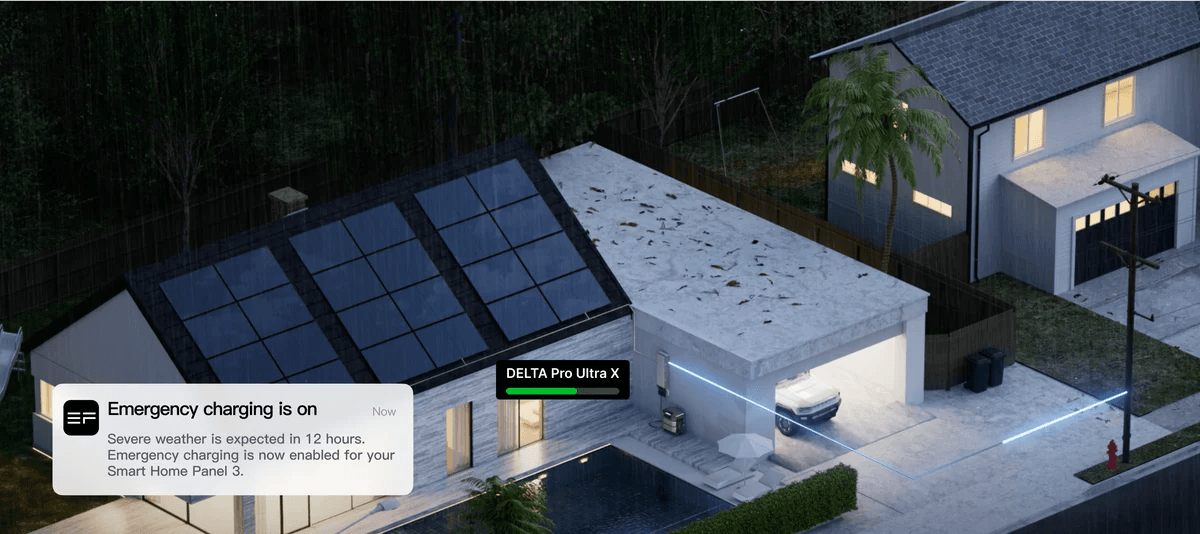
The added weight of graupel on cables can cause sagging and breakages that lead to local outages, sometimes with little warning, since graupel can form without an obvious storm. A home backup power system, like the EcoFlow DELTA Pro Ultra X, can bridge the gap if the grid goes down, keeping heating, refrigeration, and essential devices running until power is restored.

Why Can Winter Weather Lead to Power Outages?
The accumulation of graupel on power lines is just one risk that can lead to power outages when winter weather conditions take over. Ice accumulation can also break power lines when temperatures plummet. It takes as little as 0.25 inches of ice to snap branches and cables, and strong winds heighten the strain caused by the extra weight.
Water vapor in gas transported through pipelines can freeze, form condensation, and cause breakages and leaks. Aging infrastructure is especially vulnerable to such risks, making many parts of the United States increasingly susceptible to power outages.
Last but not least, the cold winter weather places a strain on the grid as the demand for energy surges. In some cases, the demand for energy can exceed the grid’s capacity, leading to blackouts. And regardless of the power outage risks, energy costs can skyrocket.
How Can You Prepare for Weather-Related Outages?
If you want to safeguard yourself against the risks of power outages due to graupel and other winter weather conditions, now’s the time to pay attention to maintain your home’s energy connections and protect your power lines. You should also consider investing in a resilient backup power system.
Backup power systems not only power your home when the grid fails, but they also significantly reduce your energy bills and carbon emissions.
For whole-home coverage, the EcoFlow DELTA Ultra Pro X starts with 12kWh of capacity, expandable up to 180kWh with up to 30 battery units. The average US household uses 10,500 kWh of electricity per year, so even at its base configuration, it can sustain essential systems through extended winter outages and scale up if your needs require it.
If you want something portable rather than a whole-home setup, the EcoFlow DELTA 3 Classic is built for exactly that. It's designed to keep essential devices, appliances, and small heating units running during a localized outage, and it charges via solar panels, AC wall outlet, or car charger, which is useful when you're not sure which option will be available.
Both units support three charging options that include solar panels and AC wall charging. The EcoFlow DELTA 3 Classic also features car charging, while the EcoFlow DELTA Pro Ultra X has a generator charging option.
Frequently Asked Questions
Is Graupel Dangerous?
Graupel can be dangerous for a number of reasons. It doesn’t need severe weather conditions to form, which means it can come unexpectedly. It also appears less dangerous than hailstones, meaning its risks often go overlooked. However, graupel accumulates and creates slippery conditions on roads and sidewalks. It also poses a range of threats to power lines and other aspects of energy infrastructure.
Can Graupel Damage Power Lines?
While hailstones generally bounce off power lines, the soft and crushable pellets of graupel can attach to power lines and accumulate. This added weight can cause sagging and breakages, especially if strong winds add strain or cause overarching tree branches to snap. The consequences can include localized or regional power outages affecting countless homes and businesses.
Warm Homes, Reliable Power, Faster Recovery
Many parts of the US and Canada are no stranger to power outages caused by winter weather and storms. Just look at the recent Winter Storm Fern, for example, which caused power outages in more than ten states. Add in factors such as rising energy costs, climate change, and the uncertainty of global markets, and you can see why now’s the opportune time to invest in a backup power solution.
EcoFlow has a whole-home backup power solution for every need, from portable units to whole-home systems.
For press requests or interview opportunities, reach out to our media team
media.na@ecoflow.com