Whale Watching Season Is Here: Locations, Peak Times, and What to Pack
Whale watching along the US coastline runs year-round, with different species peaking at different times and locations. Gray whales dominate the California coast in winter and spring, while humpbacks and blue whales are active from late spring through fall. The sections below cover the top US destinations, peak months by region, tour selection criteria, and a packing list for a day on the water.
When Is the Best Time for Whale Watching in the US?
Peak season varies by location and species. This table maps each major US destination to its peak months and the species most commonly spotted.
Location | Peak Season | Common Species |
|---|---|---|
San Diego, CA | Dec - Apr | Gray whale |
Monterey, CA | Apr - Nov | Humpback, blue whale |
Boston, MA | Apr - Oct | Humpback, finback, minke |
Pacific Northwest (WA/OR) | Mar - Oct | Gray whale, orca |
Hawaii (Maui) | Jan - Mar | Humpback whale |
Juneau, AK | May - Sep | Humpback, orca |
May and June are excellent shoulder months because productive whale watching is accessible across multiple regions at once.
Along the East Coast, humpbacks arrive at Stellwagen Bank off Boston from May onward and build steadily through June.
In California, humpbacks begin reaching Monterey Bay as krill concentrations rise, and blue whales start appearing offshore by late June to early July.
The Pacific Northwest stays active with gray whales and orcas throughout this window.
No single location peaks for all species in these two months, but strong activity runs across at least two or three species and both coasts simultaneously.
Where to Watch the Whale: Top US Destinations
Where to watch the whale depends on the species you want to see and the travel window you have. The three destinations below represent the most consistent whale watching experiences in the country.
In San Diego and Southern California
Whale watching in San Diego places you directly on the gray whale migration corridor, a heavily traveled route where thousands of Pacific gray whales pass within a few miles of the coast each winter and spring, traveling between Alaska and Baja California. Tours depart from Point Loma and Mission Bay, with trips averaging 3 to 4 hours. Blue whales also appear offshore from June through September, making San Diego a two-season destination and a top pick for whale watching in California.
In California: Monterey Bay
Monterey Bay ranks among the top whale watching spots globally because an underwater canyon off its coast pushes nutrient-rich cold water to the surface year-round. Blue whales, the largest animals on Earth, feed here from July through October. Humpbacks are present from April through November. Risso's dolphins, sea otters, and Pacific white-sided dolphins appear regularly alongside whales, making Monterey tours diverse even outside peak whale watching season. For travelers targeting multiple species, Monterey is among the best places for whale watching in California.
In Boston and the Northeast
Whale watching in Boston runs from April through October, with tours departing Boston Harbor and reaching Stellwagen Bank National Marine Sanctuary in about 90 minutes. Stellwagen Bank draws humpback whales, finback whales, and minke whales in large numbers throughout summer. Humpbacks here are individually identified by researchers, and guides can often name the specific animals you see. The average round-trip covers about 50 miles and lasts 3.5 to 4 hours.
How to Choose a Whale Watching Tour Worth Booking
Not all whale watching tour operators deliver the same experience, and price alone is not a reliable quality signal.
Choose an operator that employs a certified naturalist or marine biologist on board. Narrated trips with expert commentary produce better species identification and a more informative experience.
Check boat size. Smaller vessels (under 30 passengers) maneuver closer to whale activity zones while staying within federal approach distance limits.
Look for operators with a sighting guarantee or free return trip policy, which signals consistently high encounter rates.
Confirm the tour follows NOAA whale watching guidelines. NOAA recommends staying at least 100 yards from most whale species, with stricter federal rules applying to certain species and regions.
Check departure time. Morning tours generally have calmer sea conditions, which improves both sighting visibility and passenger comfort.
Read reviews dated within the last 90 days, as whale distribution shifts seasonally and older reviews may not reflect current conditions.
A whale watching tour operator with an on-board naturalist, a transparent sighting policy, and NOAA-compliant practices consistently delivers a better trip than operators who skip those standards, regardless of how long the tour runs.
What to Pack for a Full Day of Whale Watching
Packing the right gear affects how much you enjoy the trip and how clearly you can observe and photograph whales.
Six Items to Pack for Any Whale Watching Trip
Take seasickness medication at least 30 to 60 minutes prior to departure. Open-water swells affect most first-time passengers, and oral medications require time to activate.
Pack binoculars with at least 7x magnification. Whales surfacing 200 to 400 yards away are difficult to detail with the naked eye.
Bring a waterproof jacket and layer underneath regardless of the forecast. Ocean temperatures on the water can run 15 to 20°F colder than onshore conditions.
Wear sunscreen rated SPF 30 or higher and sunglasses with UV protection. Open-ocean glare intensifies UV exposure even on overcast days.
Carry a fully charged camera or phone with extra storage. Set your camera to burst mode or sport mode to capture fast surface events like breaching and fluking.
Bring water and a small snack. Most whale watching tours run 3 to 4 hours, and physical cold combined with excitement accelerates dehydration.
Why Device Power Matters More Than You Expect
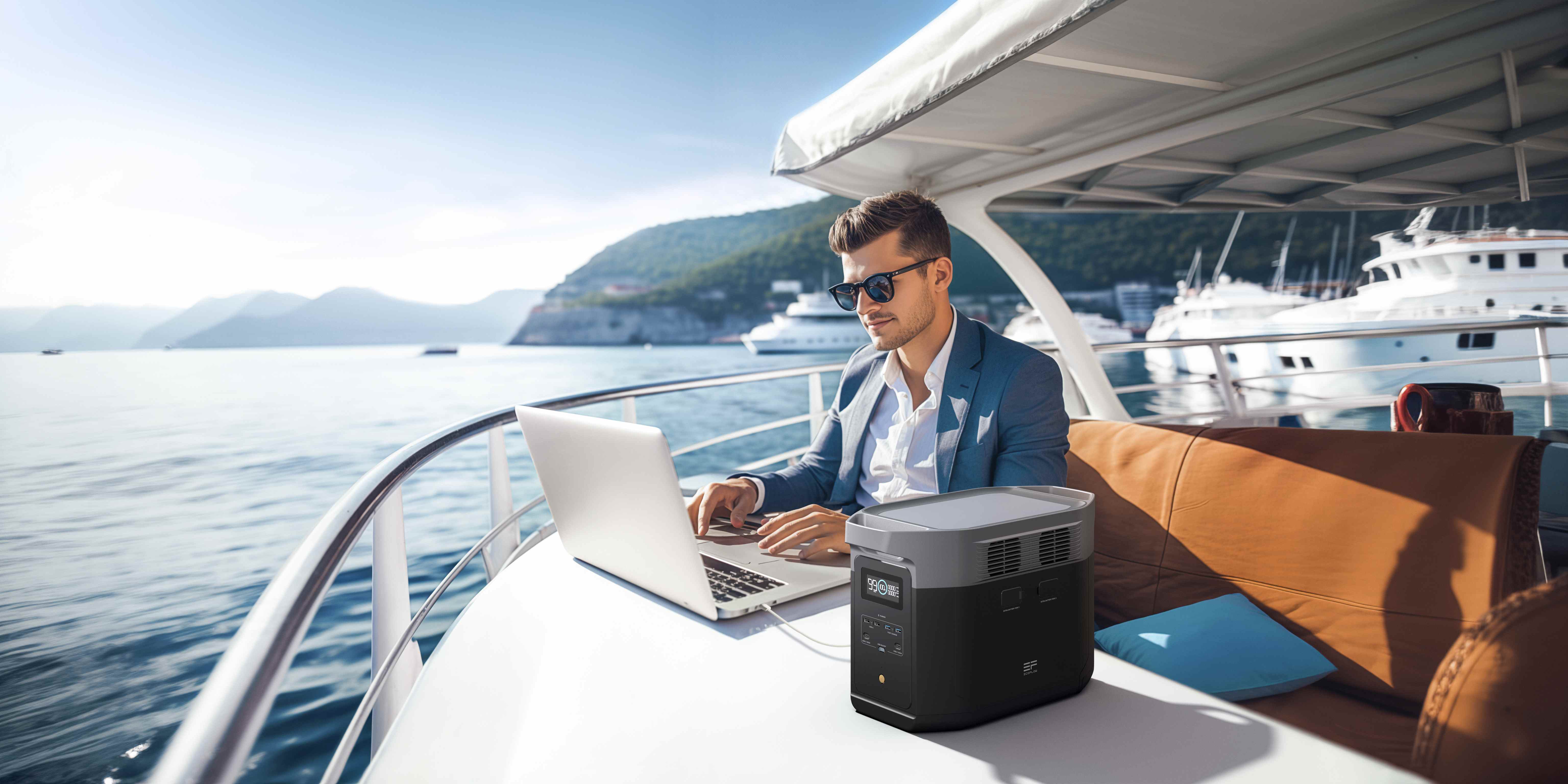
Cold air reduces lithium battery performance noticeably, and continuous burst shooting can cut camera battery life in half compared to casual use. A 3 to 4 hour boat trip at sea drains devices faster than a comparable time on land, and charging outlets are not available on most tour boats.
The EcoFlow DELTA 3 Classic (1024Wh) addresses this directly. Charge it fully in your hotel room the evening prior to your trip, and every camera battery, phone, and device arrives at the dock at full capacity. With multiple AC and USB outputs, you can top off all your gear in a single overnight cycle rather than hunting for separate outlets. It operates at 30dB whisper-quiet, weighs 26.7 lbs, and charges from 0 to 80% in 45 minutes with AC charging, keeping it ready across multiple days of back-to-back trips without downtime.
Your Whale Watching Window Is Open
Match your travel dates to the species and region, book a NOAA-compliant tour with an on-board naturalist, and come prepared for hours at sea. Gray whales, humpbacks, and blue whales are active right now along both US coasts, and the peak window closes faster than most travelers anticipate. Pack your gear, charge your EcoFlow, and get on the water.
In this article, whale watching safety guidelines referenced in this article are based on NOAA's publicly available Whale Watching Guidelines; for the most current federal regulations and approach distance requirements, visit noaa.gov. Destination and species activity information is provided for general reference only and is subject to change based on seasonal conditions, weather, and population dynamics. Readers should confirm current conditions with a local tour operator before booking.
FAQs About Whale Watching in the US
Q1. How Far Offshore Do Whale Watching Tours Usually Go?
Most US whale watching tours travel 5 to 25 miles offshore, depending on location and season. Monterey tours reach active feeding zones in 20 to 30 minutes. Boston tours to Stellwagen Bank take about 90 minutes each way. Distance is driven by where whales are feeding or migrating at that time of year, not operator preference. During peak gray whale migration in San Diego, active sightings occur as close as 3 to 5 miles offshore, which keeps those tours shorter and conditions calmer for passengers.
Q2. How Do You Photograph Whales on a Moving Boat?
Set your camera to shutter-priority mode at 1/1000 second or faster to freeze whale movement in the frame. Use continuous autofocus and burst mode to capture multiple frames during a surface event. Stabilizing against the boat railing reduces blur from vessel motion. A focal length of 200mm to 400mm covers most surface distances you will encounter on a standard tour. If you are using a phone, tap to lock focus on the water surface and hold steady with both hands.
Q3. Do Whale Watching Tours Disturb the Whales?
Reputable operators follow NOAA-recommended approach distances and vessel conduct guidelines designed to minimize disturbance to feeding and migrating whales. NOAA and national marine sanctuary programs support responsible whale watching as compatible with conservation, provided operators follow approach guidelines and vessel conduct standards. Boats that linger too close or accelerate suddenly near whales do cause stress in the animals. Choosing an operator with a documented commitment to NOAA guidelines is the most direct way to ensure your trip does not add to that pressure.
Q4. Why Do Whales Breach During Whale Watching Trips?
Breaching is not fully understood, but researchers link it to communication, parasite removal, play behavior, and courtship displays. Humpbacks breach with greater frequency than most other large whale species. Breaching is not triggered by boat presence and happens with or without observers nearby, so catching a breach is a matter of timing, not tour behavior. Keeping your camera in burst mode and staying alert throughout the trip, not only during confirmed sightings, gives you the best chance of capturing the moment.
Q5. Is Whale Watching Suitable for Young Children?
Most tour operators welcome children, and whale watching is a strong family activity for kids aged 5 and up. Shorter coastal tours with calmer sea conditions work better for young children than long offshore expeditions. Pack snacks, a light jacket, and motion sickness bands for children prone to car sickness. Morning departures tend to have smoother water, which reduces discomfort. Many operators in San Diego and Boston offer family-friendly tours with naturalist-led narration pitched at younger audiences.
For press requests or interview opportunities, reach out to our media team
media.na@ecoflow.com