Watt to BTU Conversion Explained: Simple Guide for HVAC, Heating, and Cooling (2026)
- What Is a Watt and a BTU? (Basic HVAC Energy Concepts)
- Watt to BTU Conversion Formula (Simple Explanation)
- Watt to BTU Conversion Chart + Real-World HVAC Examples
- How to Choose the Right AC Using BTU Ratings
- Watt vs. BTU in Real HVAC Performance (Efficiency & Power Use)
- High-BTU Devices and Real Power Demand (What Most Guides Ignore)
- Powering HVAC Systems in Real Life (Backup & Off-Grid Scenarios)
- Conclusion
- FAQs
Evaluating a new air conditioner or heating system in the United States requires balancing two completely different metrics: electrical draw and thermal capacity. Homeowners frequently run into confusion when monthly utility bills charge for power consumption in kilowatts, while the window cooling units sitting in retail aisles carry ratings in thousands of BTUs. Figuring out how these two values interact does not require an advanced engineering degree. Mastering the basic math allows you to maintain a comfortable indoor environment without overpaying on your monthly utility statements. This guide outlines the essential formulas needed to convert Watts to BTUs, streamlining equipment decisions for houses, mobile RV setups, and off-grid emergency backup systems.
What Is a Watt and a BTU? (Basic HVAC Energy Concepts)
Managing indoor temperatures requires separating the electricity an appliance consumes from the actual volume of climate control it delivers. Watts and BTUs represent opposite sides of this mechanical equation, functioning respectively as electrical power input and thermal capacity output.
What Is a Watt in Electrical Systems
A watt (W) serves as the universal unit of power used to measure the instantaneous rate of energy consumption inside an electrical circuit. It shows the exact amount of electricity a machine pulls from the power grid, a generator, or a battery bank at any specific moment. Elevated wattage numbers mean the equipment demands a heavy supply of current, draining available energy reserves at an accelerated pace.
How Watts Are Used in HVAC and Home Appliances
Inside standard residential climate hardware, wattage indicates the input power requirement. This value determines the total amount of electricity needed to run internal components like fans, control boards, and compressors. For off-grid configurations, choosing an appropriately sized solar generator helps ensure these power demands can be supported more sustainably. Large, demanding installations like central air conditioning systems pull far more watts than minor household conveniences like air circulation fans or LED light bulbs.
What Is a BTU (British Thermal Unit)
A British Thermal Unit (BTU) measures physical heat energy. One BTU represents the precise quantity of thermal energy needed to change the temperature of a single pound of liquid water by one degree Fahrenheit. When looking at heating and cooling hardware, the industry uses BTUs to quantify total capability rather than line current consumption.
Why HVAC Systems Use BTU/h Instead of Watts
The North American climate control sector relies on BTUs per hour (BTU/h) because this value tracks real output performance instead of electrical input draw. This metric tells you exactly how much heat energy an air conditioner can extract from a living space, or how much warmth a furnace can introduce to a room over a sixty-minute period. This standardized layout makes it easy to match hardware capacity directly to structural square footage.
Watt to BTU Conversion Formula (Simple Explanation)
Moving between these two data points requires applying a fixed thermodynamic constant. Because both metrics track power over a set duration, they convert back and forth cleanly using basic multiplication and division.
Basic Conversion Formula (1 W = 3.412 BTU/h)
The mathematical bridge linking incoming electrical power to outgoing thermal performance is unvarying. Understanding how to calculate BTU from watts makes it much easier to compare heating and cooling equipment in real-world HVAC applications. One watt of power is equivalent to 3.412 BTUs per hour in energy terms.
BTU/h = Watts × 3.412
Reverse Formula (1 BTU/h = 0.293 W)
When working backward to determine the electrical wattage a specific thermal capacity requires, use the inverse conversion factor. Multiplying the hourly BTU rating by 0.293 isolates the raw electrical baseline, giving you the exact data needed to calculate whether an alternative power supply can sustain a heating device.
Watts = BTU/h × 0.293
Why “Per Hour” Matters in HVAC Calculations
Leaving time out of the equation reduces accuracy in HVAC performance calculations. When an equipment sticker mentions a "12,000 BTU air conditioner," it means 12,000 BTUs per hour. A raw BTU is just a static block of energy, but adding the hourly variable creates a dynamic rate of continuous flow. This tells an engineer how effectively a compressor can fight against steady outdoor heat leaking through residential window glass all afternoon.
Step-by-Step Conversion Example
A typical domestic space heater running at full capacity on a standard household outlet draws 1,500 watts of power. To calculate its thermal output in BTUs per hour, drop that electrical value into the primary formula:
1,500 × 3.412 = 5,118 BTU/h
This simple equation proves that the heater provides roughly 5,118 BTUs of continuous warmth to an enclosed space for every hour it runs on its high setting.
Watt to BTU Conversion Chart + Real-World HVAC Examples
To save you from running manual calculations for every appliance sticker, the reference table below cross-references common electrical wattages with their thermal capacities and everyday household applications.
Quick Reference Watt to BTU table
| Electrical Watts (W) | Thermal Equivalent (BTU/h) | Typical HVAC Device Example |
|---|---|---|
| 100 W | 341 BTU/h | Small desktop personal fan |
| 500 W | 1,706 BTU/h | Mini personal space heater |
| 900 W | 3,071 BTU/h | Mid-size electric countertop food dehydrator |
| 1,200 W | 4,094 BTU/h | Compact portable bedroom AC |
| 1,500 W | 5,118 BTU/h | Standard US electric space heater / oil-filled radiator |
| 3,000 W | 10,236 BTU/h | Large built-in electric garage heater |
| 5,000 W | 17,060 BTU/h | Whole-house central heat pump (Auxiliary heat strip) |
How to Read the Conversion Chart in Real Life
When applying these figures to real appliances, double check whether the label shows line current draw or structural thermal capacity. A space heater offers an identical match between electrical input and thermal output because turning electrical current directly into raw heat operates at nearly 100% efficiency. Air conditioners work differently because they use electricity to move existing heat around rather than creating it from scratch.
HVAC Device Examples (AC, Heaters, Fans)
Power profiles differ completely depending on the hardware design. A basic box fan simply circulates indoor air, requiring a modest 60 to 100 watts of power. A 1,500-watt space heater pulls fifteen times that energy because it must physically generate new thermal mass. Meanwhile, a window AC unit might draw 1,000 watts of electricity from the wall but actively extract 10,000 BTUs of heat from the room, demonstrating the unique efficiency of modern refrigerant compression loops. Understanding these drastic wattage variances is essential when planning off-grid or backup power systems, where devices like a portable power station may be used to support essential climate control equipment.
How to Choose the Right AC Using BTU Ratings
Picking the right air conditioning size is the most important factor in securing reliable indoor comfort, protecting internal machinery, and keeping utility bills manageable.
Matching BTU Capacity with Room Size
The U.S. Department of Energy offers a straightforward operational rule: a properly sized cooling system needs approximately 20 BTUs of capacity for every single square foot of target living space. To find your exact structural demand, multiply the length of the room by its width to calculate the total square footage, then multiply that final number by 20.
Small vs. Large Room Cooling Requirements
Small Rooms (150 sq. ft.): Standard home offices or 10 x 15 spare bedrooms operate perfectly with a compact 5,000 to 6,000 BTU unit.
Medium Rooms (350 sq. ft.): Master bedrooms or isolated dining areas require an output scale ranging between 7,000 and 9,000 BTUs.
Large Rooms (500 sq. ft.+): Open-concept layouts, studio apartments, or interconnected living spaces demand heavy-duty 12,000 to 14,000 BTU systems.
Common Mistakes When Choosing AC Units
Assuming that a higher capacity rating always yields better results is a frequent equipment error. If you put an oversized 14,000 BTU cooling unit into a small 200-square-foot room, the system drops air temperatures so fast that it satisfies the thermostat too early. The compressor shuts down before running long enough to draw moisture out of the air, creating a cold, humid, and sticky indoor environment. Conversely, an undersized unit runs indefinitely without ever hitting the target temperature, driving up monthly utility costs.
Watt vs. BTU in Real HVAC Performance (Efficiency & Power Use)
Understanding how a home cooling system uses energy requires drawing a clear distinction between electrical power input (watts) and thermal output (BTU/h).
Input Power (Watts) vs. Output Cooling/Heating (BTU)
Air conditioners and heat pumps do not generate cold air. They function as heat-transport mechanisms, utilizing a closed refrigerant loop and a compressor to absorb indoor thermal energy and release it outside. This operating method allows them to move far more thermal energy than the electrical wattage they consume during the process. Because of this, a typical window cooling unit can draw roughly 900 to 1,100 watts of electrical power while delivering a robust 10,000 BTU/h of active cooling capacity.
Energy Efficiency and Electricity Bills
The efficiency of cooling hardware is measured by the Energy Efficiency Ratio (EER) or the Seasonal Energy Efficiency Ratio (SEER).
EER = BTU/h ÷ W
Higher EER or SEER values indicate superior mechanical efficiency. This means the system produces a larger cooling output for every single watt of electricity it draws from the grid, translating directly into reduced utility expenses during peak summer months.
Common Misunderstanding in Watt vs. BTU Comparison
A common consumer mix-up is assuming that a 10,000 BTU air conditioner requires a constant supply of 10,000 watts of electricity. In reality, BTU/h tracks total thermal cooling capacity, not electrical circuit load. Most modern 10,000 BTU/h units run on an electrical input of about 900 to 1,100 watts, and high efficiency inverter models drop even lower. To get accurate data, check the yellow EnergyGuide sticker or manufacturer specification sheets, which clearly separate thermal output from electrical input.
High-BTU Devices and Real Power Demand (What Most Guides Ignore)
Online calculators usually look only at steady-state electrical draw, but real world electrical systems must account for initial start-up demands and residential circuit limits.
How Many Watts does a Typical 10,000 BTU AC Use
A modern 10,000 BTU window air conditioner draws between 900 and 1,000 running watts during continuous operation. If you are setting up backup electrical hardware, understanding how many watts an air conditioner uses on average will help you size your battery banks properly. Older hardware or less efficient portable dual-hose setups often require closer to 1,200 or 1,300 running watts to deliver the same volume of cooling performance.
Startup Surge Power vs. Running Watts
Steady-state operational ratings hide the brief, intense power draw required to spin up a stationary compressor motor. This mechanical hurdle, known as Locked Rotor Amps (LRA), demands a momentary current spike lasting a fraction of a second. A system that sits at 1,000 running watts frequently requires a 2,500 to 3,000-watt inductive surge to start, creating strict performance thresholds for emergency generation and solar backup designs.
Why Power Capacity Matters in Real Homes
In typical domestic environments, particularly older homes with standard 15-amp circuits, high-BTU climate appliances can easily push electrical thresholds to the limit when running simultaneously with other high draw devices like microwaves or computers. Factoring in both steady running wattages and initial compressor surge requirements prevents frequent circuit breaker trips and ensures long-term electrical stability across the household.
Powering HVAC Systems in Real Life (Backup & Off-Grid Scenarios)
Balancing input wattage against thermal BTU output becomes a critical calculation when the traditional electrical grid suffers a total failure.
The Challenge of Running HVAC During Outages or Off-Grid Use
Extreme weather events place severe pressure on aging domestic electrical infrastructure, resulting in widespread winter blackouts, wildfire-related power shutoffs, and hurricane disruptions. Maintaining indoor climate control during these grid collapses is incredibly difficult. HVAC equipment demands both high continuous running wattages and intensive start-up surge capabilities, which easily overwhelm standard portable fuel generators or entry level battery banks. Securing reliable climate resilience depends entirely on high capacity energy storage systems engineered to sustain these massive electrical demands.
DELTA 3 Ultra Plus + 500W Solar Panel (Home Emergency HVAC Backup)
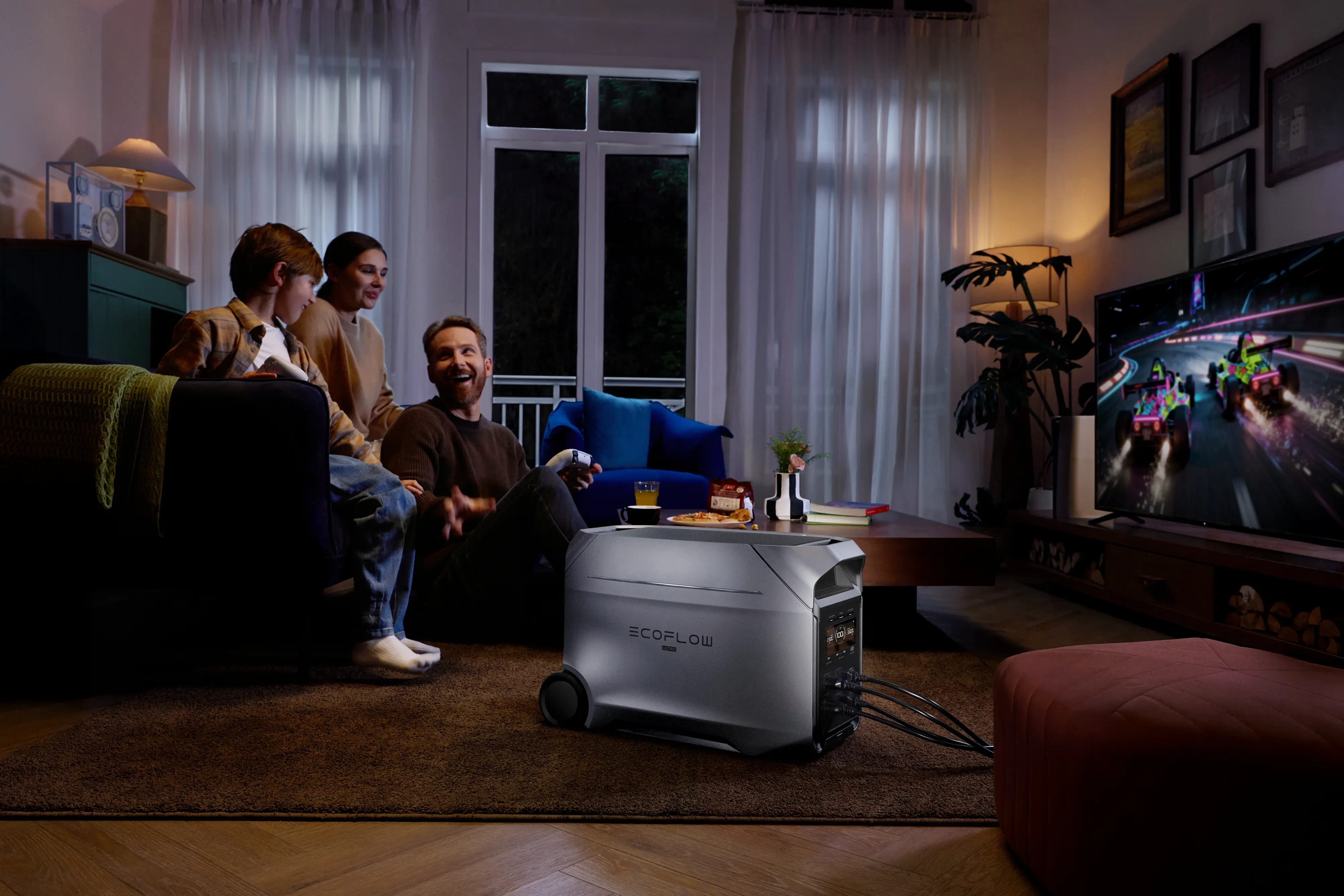
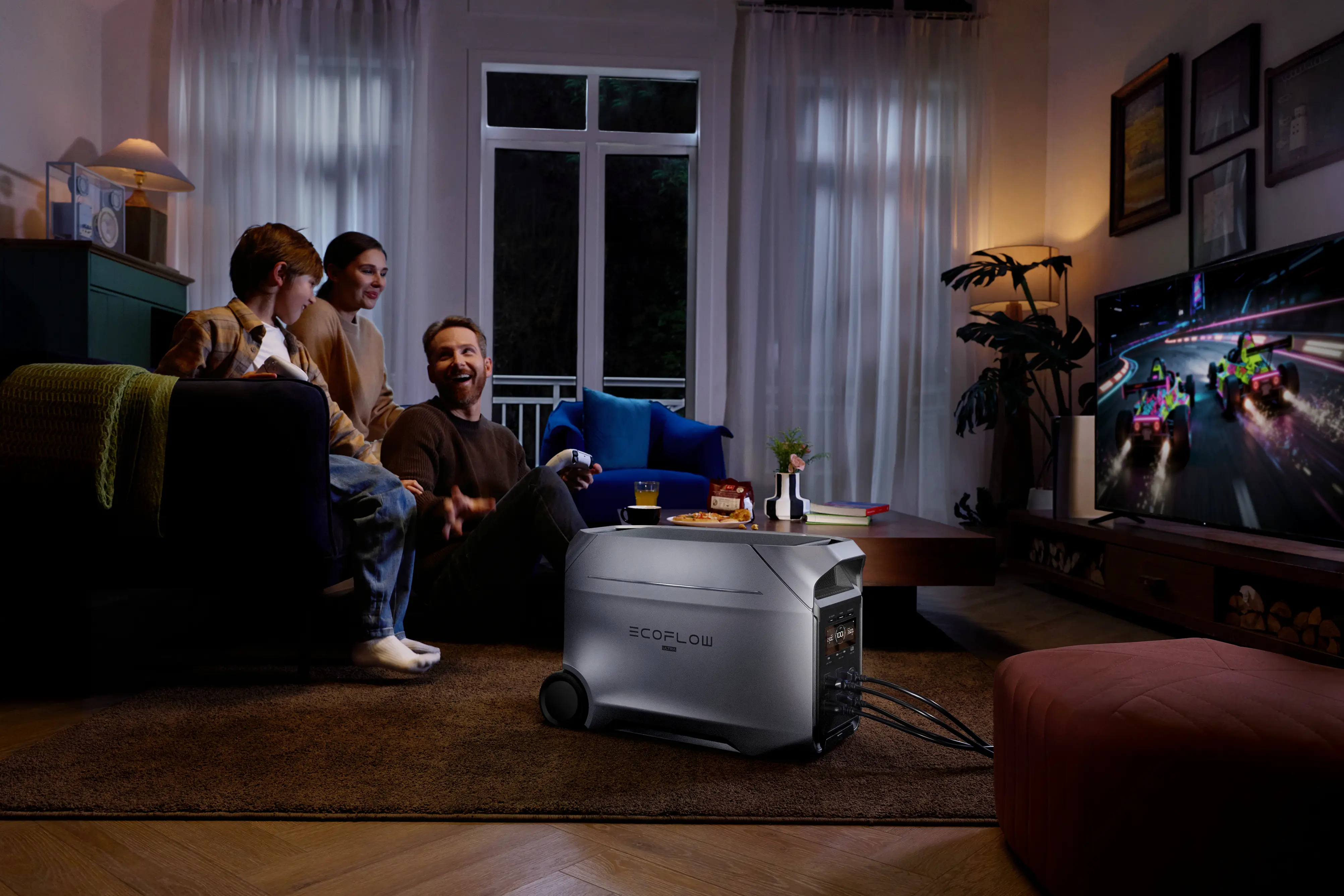
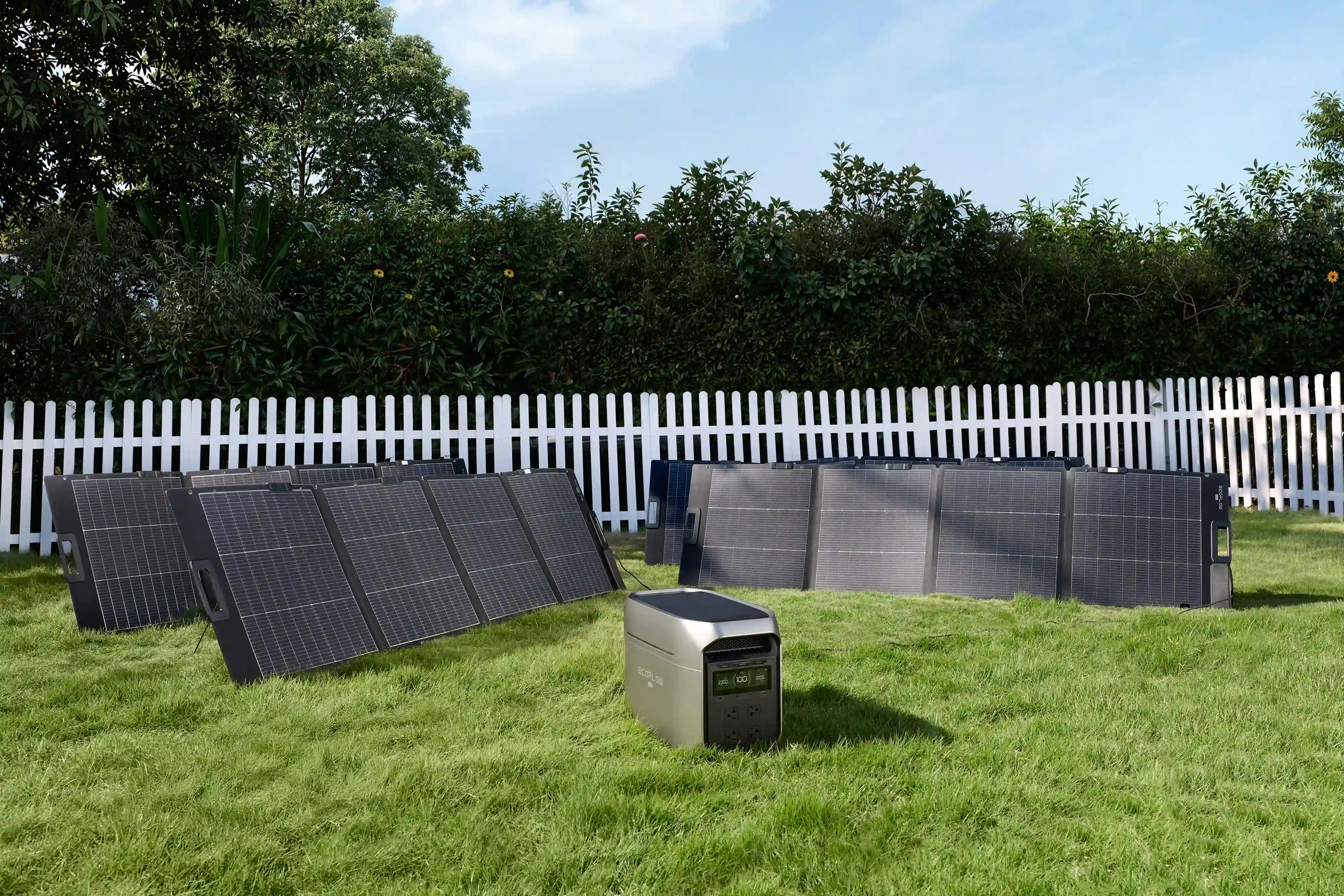
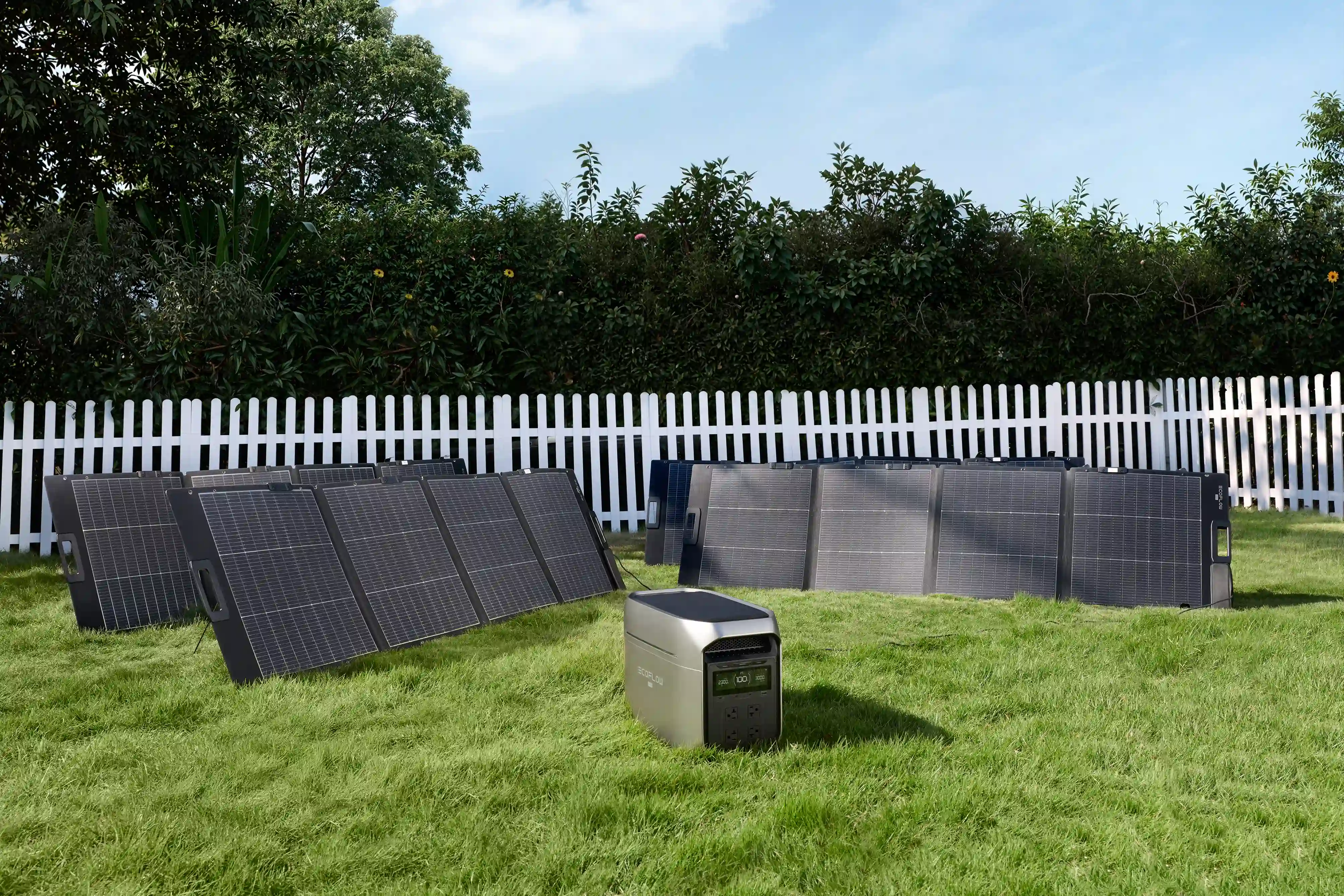
For single family properties exposed to severe storm disruptions, the EcoFlow DELTA 3 Ultra Plus (3072Wh) + 500W Solar Panel provides a backup solution for essential HVAC equipment. The high output inverter architecture integrated into this system easily manages the intense locked rotor amperage spikes generated by window air conditioners or furnace blowers. The system operates as a closed-loop energy station: the battery unit supplies clean power safely indoors without emissions or mechanical vibration, while the 500W solar array replenishes core capacity during daylight hours to extend operational runtime through multi-day grid failures.
DELTA 3 Max Plus + 2 × 220W Solar Panel (RV & Mobile HVAC Power Solution)
Mobile living and off-grid travel require precise management of tight energy budgets where space and climate control intersect. Sustaining a portable air conditioner alongside a fridge, laptop, and lighting demands a flexible, responsive power infrastructure. The EcoFlow DELTA 3 Max Plus + 2 × 220W Solar Panel is configured to handle these mobile parameters. Utilizing dual solar arrays allows for split-angle positioning to maximize energy harvesting across changing daylight conditions. This layout ensures consistent input performance, reducing reliance on fossil-fuel combustion generators while maintaining an optimized thermodynamic balance inside the living space.
Conclusion
Mastering the relationship between Watts and BTUs is essential for optimizing residential climate control and maximizing energy efficiency. Translating electrical input into thermal capacity output prevents the costly mistake of purchasing mis-sized appliances that inflate utility bills. This knowledge allows you to configure dependable off-grid backup systems using targeted solutions like the DELTA 3 series. Whether safeguarding a home from unexpected infrastructure failures or sustaining an off-grid camper van, matching HVAC demands with the proper solar generator setup ensures consistent environmental comfort in any season.
FAQs
How Many BTU is 1000 Watts?
An electrical input of 1,000 watts produces a raw thermal equivalent of exactly 3,412 BTUs per hour. This value can be verified at any time by multiplying the device's electrical wattage by the fixed thermodynamic conversion factor of 3.412.
Is Higher BTU Always Better for AC?
A higher BTU rating is not always ideal. If the cooling capacity of an air conditioner is too large for the targeted square footage, it will lower the room temperature too rapidly and cycle off before extracting latent humidity from the air, leaving the living space cold and damp.
Can I Size an AC Using Watts Instead of BTU?
Sizing cooling equipment based strictly on wattage should be avoided because watts only measure electrical power consumption, not cooling performance. Two separate air conditioning units can both draw 1,000 watts of electricity, but an efficient model might deliver 11,000 BTUs of cooling while an outdated unit outputs only 8,000 BTUs.
Why Does HVAC Industry Use BTU Instead of Watts?
The North American HVAC sector retains the BTU metric because it provides a standard measurement for actual thermal energy transfer rather than electrical current draw. This allows engineers and installation contractors to calculate structural heat gain and insulation profiles independently of the internal electrical design of the specific equipment.
For press requests or interview opportunities, reach out to our media team
media.na@ecoflow.com