Water Security During a Power Outage: What You Should Know
When the power grid fails, our first thoughts often turn to lights, heat, and refrigerators. Yet, a far more fundamental dependency is silently severed: our access to safe, clean water. A prolonged blackout doesn't just darken our homes; it threatens to dehydrate them, creating a genuine water crisis challenge to our well-being. Achieving water security is a cornerstone of true preparedness.
Why Power Outages Threaten Water Access
The link between electricity and water is absolute, whether you live in a bustling city or a quiet rural area. Municipal water systems are colossal energy consumers. Drinking water and wastewater plants can account for 30 to 40 percent of a local government's total energy use. Every stage—extraction, treatment, storage, and distribution—relies on a constant flow of electricity. When a widespread power outage occurs, the pumps that move water through miles of pipes fall silent.
The immediate result is a loss of water pressure at your tap. But a more sinister problem lurks. That pressure is a physical barrier, keeping treated water safe inside the pipes and contaminants out. When pressure vanishes, groundwater and soil contaminants can seep into the distribution system, turning what little water might remain into a health hazard. A simple water and power outage can quickly escalate into a full-blown water crisis.
For the millions of Americans who rely on private wells, the situation is even more direct. Your well pump is an electrical appliance. No power means no pump, and no pump means no water. Period. It's a simple equation with profound consequences. Furthermore, just like municipal systems, private wells depend on pressurization to maintain a safe, closed loop. Using the few gallons stored in your pressure tank during an outage depressurizes the system. A depressurized well is vulnerable to contamination from bacteria and other pathogens in the surrounding soil, which can enter your water supply without any noticeable change in taste or smell. What begins as a water shortage can become a lingering contamination problem long after the lights come back on.
Emergency Water Storage: How Much Do You Need?
The foundation of any water security plan is a passive, immediately accessible reserve. Federal agencies like FEMA and the CDC recommend a baseline of one gallon of water per person, per day. Half a gallon is for drinking, while the other half covers basic sanitation and food preparation.
Is a three-day supply enough? For a brief, localized outage, perhaps. For a more serious event, a two-week supply is a much safer goal. Your personal calculation should also account for the increased needs of children, nursing mothers, anyone who is ill, and pets. Living in a hot climate can easily double your water requirements.
Commercially bottled water is the gold standard for storage; it's safe, sealed, and reliable. If you choose to store your own water, use only food-grade containers. Old milk or juice jugs are a poor choice, as residual sugars and proteins can foster bacterial growth. Before filling, clean your containers thoroughly and sanitize them with a solution of one teaspoon of unscented household bleach per quart of water, followed a complete rinse. Remember to label your containers with the filling date and rotate your supply every six months to keep it fresh.

Water Filtration and Purification Without Power
Your stored water is your first line of defense, but what happens when it runs low? A reliable method for treating alternative water sources is the next critical layer of preparedness. Boiling is a highly effective purification method, killing virtually all harmful organisms with a one-minute rolling boil. Its drawback, however, is that it consumes fuel, which might also be a scarce resource.
A more sustainable solution for an extended emergency is a high-quality gravity-fed water filter. Systems from reputable brands like Berkey, Alexapure, and ProOne use advanced ceramic or composite filter elements to remove bacteria, protozoa, and other contaminants without needing any electricity. These units are workhorses, capable of purifying thousands of gallons of water over the life of their filters. They operate slowly, so the key is to filter water continuously to keep your ready-to-drink supply full. A gravity filter is an essential component of a resilient off grid water system.
Chemical treatments, such as purification tablets or unscented bleach, offer another option. They are lightweight and excellent for a portable emergency kit, but they have limitations. Some chemicals are not effective against certain hardy protozoan cysts, and they can affect the taste of the water. For home use, they are best seen as a backup to a more robust filtration system.
Backup Power for Your Water System
For homeowners with a private well, the ultimate step toward water independence is securing a backup power source for the pump. The most critical factor is not the pump's running wattage but its starting (or surge) wattage. A pump can draw two to three times its normal power for the first few seconds it kicks on. Your power source must be able to handle that momentary spike.
Pump Motor Size (HP) | Typical Running Watts (W) | Estimated Starting/Surge Watts (W) |
1/3 HP | 750 W | 1,500 - 3,000 W |
1/2 HP | 900 W | 2,000 - 4,000 W |
3/4 HP | 1,500 W | 3,000 - 4,500 W |
1 HP | 2,000 W | 4,000 - 6,000 W |
1.5 HP | 2,500 W | 5,000 - 7,500 W |
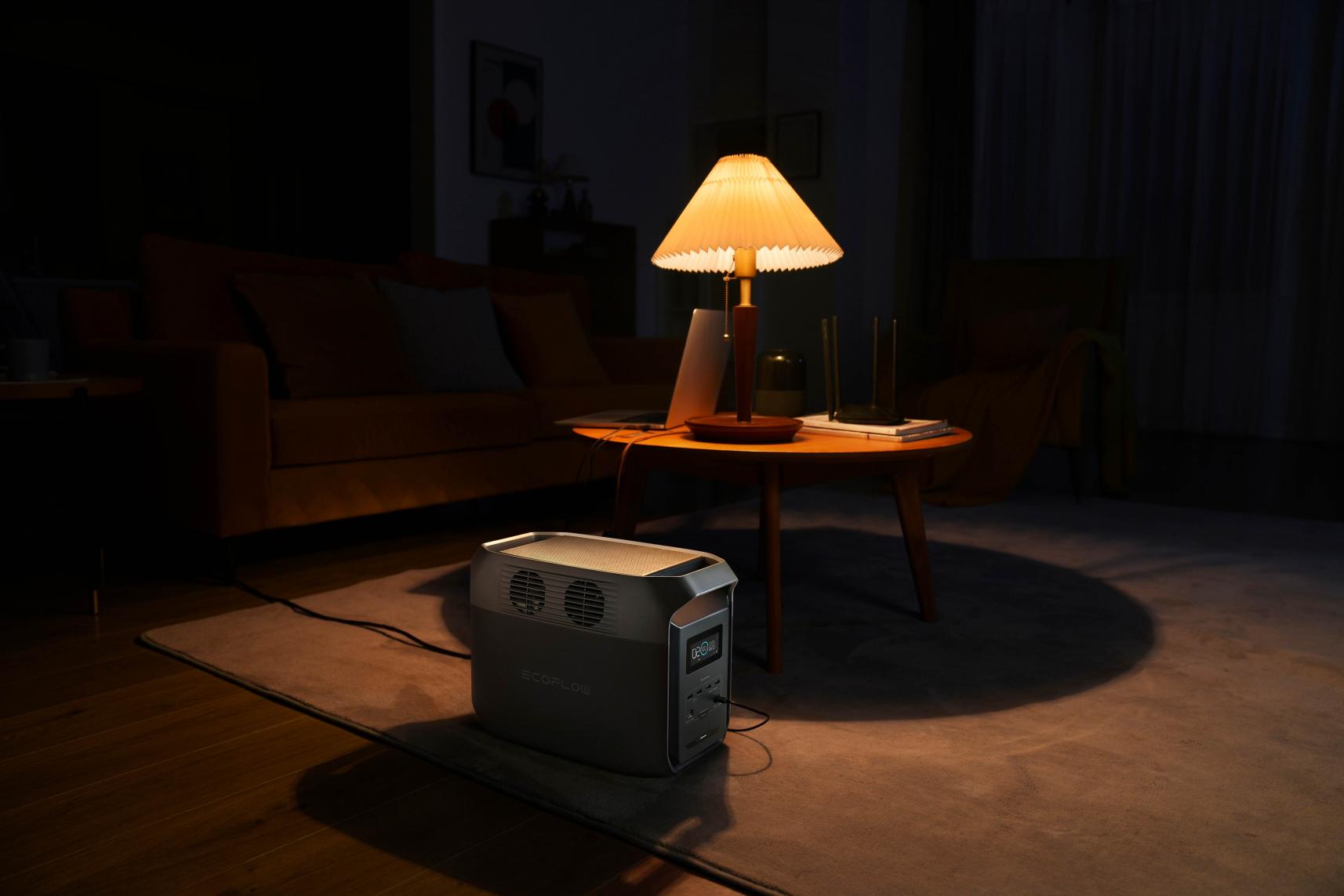
Modern portable power stations, which are essentially large batteries with built-in inverters, offer a silent, fume-free alternative to traditional gas generators. They are excellent equipment for power outages. Here's a look at a few options that can tackle the job.
EcoFlow DELTA 3 Classic (1024Wh)
Compact Battery Backup for Shallow or Low-Flow Wells
If your well pump is relatively small—typically under ½ horsepower—the EcoFlow DELTA 3 Classic offers a dependable and ultra-quiet portable power station. With 1800W continuous output and 3600W surge capability, it can handle the initial power draw most small well pumps require to start. What makes it stand out is its 10ms automatic switchover, which ensures uninterrupted operation for essential systems like pressure tanks or UV purifiers. Its automotive-grade LFP battery promises a decade of daily reliability, while OASIS 3.0 smart app control allows you to schedule runs or activate backup mode remotely before a storm hits. At only 30dB under moderate loads, it’s whisper-quiet—perfect for overnight use inside your home.
EcoFlow DELTA 3 Max (2048Wh)
Balanced Power and Runtime for Mid-Sized Households
For homes with deeper wells or larger pressure systems, the DELTA 3 Max strikes a solid middle ground between portability and serious performance. With 2400W continuous AC output, 4800W surge capacity, and 3400W X-Boost, the home battery can comfortably power ¾ HP pumps while maintaining other small household loads like lights or routers. The 1.8kW AC input lets it recharge from 0–80% in just over an hour, and it also supports solar input up to 500W, letting you restore water access even during extended outages. The built-in LFP chemistry ensures long cycle life, and its 9 versatile ports make it a flexible hub for both emergency water systems and general household backup power.
EcoFlow DELTA 3 Ultra (3072Wh)
Heavy-Duty Backup Power for Deep Wells and Whole-Home Use
When your property relies on a 1 HP deep well pump or you need to sustain a multi-circuit water system, the DELTA 3 Ultra is the clear choice as a house battery. Delivering 3600W continuous output and a staggering 7200W surge, it can handle the toughest startup loads with ease. The TT-30 RV outlet provides direct compatibility with high-amperage equipment, while smart output priority ensures your well pump gets power first when demand spikes. Its 800W solar input and 1800W fast recharge make it suitable for prolonged outages or off-grid properties where water access is mission-critical. Despite its impressive capacity, it remains fully portable and can be managed through the EcoFlow app for real-time monitoring, scheduling, and system optimization.
Smart Water Security Planning
Achieving real peace of mind comes from integrating these elements into a cohesive plan. Don't rely on a single solution; build redundancy.
Your strategy should be layered. Start with a passive reserve of stored water as your first line of defense. Add a powerless purification method, like a gravity filter, to process alternative water sources if needed. Finally, for those with wells, a properly sized battery backup system provides the ultimate layer of resilience, allowing you to access your primary water source on demand and effectively end a water supply emergency.
A plan is only a theory until it's tested. Once a year, simulate a power outage. Shut off the main breaker to your house for a few hours. Connect your power station to your well pump and confirm it works as expected. Practice using your filter. Review your plan with your family. A drill like this will reveal any weaknesses before you face a real emergency.
Finally, remember that preparedness shouldn't be confined to your home. Your emergency go-bag should include several days' worth of water for each person or a reliable portable filter. Should you need to evacuate, your most critical survival need will already be covered.
The End
The connection between power and water is an undeniable reality of modern life, but it doesn't have to be a crippling vulnerability. A thoughtful strategy built on the three pillars of storage, purification, and house battery backup can transform your household from a state of dependency to one of self-reliance. Preparation is a deliberate choice, and the reward is not just a supply of water, but the profound peace of mind that comes from knowing you are ready for whatever comes next.
For press requests or interview opportunities, reach out to our media team
media.na@ecoflow.com