Should You Install an Outdoor EV Charger?
- 3-Step Must-Do Checklist for Outdoor EV Charging
- Outdoor EV Charger vs Indoor EV Charger: What You Need to Know
- Outdoor EV Charger Installation Costs
- Hardwired vs Plug-In Outdoor EV Charger Installation
- Electrical Requirements and Safety Considerations
- Smart Charging and High-Load Device Management
- Is an Outdoor EV Charger Right for You?
- Charge Your EV Safely Outdoors
- FAQs
Disclaimer: The information provided in this article is for general guidance and educational purposes only. Installing an EV charger involves high-voltage electricity and poses significant safety and fire risks. You should always comply with local electrical codes, obtain the necessary permits, and hire a licensed, insured electrician to perform any electrical work or installation.
Code and Source Note: Outdoor EV charger installation should follow the locally adopted electrical code, which may be based on a specific edition of NFPA 70, the National Electrical Code. NEC Article 625 covers EV power transfer equipment and related conductors, while permitting and inspection rules are enforced by local authorities, so requirements can vary by city, county, and state.
Installing an outdoor EV charger makes daily vehicle charging simple and highly convenient, especially if your garage is full, nonexistent, or located far from your driveway. These durable units provide reliable Level 2 charging speeds while safely withstanding rain, direct sunlight, snow, and extreme temperature swings. This guide explains the differences between indoor and outdoor setups, installation costs, safety requirements, and how to determine if an exterior charging station is the right investment for your property.
3-Step Must-Do Checklist for Outdoor EV Charging
Before diving into the details, here are the three essential steps you must take for a successful installation:
Confirm Placement and Cable Length: Identify your exact parking spot and measure the distance to the charger mounting point to ensure the cable easily reaches your car without creating a tripping hazard.
Consult a Licensed Electrician: Have a professional evaluate your home’s electrical panel capacity (to see if a 200-amp upgrade is needed) and handle the required local permits.
Choose the Right Equipment: Select a charger with a NEMA 4 or 4X weather rating for maximum element protection, and verify its warranty and smart monitoring features.
Outdoor EV Charger vs Indoor EV Charger: What You Need to Know
Both indoor and outdoor chargers provide Level 2 charging, which is fast enough for most daily EV needs. The main difference lies in weather protection and installation requirements.
Indoor chargers are typically mounted on a wall near the home’s electrical panel. Installation is straightforward, often plug-in or hardwired, with minimal maintenance. They are not exposed to the elements, so additional weatherproofing is unnecessary. Indoor units are ideal for homeowners with a spacious garage and convenient vehicle access.
Outdoor chargers must withstand sun, rain, wind, and occasional snow. Installation is more complex, often requiring hardwiring, a weatherproof enclosure, and careful cable management. Outdoor chargers are generally placed in driveways, carports, or detached garages, offering flexibility when indoor space is limited.
Practical Example: A family living in a Houston townhouse installed an outdoor EV charger at the end of their driveway. By measuring the distance from the mounting point to the car’s charging port, they selected a 25-foot cable, ensuring safe access without crossing walkways or obstructing doors. This setup also allowed them to charge two vehicles using the same charger with minimal rearrangement.
Feature | Outdoor EV Charger | Indoor EV Charger |
|---|---|---|
Avg. Installation Cost | $1,300–$3,500 | $800–$2,500 |
GFCI Protection | Mandatory | Recommended |
Installation Type | Hardwired recommended | Plug-in or hardwired |
Maintenance | Weatherproofing checks | Minimal |
Mounting Options | Wall mount or pedestal | Wall mount |
Best For | Driveways, carports, uncovered areas | Garage access, indoor parking |
Outdoor EV Charger Installation Costs
Installation costs for an outdoor EV charger can vary wildly depending on your home’s existing electrical infrastructure and the physical distance from your main panel to the parking spot. On average, you should expect to pay $500 to $1,000 more for an outdoor setup compared to an indoor one.
Key Factors Affecting Cost:
Distance from Electrical Panel: Copper wiring is expensive. If the panel is on the other side of the house, running conduit and heavy-gauge wire can quickly escalate costs from a few hundred dollars to over $1,000 just for materials.
Trenching Requirements: If the charger is mounted on a pedestal at the end of a driveway, the wiring must be buried underground to meet safety codes. Trenching adds $1,000–$2,000 depending on the length of the run, soil conditions, and whether concrete/asphalt needs to be cut and repaired.
Electrical Panel Upgrades: Level 2 chargers typically draw a continuous 40 to 60 amps. If your home has an older 100-amp panel, you will likely need a heavy-up (panel upgrade) to 200 amps. This upgrade alone can cost $1,500–$3,000.
Equipment and Mounting: Outdoor-rated chargers with NEMA 4 ratings range from $400–$1,200. Additional hardware like weatherproof boxes ($100–$300) and custom pedestal mounts ($200–$500) will add to the final bill.
Permits and Inspections: Most municipalities require a permit to install a 240V circuit, which can add $50 to $200 to the project.
Budget Estimation for Outdoor EV Charger Installation
To help you gauge potential costs, use this rough estimation framework based on your specific home conditions (costs exclude the charger unit itself):
Base Installation (within 10 ft of panel, no upgrades): $500 – $800
Add Long Distance Run (>50 ft from panel): +$500 – $1,000
Add Underground Trenching: +$1,000 – $2,000
Add 200A Main Panel Upgrade: +$1,500 – $3,000
Estimated Total Range: $500 (Best Case) to $6,800+ (Worst Case)
Always check for local, state, and federal tax rebates or utility company incentives. Many programs will reimburse you for up to 50% of the hardware and installation costs of a Level 2 charger.
Hardwired vs Plug-In Outdoor EV Charger Installation
When installing a charger outdoors, the debate between hardwired and plug-in setups usually has a clear winner: hardwired.
A hardwired installation means the charger is permanently wired directly into your home's electrical panel. This direct connection drastically reduces potential failure points. Plug-in chargers (which use a 240V outlet like a NEMA 14-50) offer the benefit of portability, but they are highly susceptible to outdoor elements. Repeated plugging and unplugging, combined with moisture, dirt, and temperature swings, can degrade the outlet contacts, leading to overheating, shortened device lifespans, and even fire hazards.
Furthermore, current electrical codes often require outdoor 240V receptacles to have their own GFCI breaker. Because many EV chargers also have internal GFCI protection, plugging them into a GFCI outlet can cause "nuisance tripping," where the power shuts off randomly during a charge.
Example: A homeowner in an open, unprotected driveway opted for a hardwired charger routed through a waterproof PVC conduit. Because the connection is sealed and the GFCI circuit is managed safely at the main electrical panel, the charger operates flawlessly through heavy summer thunderstorms and freezing winter nights, completely eliminating the risk of a worn-out, water-damaged plug.
Electrical Requirements and Safety Considerations
Installing an outdoor EV charger involves high-voltage electricity and constant exposure to the elements. This is not a DIY project. A licensed, bonded electrician is essential to handle the strict safety requirements:
Dedicated 240V Circuit: Your EV charger must have its own dedicated breaker. Sharing this circuit with a dryer or HVAC unit will overload the system and trip the breaker immediately.
GFCI Protection: Outdoor EV charging requires careful ground-fault protection. NEC guidance commonly requires GFCI protection for EV charging receptacles, and wet-location receptacles must use weatherproof enclosures. For hardwired EVSE, follow the locally adopted code and the charger’s installation manual, because some chargers include internal charging circuit interruption protection and some local codes may still require specific breaker protection.
Protective Conduit: All exposed outdoor wiring must be shielded from UV radiation, moisture, and physical impact. Electricians use liquid-tight flexible conduit for short runs or rigid metal/heavy-duty PVC for underground trenching.
NEMA Ratings: A NEMA 3R enclosure may be acceptable in some protected outdoor locations, but NEMA 4 or 4X is generally more appropriate for exposed driveways because it offers stronger protection against windblown water and dust. Even with a weather-rated charger, the unit should not be installed where it may sit in standing water, be hit by sprinklers continuously, or be exposed to physical damage from vehicles.
Smart Charging and High-Load Device Management
Adding an EV to your home is like adding a second air conditioner; it significantly impacts your monthly electricity consumption. A Level 2 charger can easily add 300 to 500 kWh per month to your utility bill.
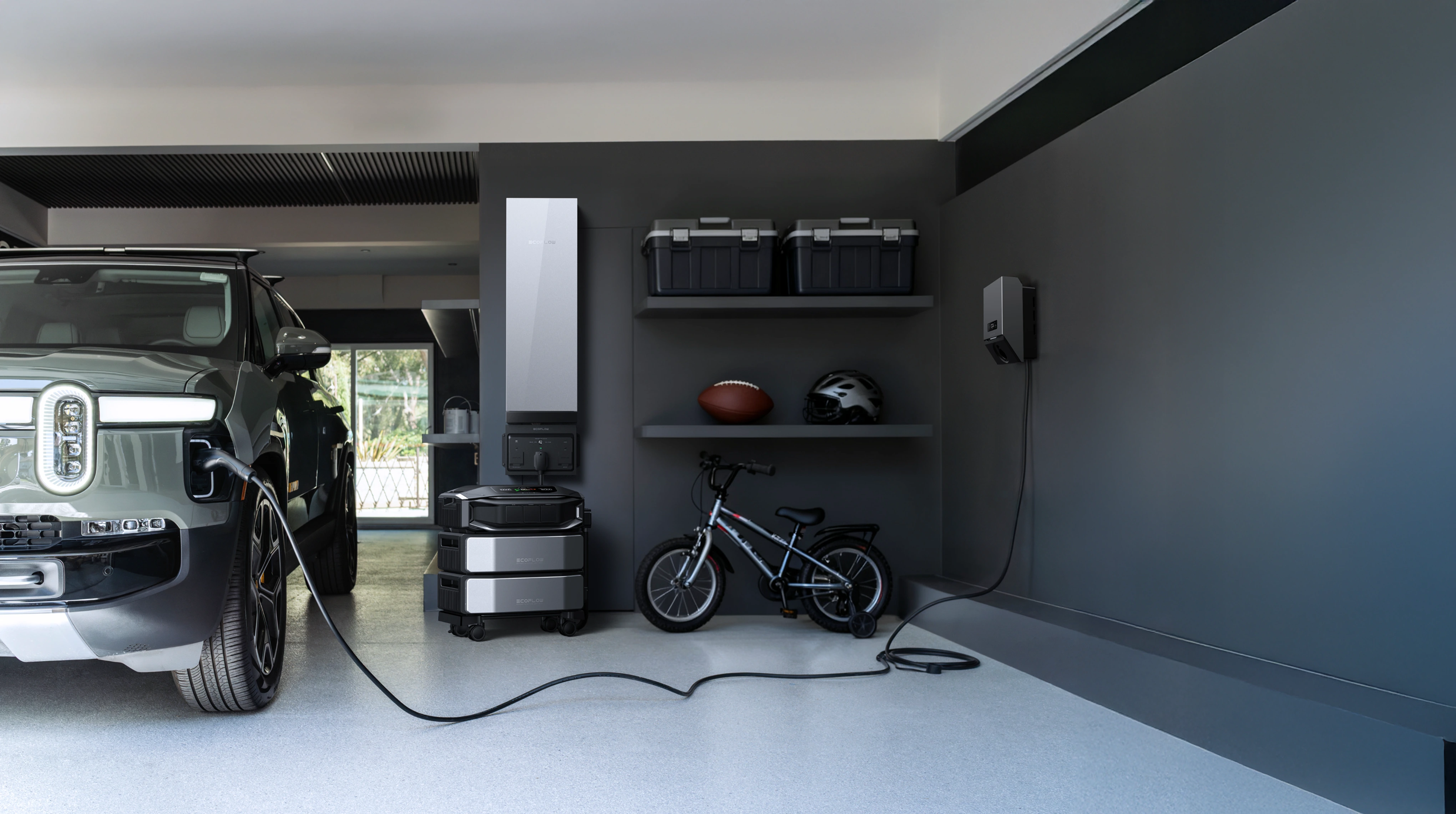
This is where smart charging and energy management become invaluable. By integrating a robust home battery ecosystem like the EcoFlow DELTA Pro Ultra X + PowerPulse EV Charger, homeowners can take total control over when and how their EV charges.
Practical Energy Tips:
Leverage Time-of-Use (TOU) Rates: Many utility companies charge less for electricity late at night. Program your smart charger or EV to only pull grid power between midnight and 6:00 AM.
Integrate Battery Storage: Store cheap grid energy at night (or free solar energy during the day), and use that stored power to charge your EV during expensive peak afternoon hours.
Load Management: Smart electrical panels or load-shedding devices can automatically pause your EV charging if your home’s HVAC and electric oven are running simultaneously, preventing your main breaker from tripping.
Is an Outdoor EV Charger Right for You?
If you are on the fence about an outdoor installation, consider this checklist. An outdoor EV charger is likely your best option if you:
Rely on exterior parking: Your primary parking spot is a driveway, carport, or curbside space.
Lack indoor infrastructure: You do not have a garage, or your garage is used entirely for storage, living space, or a workshop.
Prioritize convenience: You want easy, walk-up access to your charging port without having to thread a heavy cable under a garage door.
Manage multiple EVs: You have a multi-EV household and need a central outdoor location where both cars can reach the cable easily.
Have HOA approval: (Always check your Homeowner Association guidelines regarding the visible installation of electrical equipment on the exterior of your property).
With professional installation and proper weatherproofing, today's outdoor chargers are incredibly resilient and can reliably last well over a decade, making them a secure long-term investment in your property's infrastructure.
Charge Your EV Safely Outdoors
You don't need a pristine, empty garage to enjoy the benefits of waking up to a fully charged electric vehicle. Outdoor EV chargers offer convenience, safety, and reliable Level 2 charging speeds for any driveway or carport setup. By prioritizing hardwired connections, demanding NEMA 4 weatherproofing, and working with licensed professionals, your outdoor setup will provide years of durable performance. Furthermore, by pairing your charger with smart home energy solutions like the EcoFlow DELTA Pro Ultra X + PowerPulse EV Charger, you may be able to optimize charging schedules, make better use of off-peak rates, and reduce long-term charging costs depending on your utility plan, driving habits, solar access, and installation setup.
FAQs
Q1: How much does it cost to have an EV charger put in outdoors?
Outdoor EV charger installation typically ranges from $1,300 to $3,500. This includes the cost of the charger unit and labor. The price fluctuates heavily based on the distance from your electrical panel, whether trenching is required to bury cables, and if your home requires a main panel upgrade to handle the extra electrical load.
Q2: What stops someone from unplugging or stealing electricity from my outdoor charger?
Most modern smart EV chargers come with a companion app that allows you to lock the charger digitally; it will not dispense power until you authenticate it via your phone. Additionally, choosing a hardwired charger prevents thieves from simply unplugging the main unit and walking away with it.
Q3: Can an EV charger safely be outside in the rain and snow?
Yes, an outdoor EV charger can be used outside when it is properly rated, installed by a qualified professional, and maintained according to its manual. A NEMA 4 or 4X-rated unit is designed for exposed conditions, but avoid locations with flooding, standing water, damaged cables, or repeated direct water spray. In extreme cold, charging cables may also become stiffer, so choose a cold-weather-rated cable if needed.
Q4: What is the best type of outdoor EV charger?
The best outdoor chargers are hardwired (to avoid outlet degradation), feature a NEMA 4 weather rating, and offer smart Wi-Fi connectivity. Look for models that provide a thick, cold-weather-rated cable (at least 25 feet long for flexibility) and offer adjustable amperage to match your home's electrical capacity.
Q5: Can a normal electrician install an EV charger, or do I need a specialist?
Any licensed, bonded, and insured residential electrician can install an EV charger. However, it is highly recommended to choose an electrician who has specific experience with installing dedicated 240V circuits, outdoor GFCI protection, and running weatherproof conduit to ensure the installation is safe and compliant with the latest National Electrical Code (NEC).
For press requests or interview opportunities, reach out to our media team
media.na@ecoflow.com