Tiny House Solar System: Sizing, Cost, and Setup
- How Much Power Does a Tiny House Use Each Day?
- What Size Solar Panels and Battery Bank Do You Need?
- How Much Does a Tiny House Solar System Cost?
- Should You Go Off-Grid, Grid-Tied, or Use a Portable Power Station?
- What Equipment Do You Need to Set Up a Tiny House Solar System?
- How Do You Install and Mount a Tiny House Solar System?
- Frequently Asked Questions
- The Right Solar Setup Keeps Your Tiny House Powered and Independent
A tiny house uses a fraction of the power a standard home does, which makes solar a realistic way to cover most or all of your energy needs. Getting the size right matters, though. This guide walks through daily power use, system sizing, installation costs, and the equipment you'll need to set it up.
How Much Power Does a Tiny House Use Each Day?
Most tiny houses use a small fraction of that. Based on 2022 data from the U.S. Energy Information Administration, the average U.S. household uses about 10,791 kWh per year — roughly 30 kWh per day — while a well-sized tiny house system can often meet daily needs with a fraction of that amount.
Where you land in that range depends on your appliances and habits. A household that cooks with propane and heats with wood sits near the low end; one running an induction cooktop, air conditioning, or a home office setup pushes toward the high end.
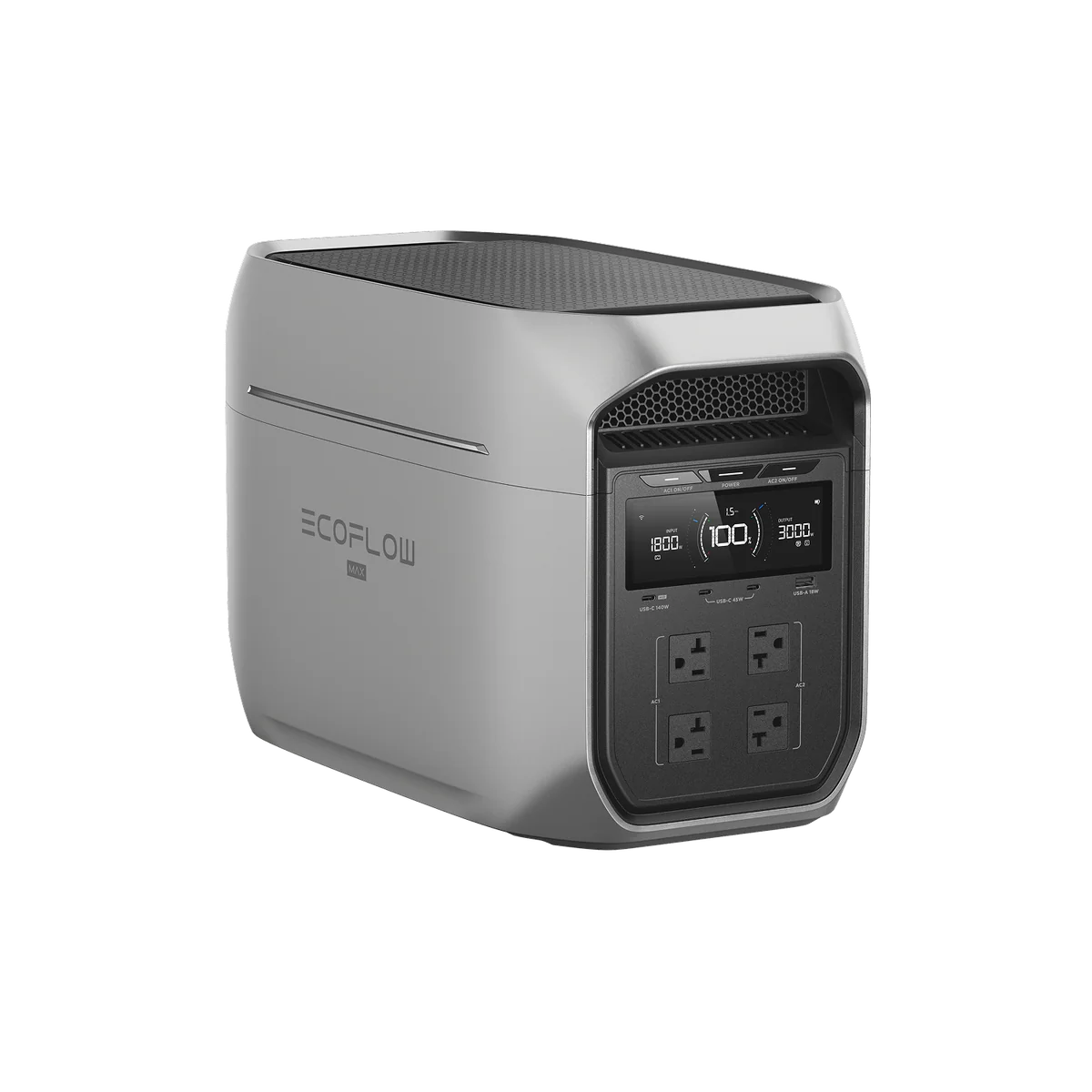
To get a real number, list every appliance you use regularly, note its wattage, and multiply by the hours you run it each day. Add a buffer for standby loads like your router and chargers. A portable power station such as the EcoFlow DELTA 3 Max (2048Wh) makes this easier to track, since its app shows real-time consumption and exactly where your power is going.
What Size Solar Panels and Battery Bank Do You Need?
Once you know your daily usage, you can size the rest of the system around it.
Solar Panel Wattage
Divide your daily kWh need by your region's average peak sun hours, then account for system losses. A tiny house using 4 kWh per day with 5 peak sun hours needs close to 1,000W of solar capacity, though most owners size up slightly to cover cloudy days.
Battery Bank Capacity
Your battery should hold at least one full day of usage, and ideally closer to two days if you want a buffer for overcast weather. For that 4 kWh/day example, a 6-8 kWh battery bank gives you a buffer, so you don't need sun every single day to stay charged.
Inverter Sizing
Your inverter needs to handle your highest simultaneous load, not just your average draw. Add up the wattage of everything you might run at once, such as a microwave and a space heater together, and choose an inverter rated comfortably above that peak.
How Much Does a Tiny House Solar System Cost?
Full tiny house solar installation costs typically run between $5,000 and $15,000, depending on system size, battery capacity, and how much of the work you do yourself. A broader look at home solar power system cost shows similar variables at play on a larger scale.
DIY Installation Costs
Handling installation yourself cuts labor costs, since labor is a distinct cost category tracked separately from equipment in professional solar installation quotes, according to the U.S. Department of Energy.
Professional Installation Costs
Hiring an installer adds labor and permitting fees but ensures the electrical work meets code, which matters for grid-tied systems or inspections. Many owners mount panels themselves and hire a licensed electrician only for the final connections, since that step is required by code in most areas regardless.
Should You Go Off-Grid, Grid-Tied, or Use a Portable Power Station?
Each approach fits a different situation.
Off-grid systems make sense without utility access, but need enough battery capacity to ride out consecutive cloudy days.
Grid-tied systems work if your tiny house sits on a property with an existing hookup, letting you draw from the grid when solar output dips.
If you're aiming for full home backup rather than just covering daily essentials, a whole-home backup power solution is worth considering instead of a single portable unit.
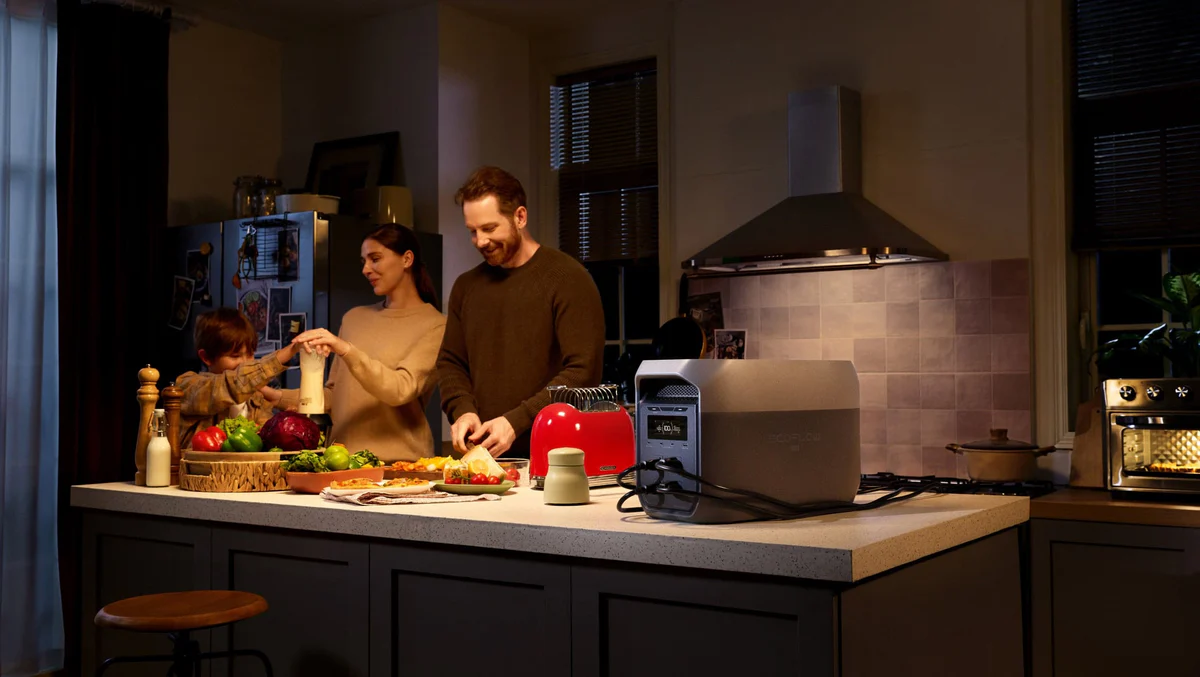
A portable power station is often the simplest starting point, especially if you're not ready to commit to a fixed installation. Pairing solar panels with the EcoFlow DELTA 3 Max (2048Wh) gives you a flexible setup that charges from the sun during the day and keeps essentials running at night, all without permanent wiring into your home's structure.
What Equipment Do You Need to Set Up a Tiny House Solar System?
A complete system comes down to four core components.
Solar Panels
These convert sunlight into usable power and are usually the first purchase, sized according to your daily energy needs and available roof or ground space.
Charge Controller
This regulates the power flowing from your panels to your battery, preventing overcharging and extending battery lifespan.
Battery Storage
Your battery stores excess solar power for use at night or during cloudy stretches, and its capacity should match the buffer you calculated earlier.
Inverter
The inverter converts stored DC power into the AC power your household appliances actually use.
How Do You Install and Mount a Tiny House Solar System?
The mounting method depends on your roof structure and how often your tiny house moves.
Roof Mounting
Roof mounts keep panels out of the way and take advantage of unobstructed sun exposure, but they require checking that your roof can support the added weight and withstand wind loads if your home is mobile.
Ground Mounting
Ground mounts are easier to install and adjust for optimal sun angle, making them a practical option if your roof isn't suited for panels or if you'd rather avoid drilling into it. They do require extra space alongside your home, which isn't always available on a tiny house lot.
A stand-alone PV system shows how these mounting choices fit into the bigger picture once wiring and permitting come into play.
Frequently Asked Questions
Can a Tiny House Run Fully on Solar Power?
Yes, with the right sizing. Most tiny houses use 3-7 kWh per day, which a properly sized panel and battery setup can cover. Success depends on matching your system to your actual usage, your local sun hours, and having enough battery capacity to handle a few consecutive cloudy days without running short on power.
Is a Portable Power Station Enough for a Tiny House?
For many tiny houses, yes, especially if you're running lights, a refrigerator, and small electronics rather than heavy appliances. A portable power station paired with solar panels can cover daily essentials and recharge during the day. Larger loads like electric heating or air conditioning may require a bigger battery bank or a dedicated system.
The Right Solar Setup Keeps Your Tiny House Powered and Independent
Sizing a tiny house solar system comes down to knowing your daily usage, matching your panels and battery to that number, and choosing an installation approach that fits your budget and living situation.
Whether you're building a full off-grid setup or starting with something simpler, pairing home solar panels with the EcoFlow DELTA 3 Max (2048Wh) gives you enough capacity to cover a typical 3-7 kWh day, with room to scale up as your usage grows.
For press requests or interview opportunities, reach out to our media team
media.na@ecoflow.com