Tailgating Generator vs Power Station: Which Is Better for Game Day?
- Start With Your Tailgate Plan: What You’re Powering and for How Long
- Tailgating Generator vs Power Station: The Real Differences That Matter
- When a Gas Generator Makes Sense for Tailgating
- When a Portable Power Station Is the Better Game Day Upgrade
- How to Choose the Right Setup Without Overbuying
- Frequently Asked Questions
- Pick the Power Option That Keeps the Party Going From Kickoff to the Final Whistle
A reliable energy source is the backbone of any successful tailgate. Whether you’re running a flat-screen TV or an electric griddle, you need the right setup to keep the party going. Gas-powered generators and portable power stations are the two main options for tailgating.
Start With Your Tailgate Plan: What You’re Powering and for How Long
Before comparing generators and power stations, calculate how much energy you need. Knowing your load is essential for picking the right power source.
Energy requirements depend largely on your tailgating party style. A minimal setup with a speaker, phone charging, and LED lights uses much less energy than a full setup with a TV, electric griddle, and mini fridge.
Add up the wattage of everything you plan to run at once. That total is your peak load requirement, and your power source’s output must be rated high enough to support it. Estimate how many hours your tailgate will run, and multiply the load by that time to get your total watt-hours. This total is the minimum capacity you need.
Tailgating Generator vs Power Station: The Real Differences That Matter
A gas generator burns fuel to produce electricity. It can run for as long as you can keep feeding it gasoline, making runtime limited only by your fuel supply. A portable power station is a large rechargeable battery that stores electricity for use at a later time.
Choosing between the two depends on your load size, stadium rules, and convenience. Here’s what to consider:
Runtime: Generators run indefinitely so long as you have fuel. Power stations are limited by battery capacity.
Noise: Generators produce a great deal of noise. Power stations are practically silent.
Fumes: Generators emit carbon monoxide and exhaust fumes that can be dangerous in crowded areas. Power stations produce zero emissions.
Portability: Generators typically weigh 30–50 lbs and require you to carry fuel. Power stations of similar output generally weigh 25–45 lbs.
Startup: Generators need a pull cord or electric start and a warm-up time. Power stations turn on instantly at the press of a button.
Maintenance: Generators need oil changes, air filter cleaning, and regular inspections. Power stations require virtually no maintenance.
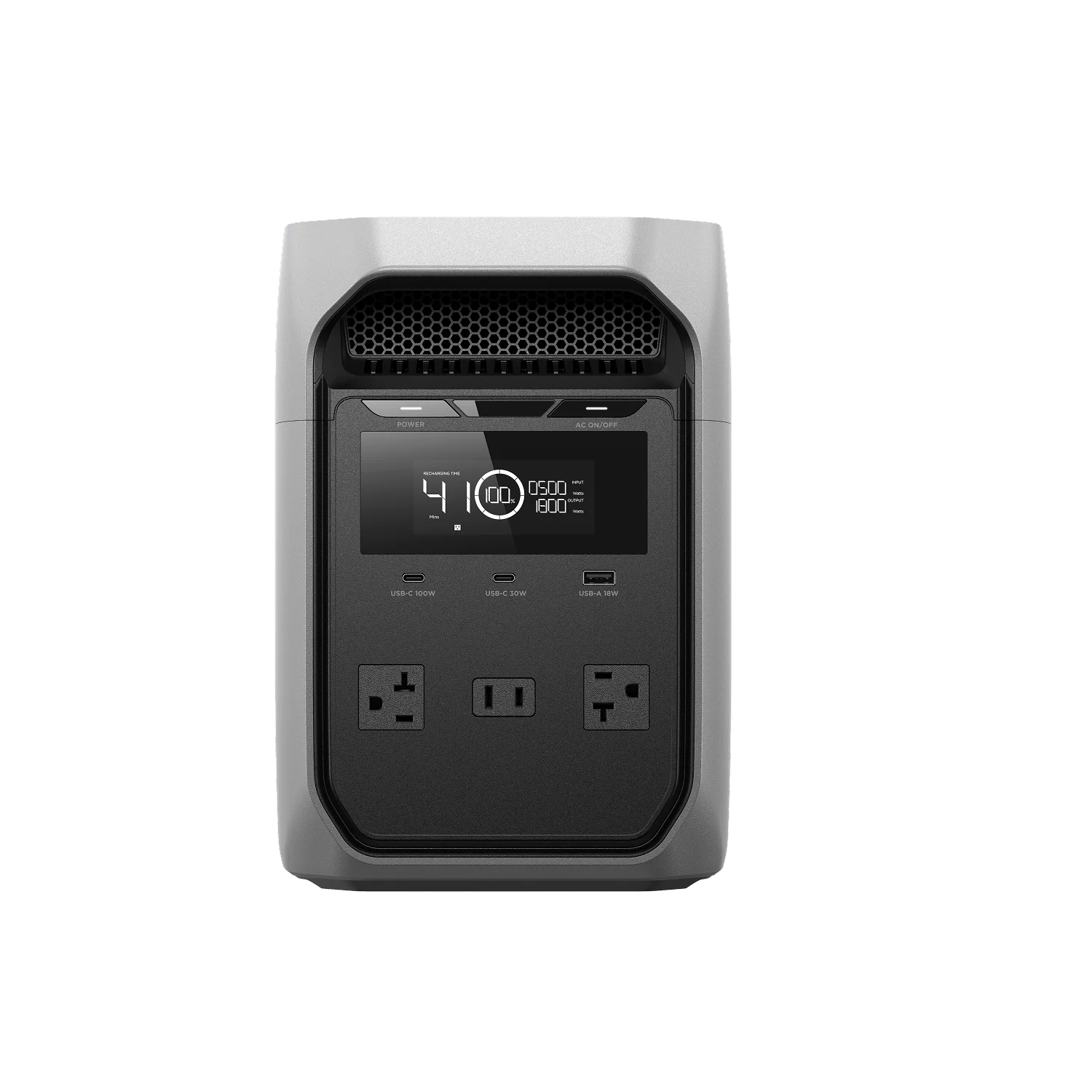
For most tailgaters, a power station like the EcoFlow DELTA 3 Classic Portable Power Station (1024Wh) covers the factors that matter most on game day: silent operation, zero emissions, instant startup, and no fuel required.

When a Gas Generator Makes Sense for Tailgating
A gas generator makes sense when power demands are great, the tailgate runs all day, and you’re in an open space where fumes and noise will not affect anyone or violate venue rules.
If you’re running several high-draw appliances, such as electric griddles, slow cookers, and blenders, a generator can support those loads.
For multi-day events where recharging a battery isn’t viable, generators can provide a practical solution. An inverter generator can improve fuel efficiency by matching power demand.
When a Portable Power Station Is the Better Game Day Upgrade
A portable power station is often preferred by tailgaters due to its convenience and cleanliness. These units are powerful enough to run a TV, speakers, phone charging, and small appliances for several hours.
The EcoFlow DELTA 3 Classic has a capacity of 1,024Wh and an output of 1,800W. It's capable of running the essentials for several hours, ensuring your tailgate goes off without a hitch.
With power stations, there’s no extra cost of fuel, no cords to pull, and no exhaust drifting into people’s food. Plus, these stations are the only alternative at venues that prohibit gas generators.
How to Choose the Right Setup Without Overbuying
You never want to run out of power during a tailgate for NFL or soccer matches, but you also don’t want to overspend unnecessarily. Ensure your power station is rated high enough in both output and capacity to avoid being cut short on either one. A unit with plenty of charge is useless if it cannot support high-draw appliances.
Match output and capacity to your load. A 1,000Wh station can run a TV, speakers, and phone charging for several hours. Add an electric griddle, and you’ll need a station of at least 2,000Wh.
Frequently Asked Questions
How Much Power Do I Need for a Tailgate Setup?
How much power you need for your tailgate depends on the size of your setup. A small setup with a TV, a speaker, and charging phones can get by for several hours with a 1,000Wh unit. If you’re connecting cooking appliances, consider a 2–3kWh unit.
Are Gas Generators Allowed in Stadium Parking Lots for Tailgating?
Rules vary by venue, but gas generator restrictions are becoming more common. Some stadiums will allow generators, but with distance requirements from other vehicles. Always check your specific stadium’s tailgating policy before game day.
How Long Will a 2 kWh Power Station Run a Mini Fridge?
An average mini fridge draws about 50W. At this rate, a 2,000Wh station has enough energy to run it for roughly 40 hours, leaving plenty of room to run other appliances and devices.
Can I Recharge a Power Station With Solar During a Tailgate?
Yes, power stations can be charged with solar panels during a tailgate. A 200W solar panel can gather up to 800Wh over 4 hours under ideal conditions. This recovered energy can prove to be meaningful during the back half of the tailgate.
Pick the Power Option That Keeps the Party Going From Kickoff to the Final Whistle
Generators can support multiple high-draw appliances at once, but power stations have grown powerful enough to handle most tailgate setups, with their own unique benefits. A portable station is quieter, cleaner, more convenient, and welcome at every venue.
Keep your next tailgate running from kickoff to the final whistle with EcoFlow. The EcoFlow DELTA 3 Classic is a highly portable unit with enough juice to ensure you don’t miss a single play.
For press requests or interview opportunities, reach out to our media team
media.na@ecoflow.com