Summer Solstice Road Trip: Chasing the Midnight Sun in Alaska and Canada
- What Is the Midnight Sun and Why Does It Happen?
- When Is the Best Time to See the Midnight Sun?
- Where Can I Watch Midnight Sun in the U.S.?
- Where Can I Watch Midnight Sun in Canada?
- How Should You Plan a Midnight Sun Road Trip Route?
- What Gear Do You Need for a Midnight Sun Road Trip?
- Start Planning Your Midnight Sun Road Trip With the Right Gear
- FAQs About Chasing the Midnight Sun
Driving north in June can feel like stepping outside normal time. The sky glows late, camp setup feels easier, and a roadside viewpoint can turn golden close to midnight. For U.S. travelers, Alaska and northern Canada offer the most practical ways to chase the midnight sun by road, with enough planning to keep the trip safe, comfortable, and unforgettable.
What Is the Midnight Sun and Why Does It Happen?
The midnight sun is continuous or near-continuous daylight in very high-latitude places during summer. Around the Arctic Circle and farther north, the sun can stay above the horizon through midnight for part of the year.
The cause is Earth’s tilted axis. Earth leans about 23.5 degrees, and around the June solstice, the Northern Hemisphere tilts toward the sun. That angle creates the longest days of the year north of the equator and can produce a full polar day in Arctic regions.
The Arctic Circle sits at about 66.5 degrees north latitude. Places above that line can experience the classic version of the midnight sun, though the exact duration changes by latitude. Farther north means a longer stretch of continuous daylight. Fairbanks, Alaska, sits south of the Arctic Circle, so the sun can dip just below the horizon, yet June nights stay bright enough to create the feeling of nearly all-day usable light.
When Is the Best Time to See the Midnight Sun?
The strongest travel window is usually mid-June through early July. That timing places you close to the summer solstice, when northern daylight reaches its yearly peak. It also gives road trippers a better chance of open services, workable road conditions, and more predictable access to campgrounds or lodges.
In Utqiaġvik, Alaska, the sun stays above the horizon from around May 10 until August 2 in a typical season. Fairbanks has about 70 straight days of continuous civil twilight from mid-May through late July, which keeps the nights bright even when the sun briefly dips below the horizon.
Northern summer can still be unpredictable. A June trip may bring rain, wind, cold evenings, mud, and thick mosquitoes. Pack for cold and wet conditions, even when the forecast looks mild. Good sleep also takes planning. Bring a real sleep mask, cover vehicle windows at night, and avoid letting the bright sky push every evening too late.
Where Can I Watch Midnight Sun in the U.S.?
Alaska is the clearest answer. It keeps the trip domestic while giving access to Arctic roads, long daylight, northern wildlife, and remote landscapes. For most travelers, the right destination depends on how remote they want the trip to feel and how much preparation they are ready to handle.
Fairbanks: The Most Practical Base
Fairbanks works well as the main base. It has flights, rental cars, groceries, hotels, outdoor gear, restaurants, and guided trips north. It is also a forgiving place to adjust to long daylight before driving into more remote country.
The important detail is accuracy: Fairbanks gives travelers a bright-night experience, while locations farther north offer a stricter polar-day experience.
Dalton Highway: The Classic Arctic Road Trip Route
The Dalton Highway is the classic road-trip route for travelers who want to push toward the Arctic. It stretches 414 miles from Livengood, about 84 miles north of Fairbanks, to Deadhorse near Prudhoe Bay.
The road crosses the Yukon River, the Arctic Circle, the Brooks Range, and the North Slope, with long gravel sections and very limited services.
Utqiaġvik: The Clearest U.S. Polar-Day Experience
Utqiaġvik gives the clearest U.S. polar-day experience, but it is usually reached by air. It is a better fit for travelers who care most about seeing continuous Arctic daylight, not necessarily completing a road-based route.
Deadhorse and Prudhoe Bay: For Experienced Remote Drivers
Deadhorse and Prudhoe Bay can be reached by road with the right vehicle, permission, and preparation. For many travelers, the most realistic plan is Fairbanks to the Arctic Circle or Coldfoot, then farther north only with enough time, confidence, and backup plans.

Where Can I Watch Midnight Sun in Canada?
Canada offers a wider northern road-trip canvas, especially through Yukon and the Northwest Territories. The scenery shifts from boreal forest to tundra, mountain passes, river crossings, and Arctic coastal landscapes. For most travelers, the strongest route follows a northbound path from Whitehorse toward the Arctic Ocean.
Whitehorse is a practical starting point, with airport access, food, lodging, vehicle rentals, and outdoor services. It gives travelers a comfortable place to prepare before heading into a more remote country.
Dawson City is a natural next stop. This historic northern town has long summer evenings and a strong sense of frontier travel. It also puts you near the start of the Dempster Highway.
The Dempster Highway runs about 740 km, or 458 miles, from near Dawson City to Inuvik. It is an unpaved all-season public road that crosses the Arctic Circle and passes through remote tundra and mountain scenery.
Inuvik works as a major northern stop before the final push to the coast. It is a useful place to rest, refuel, check road conditions, and prepare for the drive to Tuktoyaktuk.
Tuktoyaktuk gives travelers a rare chance to reach the Arctic Ocean by vehicle. Build in extra time for weather, gravel, ferry timing, road work, and fatigue. Northern Canada rewards drivers who leave space in the schedule.
How Should You Plan a Midnight Sun Road Trip Route?
Route planning should begin with distance, road rules, fuel, lodging, and tire support. Northern highways can look simple on a map, then slow down because of gravel, construction, rain, wildlife, and long service gaps.
For Alaska, choose a route based on comfort level:
Route | Best For | Planning Tip |
|---|---|---|
Fairbanks to the Arctic Circle | First-time northern road trippers | Use a guided tour or a rental approved for gravel roads |
Fairbanks to Coldfoot or Wiseman | Travelers wanting a deeper wilderness feel | Reserve lodging early and confirm fuel stops |
Fairbanks to Deadhorse | Experienced remote drivers | Check rental rules, tire coverage, weather, and road updates before departure |
Rental terms matter. Many companies restrict travel on rough gravel highways, including the Dalton. Get written permission before heading north. A cheap rental can become expensive fast if a breakdown happens outside approved roads.
For Canada, a strong route is Whitehorse, Dawson City, Tombstone Territorial Park, Eagle Plains, Inuvik, and Tuktoyaktuk. Eagle Plains is a key fuel and rest stop, so do not treat it as optional. Carry offline maps, a paper map, emergency food, water, backup power, and a communication device that works outside cell coverage. U.S. travelers crossing into Canada should also check passport validity, vehicle insurance, rental rules, and roaming coverage before leaving home.
What Gear Do You Need for a Midnight Sun Road Trip?
Packing should answer the real risks of northern travel: rough roads, limited service, shifting weather, poor sleep, bugs, and power demand.
Vehicle and Safety Essentials
A remote road kit should include:
Full-size spare tire, tire repair kit, and portable air compressor
Basic tools, jumper cables, and windshield washer fluid
Extra fuel where allowed and safe
Offline maps plus a paper map
First-aid kit, emergency blanket, and headlamp
Satellite messenger or satellite phone for isolated stretches
Bear-safe food storage for camping areas with wildlife rules
Check the spare tire before departure. A compact spare is a poor match for long gravel sections. Also inspect tire tread, windshield condition, wipers, and fluids before leaving a major town.
Clothing, Sleep, and Personal Comfort
Bring layers for cool wind, rain, and damp camp mornings. A rain shell, warm socks, gloves, sunglasses, sunscreen, insect repellent, and a brimmed hat all earn their place. Bright nights can disturb sleep, so pack an eye mask and use window covers in the vehicle or tent.
Photography, Food, and Camp Power
Low-angle summer light is one of the main rewards of the trip. Bring extra camera batteries, memory cards, a tripod, lens cloths, and dry storage. For food and water, carry enough to cover delays. Gravel, mud, and weather can add hours to a planned day.
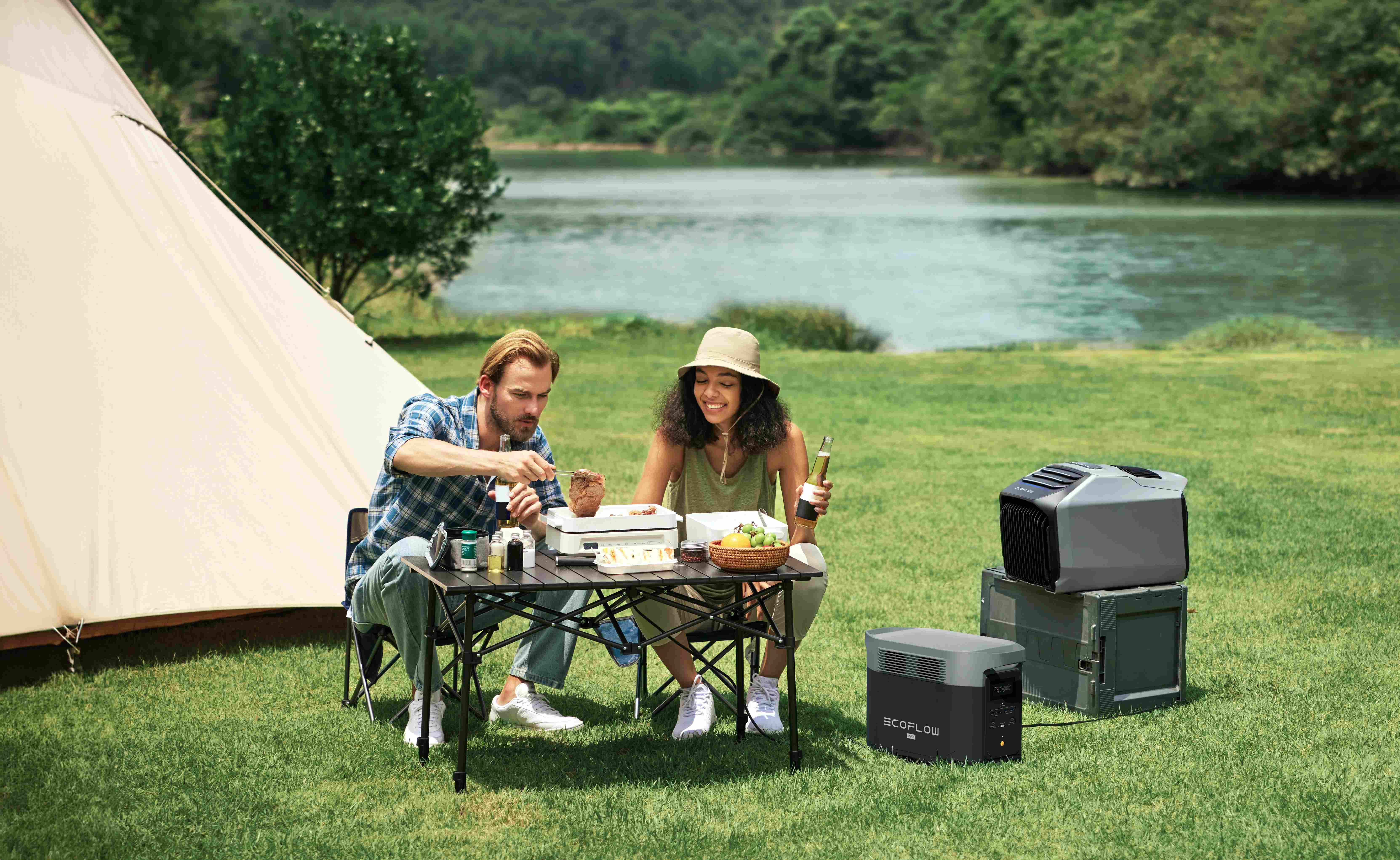
Power becomes a safety and comfort issue on remote roads. Phones, GPS devices, cameras, satellite messengers, camp lights, laptops, air pumps, and small fridges all need energy. Long daylight can help recharge solar gear, but stored power matters when clouds roll in or camp use continues late.
For longer off-grid stretches, the EcoFlow DELTA 2 Max + 2 × 220W NextGen Bifacial Portable Solar Panels is a strong fit. DELTA 2 Max offers 2048Wh capacity and 2400W AC output, enough for phones, cameras, GPS devices, camp lights, a laptop, or a small fridge. The two 220W panels help recharge during long summer daylight, while the system stays portable enough for road trips, campsites, and remote stops.
Start Planning Your Midnight Sun Road Trip With the Right Gear
A summer solstice drive through Alaska or northern Canada can give you glowing skies, quiet roads, and a rare view of Arctic summer. Choose a route that fits your vehicle and experience level, confirm fuel and lodging before remote stretches, pack for sleep and weather, and bring reliable power for essential devices. Good preparation turns the long northern light into a trip you can fully enjoy.
FAQs About Chasing the Midnight Sun
Q1. Can You See the Midnight Sun From an Alaska Cruise?
Usually, no. Most Alaska cruises stay in Southeast Alaska or the Inside Passage, which sits too far south for true polar day. You may get very late sunsets and long golden evenings, but not the classic midnight sun. For a stronger experience, add a land extension to Interior or Arctic Alaska.
Q2. Is the Midnight Sun the Same as Golden Hour?
No. Golden hour is a short period of soft, low-angle light near sunrise or sunset. The midnight sun is a high-latitude summer phenomenon where the sun remains visible very late or through midnight. The two can overlap visually, which is why Arctic summer light often looks warm, low, and unusually long-lasting.
Q3. Do You Need Special Sunglasses for the Midnight Sun?
Yes, quality UV-protective sunglasses are strongly recommended. Long daylight increases glare from roads, water, snow patches, and pale gravel. Polarized lenses can reduce eye strain during long drives, especially near rivers, coastlines, and open tundra. Drivers should also keep a spare pair in the vehicle.
Q4. Can Portable Energy Storage Power a Fridge During the Trip?
Yes, but capacity matters. A small car fridge can run from a portable power station, but the runtime depends on fridge wattage, outside temperature, battery capacity, and how often the lid opens. For remote routes, pair stored energy with solar charging and test the setup at home before departure.
Q5. Should You Book Lodging Before a Midnight Sun Road Trip?
Yes, especially in remote northern towns. Lodging options can be limited, and summer is the busiest travel window in Alaska, Yukon, and the Northwest Territories. Book key overnight stops early, then keeps some schedule flexibility for weather or road delays. Campgrounds may also fill near popular route hubs.
Disclaimer: This article is for informational purposes only and does not constitute professional travel, weather, road safety, emergency management, or product advice. Arctic and subarctic road conditions, daylight patterns, weather, border rules, rental policies, and campsite availability can change by season, route, and local situation. Always check current road conditions, official alerts, vehicle permissions, lodging availability, and product specifications before departure. For official and authoritative information, please refer to National Weather Service Seasons and Earth’s Tilt, Travel Alaska Midnight Sun in Alaska, Explore Fairbanks 70 Straight Days of Sunshine, Bureau of Land Management Dalton Highway, and Travel Yukon Dempster Highway Road Trip Itinerary.
For press requests or interview opportunities, reach out to our media team
media.na@ecoflow.com