Solar Panels for Home Power: Everything Homeowners Need to Know in 2026
If you’ve driven through any American suburb lately, whether it’s the sun-scorched blocks of Phoenix or a quiet cul-de-sac in New Jersey, you’ve seen the "shimmer." Rooftop solar isn't a niche hobby for tech nerds anymore; in 2026, it’s a mainstream household staple.
Between "bill shock" from aging power grids and the push for cleaner living, thousands of homeowners are finally cutting the cord (or at least loosening the knot) with their local utility. In this guide, we’re going to skip the sales pitch and look at how the tech actually works, what it really costs after Uncle Sam takes his cut, and how to tell if your roof is actually a good candidate for a "glow-up."
Why Homeowners Are Switching to Solar Power
It’s pretty simple: people are tired of their power bill feeling like a gambling debt. With extreme heatwaves in the South and winter storms in the North causing electricity rates to spike, solar offers something the grid can't: predictability.
Beyond just shrinking your carbon footprint, the 2026 market is different. The tech is more efficient, and the financial incentives are more aggressive than ever. For most families, it’s about turning a monthly "liability" (that check you write to the power company) into a home asset that actually adds value to your property.
| Scenario | Without Solar | With Solar |
|---|---|---|
| Monthly bill | Unpredictable | Stable and way lower |
| Energy control | Utility dependent | Self-controlled |
| Grid Blackouts | High | Low (with battery) |
| Long-Term ROL | Increasing | Decreasing |
How Solar Panels Generate Electricity (PV Basics)
Solar is physics working in your favor to turn daylight into cold, hard cash. Most systems use Photovoltaic (PV) cells to grab sunlight and turn it into Direct Current (DC) electricity.
But here’s the thing: a massive, permanent rooftop array isn't the right move for everyone. If you’re renting a townhouse, have a roof shaded by massive oaks, or you're planning on moving in two years, bolting panels to your shingles might not be the play.
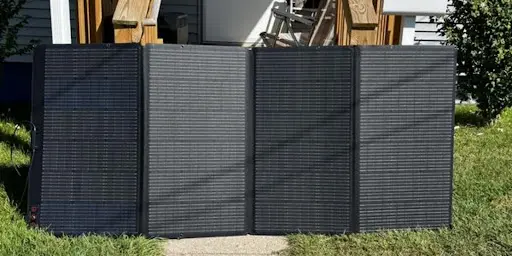
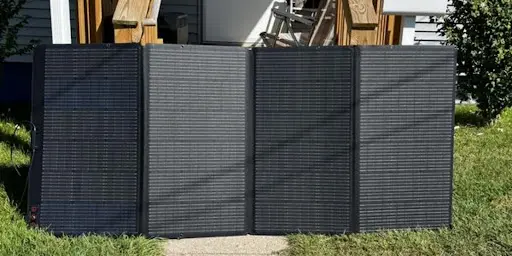
This is where portable or expandable solar panels come in. Units like EcoFlow Solar Panels are a total game-changer for flexibility. They’re "plug-and-play," meaning you get the high efficiency conversion without the 20-year commitment or the nightmare of municipal permits. It’s the perfect way to "test drive" solar or power a specific part of your home without a full scale construction crew taking over your driveway.
Key Components of a Home Solar System (Panels, Inverter, Battery)
To understand your system, stop thinking of it as a bunch of gadgets and start thinking of it as a collection, conversion, and storage chain. If one link is missing, the whole thing loses its punch.
1. The Panels (The Collectors)
These are the workhorses on your roof (or in your yard). Their only job is to sit there and soak up photons to create Direct Current (DC) electricity. In 2026, the standard is high efficiency monocrystalline panels, they look sleeker (usually all black) and pull way more power even on those "gray" Seattle-style days.
2. The Inverter (The Translator)
This is arguably the most important box in the house. Your wall outlets and appliances run on Alternating Current (AC), but your panels make DC. The inverter is the "translator" that flips that power so your fridge and TV can actually use it.
Pro Tip: If you’re looking at newer tech, Microinverters (one small inverter under every panel) are the way to go. If one panel gets shaded by a stray chimney or a tree branch, the rest of the system keeps humming along at 100%.
3. The Battery (The Vault)
This used to be optional, but in 2026, it’s the heart of the system. Without a battery, you’re basically "renting" your solar power, you use what you can during the day, and the rest gets sent back to the grid for pennies. With a battery, you’re a mini-utility. You store that afternoon sun and use it at 8:00 PM when the utility companies usually crank up their rates.
Grid-Tied vs. Off-Grid vs. Hybrid Systems Explained
The type of system you choose determines how much you still have to deal with your local power company.
| System Type | Grid Connection | Battery Required | Best For |
|---|---|---|---|
| Grid-Tied | Yes | No | Lower cost |
| Off-Grid | No | Yes | Full independence |
| Hybrid | Yes | Yes | Backup + savings |
Grid-Tied: You stay connected to the local utility, sending excess power to them and drawing from them at night.
Off-Grid: You’re totally independent, usually requiring a massive battery bank and a backup generator.
Hybrid: The best of both worlds. You stay connected to the grid but have a battery to keep the lights on during outages.
How Much Do Solar Panels Cost in 2026?
If you’re looking for a ballpark figure, a standard 8kW to 10kW system in the U.S. usually lands between $20,000 and $30,000 before any discounts or tax breaks. But here’s the thing: nobody actually pays that full amount. Between the federal "Golden Ticket" tax credit (more on that in a second) and local rebates, that price usually gets chopped down by 30% to 50%.
Factors That Affect Solar Installation Costs
If your neighbor got solar for $18k and your quote came back at $25k, it’s probably not a scam. A few things can hike up the labor:
The "Tetris" Roof: If your roof is full of steeples, dormers, and weird angles, the installers have to spend way more time cutting rails and fitting panels.
Panel Quality: You’re likely choosing between "Value" panels and high-efficiency Monocrystalline ones. Go for the good ones, they handle the heat better and last longer.
Permit Purgatory: Some counties in the U.S. charge $200 for a permit; others (looking at you, California) can be much more expensive and take forever.
How to Pay for It: Four Paths to Power
You don't need $25,000 in a briefcase to go solar. Most homeowners pick one of these four lanes:
Cold Hard Cash: If you have the savings, this is the winner. You own the system outright, get the highest ROI, and your "payback period" is the shortest.
Solar Loans: This is the most popular choice. You go $0 down, and your monthly loan payment is often lower than what you were paying the power company anyway.
Leases & PPAs: You’re basically "renting" your roof space. You don't own the panels, but you pay a locked-in, lower rate for the electricity they produce. Just be careful, these can make selling your house a bit more complicated later.
Payback Period and Long-Term Savings
On average, most American homeowners see their system pay for itself in 6 to 9 years. In high rate states like New York or California, it can happen even faster.
Since your panels are warrantied for 25 years, that means once you hit year seven or eight, you’ve got over 15 years of essentially free electricity. When was the last time your utility company offered you a decade and a half of free power? (Spoiler: Never.)
Solar Incentives, Tax Credits, and Rebates in 2026
The government is still putting its money where its mouth is to get panels on roofs. But between 2024 and 2026, a few rules changed, especially regarding how you get paid for the extra power you don't use.
Federal Solar Tax Credit (ITC Explained)
Despite some of the rumors you might have heard in 2025, the Federal Investment Tax Credit (ITC) is still alive and kicking at 30% for 2026. This isn't just a deduction; it’s a dollar-for-dollar credit against your federal income taxes.
How it works: If your system costs $25,000, you get a $7,500 credit on your next tax return.
The 2026 Catch: To claim this as a homeowner, you have to own the system (cash or loan). If you're doing a lease or a PPA, the solar company gets the credit and (hopefully) passes some of that savings to you in your monthly bill.
State-Level Incentives and Net Metering Policies
Depending on where you live, you might be able to "stack" even more savings. States like New York and South Carolina offer their own income tax credits (up to 25%), and some utilities offer upfront rebates of $1,000 to $2,500. However, the biggest change in 2026 is Net Metering.
The Old Way: You’d send 1 kWh to the grid and get credited for the full retail price (say, $0.25).
The 2026 Way (NEM 3.0 and beyond): Many states, led by California, have moved to "Net Billing." Now, the utility might only pay you $0.05 for that same 1 kWh.
The Result: Exporting power is no longer the "get rich" scheme it used to be. This is why batteries are now essential. Instead of selling your power for pennies, you save it in your "vault" and use it yourself when rates are high.
How to Maximize Your Savings
Don't just take the first quote you get. To maximize your ROI in 2026:
Claim the 30% Federal ITC (IRS Form 5695).
Check for State Credits: NY, MA, and NJ are legendary for these.
Look for "Performance-Based Incentives": Programs like Massachusetts' SMART pay you a small amount for every kWh you actually produce over 10-20 years.
Utility Rebates: Some companies will pay you to "enroll" your battery in a Virtual Power Plant (VPP), where they can borrow a tiny bit of your stored power during emergencies in exchange for cash.
Is Your Home a Good Fit for Solar Panels?
Before you sign a contract, you need to make sure your property can actually pull its weight in the sun.
Age and Condition: It is vital to check if you need a roof replacement before going solar to avoid the high cost of removing and reinstalling panels later. If your roof is more than 15 years old or showing its age, replace it now. You don't want to pay an extra $3,000 to $5,000 in a few years just to have a crew unmount and remount your panels so you can fix a leak.
Orientation: In the U.S., South-facing roofs are the gold standard for production. West-facing is a solid second place (especially for catching that late-afternoon sun when rates are highest).
The Shade Factor: Those massive oaks look great, but if they’re draping your roof in shadows for four hours a day, your "yield" is going to tank.
Climate: Does it Work in the Cold?
One of the biggest myths is that solar needs "heat." Actually, solar panels are like most electronics, they actually perform more efficiently in cooler temperatures. While a home in Phoenix will produce more total power than one in Vermont simply because it gets more "peak sun hours," the Vermont panels are perfectly happy in the cold. Just keep in mind that if you’re in a cloudier state, you might need a slightly larger system (more surface area) to hit the same energy goals as your cousin in Texas.
Local Regulations and HOA Rules
If you live in a neighborhood with a strict HOA, you’ve probably heard horror stories about boards banning panels for "aesthetic reasons."
In 2026, the law is largely on your side. Most states (including California, Texas, Florida, and now Michigan and New Jersey) have "Solar Rights" laws that prevent HOAs from flat-out banning solar.
The "10% Rule": In many states, an HOA can't force you to move your panels if it increases the cost by more than 10% or decreases your efficiency by more than 10%.
Check the Deadline: Many states (like Michigan and NJ) have set April 2026 deadlines for HOAs to have written solar policies in place. If they don't have one, they often lose their right to fight your installation at all.
Power backup system for households:
In 2026, the question isn't just "How much will I save?" but "Will my lights stay on when the grid fails?" In states like Florida, Texas, and California, where hurricanes, grid strain, and wildfires are part of the seasonal calendar, home backup power has moved from a "nice-to-have" to a survival necessity.
To truly achieve independence, panels alone aren't the whole story. You need a way to store that juice so you're not left in the dark at 2:00 AM.
A system like the EcoFlow DELTA Pro Ultra Whole-Home Backup Power is basically the "brain" for this exact scenario. It’s a high capacity powerhouse that integrates directly with your rooftop solar. During the day, it siphons off the extra energy your house isn't using; at night, or during a week-long blackout, it takes over. It’s beefy enough to run heavy-duty appliances like your central AC and fridge simultaneously, turning a simple solar array into a resilient home power station.
Installation, Maintenance, and Whether Solar Is Worth It
Don't let a salesperson tell you this is a weekend project. While the actual "climbing on the roof" part is fast, the red tape in 2026 is thick. Expect the whole process to take 3 to 5 months from start to finish.
Step 1: The Site Audit
A pro comes out to poke around your attic and your electrical panel. They’re checking if your rafters can handle the weight and if your breaker box needs a $2,000 upgrade to handle the new juice.
Step 2: Design & Permitting (The Slog)
This is the "black hole" of the process. Your installer draws up the blueprints and sends them to the city. Depending on where you live, this can take anywhere from two weeks to two months.
Step 3: Installation Day
Finally, the fun part. A crew shows up, and for 1 to 3 days, your house sounds like a construction zone. They’ll mount the racking, bolt down the panels, and wire up the "brains" of the system (the inverter and battery).
Step 4: PTO (Permission to Operate)
Even once the panels are up and looking pretty, you can't turn them on yet. Your local utility company has to come out and give the "Green Light," also known as PTO. Once they swap your meter for a "net meter," you’re officially a power producer.
Maintenance: Set It and (Mostly) Forget It
One of the best things about solar is that there are no moving parts. It’s basically a high-tech "glass sandwich" that sits in the sun.
The Cleaning Myth: You don't need a specialized solar cleaning crew once a month. In most parts of the U.S., a good rainstorm does 90% of the work. If you live in a dusty area (looking at you, Arizona) or have heavy pollen, a quick hose-down twice a year is plenty.
The "Degradation" Reality: Panels don't just "die" after 25 years. They just get a little tired. Most modern panels lose about 0.5% efficiency per year. This means that after 25 years, your system will still be pumping out about 85% to 88% of the power it did on day one.
The Verdict: Is It Actually Worth It in 2026?
Let’s skip the fluff. Solar is a massive investment, and it’s not for everyone. If you’ve seen systems installed and still wonder why is your electric bill still high with solar panels, the answer usually comes down to whether your home fits these specific criteria.
The "Yes" Column
Your monthly bill is over $150.
You plan to stay in the house for 7+ years. (This ensures you hit that "break-even" point where the system has paid for itself).
You want home value protection. A 2026 study showed that "owned" solar (not leased) can boost a home's resale value by 5% to 10%, that's an extra $40k on a $400k home.
The "No" Column
You’re moving in 2 years. You won't recoup the costs in time.
Your roof is a disaster. If you need a new roof, the cost of "unmount/remount" later will kill your ROI.
You have "Tier 1" shade. If you live in a literal forest, solar is just a very expensive roof decoration.


Conclusion
Going solar in 2026 is less about "being green" and more about energy defense. With utility rates projected to keep climbing, owning your power is the only way to opt-out of the madness. Whether you go with a full rooftop array or a modular backup system like the EcoFlow DELTA Pro Ultra Whole-Home Backup Power, you're buying peace of mind for the next three decades.
FAQs
1. How many solar panels do I need to power a house?
For a typical U.S. home, you’re looking at 20 to 25 panels to hit 100% power offset.
The Math: If your home is roughly 2,000 sq. ft. and you use a standard amount of AC, a 6kW to 8kW system is usually the "sweet spot."
The Pro Tip: Don't just count panels, look at the wattage. Twenty high efficiency 400W panels will out-produce thirty older 250W panels any day of the week.
2. Do solar panels work during power outages?
Not by default. This is the biggest surprise for new solar owners. If you have a standard grid-tied system, it shuts down instantly during a blackout to keep utility workers safe. However, in 2026, you have two ways around this:
Sunlight Backup: Some newer inverters (like the Enphase IQ8 series) can now provide a tiny bit of "emergency" power directly from the sun during the day, even without a battery. It’s enough for your Wi-Fi and a few chargers, but it dies the second a cloud passes over.
Battery Storage (The Real Fix): A system like the EcoFlow DELTA Pro Ultra Whole-Home Backup Power creates a "microgrid." When the grid fails, it physically disconnects your house from the street and takes over. It’s the only way to keep your fridge and AC running through the night.
3. What happens to solar panels at night?
Since panels don't work in the dark, you have two choices:
Grid-Pull: You draw power from the local utility just like you always have.
Self-Powered: You use the "extra" energy your battery stored during the day. This is the goal for most 2026 homeowners because it avoids those expensive "peak hour" rates from the power company.
4. How long does it take to break even on solar panels?
The average "break-even" point in the U.S. right now is 6 to 9 years.
High-Rate States (NY, CA, MA): You might hit the break-even in 5 years.
Low-Rate States (WA, UT, ID): It might take 12 to 14 years. Once you hit that point, every watt you produce is essentially pure profit for the remaining 15-20 years of the system's life.
5. Are solar panels worth it in cloudy or cold states?
Yes. Solar panels actually prefer the cold, electronics are more efficient when they aren't overheating. While a home in snowy Vermont might need a slightly larger array than a home in Arizona to make up for the shorter winter days, the panels themselves will work perfectly fine. In fact, a light dusting of snow can actually help clean the panels as it slides off!
For press requests or interview opportunities, reach out to our media team
media.na@ecoflow.com