Solar Panel Efficiency Explained: What the Ratings Mean and Which Panels Perform Best
- What Solar Panel Efficiency Actually Means for Your Home
- How Solar Panels Are Rated and Why STC Isn’t the Whole Story
- What Changes Solar Panel Efficiency in Real Conditions
- Choosing Between Standard and High-Efficiency Panels
- Pairing Efficient Panels With Solar Generators for Reliable Backup Power
- Frequently Asked Questions
- Generate More Power From the Same Sunlight and Build a More Resilient Setup
Solar panel efficiency tells you how much electricity a panel produces per square foot, and it's the number that matters most when roof space is limited. This guide breaks down how efficiency ratings are measured, why real-world output almost always falls short of the nameplate spec, and how to choose panels that match your roof, climate, and budget.
What Solar Panel Efficiency Actually Means for Your Home
When shopping for solar panels, terms like solar panel efficiency, wattage, and energy output are used a lot. While these specs are related, they describe different metrics.
Solar panel efficiency is how well a panel converts sunlight into electricity, and it’s expressed as a percentage. High-efficiency solar panel types produce more electricity per square foot.
Wattage rating is the maximum power output under ideal conditions at a given time. A higher wattage panel can generate more electricity, but panel size and efficiency also matter when comparing specs.
Energy output (kWh rating) is how much electricity the panels generate over time. This metric estimates how much energy panels can produce daily or annually.
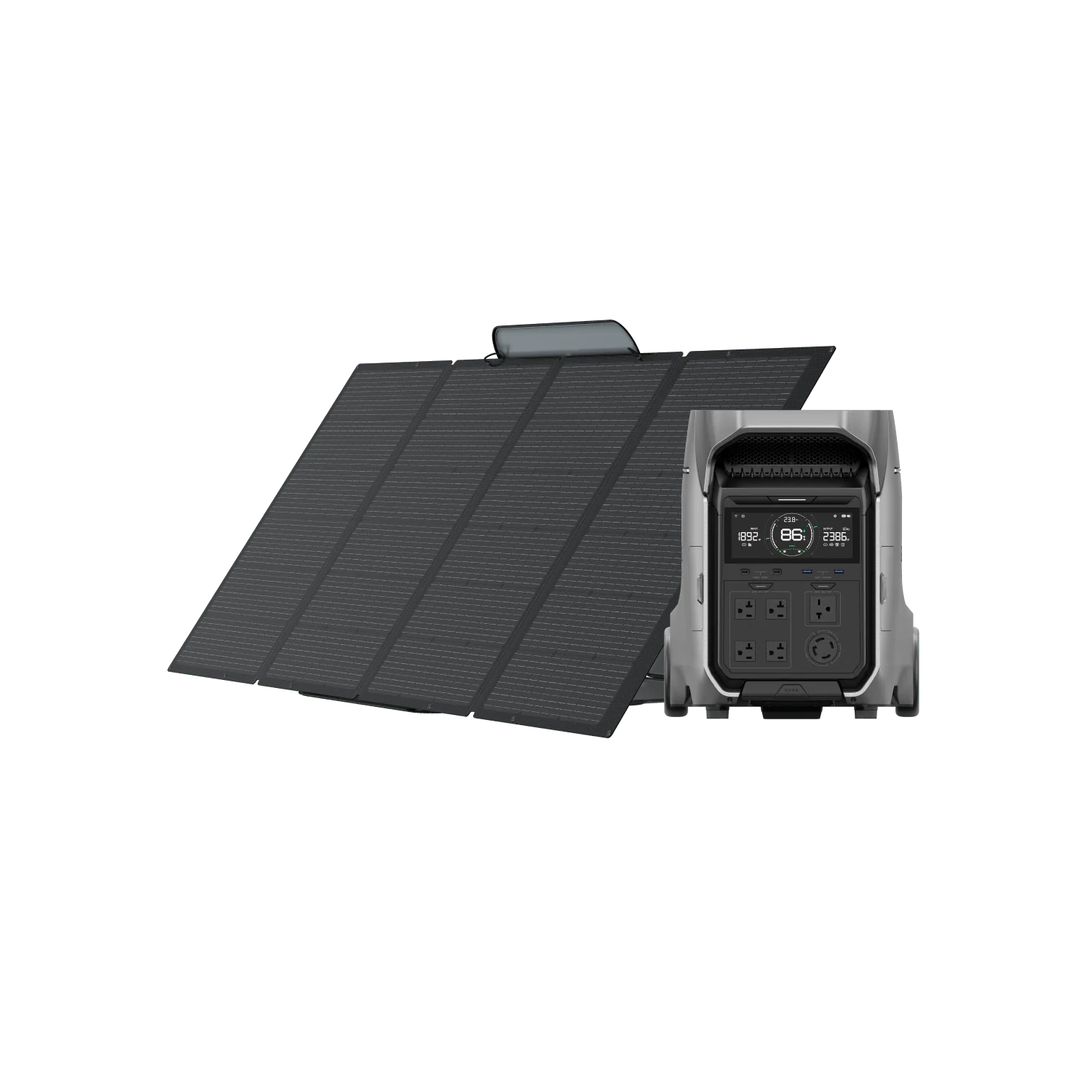
If you're pairing solar panels with a home battery system, like the EcoFlow DELTA Pro 3 Solar Generator + 400W Solar Panel bundle, panel efficiency directly affects how much energy gets stored each day.
How Solar Panels Are Rated and Why STC Isn’t the Whole Story
When you’re comparing solar panels, you should look into the full nameplate specifications, not just the wattage ratings. Each one has a specification sheet describing performance under standardized laboratory conditions.
The standard test conditions (STC) rating is determined by placing the panels under a sun simulator with fixed light intensity and controlled temperature. Scientists measure the maximum power output, which becomes the panel’s wattage and STC rating.
Some manufacturers provide a PVUSA test conditions (PTC) rating, where the temperature, airflow, and light intensity mimic real-world conditions. The difference between STC and PTC helps show how much power the panel may lose during actual operation.
Because these are mass-produced, wattage ratings include a power tolerance to account for small manufacturing variations.
What Changes Solar Panel Efficiency in Real Conditions
Solar panels will rarely operate at their STC specifications. Once installed, environmental conditions will influence how effective they are at converting sunlight into energy. Some of those factors include:
Temperature: They become less efficient as they heat up. STC testing uses 77°F (25°C), but summer rooftop temperatures often reach 122–158°F (50–70°C), increasing electrical resistance and reducing output.
Sunlight Intensity: Clouds, seasons, time of day, and geography impact how much sunlight reaches the panels.
Dust, Snow, Dirt: Anything blocking sunlight to the panel surface reduces efficiency.
Shade: Even partial shade on a small section of a panel can significantly reduce the output across an entire string. Some installations use microinverters or power optimizers to limit how much one shaded panel pulls down the rest of the array.
Roof Orientation: In the Northern Hemisphere, south-facing roofs capture the most sunlight over the course of a year. East- or west-facing orientations can reduce annual energy production.
Tilt Angle: The angle of your panels relative to the sun affects how directly sunlight hits the surface. A tilt roughly equal to your geographic latitude maximizes annual output, though fixed rooftop installations rarely achieve the theoretical optimum year-round.
System Losses: No installation delivers 100% of what the panels generate. Inverter conversion, wiring resistance, and connection losses typically reduce the energy that reaches your circuits compared to the panel's nameplate rating.
Solar Panel Lifespan: Solar panels slowly degrade over time from use and exposure to UV rays, moisture, and temperature cycling.
Choosing Between Standard and High-Efficiency Panels
Photovoltaic cell chemistry, like polycrystalline or monocrystalline silicon, affects both efficiency and cost. Standard-efficiency panels are typically cheaper with efficiencies around 17%–20%, while high-efficiency ones cost more but can reach 21%–24%.
The high-efficiency route is worth the added cost when:
Roof space is limited.
Electricity use is high.
Utility rates are expensive.
Climate is hot, and premium panels handle heat better.
Standard is ideal when:
Roof space is plentiful.
Lower upfront costs are the priority.
Home energy demands are modest.
The best solar system balances price, yearly energy production, and roof space.
Pairing Efficient Panels With Solar Generators for Reliable Backup Power
Solar panels are most effective when paired with battery storage, turning daytime generation into power you can use at night or during an outage.
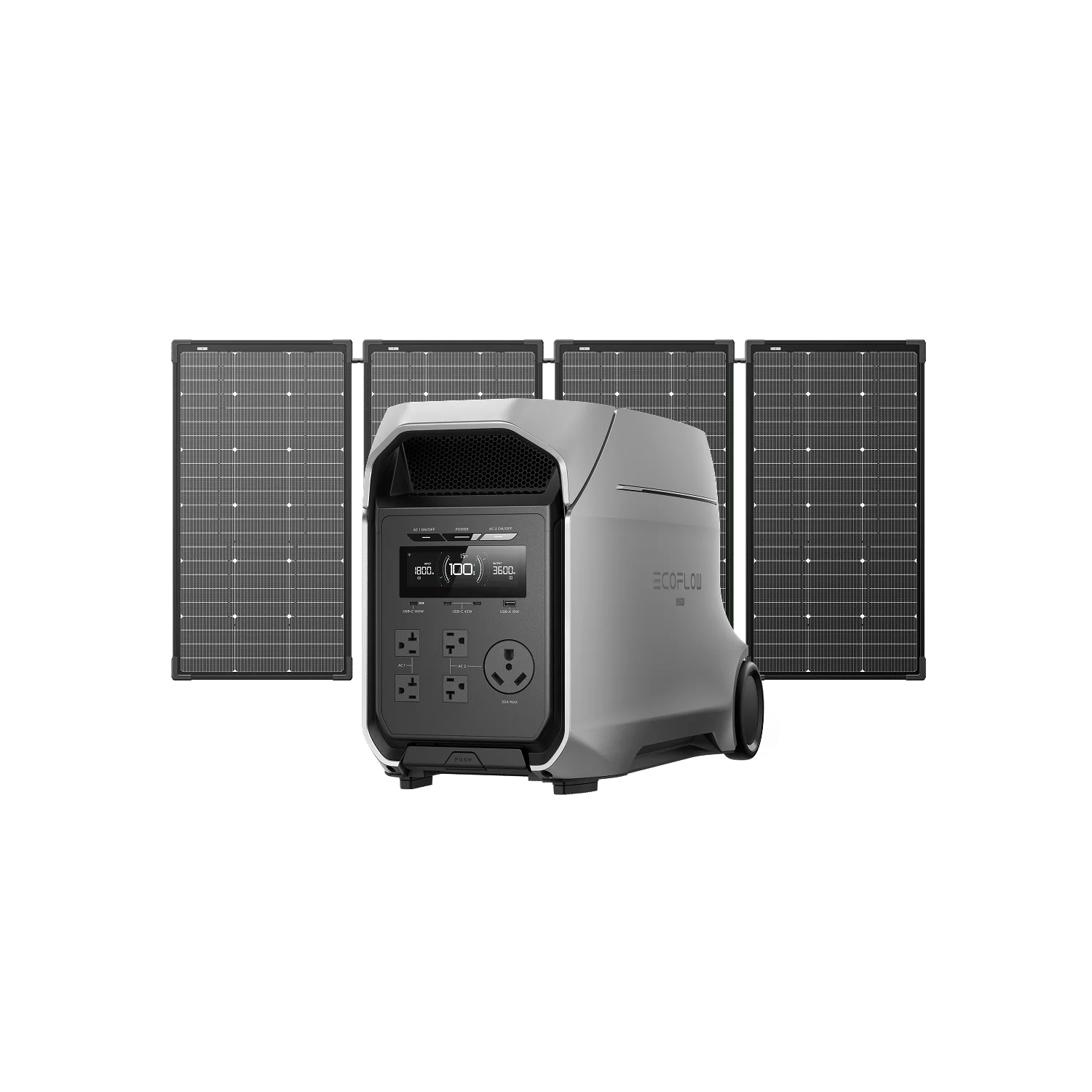
The EcoFlow DELTA Pro 3 Solar Generator + 400W Solar Panel and the EcoFlow DELTA 3 Ultra Plus Solar Generator + 500W Solar Kit both pair with high-efficiency solar panels, storing any energy produced during the day that isn't immediately consumed.
A solar generator is a portable battery system that stores electricity for later use. When combined with solar panels, any energy produced and not consumed during the day can be stored for use at night or during a blackout instead of going to waste. You can stack several batteries together for enough storage for a whole home backup power solution.
Frequently Asked Questions
What Is a “Good” Solar Panel Efficiency Rating Today?
Modern solar panels fall between 17% and 24% efficiency, depending on the manufacturer and technology. For home use, ratings between 20% to 22% are considered good. Of course, roof space, climate, and budget also matter when determining the best solar panels for your home.
How Much Roof Space Do I Need to Hit a Specific kW Goal?
The amount of roof space required depends on the panel’s wattage, efficiency, and the kW goal. Say your kW goal is 4 kW. If the solar panel wattage rating is 400 W, then the number of panels needed is 10. If each panel takes up 20 square feet, you need 200 square feet.
How Much Does Heat Reduce Solar Panel Output in Summer?
Most panels lose 0.3%–0.5% of power per 1°C (1.8°F) above the STC baseline of 25°C (77°F); this is called the temperature coefficient. If a panel reaches 113°F (45°C) and the coefficient is 0.5%, then the power loss becomes 10%, making a 400W panel operate at 360W instead.
How Long Do Solar Panels Keep Producing Meaningful Power?
Many solar panels lose power efficiency over time as they degrade from UV or moisture exposure, or temperature cycling. Modern ones can last 25–30 years or longer. Many manufacturers provide performance warranties that panels will produce 80%–85% of their original output after 25 years.
Generate More Power From the Same Sunlight and Build a More Resilient Setup
Solar panels are the keystone equipment in a resilient energy setup. It’s important to understand how to interpret product descriptors like solar panel efficiency, wattage rating, power output, and what testing conditions manufacturers use to measure performance. STC ratings can help standardize comparisons between panels, but real-world energy production depends on much more than the number on the label.
For even greater energy resilience, pair solar panels with EcoFlow’s solar generators to store backup power for outages and nighttime use.
For press requests or interview opportunities, reach out to our media team
media.na@ecoflow.com