Power Outage Food Safety: How Long Is Your Food Safe Without Power?
- What Food Safety Means During a Power Outage
- How Long Food Stays Safe Without Power: Fridge vs. Freezer
- What to Keep vs. What to Toss After an Outage
- How to Keep Food Cold Longer During a Blackout
- Backup Power Options to Reduce Food Loss in Future Outages
- Frequently Asked Questions
- Keep Food Safe, Reduce Waste, and Regain Peace of Mind
When the power goes out, the countdown to food spoilage begins. Food might not show any visible sign that it has been sitting in unsafe temperatures, making it risky to consume any of the items in your refrigerator.
Aside from the health risks, spoilage can cause $200–400 in grocery value lost during extended outages, but preparing for this possibility with reliable backup power can reduce that loss significantly.
Brush up on your food safety knowledge before an outage starts so you can manage the disruption with ease.
What Food Safety Means During a Power Outage
When the power goes out, your refrigerator temperature matters more than how long the outage is. Food safety decisions should be based on the item’s internal temperature. Bacteria multiply within the 40ºF-140ºF range, known as the “Danger Zone” according to the USDA. In this zone, pathogens like E. coli and Salmonella can double in as little as 20 minutes.
The populations at the highest risk from spoiled food are young children, the elderly, pregnant women, and immunocompromised individuals. If these individuals consume spoiled items, they’ll face more severe consequences of food safety contamination.
If you have any doubt as to the safety of your food after an outage, it’s best to throw it out. You can’t rely on appearance or smell alone, so if there’s any chance it may be spoiled, it’s not worth the risk.
How Long Food Stays Safe Without Power: Fridge vs. Freezer
How long is food safe once the power goes out? If it's kept in the fridge with the doors kept closed during a power outage, it remains safe for approximately four hours per FDA guidance.
The safety timeline for a full freezer that remains closed is approximately 48 hours, but if that freezer is half full, it cuts it down to 24 hours.
The strictest threshold is the four hours at 40ºF rule. Past this point, you should discard any meat, fish, poultry, eggs, or leftovers. The only reliable tool to measure internal temperature is a thermometer. You can't use elapsed time to determine what's truly safe.
What to Keep vs. What to Toss After an Outage
The food at the highest risk of contamination after an outage includes:
Raw or cooked meat
Raw or cooked poultry
Raw or cooked seafood
Eggs
Milk
Cooked pasta/rice
Soft cheese
Leftovers
If any of these have an internal temperature of above 40ºF for more than two hours, throw them out.
Lower risk fridge staples that typically survive are: hard cheeses, butter, fruit juice, peanut butter, jelly, fresh whole fruits and vegetables, bread, crackers, and canned goods.
It can be tempting to determine whether food is safe to keep based on smell and appearance, but these are both unreliable indicators, because pathogens that cause foodborne illness may not produce any detectable odor or visible changes.
Any other items that have come into contact with drips from raw meat or poultry during the outage should also be thrown in the trash because of the risk of cross-contamination.
How to Keep Food Cold Longer During a Blackout
The most impactful step to keep your food cold longer during a blackout is keeping the doors closed. Door discipline can be hard to maintain, but it’s critical. Every time you unnecessarily open it, it accelerates the warming.
Place appliance thermometers in your fridge and your freezer before an outage, as they are the only accurate way to assess safety after the power returns. If the outage extends beyond three to four hours, transfer your perishable items to a cooler with ice or frozen gel packs. You could also use dry ice to keep a fully-stocked freezer cold for approximately two extra days.
There's also a simpler solution. A whole home generator eliminates decision-making entirely by maintaining power even when the grid goes out, to keep your fridge running and keeping your food cold and safe throughout the outage.
Backup Power Options to Reduce Food Loss in Future Outages
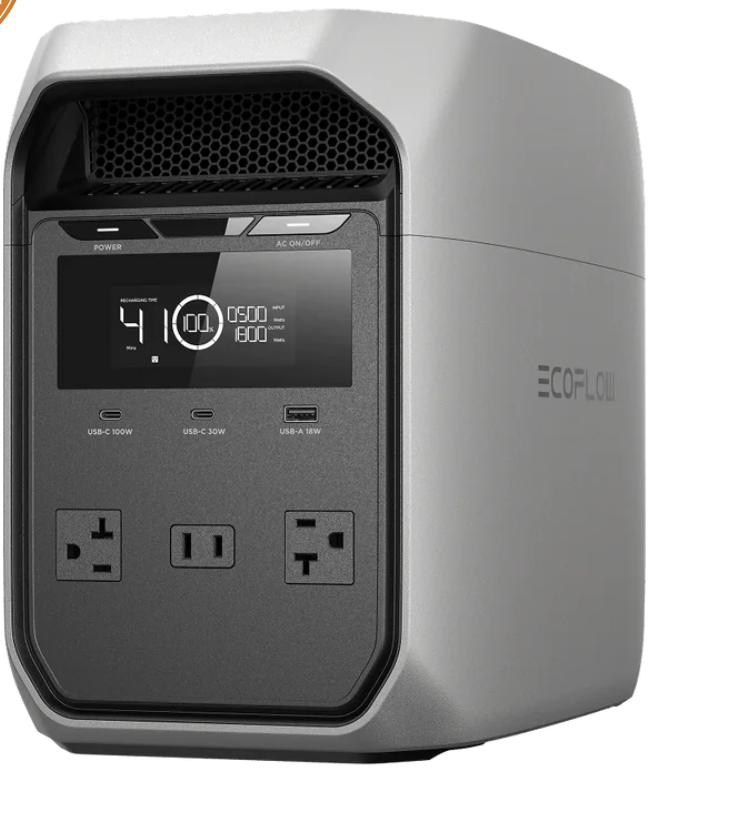
To run your fridge with backup power, you'll need to match your power station's capacity to the fridge's running wattage. Most refrigerators have 100–400W running wattage, and a surge wattage of two to three times that.
A 1024Wh portable station, like the EcoFlow DELTA 3 Classic Portable Power Station (1024Wh), can power a midsize refrigerator for about 8 to 12 hours, depending on the compressor cycle and the ambient temperature.
For multi-day outages, you'll need something more robust, like the EcoFlow DELTA Pro Ultra X Whole-Home Backup Power, which has the capacity needed to run a full-size refrigerator continuously alongside your other essential appliances. If you add solar input, it extends your runtime significantly.
Frequently Asked Questions
How long can refrigerator food stay safe without power?
A refrigerator can keep food safe for about four hours without power if the doors stay closed. After this point, you should discard all perishables, including meat, poultry, eggs, seafood, dairy, and cooked leftovers.
How long will a freezer keep food safe during an outage?
A full freezer can keep everything safe for approximately 48 hours during an outage if the doors stay closed. If that same freezer is only half full, the timeline shrinks to approximately 24 hours. Refreezing that food is safe as long as the food measures 40ºF or below.
Can thawed food be refrozen safely?
Thawed food can still be refrozen safely if it contains ice crystals or is at or below the 40°F threshold. The quality and texture may suffer, but it's safe. If anything has thawed fully and is above 40°F internally, discard it.
Is the smell test reliable for spotting spoiled food?
The smell test is not a reliable method to identify spoiled food because many dangerous pathogens like E. coli or salmonella do not produce a noticeable odor. Visual checks are also unreliable. The only meaningful measure to spot spoiled items is temperature.
Keep Food Safe, Reduce Waste, and Regain Peace of Mind
The deciding factor for whether food is still safe after an outage is its temperature. If you can keep it below 40°F, your items stay safe, but as soon as it rises above that, time starts to work against you.
While a thermometer and a cooler plus ice can help cover you in most scenarios, a robust backup power option eliminates the guesswork during future outages. Something like the EcoFlow DELTA Pro Ultra X Whole-Home Backup Power provides power to keep your refrigerator and freezer running continuously.
For press requests or interview opportunities, reach out to our media team
media.na@ecoflow.com