Portable Inverter Generator for Camping: What to Know About Quiet and Reliable Power
A reliable power source can make the difference between an enjoyable camping trip and a frustrating one. Many campers will use a portable inverter generator because they are quieter and provide stable electricity. They also offer better fuel efficiency compared to conventional generators. This guide explains how camping inverter generators work and what they can power. You’ll also learn what to consider before buying, and how solar generators offer a quieter alternative when you’re off-grid.
What Is a Portable Inverter Generator for Camping?
When choosing a camping generator, portable inverter generators are a popular choice for campers looking for reliable power outdoors. They are quieter, more fuel-efficient, and easier to move around than traditional generators. Understanding how they work will help you choose the right model for your next camping trip.
How Portable Inverter Generators Work
A portable inverter generator uses a multi-step process to produce power. It first generates Alternating Current (AC), converts it to Direct Current (DC), and then inverts it back to stable AC current. This process produces a consistent sine wave output, just like the electricity supplied by the utilities. This multi-step process protects sensitive equipment from voltage spikes.
Differences From Traditional Generators
Many traditional generators run at a fixed engine speed regardless of the electrical load. This is usually around 3,600 RPM for 60Hz models. Traditional generators are often louder, less efficient at light loads, and heavier to move around. In contrast, inverter generators feature smart throttle technology that automatically adjusts engine speed to match the exact wattage demand. This results in significantly lower noise levels, better fuel economy, and a much lighter frame designed for easy transport.
| Feature | Traditional Generator | Portable Inverter Generator |
|---|---|---|
| Noise Level | Usually louder (70+ dB) | Quieter (around 50–60 dB) |
| Power Output | Good for heavy-duty loads | Best for small to medium loads |
| Power Quality | May have voltage fluctuations | Provides cleaner power with pure sine wave output |
| Fuel Efficiency | Runs at constant speed | Adjusts engine speed based on demand |
| Portability | Larger and heavier | Compact and easier to carry |
| Best For | Construction, backup power | Camping, RV trips, sensitive electronics |
For most campers, an inverter generator offers a better balance of portability, noise control, and power quality.
What Makes an Inverter Generator Suitable for Camping?
Campers have several power options for off-grid outdoor living, including traditional generators, inverter generators, and solar generators. Each option is designed for different camping scenarios and power needs. Inverter generators are specifically engineered to address many common camping needs, offering benefits such as lower noise, cleaner power output, and better fuel economy.
Quiet Operation for Campground Environments
It is proper etiquette for campers to always be respectful of fellow outdoor enthusiasts and local wildlife. This is hard to do with traditional generators that often reach 70 to 80 decibels (dB). They can sound like a lawnmower right next to your site. Inverter generators typically operate between 50 and 60 dB at a standard 20-foot distance, which is about as quiet as a normal background conversation. This way you can stay powered up without annoying your neighbors.
Clean Power for Sensitive Electronics
Modern devices used while camping include sophisticated electronics like smartphones, laptops, mirrorless cameras, and drone batteries. Conventional generators can produce high total harmonic distortion (THD), which can damage delicate circuit boards. Many inverter generators are designed to produce low-THD power, often below 3%, and provide cleaner power that is safer for sensitive electronics.
Efficient Fuel Use for Longer Trips
Inverter engines throttle down when power demand is reduced, so they will use far less gasoline than conventional units. A small 1-gallon fuel tank on an inverter unit can often run for 8 to 12 hours under a light load. This higher efficiency means you bring fewer gas cans, and save some space.
Reliable Performance in Outdoor Conditions
Portable inverter generators are designed to be used outdoors. They are enclosed, have weather-resistant casings and built-in dampening to handle the bumps of forest roads. They feature recoil or push-button start mechanisms so they are easy to start up on cold mornings, damp environments, or high-altitude campsites.
What Can You Run With a Camping Inverter Generator?
Portable inverter generators generally range from 1,000 watts to 3,500 watts. The devices you can run depend on the generator’s rated output, start up surge capacity, and the combined power demand of your equipment. They are commonly used for personal electronics, camping appliances, and basic RV power needs.
Charging Personal Devices and Gear
For basic camping needs, inverter generators provide a stable power source for charging personal electronics and outdoor gear. Campers can recharge smartphones, GPS devices, headlamps, cameras, drone batteries, and other small electronics during extended outdoor trips.
Powering Camping Comfort Essentials
For those who prefer a touch of “glamping” while roughing it, an inverter generator can support common campsite comforts. Depending on the model, it may power items such as coffee makers, mini-fridges, electric blankets, outdoor LED string lights, and portable heating or cooling devices.
Supporting Basic RV Camping Needs
If you’re towing a travel trailer, driving a camper van, or using a pop-up camper, a 2,000 to 3,500-watt inverter generator can support your power needs. Larger models may also support equipment such as rooftop air conditioners, depending on the generator’s capacity and the appliance’s starting requirements.
What Are the Limitations of Camping Inverter Generators?
While inverter generators offer many benefits, they also come with some trade-offs. Understanding the pros and cons of inverter generators can help you set realistic expectations before using one for camping or backcountry trips.
Limited Capacity for High-Power Appliances
Compact size means compact power output. If you try to use too many high power devices at the same time, the unit’s breaker may trip. A standard 2,000-watt inverter generator may struggle if you try to run a space heater, a hair dryer, and a coffee maker all at the same time.
Fuel Storage and Maintenance Requirements
Like any gasoline-powered motor, inverter generators also require ongoing maintenance, including oil changes, spark plug checks, and air filter cleaning. In addition, carrying gasoline in your vehicle introduces smell, spillage risks, and potential safety hazards. Always use approved storage containers and handle them properly.
Consider Noise During Quiet Hours
Even though inverter generators are relatively quiet, they still emit a continuous engine hum. Most public campgrounds have strict “quiet hours” that typically go from 10:00 PM to 6:00 AM. During these hours, running any combustion engine generator may be prohibited.
Requires Proper Outdoor Operation
Engine exhaust contains toxic carbon monoxide (CO). Gas generators must always be operated outdoors, at least 20 feet away from any tents, RV doors, and open windows. Also, place them downwind so wind blows exhaust fumes away from where people sleep.
When Should You Consider a Solar Generator for Camping?
Inverter generators work well for many camping needs, but solar generators are another option for those who prefer quiet, clean, and low-maintenance power.
Campgrounds With Generator Restrictions
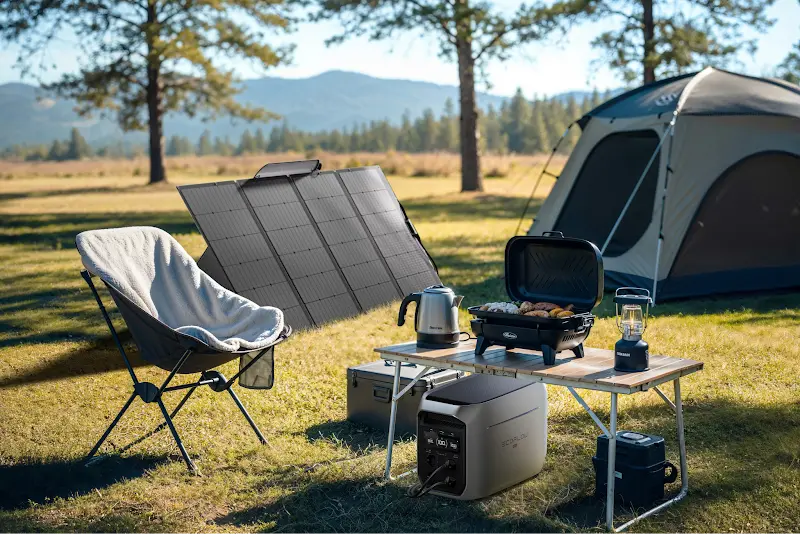
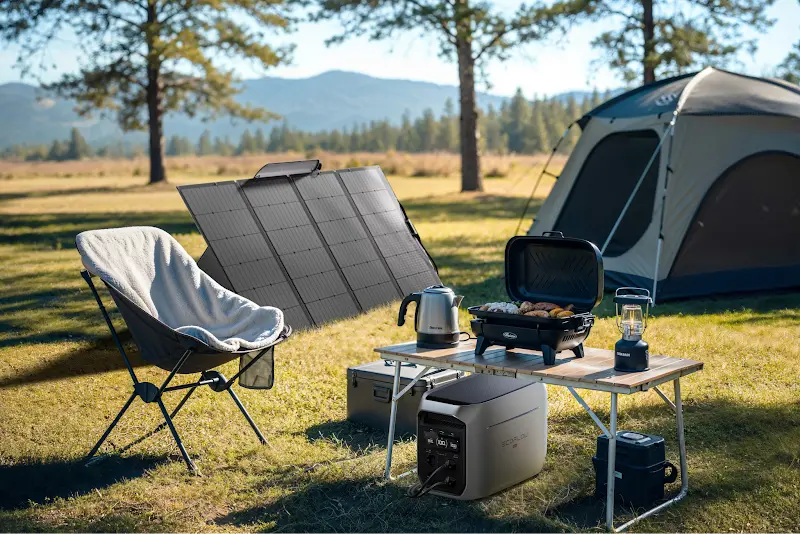
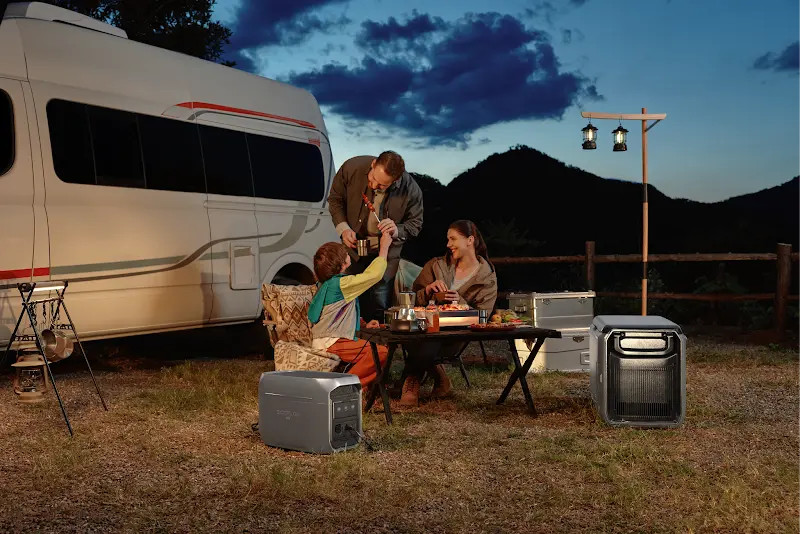
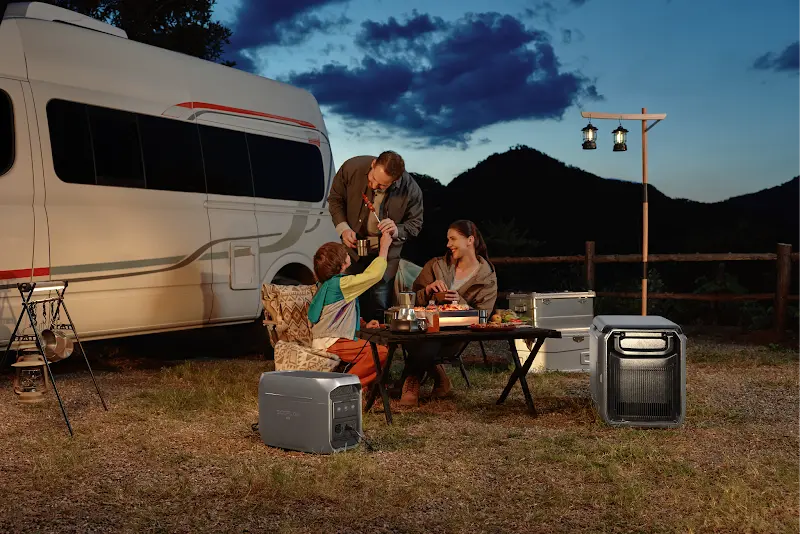
If you plan to stay at campgrounds with strict quiet hours or restrictions on gas-powered generators, a battery-powered solar generator can be a practical alternative. This type of system provides flexible, low-noise power without the need to run a fuel-powered engine. For example, the EcoFlow DELTA 3 Classic Portable Power Station (1024Wh) can support all your typical camping electronics such as smartphones, camera gear, camp lights, and Bluetooth speakers. It’s easy to use and a convenient option for weekend family trips and car camping.
Extended Off-Grid Camping Adventures
If you’re going out for days on the road or deep boondocking where there are no hookups, carrying enough gasoline to run a generator can require extra planning. Alternatively, using a solar generator combined with portable solar panels can help extend your available power when sunlight is available. For higher power needs, the EcoFlow DELTA 3 Max Plus Portable Power Station (2048Wh) offers larger battery capacity and higher output. This system can power devices such as portable camping fridges, larger photography setups, and multiple campsite appliances based on your energy requirements.
Trips Without Easy Fuel Access
When exploring remote wilderness areas, finding a gas station to refuel your generator can be difficult and require some long detours. Solar generators don’t need gas, and can be recharged using solar energy when paired with compatible solar panels.
Camping With Less Maintenance Planning
Gas generators require some preparation before using, like checking the oil, carburetor winterization, and fuel stabilization. However, a solar generator requires no mechanical upkeep, and you can just grab-and-go with no fuel and will have no exhaust or noise.
Conclusion
Choosing outdoor power comes down to what you actually need, how much noise you can handle, and what’s easiest to deal with. An inverter generator is a solid choice, it’s clean, efficient, and handles camping basics without a problem. But if you want something quiet that doesn’t need gas or oil changes, a solar generator is worth a look. Figure out your power needs and where you’ll be camping, and you’ll have no trouble keeping things running wherever you end up.
FAQ
How much quieter is an inverter generator?
About 10 to 20 decibels quieter than a regular open‑frame generator. Most inverter models sit around 50–60 dB, compared to 70 dB or more for the old‑school ones.
How long can you run an inverter generator continuously?
Figure 8 to 12 hours on a tank with a light load. Depends on the tank size, how efficient the engine is, and what you’ve got plugged in.
What size inverter generator do you need for an RV AC?
For a standard 13,500 BTU AC, you’re looking at 2,000 to 3,500 watts. A soft‑start can help, but going bigger gives you more room to work with.
Is an inverter generator safe for electronics?
Yes, most are. They put out clean power with low harmonic distortion, so laptops and phones won’t get fried.
Is it safe to sleep in an RV with the generator running?
You can, but you need to do it right. Keep the generator outside at a safe distance, point the exhaust away from windows and vents, and make sure your carbon monoxide detector works.
For press requests or interview opportunities, reach out to our media team
media.na@ecoflow.com