Portable Inverter Generator vs. Portable Power Station: Which One Is Best for Home Backup and Camping?
- Why Portable Backup Power Is Becoming Essential in the U.S.
- What Is a Portable Inverter Generator?
- What Is a Portable Power Station?
- Key Differences Between Inverter Generators and Power Stations
- Cost Comparison: Inverter Generators vs. Power Stations
- Which One Is Better for Home Backup Power and Camping?
- How to Choose the Right Option for Your Needs
- Conclusion
- FAQs
By mid-2026, the landscape of residential energy in the U.S. has shifted significantly. Portable power is no longer viewed through the lens of “extreme prepping” but as a functional necessity. Whether maintaining climate control during a suburban grid failure or providing the necessary capacity for remote professional work, these systems have become an essential component of modern emergency preparedness and mobile lifestyles.
The key question is : do you stick with the loud, reliable rumble of an inverter generator, or go all-in on a silent portable power station? The choice depends on user scenarios and technical requirements, but it really comes down to how you actually live. We’re going to dig into the tech, the actual costs, and how these things perform when the lights go out. By the end, you’ll know exactly which one is the best backup power solution for your specific needs.
Why Portable Backup Power Is Becoming Essential in the U.S.
The days of backup power being a niche hobby for survivalists are over. From families in Florida to van-lifers out West, everyone is looking for a way to stay plugged in when the grid fails. For many homeowners, deciding whether to invest in a reliable inverter generator has become a standard part of modern emergency preparedness.
Increasing Power Outages Across the Country
The national power grid is currently facing unprecedented strain. In 2026, aging infrastructure and extreme climate events have made “load shedding” and unplanned outages a standard operational reality. For the modern household, a multi-hour outage represents more than a minor inconvenience; it poses a direct risk to refrigerated inventories, disrupts remote work connectivity, and jeopardizes those relying on critical medical equipment.
Rising Demand for Camping, RV, and Van Life
The widespread adoption of remote work has fundamentally changed the requirements for mobile power. Reliable energy is now a prerequisite for operating high draw equipment like Starlink terminals and localized refrigeration systems in remote environments. Traditional recreation has evolved into a more “electrified” experience, leading to a professional preference for silent, high efficiency systems that comply with increasingly strict campground noise regulations.
Shift Toward Clean and Quiet Energy Solutions
There’s a massive push lately toward being a better neighbor. Whether you’re in a packed KOA campsite or a tight cul-de-sac, that old school generator roar is a fast way to make enemies. People are gravitating toward high efficiency, zero emission gear that doesn’t smell like exhaust or wake up the kids three tents over.
What Is a Portable Inverter Generator?
An inverter generator functions as the heavyweight champion of raw, sustained power. If you’re comfortable with fuel storage, these units are hard to beat for high-wattage output and sustained heavy-duty performance.
How Inverter Generators Work
Standard open frame generators, the ones that sound as loud as a traditional open-frame generator (typically over 70-80 dB), run at a constant speed. Inverter generators are smarter. They use a microprocessor to throttle the engine up or down depending on what you’ve plugged in. This tech creates “clean” electricity, often called a pure sine wave. When comparing an open frame vs. closed frame inverter generator, the latter is significantly quieter due to its insulated housing.
Key Features of Inverter Generators
Fuel Efficiency: Since the engine doesn’t have to run at full tilt 24/7, you aren’t burning gas just to keep a single lightbulb on.
Portability: Most of these units are tucked inside sleek plastic shells. They usually come with solid handles or wheels, making them way easier to move than the old-school metal cage versions.
Parallel Capability: A common feature is, if one unit is not enough, many models let you bridge two together. It’s a simple way to double your wattage without buying a massive, unmovable unit.
Common Use Cases in the U.S.
Inverter generators are commonly used in all over construction sites, powering up tools, or tucked behind food trucks. They’re a staple for large RVs that need to crank a 15,000 BTU air conditioner through a muggy night in the South. Also, if you live out in the sticks where the power might be out for three days straight, having a machine that runs as long as you have gasoline is a massive advantage.
What Is a Portable Power Station?
A portable power station functions as the scaled-up, high-capacity versions of portable consumer battery packs you carry for your phone. Except, instead of just topping off a battery, these things can actually keep your fridge cold and your lights on.
How Portable Power Stations Work
While frequently marketed as “solar generators,” this terminology is technically imprecise. These units do not generate energy independently; rather, they function as high capacity energy storage systems. In 2026, industry leading units typically utilize Lithium Iron Phosphate (LiFePO4) chemistry, offering superior thermal stability and cycle life compared to earlier lithium-ion iterations.
Key Features of Power Stations
Silent Operation: There’s no engine. No combustion. Just a few quiet fans that kick on when things get warm. You can sit right next to one and have a conversation without raising your voice.
Indoor Safe: This is the big one. Since they don’t spit out carbon monoxide, you can keep them in your bedroom, your tent, or your home office. No exhaust, no smell, no danger.
Instant Power: Forget about yanking on a starter cord five times. You just hit a button, and you’ve got AC power. It’s as simple as turning on a flashlight.
Typical Use Cases
These are highly suitable for apartment dwellers who can’t exactly run a gas engine on a balcony. They’re also a favorite for “glampers” and anyone working remotely from a van. Also, if you use a CPAP machine at night, a power station is a must-have: it’ll keep you breathing through a blackout without making a peep. They’re perfect for keeping the Wi-Fi router and a few lamps going during those annoying suburban outages.
Key Differences Between Inverter Generators and Power Stations
When you’re staring at a row of options at the hardware store or browsing online, the specs start to blur. To keep it straight, here’s the breakdown of how these two actually stack up when you’re out in the field or stuck in a dark house.
| Feature | Inverter Generator | Portable Power Station |
|---|---|---|
| Energy Source | Gasoline, Propane, or Diesel | Battery (recharged via AC/Solar/Car) |
| Noise Level | Moderate (50-60 dB) | Silent (0-20 dB from fans) |
| Indoor Use | Never (Carbon Monoxide risk) | Safe (Zero emissions) |
| Maintenance | Oil changes, spark plugs, fuel stabilizing | Minimal (Keep battery charged) |
| Run Time | Unlimited (as long as you have fuel) | Finite (limited by battery capacity) |
Hidden Downsides of Inverter Generators Most Buyers Ignore
Inverter generators offer high output reliability for extended outages, yet many owners find the mechanical commitment more taxing than anticipated. Carefully weighing the pros and cons of inverter generators is essential, as these systems require consistent engine maintenance and rigorous fuel management to remain operational.
The primary hurdle involves fuel stability; standard gasoline degrades within months, often leading to ignition failure during critical emergencies. Storing large quantities of combustible fuel also introduces localized fire hazards and unpleasant odors into residential spaces. Furthermore, in sub-freezing temperatures, the mechanical difficulty of a cold start adds a layer of frustration that battery systems bypass. Maintenance requirements, including oil changes and spark plug inspections, essentially mirror the upkeep of a secondary vehicle. For those without the technical inclination for routine engine work, these tasks often become expensive professional service burdens.
Increasingly strict regulations in 2026 also limit generator use. Many HOAs and premium campgrounds now enforce “zero-noise” windows that exclude even the quietest combustion models. Additionally, the risk of carbon monoxide poisoning necessitates placing the unit at least 20 feet from any structure, requiring deployment in rain or snow during a storm. Because of these logistical complexities, more U.S. households are transitioning toward low maintenance, automated power stations for their primary backup and recreational needs.


Cost Comparison: Inverter Generators vs. Power Stations
At first glance, a gas generator looks like a bargain. You can grab a decent unit for a few hundred bucks and complete the setup. But that’s just the initial purchase price. Once you factor in the ongoing cost of premium gasoline, fuel stabilizer, oil, and the occasional spark plug swap, the price starts to creep up.
Portable power stations require a higher initial capital expenditure. However, when evaluating the Total Cost of Ownership (TCO) over a five year period, the economics shift. Solar integration allows for near-zero marginal operating costs. When you factor in the absence of fuel expenses, oil changes, and mechanical repairs, the battery based system often emerges as the more fiscally prudent choice for frequent users.
Real-World Product Examples for Different Use Cases
The U.S. market has moved past those clunky “emergency-only” boxes. People want gear that works for a Saturday at the lake and a Tuesday night blackout.
Entry-level / Portable Use
The EcoFlow DELTA 3 Plus + 220W Solar Panel is a great example of this “dual-use” sweet spot. Its compact, portable design makes it easy to load into a truck for a weekend at Zion or the Smokies without the heavy lifting typical of older lead-acid units. When you return home, it transitions into a reliable emergency backup. With a 1024Wh capacity and 1800W AC output, it’s powerful enough to keep a high-efficiency kitchen fridge running during a local grid failure, protecting hundreds of dollars in groceries.
This configuration is increasingly popular in regions such as California and Texas where people are tired of grid instability and noise complaints. Also, technology has actually caught up to our lifestyles. You can check your solar input or toggle outlets from your phone while sitting by the campfire. It makes managing your power feel about as complicated as skipping a song on Spotify.
High-load Home Backup
Traditional emergency power often involves the logistical burden of deploying a combustion unit in adverse weather and managing complex cable routing. The EcoFlow DELTA 3 Ultra Portable Power Station (3072Wh) streamlines this by allowing for seamless integration into the home’s electrical distribution panel. This system is engineered for the smart home era, providing automated notifications for load management and ensuring that essential appliances remain operational without manual intervention during a grid failure.
Which One Is Better for Home Backup Power and Camping?
Choosing between these two goes beyond simply finding the “perfect” solution. It all comes down to the right tool for where you live. Whether you’re hunkering down for a hurricane on the Gulf Coast or loading up the Ford for a weekend in the Sierras, here’s how the two compare in real-world applications.
Best Option for Home Backup
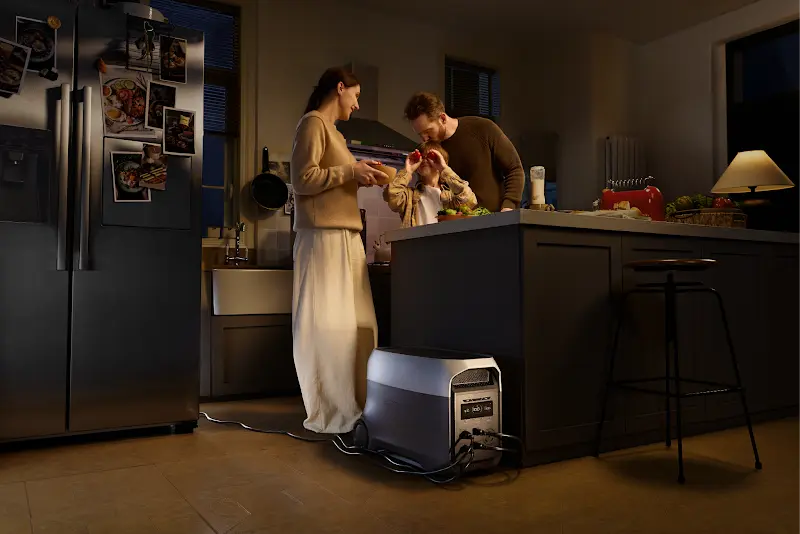
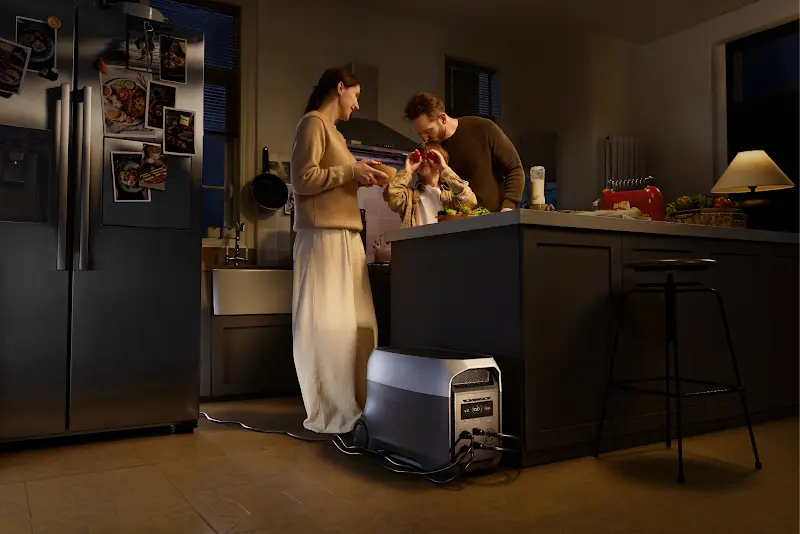
If you’re in an apartment or a suburban neighborhood where the houses are practically touching, the portable power station is the preferred option. You can keep it right in the living room without worrying about carbon monoxide or the neighbors calling the HOA about the noise. In rural applications where reliable operation of well pumps or high-load portable air conditioners is required during extended summer heatwaves, inverter generators remain a more suitable solution. Batteries are great, but for high wattage thermal loads over several days, gas still has the edge.
Best Option for Camping and RV Use
The portable power station is the more suitable option for camping scenarios. Modern campgrounds are getting really strict with noise ordinances, some only give you a two-hour window to run an engine. Being able to soak up free juice from solar panels while you’re hiking and then having silent power at night for your phone or a projector is a luxury a gas unit just can’t touch. Many campers prefer quieter power solutions that do not produce continuous engine noise.
When a Hybrid Setup Makes Sense
A growing trend among advanced users in 2026 is the implementation of a hybrid energy strategy. This involves using a portable power station to handle sensitive loads like medical equipment and refrigeration silently overnight, then utilizing a compact inverter generator for a limited window during the day to recharge the battery array if solar conditions are unfavorable. This approach offers the optimal balance of silent operation and extended runtime.
How to Choose the Right Option for Your Needs
Deciding between gas and battery involves more than reading a spec sheet. Success here depends on how the unit actually fits into your life when the grid fails or the trail gets rugged. To cut through the noise, here are the things you need to think about before pulling the trigger in 2026.
Based on Your Power Requirements
Start with a reality check on your wattage. If you’re trying to keep a deep-well pump running or a central AC unit that pulls over 3,000W, a gas inverter generator is still the high-output solution designed for sustained heavy-load applications. But for a “standard” home backup, think fridge, Wi-Fi, and keeping everyone’s laptops charged, a high capacity battery station is usually more efficient. It handles those essential electronics without burning through fuel while idling.
Based on Usage Scenarios
If you’re in an apartment or a tight suburban lot where you can practically high-five your neighbor from your window, a gas generator is generally not a viable option. A portable power station is the only safe, indoor-friendly play. For the road warriors, gas is fine in the middle of nowhere, but the silence of a battery is a massive win in crowded U.S. campgrounds where noise ordinances are getting stricter by the year.
Based on Budget and Long-Term Cost
When evaluating upfront costs, consider the lower initial price of gas generators against the low-maintenance nature of lithium battery systems. You can find a solid inverter for under $800, but you’ll be paying for premium gas and engine oil for years. On the flip side, an investment in something like the DELTA 3 series costs more on day one, but it pays for itself. Zero maintenance and “free” solar charging make it the smarter financial move for frequent users over the long haul.
Final Decision Framework
If you need massive, indefinite power for a rural homestead and don’t mind getting your hands dirty with maintenance, go with an inverter generator. But if you prioritize indoor safety, silent camping, and a lifestyle that doesn’t involve spark plugs, a portable power station is the superior choice for 2026. For those who want total energy security, a hybrid setup, using the battery for daily needs and a small gas unit for week-long emergencies, is a commonly adopted hybrid strategy among advanced users.
Conclusion
The “best” choice in 2026 really depends on your personal definition of freedom. If freedom to you looks like never checking a battery percentage as long as you’ve got a fresh jerry can of gas in the shed, then an inverter generator is your best bet. It’s reliable, it’s loud, and it gets the job done. But if freedom means waking up to silent mornings, breathing zero exhaust fumes, and pulling “free” energy right from the sun, the portable power station is clearly the future of American backup power. Whether you’re hunkering down for a storm or finding that perfect off grid campsite, just make sure you’ve got the reliable power to keep your world running.
FAQs
What Type of Generator is Suitable for Sensitive Electronics?
Inverter generators and portable power stations are both safe. They provide pure sine wave output power, clean electricity that won’t glitch or fry the delicate circuitry in your MacBook or CPAP machine.
Can You Use a Generator in Yellowstone National Park?
Yes, but only from 8 am to 8 pm. They must also stay under 60 decibels. Many campers have switched to power stations just to avoid these time limits and the risk of a ranger knocking on their tent.
How Long Do Portable Power Stations Last for Camping?
A mid-sized unit usually runs a camping fridge and charges phones for 2 to 3 days. Pair it with a 400W solar panel and you can stay off grid indefinitely, provided the sun plays along.
What Is the Temperature Range for a Portable Power Station?
They work best between 32°F and 104°F. While sub-freezing weather used to be a dealbreaker, many 2026 models now have internal heaters that let you charge up even when it’s 10°F outside.
Can You Leave a Portable Power Station Plugged in All the Time?
Generally, yes. Modern units use a Battery Management System (BMS) to prevent overcharging. Keeping it plugged in ensures you’re at 100% the second a storm hits and the grid goes dark.
For press requests or interview opportunities, reach out to our media team
media.na@ecoflow.com