How Many Watts Does a Portable Air Conditioner Use?
- How Many Watts Does a Portable Air Conditioner Use?
- Watts Vs BTU: What Is the Relationship?
- How Much Does It Cost to Run a Portable Air Conditioner?
- How Do Running Watts Differ From Startup Surge?
- How Do You Reduce the Running Costs of a Portable AC?
- How Do I Size a Generator for a Portable AC?
- Frequently Asked Questions
- Power Your Portable AC Reliably, Efficiently, And Safely
Nobody wants to sleep in a hot tent, cabin, or bedroom. A portable air conditioner makes the experience more comfortable, but there's just one problem: it significantly increases your energy use.
If you’re shopping for a portable power station or generator, know how much electricity your portable AC needs. Read on to see how many watts a portable AC needs, plus how to properly size a generator for stress-free air conditioning on the go.
How Many Watts Does a Portable Air Conditioner Use?
Generally, most portable air conditioners use between 640 and 1,500 running watts, depending on their cooling capacity. The unit’s actual power consumption depends on its capacity, efficiency, and outdoor temperatures, though.
Smaller portable ACs designed for bedrooms, home offices, RVs, or small apartments typically draw less electricity than larger units built to cool open living spaces.
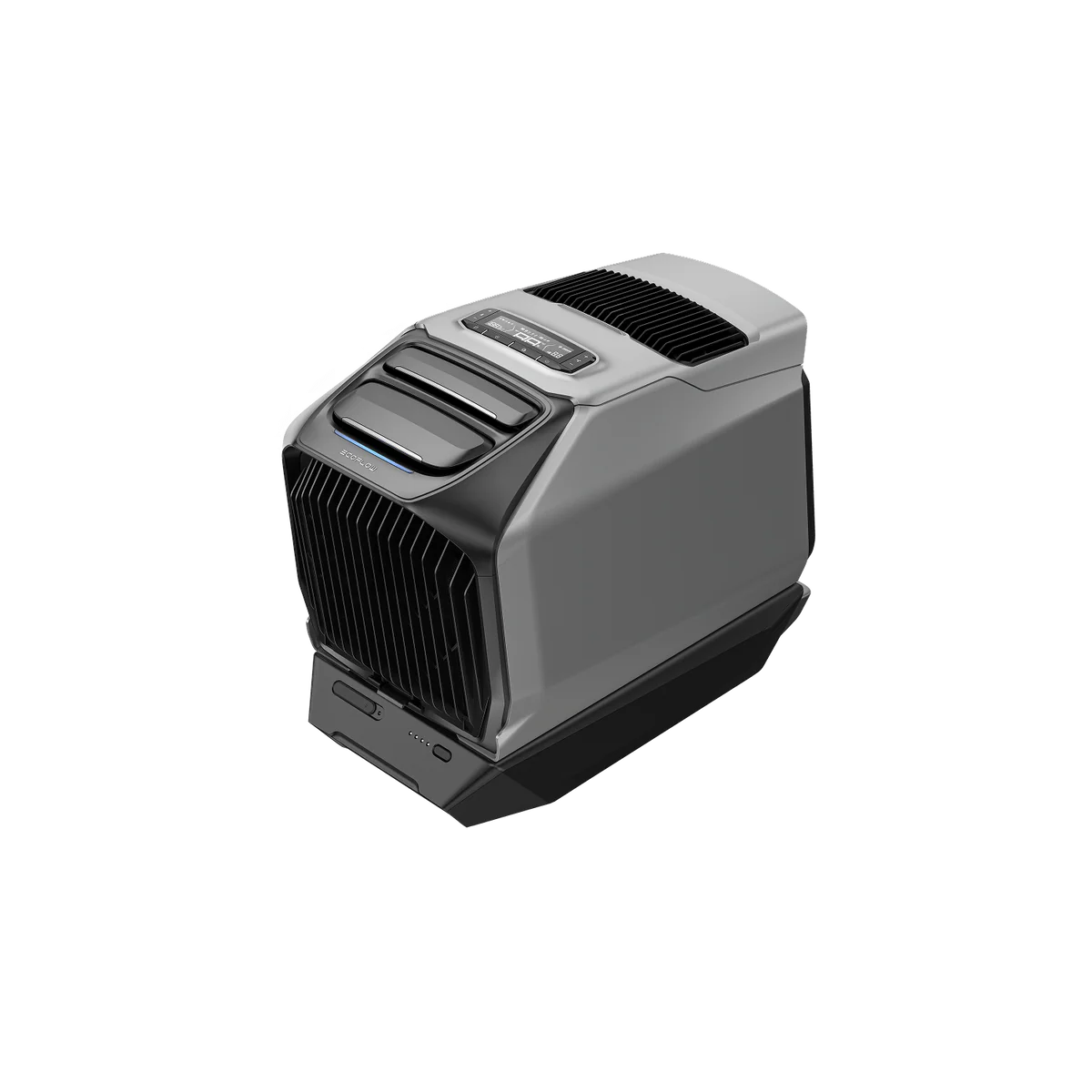
A compact model may use under 1,000 watts during normal operation. The EcoFlow WAVE 3 Portable Air Conditioner with Heater, for example, draws just 640–690 watts while delivering 6,100 BTU of cooling.
Larger, high-capacity units, by contrast, can exceed 1,500 watts. For comparison, a typical window air conditioner uses several hundred to over 1,000 watts depending on its size, while a central air conditioning system can draw several thousand watts during operation.
If you're running a portable AC off-grid in an RV, tent, or cabin, you’ll need to choose a properly sized generator for your AC. Undershooting it could mean you can't use the unit at all, while oversizing it could needlessly complicate your setup.
Watts Vs BTU: What Is the Relationship?
Portable air conditioners show two numbers: BTUs and watts. Both matter, but they measure different things.
British Thermal Units (BTUs) indicate cooling capacity, so the higher an AC’s BTU, the better it is at removing heat.
Watts just look at power consumption, or how much electricity the unit needs.
ACs with higher BTUs need more power, but efficiency also plays a role.
It requires doing some math, but taking the time to check your unit’s cooling capacity and power requirements will help you choose the right backup power option.
If you’re prepping for outages or building a whole-home backup system, a properly sized whole-home generator can keep essential cooling equipment running when grid power isn't available.
How Much Does It Cost to Run a Portable Air Conditioner?
You need to know three things to calculate the costs of running your portable AC unit:
Wattage
How long you plan to run it
Your local electricity rates
Once you know these numbers, plug them into this formula:
(Watts X Hours Used / 1,000) X Electricity rate = Cost
For example, let's say your portable air conditioner uses 700 watts and runs for 8 hours.
700 watts X 8 hours = 5,600 watt-hours
5,600 watt-hours / 1,000 = 5.6 kWh
If your utility charges $0.17 per kWh, running the AC for those 8 hours would cost about $0.95.
The math is a little tricky, though, because most portable ACs cycle on and off throughout the day and don’t run all the time, so your actual costs will probably be lower.
But if you’re using a portable AC off-grid, you can save yourself a lot of heartache by choosing a lower-wattage model designed to run on battery power.
For example, the EcoFlow WAVE 3 Portable Air Conditioner with Heater delivers 6,100 BTU of cooling power while drawing around 640–690 watts. That’s significantly more efficient than a lot of portable air conditioners. Plus, you can run it on battery power, from an AC outlet, in your car, or even from solar panels.
How Do Running Watts Differ From Startup Surge?
Another complicating factor in understanding how much power you need is running versus starting watts.
Running watts is the amount of power the air conditioner uses during operation. This is the number you’ll use to see if your AC is compatible with certain battery systems.
Starting watts, or surge power, is the extra energy that the unit needs to kick on the compressor. The surge only lasts a few seconds, but your generator needs to be able to handle it.
This distinction matters when you’re in the great outdoors and need reliable cooling. If you’re planning to run an AC unit while tent camping, check your air conditioner's specifications for:
Running watts
Starting watts (surge watts)
Voltage requirements
Daily runtime needs
Once you have those numbers, you can confidently size your system and avoid unpleasant surprises on a hot day.
How Do You Reduce the Running Costs of a Portable AC?
Portable ACs are generally cost-effective to run, but you can reduce costs with a few simple changes:
Be heat-smart: The harder your AC has to work, the more electricity it needs. Keep more cool air in your space by sealing drafts around windows or using blackout shades during the hottest parts of the day.
Buy an efficient model: Efficient models provide the same cooling performance while using less electricity. Size does matter, too. An oversized unit might cycle on and off too much, while an undersized one could run too much without even cooling the space.
Clean the air filter: This is a must for any AC unit. A dirty filter restricts airflow, so clean or replace your filter regularly, especially after heavy use.
Use fans: They might not lower the actual temperature, but fans circulate air and help you feel cooler.
Set up solar recharging: Pairing your portable AC with a solar-charged battery lets you run it off free energy, cutting your electricity costs throughout the summer.
How Do I Size a Generator for a Portable AC?
So, can a portable power station run an air conditioner? Yes, as long as you buy a system that’s properly sized for the job.
To do that:
Find your AC’s starting and running watts: You can usually find these numbers on the air conditioner's specification label, owner's manual, or the manufacturer's website. Your generator needs to handle both starting and running watts.
Consider other devices: You’ll probably use your power station for more than just running the AC. Add the wattage of all your other devices to your total before sizing your generator. A portable AC may only require 1,000–1,500 watts on its own, but adding a refrigerator, TV, lights, or other devices will increase your power needs.
Buy a generator that exceeds your needs: Once you know your power requirements, choose a generator that exceeds them. A good rule of thumb is to calculate your total wattage requirement and add 20%. This gives you a comfortable buffer and helps prevent overloads when the compressor cycles on.
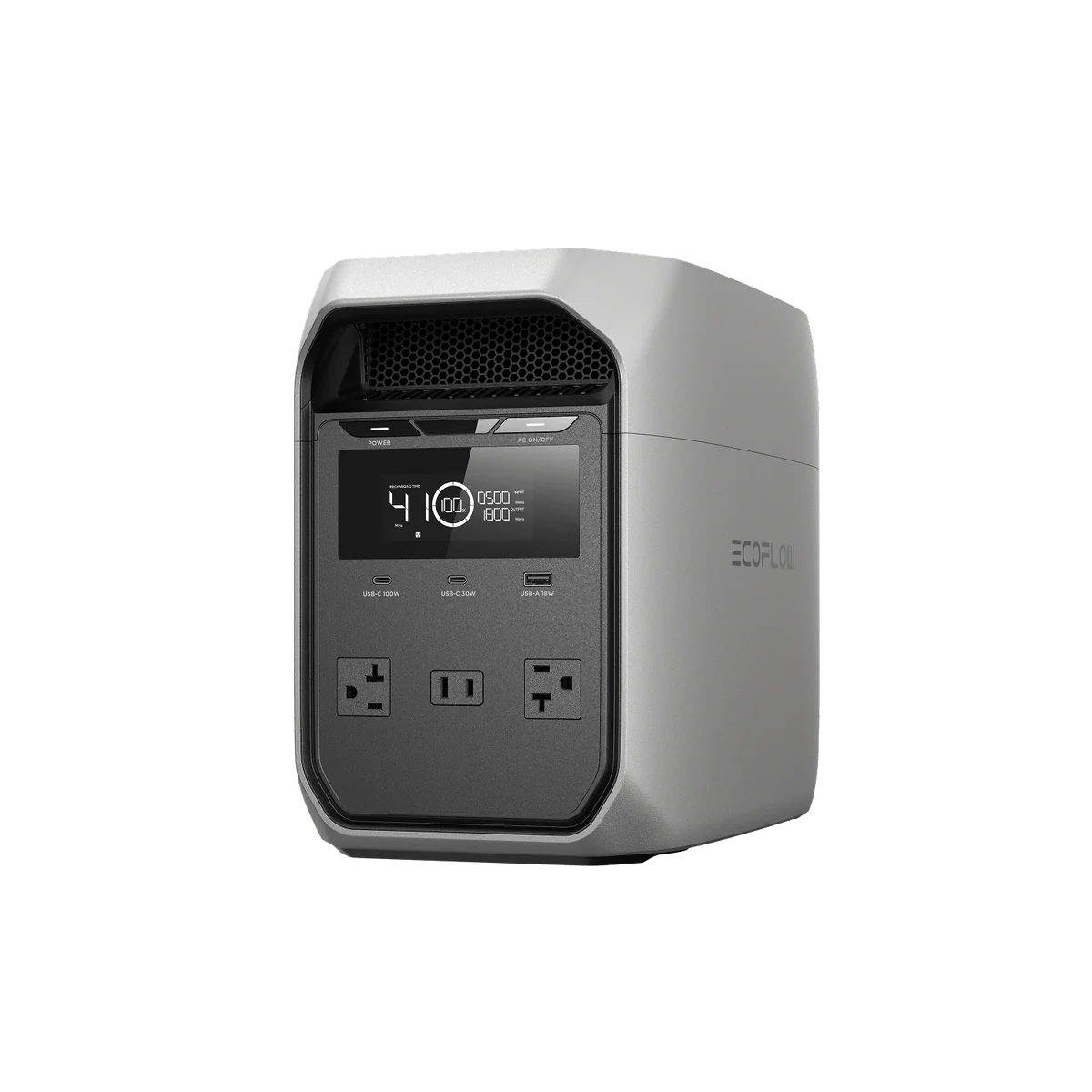
If you want a power station that takes the guesswork out of sizing, the EcoFlow DELTA 3 Classic pairs well with solar panels for off-grid use, letting you recharge during the day and run your AC and other devices through the night.
Frequently Asked Questions
How Many Watts Does a 10,000 BTU Portable Air Conditioner Use?
Generally, a 10,000 BTU unit will use anywhere from 800 to 1,300 running watts, though this depends on the model, your usage, and ambient temperature. Your manufacturer’s specs will give you the most accurate information about wattage. If you’re sizing a generator with this information, remember to account for both running watts and the startup surge.
Can a Portable Power Station Run a Portable AC?
Yes, as long as it’s sized correctly. Make sure the portable power station can handle both the running and startup wattage for your AC unit. Next, estimate how long you’ll run the air conditioner and choose a battery that can support your desired runtime. When in doubt, go with a slightly higher-capacity power station to enjoy more AC runtime, plus the flexibility to power other devices.
Power Your Portable AC Reliably, Efficiently, And Safely
Portable air conditioners can use anywhere from around 600 to over 1,500 watts depending on their size, cooling capacity, and efficiency. Whether you're cooling a bedroom during a summer outage, staying comfortable in an RV, or keeping a tent livable during a camping trip, matching your power source to your AC's requirements is essential.
But if you’re struggling to do the math, go with a solution designed for hassle-free, wireless use on the go. See how the EcoFlow WAVE 3 Portable Air Conditioner with Heater offers reliable cooling when you need it most.
For press requests or interview opportunities, reach out to our media team
media.na@ecoflow.com