Night Tornadoes: Why They're Deadlier and How to Stay Alert
- Why Nocturnal Tornadoes Pose a Greater Risk
- Essential Methods for Monitoring a Potential Night Tornado
- Critical Signs a Tornado Is Coming at Night
- Creating a Reliable Family Nighttime Action Plan
- Managing Power Failures with Reliable Backup Solutions
- Take Control of Your Storm Preparedness
- Frequently Asked Questions
Safety Disclaimer: The information provided in this article is for educational purposes only and does not replace the official guidance provided by local emergency management agencies or professional rescue services. These guidelines specifically apply to North American regions supported by NOAA and WEA alert systems. Always prioritize instructions from your local authorities and emergency responders during active weather events.
Imagine waking up to the sound of shattering glass and howling winds, only to realize you have seconds to reach safety. This is the terrifying reality for many who face a tornado at night. While daytime storms are easier to track, nocturnal events catch families at their most vulnerable. Therefore, it is necessary to understand these unique risks to ensure your household remains safe when the sun goes down and the clouds begin to rotate.
Why Nocturnal Tornadoes Pose a Greater Risk
While any storm is dangerous, the statistics regarding nighttime events are sobering and require a different level of preparation. Atmospheric conditions at night often mask the approach of a storm, making proactive measures essential.
The Statistical Reality of Nighttime Fatality Rates
Tornadoes occurring between midnight and dawn are significantly more likely to cause fatalities than their daytime counterparts. According to a study published by the American Meteorological Society (AMS), nocturnal tornadoes are approximately 2.5 times more likely to be fatal. This increased risk is not necessarily because the storms themselves are stronger, but because the human environment is far less prepared to respond to a night tornado than a daytime one.
The Difficulty of Seeing a Tornado at Night
During the day, a funnel cloud is often visible against the horizon, giving people a visual cue to seek shelter. At night, a tornado is often visually obscured by darkness or heavy rain. Unless it is illuminated by frequent lightning or the blue and green "power flashes" caused by exploding electrical transformers, you cannot see it coming. This lack of visual confirmation often leads to a dangerous delay in reaction time. Relying on visual confirmation alone can delay response and increase risk, as a nocturnal storm may be upon you before it is ever visible.
The Vulnerability of Sleep and Delayed Response
The biggest obstacle to safety is human biology. Most people are in deep sleep during the overnight hours (typically after sunset through early morning). When you are asleep, you cannot monitor local news or watch the sky for changing conditions. Furthermore, many people set their smartphones to silent or "Do Not Disturb" modes to avoid being woken by notifications. If a warning is issued while you are in a deep sleep cycle, you might miss the notification entirely. This creates an awareness gap that can leave families unprepared for impact.
How the Low-Level Jet Intensifies Nighttime Storms
From a scientific perspective, the atmosphere does not always calm down after sunset. A phenomenon known as the nocturnal low-level jet often develops a few thousand feet above the ground. This stream of fast-moving air increases wind shear, which is the change in wind speed and direction with height. According to the National Weather Service (NWS), this extra energy can sustain or sometimes intensify storm systems under favorable conditions long after the heat of the day has faded. Because this happens in the dark, the intensification often catches the public off guard.
Essential Methods for Monitoring a Potential Night Tornado
Staying safe requires a redundant alert system that does not rely on your own senses. You should have at least two ways to receive warnings that are loud enough to wake you from a heavy sleep.
The Reliability of NOAA Weather Radios
A NOAA Weather Radio is a vital tool for nighttime safety. Unlike a smartphone, which relies on cellular towers that can fail during a storm, these radios receive signals directly from the National Weather Service. Most models include a "Public Alert" feature that remains silent until a warning is issued for your specific county. Once triggered, the radio emits a piercing siren designed to wake anyone in the house. This helps ensure that even if the power goes out, you will receive the message through the radio's battery backup system.
Optimizing Smartphone Alerts for Heavy Sleepers
Your phone can be a life-saving tool if it is configured correctly. Wireless Emergency Alerts (WEA) are government-issued messages that look like text messages but come with a unique sound and vibration. To improve safety during a tornado at night, you should ensure these alerts are enabled in your phone's settings. Many modern operating systems allow you to override silent modes for emergency weather apps. Using apps like the one provided by the American Red Cross can provide extra layers of security and localized information.
Critical Signs a Tornado Is Coming at Night
When technology fails or the storm moves faster than expected, you must know the natural indicators of an approaching threat. Recognizing these signs can provide the few extra seconds needed to move to safety.
Identifying Visual and Auditory Indicators
If you are awake and wondering if there was a tornado last night or if one is currently approaching, listen for a low, continuous rumble. This is often described as the sound of a freight train or a jet engine that does not fade away like thunder. Visually, look for "power flashes" on the horizon. These are bright, colorful bursts of light that occur when a tornado's winds snap power lines and transformers. If you see these flashes in the distance, it is a clear sign that a destructive wind event is occurring near the ground.
Observing Changes in the Environment
Another common sign is the "dead calm" that sometimes occurs just before a storm hits. The wind may stop completely, and the air might feel strangely heavy. Additionally, large hail often precedes a tornado. While hail itself is dangerous, it also serves as a final warning that the most intense part of the storm is about to arrive. If you hear heavy debris or large ice hitting your roof in the middle of the night, it is highly recommended that you move to your safe place immediately without waiting for a siren.
Creating a Reliable Family Nighttime Action Plan
Preparation should happen long before a storm cloud forms. A well-rehearsed plan helps ensure that every family member knows exactly where to go when an alarm sounds in the middle of the night.
Designating Your Safest Interior Shelter
According to FEMA guidelines, the safest place to be during a tornado is a basement or a professionally installed storm cellar. If those are not available, head to the lowest floor of your home and find a small, interior room without windows. Bathrooms, closets, or hallways are typically the strongest parts of a house because they have extra framing. Putting as many walls as possible between you and the outside world is a recognized safety protocol that may reduce injury from flying debris.
Preparing a Bedside Emergency Kit
When a warning wakes you up, you will not have time to hunt for supplies. Keep a pair of sturdy, hard-soled shoes and a flashlight right next to your bed. Walking through a damaged house in the dark with bare feet is dangerous due to broken glass and nails. Additionally, the Centers for Disease Control and Prevention (CDC) notes that head injuries are a primary cause of storm-related fatalities. Keeping a bicycle or batting helmet in your safe room and wearing it during a warning may significantly increase your chances of surviving an impact from flying debris.
Managing Power Failures with Reliable Backup Solutions
One of the most common issues after a storm is a prolonged power outage. Without electricity, you lose access to lights, refrigeration, and the ability to charge your communication devices.
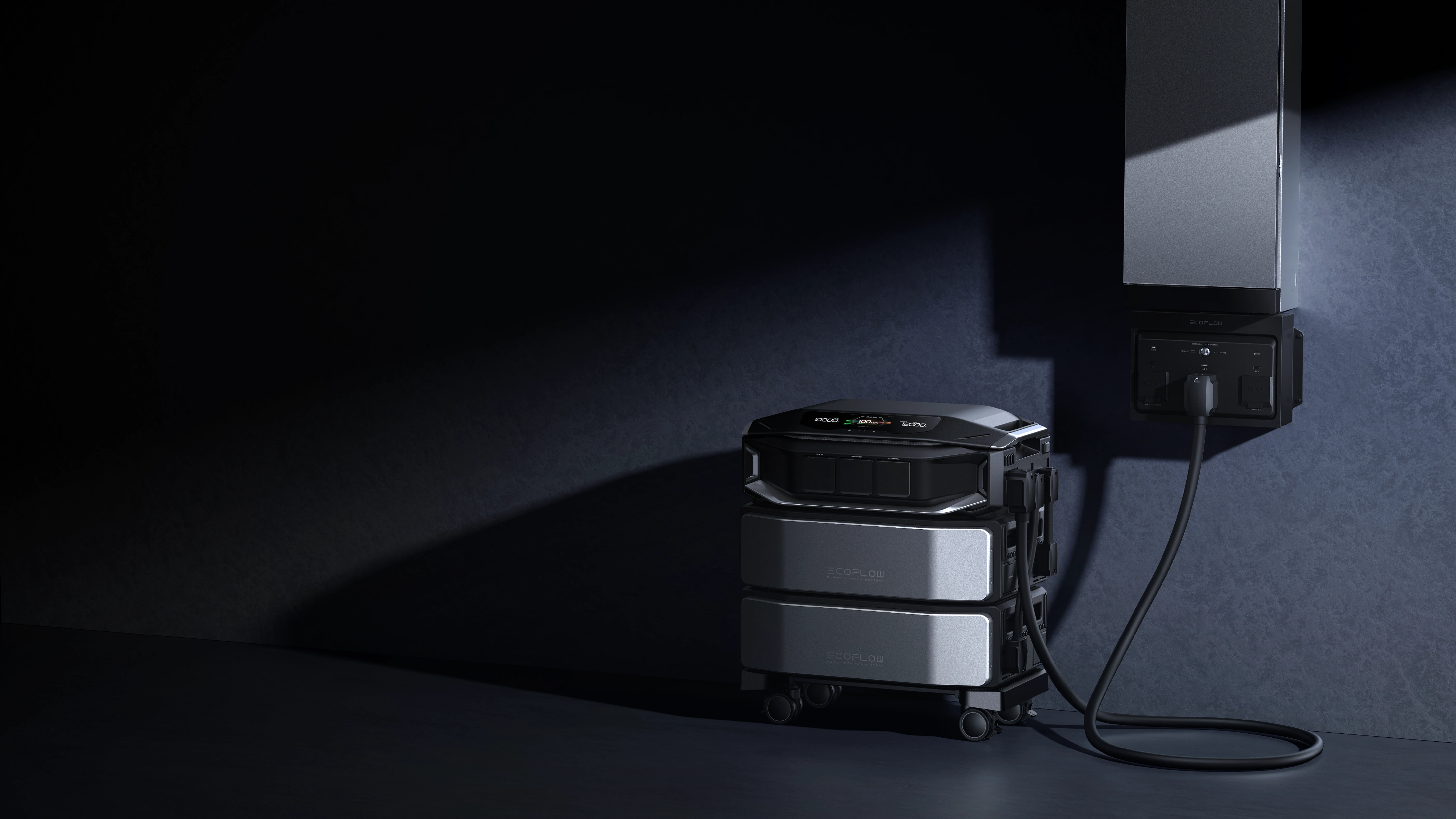
Tornadoes often destroy power infrastructure, leaving families in the dark for days. The EcoFlow DELTA Pro Ultra X serves as a premier whole-home backup solution, offering an expandable capacity from 12kWh to a massive 180kWh. With a 12kW to 36kW output, it effortlessly powers high-demand appliances like central air and well pumps. Its 0ms seamless switchover provides instant protection during outages, while its quiet, emission-free operation makes it safe for indoor use. This reliable system ensures your communication lines stay open and your home remains functional throughout the critical recovery period.
Take Control of Your Storm Preparedness
Nocturnal storms are a silent threat, but they do not have to be a tragedy. By setting up a redundant alert system, choosing a safe room in advance, and having a backup power plan, you can significantly reduce the risks your family faces. Do not wait until the sirens wail to decide what to do. Take action today by testing your weather radio and clearing out your interior shelter. Your preparation is a critical step in protecting your loved ones from the power of a midnight storm.
Frequently Asked Questions
Q1: Why Are Tornadoes So Dangerous at Night?
Nighttime tornadoes are especially dangerous because they are nearly impossible to see without external light sources. Most people are also asleep, which means they are not monitoring weather updates. This combination of limited visibility and a lack of awareness leads to higher casualty rates because people often have less time to reach shelter before the storm hits.
Q2: How Can I Stay Safe From a Tornado at Night?
To improve your safety, use a NOAA Weather Radio with a loud alarm and battery backup. You should also enable Wireless Emergency Alerts on your smartphone and ensure your phone is set to allow emergency notifications. Having a pre-planned safe room and an emergency kit with shoes and a flashlight next to your bed can help you react quickly.
Q3: What Time of Night Do Most Tornadoes Occur?
While tornadoes can happen at any hour, nocturnal tornadoes are most frequent between sunset and sunrise. Meteorological data suggests a peak in activity during the early evening hours, but the most dangerous events often occur between midnight and 6:00 AM when the public is generally least prepared to receive warnings.
Q4: Will a Tornado Wake You Up?
You should not rely on the sound of the storm to wake you. While a tornado is very loud, modern homes are often well-insulated, and heavy rain or wind can mask the specific sound of a funnel cloud. By the time the noise is loud enough to wake a deep sleeper, the tornado is usually already extremely close to the home.
Q5: What to Do if a Tornado Hits at Night?
If a warning is issued, move to your designated safe room immediately. Grab your shoes and a flashlight on the way. If you are in bed, cover yourself with a thick blanket, a mattress, or a helmet to help protect against flying debris. Stay in your shelter until you are certain the threat has passed and it is safe to exit.
For press requests or interview opportunities, reach out to our media team
media.na@ecoflow.com