Mini-Split vs Heat Pump: Cost, Efficiency, and Performance Compared
- What Is the Difference Between a Mini-Split and a Heat Pump?
- How Do Mini-Splits and Heat Pumps Work?
- How Do Installation Costs Compare?
- Which System Is More Energy Efficient?
- How Do Performance and Climate Suitability Compare?
- What Are the Long-Term Operating Costs?
- Frequently Asked Questions
- More Comfort, Lower Bills, and Reliable Backup Power
Mini-splits and heat pumps are more efficient HVAC systems than traditional furnaces and air conditioners. While both are technically heat pumps, a mini-split is a ductless model designed for zoned temperature control, while central pumps distribute air through ductwork for whole-home heating and cooling.
This guide compares efficiency, cost, performance, and long-term operating costs to help you decide which works best for your home.
What Is the Difference Between a Mini-Split and a Heat Pump?
Both are technically heat pumps, which move thermal energy around rather than generating warm or cold air like furnaces or air conditioners. The primary difference is that a mini-split is a ductless model that typically controls one room at a time. When we say “heat pump,” we usually mean central heat pumps, which use ductwork to warm or cool the entire home.
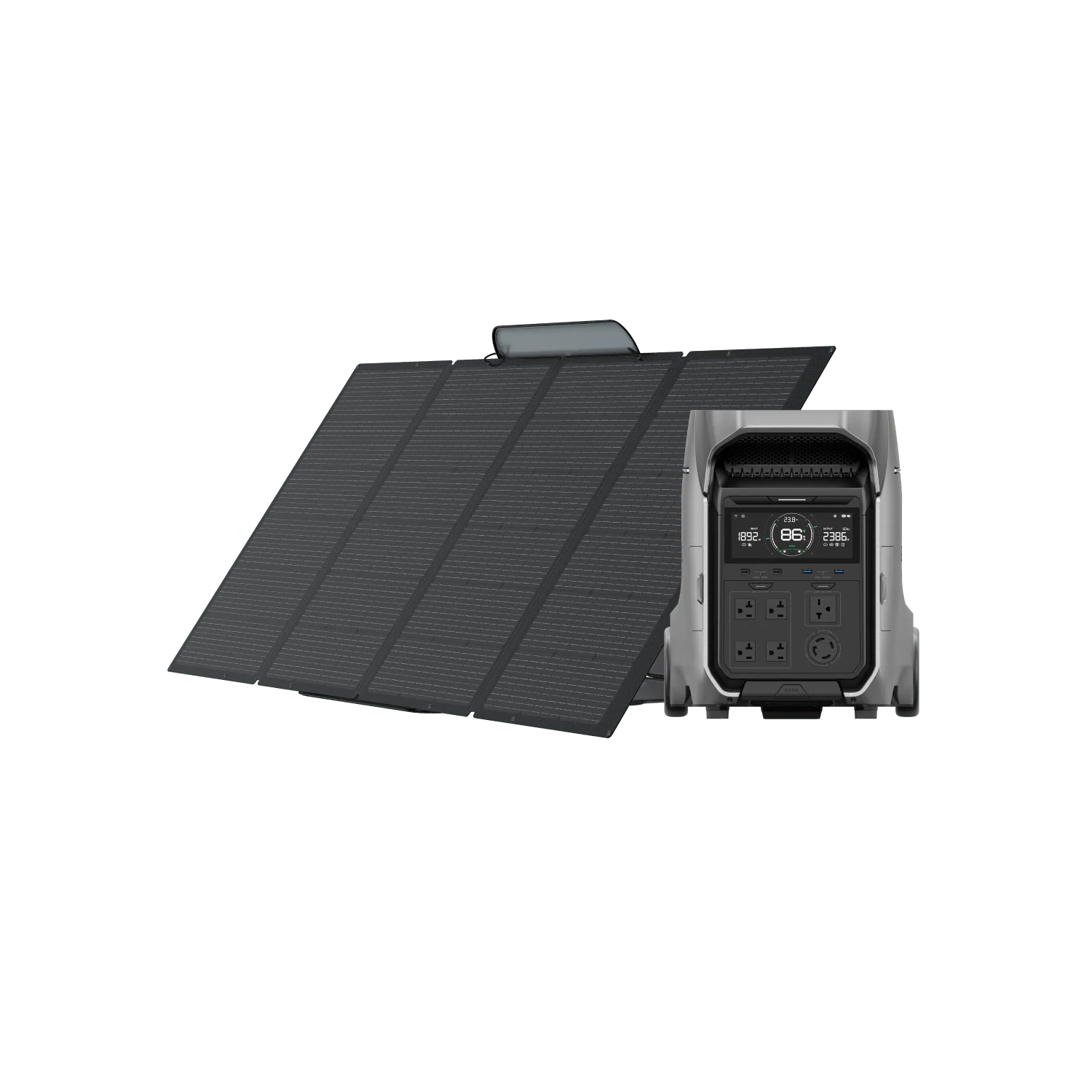
To help increase your energy efficiency and resiliency to outages, you can use something like an EcoFlow DELTA 3 Pro + 400W Solar Panel setup. With 4000W AC output and 120V/240V plugs, it can handle most household HVAC needs.
How Do Mini-Splits and Heat Pumps Work?
A mini-split is a ductless heat pump, making it ideal where ducting isn’t present or practical.
They consist of an outdoor compressor or condenser unit and one or more indoor air handlers with evaporator coils and blowers to cool or warm a room, multiple rooms, or entire homes, depending on the size and configuration. They use refrigerants to absorb thermal energy, bringing it inside (heating) or pushing it outside (cooling), also depending on the setting.
Central heat pumps are very similar. They also have indoor and outdoor units and use refrigerants to extract thermal energy to provide both heating and cooling. The primary difference is that these push heated or cooled air through the ductwork for whole-home climate control.
If you want to keep your HVAC system running during power outages, use an indoor-safe, battery-operated whole-home generator.
How Do Installation Costs Compare?
The upfront purchase cost of a heat pump is usually higher than that of a mini-split. However, you need to factor in how many mini-splits you need or if you’ll be running a multi-zone mini-split, which, in both cases, may cost more depending on the size of your home.
Installation costs depend mostly on whether or not your home has ductwork. If yours does, then heat pumps may have lower installation costs if you’re replacing an existing furnace. However, without ducts, a ductless mini-split is cheaper.
Which System Is More Energy Efficient?
While both are more efficient than traditional HVAC systems, mini-splits usually have higher efficiency because energy isn’t wasted in ducting.
They also often have a higher coefficient of performance (COP) of 3-4.5. This means it can move 3–4.5 units of thermal energy for each unit of electricity consumed, compared to 2.0–4.0 for central heat pumps, depending on the model and outdoor conditions.
Still, it depends on your home. Mini-splits are ideal for homes with rooms that require individual temperature control. But using multiple units increases installation complexity and can become less efficient in large homes if not sized correctly.
With central heat pumps, you use a single unit, and it may be more efficient, especially in large homes. However, it’s less flexible for individual temperature control.
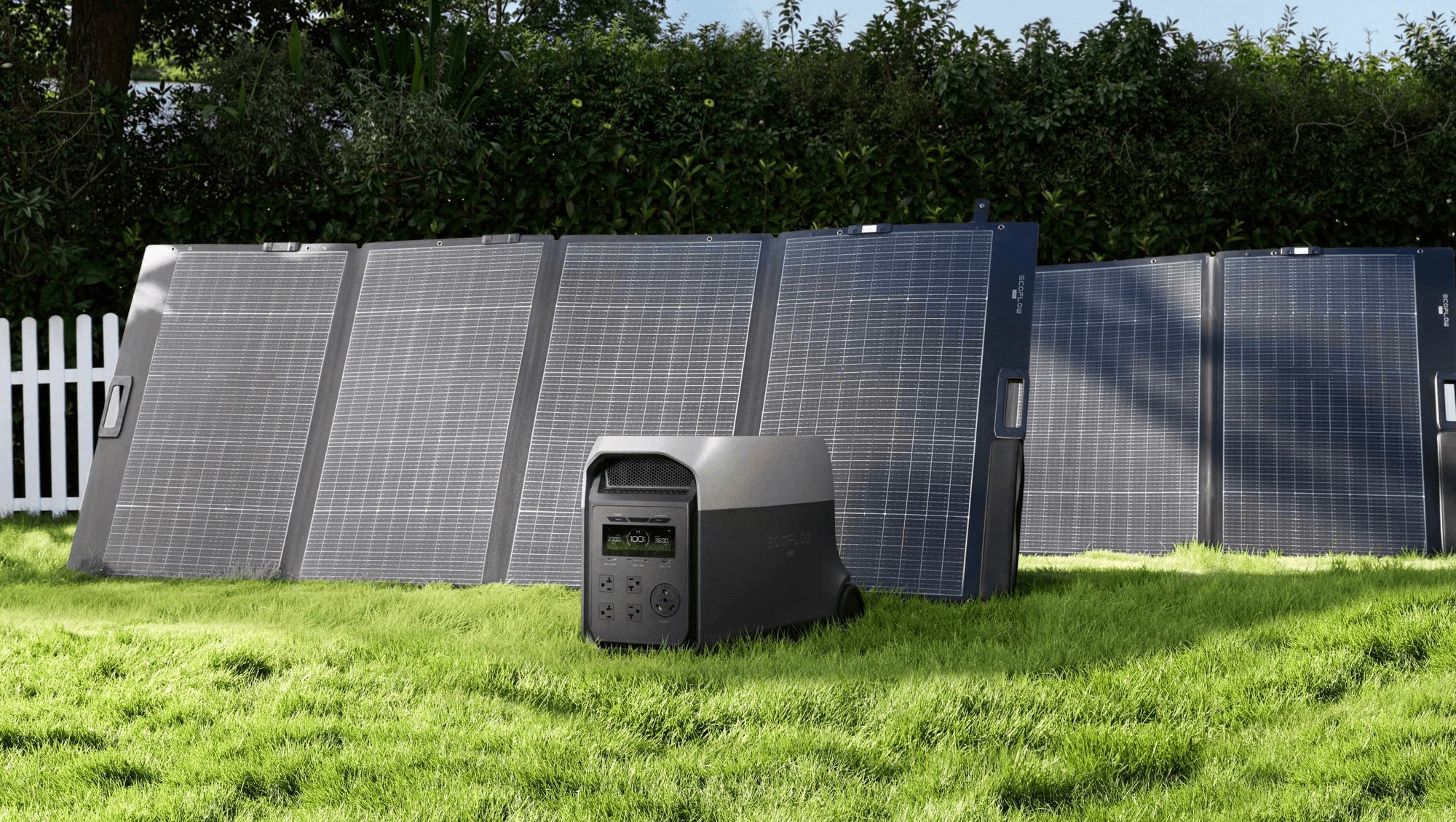
You can save energy by running HVAC on solar, using free energy from the sun. The EcoFlow DELTA 3 Ultra Plus + 500W Solar Kit will run most 120V HVAC models, for example.
How Do Performance and Climate Suitability Compare?
When it comes to moderate climates, both excel for year-round heating and cooling without additional furnaces or ACs.
However, in areas with freezing winters, both may struggle if they’re not cold-climate-rated. Newer cold-climate-rated models of either system seldom need supplemental heating, but it depends on the outside temperatures and your heating goals.
Whichever you choose, whole-home backup power solutions are strongly recommended to keep it running during power outages.
What Are the Long-Term Operating Costs?
Depending on your climate, model, and utility costs, both typically have lower operating costs than traditional HVAC systems do. But comparing mini-splits and central heat pumps is difficult.
While mini-splits can operate more efficiently since no energy is lost in the ducting, it depends on the size of your home. You only need the one heat pump, while you may need several mini-splits, so you’ll need to add up the wattages to make meaningful comparisons.
You can reduce long-term operating costs using solar power for heating and cooling. With a battery-operated generator, you can use solar at night, provided it has enough output. For instance, while a 2000W generator will run a small mini-split, it may not handle larger systems.
Frequently Asked Questions
Is a Mini-Split the Same as a Heat Pump?
They are both heat pumps that move energy around for heating and cooling, but a mini-split is a ductless model. “Heat pump” is typically used to describe central heat pumps that require ducting for whole-home climate control.
Which Is Cheaper to Run, a Mini-Split or a Central Heat Pump?
It depends on the size of your home. If you have a large home with several mini-splits, it might be pricier than a central heat pump. One or two mini-split systems are probably cheaper, but it still depends on the models.
Can a Generator Run a Mini-Split or Heat Pump?
Yes, a generator can run both mini-splits and central heat pumps, provided they’re sized correctly with enough output (watts) to handle the load and enough capacity (watt-hours) to keep running.
More Comfort, Lower Bills, and Reliable Backup Power
Mini-splits and central heat pumps offer efficient year-round heating and cooling, but which is better depends on the size of your home, ductwork, and HVAC goals. Mini-splits are superior
for zoned control without ducting, while central pumps are ideal for whole-home control, especially with existing ductwork.
And pairing any HVAC with solar-powered backup, like the EcoFlow DELTA 3 Pro + 400W Solar Panel or EcoFlow DELTA 3 Ultra Plus + 500W Solar Kit, will reduce costs and keep you comfortable during outages.
For press requests or interview opportunities, reach out to our media team
media.na@ecoflow.com