Massachusetts Solar Incentives 2026: SMART Program, SREC Payments & Mass Save Rebates
- Massachusetts Solar Incentives in 2026: What You Can Still Claim and Why It Matters
- Smart Program 2026 Explained: Eligibility, Rates, and How Payments Are Calculated
- SREC Payments in Massachusetts: What Changed and What to Expect in 2026
- Mass Save Rebates and Other Savings That Reduce Solar and Storage Costs
- How to Maximize Massachusetts Incentives with Solar Plus Storage at Home
- Frequently Asked Questions
- Save More on Energy and Build a More Resilient Home in 2026
The federal clean energy tax credit expired at the end of 2025, but Massachusetts still offers several reasons to invest in solar. Between SMART 3.0 production payments, legacy SREC income for older systems, tax exemptions, and Mass Save’s battery incentives, the state offers a competitive set of solar incentive stacks for 2026.
Find out what incentives you can still claim in 2026, and why solar is still a worthy investment.
Massachusetts Solar Incentives in 2026: What You Can Still Claim and Why It Matters
The Residential Clean Energy Credit, which covered 30% of solar system costs, expired on December 31, 2025, meaning any system placed in service in 2026 is ineligible.
However, Massachusetts offers its own incentives that make solar worth it, including the Solar Massachusetts Renewable Target (SMART) 3.0 program, the Massachusetts Residential Energy Credit, sales tax exemption, and property tax exemption.
Massachusetts has some of the highest residential electricity rates in the country, which makes solar energy a particularly strong investment. These incentives keep payback timelines competitive with states that get far more sunshine.
Smart Program 2026 Explained: Eligibility, Rates, and How Payments Are Calculated
The Solar Massachusetts Renewable Target (SMART) 3.0 program is the state’s primary production-based initiative. Unlike traditional net metering that provides credits for excess energy produced, SMART pays for every single kWh your system produces, with incentives decreasing as certain capacity milestones are reached.
The SMART compensation rate can be increased with adders, such as battery storage, low-income households, and building-mounted installations. The SMART 3.0 program is currently subject to an ongoing tariff proceeding before the Department of Public Utilities. DOER will continue accepting applications, but will not issue Final Statements of Qualification until the tariff is approved.
SREC Payments in Massachusetts: What Changed and What to Expect in 2026
Solar Renewable Energy Certificates (SRECs) are tradable certificates that allow solar panel owners to earn money for the clean energy they produce. The original SREC program closed to new applicants in 2018 and was replaced by the SMART program. However, if your system was installed and qualified prior to then, you can continue to earn credits in 2026, and it's worth exploring other government incentives that can reduce your solar costs too.
Systems registered in the SREC-II program may continue to generate certificates for up to 10 years or until the end of 2027, whichever comes first. After SREC-II eligibility expires, the system will be eligible to produce MA Class-I RECs.
SRECs may be higher than the current SMART base rates, so SREC holders should be careful about adding anything that can disrupt their existing contract. Consult your installer or utility before adding any panels, batteries, or other modifications to a legacy SREC system. Expansions can affect SREC eligibility or trigger enrollment requirements under SMART instead.
Mass Save Rebates and Other Savings That Reduce Solar and Storage Costs
Mass Save doesn’t necessarily issue direct rebates for solar panels themselves, but rather adds value through battery and efficiency upgrades.
Mass Save runs a demand response program called ConnectedSolutions, where battery owners allow their utility company access to their units during summer peak events. In return, they will receive around $275 per kilowatt for a battery’s average contribution, depending on their utility company.
Massachusetts features other savings that make solar more affordable. The Massachusetts Residential Energy Credit allows you to deduct 15% of your total installation cost from your state income tax, with a maximum of $1,000.
Massachusetts provides an exemption from the state’s 6.25% sales tax for all equipment directly related to a solar power system. And, the value added to your home by a solar power system is exempt from local property taxes for 20 years.
How to Maximize Massachusetts Incentives with Solar Plus Storage at Home
Pairing storage with solar makes the most of Massachusetts incentives. The SMART storage adder adds roughly $0.04 per kWh on top of your base production rate, while the ConnectedSolutions program adds an additional payment for letting your utility draw on stored energy.
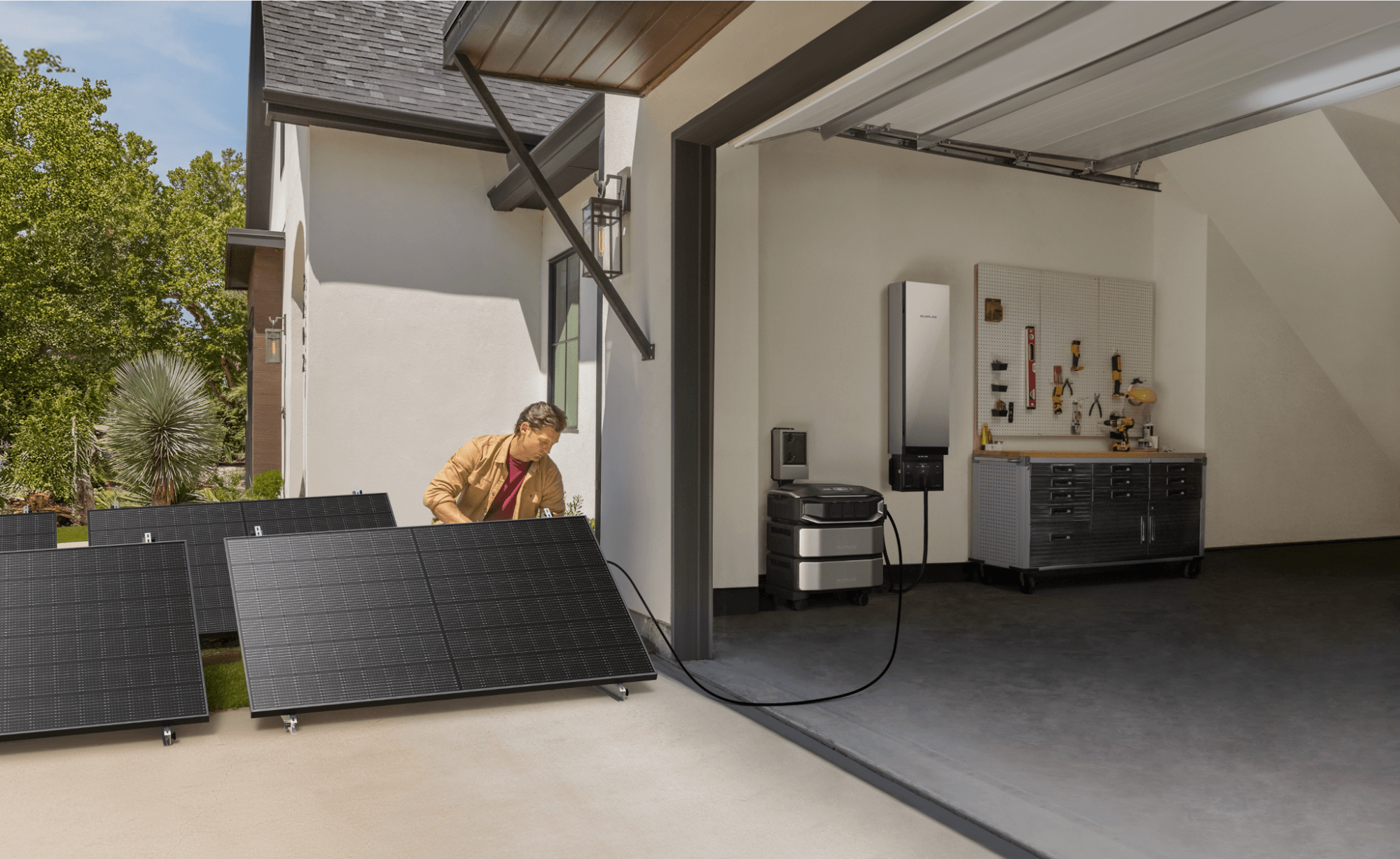
A whole-home backup power system like the EcoFlow DELTA Pro Ultra X can provide a substantial amount of battery capacity for maximizing clean energy incentives. You can pair a unit like this with your solar panel array to cut down on energy costs.

Frequently Asked Questions
How Do I Know If My Utility is Eligible for the SMART Program?
SMART is administered through the state’s three investor-owned utilities: Eversource, National Grid, and Unitil. If one of these companies delivers your electricity and there is capacity in the current program year’s block, you’re typically eligible to apply.
Can I Get SMART Payments and Net Metering Credits at the Same Time?
Yes, these programs stack to deliver dual benefits. Net metering credits the electricity sent back to the grid at a rate close to retail, while SMART pays a separate per-kWh rate on all electricity your system produces, regardless of whether it’s used onsite or not.
Does Massachusetts Still Have an MA Residential Energy Credit in 2026?
Yes, the state-level credit is still active. Massachusetts offers a 15% state income tax deduction on your solar installation cost, up to $1,000.
Do Mass Save Rebates Apply to Solar Panels or Only Batteries and Efficiency Upgrades?
Mass Save rebates are primarily aimed at batteries and efficiency measures, not solar panels. Solar panel incentives come through SMART, net metering, and the state tax credit instead.
Save More on Energy and Build a More Resilient Home in 2026
Even without the federal clean energy tax credit, Massachusetts homeowners still have plenty of reasons to invest in a clean energy system in 2026. SMART production payments, state tax credit, and tax exemptions give homeowners a strong incentive stack for solar. Pairing solar with battery storage can further the savings.
If you want to maximize your home’s resilience, a home solar system can deliver whole-home backup power and help you take advantage of qualifying solar incentives.
Note: This article reflects program details as of June 2026 and is intended for informational purposes only. Incentive rates, eligibility criteria, and program availability are subject to change. Always verify the latest information with the relevant program administrator before making financial decisions.
For press requests or interview opportunities, reach out to our media team
media.na@ecoflow.com