Is a Car Battery AC or DC Power? Full Answer and Voltage Facts
The car battery provides power in the form of direct current (DC), nominally 12 volts. Your car’s electrical system is all DC power, but most household electronics run on alternating current (AC) electricity. Knowing the difference between AC and DC power not only lets you safely connect appliances to your vehicle, it also helps explain how portable power stations meet the need between the DC storage of your vehicle and the demand for AC power in your home.
When planning road trips, emergency vehicle backup or off-grid setups, understanding how direct current works in automotive systems prevents blown fuses, damaged sensitive electronics and drained starter batteries. Vehicle electrical architectures are built to deliver a short high burst current output to crank internal combustion engines and low voltage DC power to operate lighting, infotainment and onboard control modules. But if you need to run laptops, mini-fridges or power tools from your driver seat, you’ll need dedicated conversion equipment to convert the standard 12V DC power to the 120V residential alternating current power.
Is a Car Battery AC or DC? The Direct Answer
Car batteries provide only DC, or direct current, power. It chemically stores energy in its internal lead-acid or lithium cells and releases it as a steady, one-directional flow of electricity.
The nominal automotive voltage is rated at 12V, but a healthy resting battery is usually closer to 12.6V when fully charged. Reviewing How Many Volts Is a Car Battery? provides deeper technical insights into battery health checks and exact voltage states before assessing charging gear.
When the engine is running, the alternator generates AC power internally as its rotor turns within a magnetic field. An integrated diode bridge rectifier then converts this high-frequency AC output into smoothed DC power before it ever leaves the alternator. Consequently, the car battery itself only stores DC energy and receives DC charging current. It neither stores, receives, nor supplies AC electricity at any point.
When you try to power devices designed for high-voltage wall sockets, automotive power is strictly low-voltage DC and it’s important to understand that. If you just plug AC appliances into DC power without an intermediate conversion system, you will burn out the equipment or blow fuses in the vehicle. The biggest thing to understand about your car battery is that it is DC. So if you try to plug in something that needs AC, like most household devices.
Turning Your Car's DC Power Into Usable AC
Most household electronics (laptops, televisions, CPAP machines, kitchen appliances) are designed to run on alternating current (AC). You cannot physically plug normal household gear into a 12V automotive auxiliary socket without special power conversion hardware. Car batteries provide steady 12V direct current ( DC ).
An inverter is the heart of the electrical component, converting the 12V DC battery power into 120V AC household electricity. By learning What Is an Inverter?, you can see how internal circuitry produces clean sine waves required for delicate electronics. Portable power stations simplify this complexity by incorporating high-efficiency pure sine wave inverters directly into safe, self-contained enclosures. They safely take 12V DC current through normal vehicle ports and then convert it into clean, stabilized AC electricity for your delicate electronics.
AC vs. DC Power: The Basics
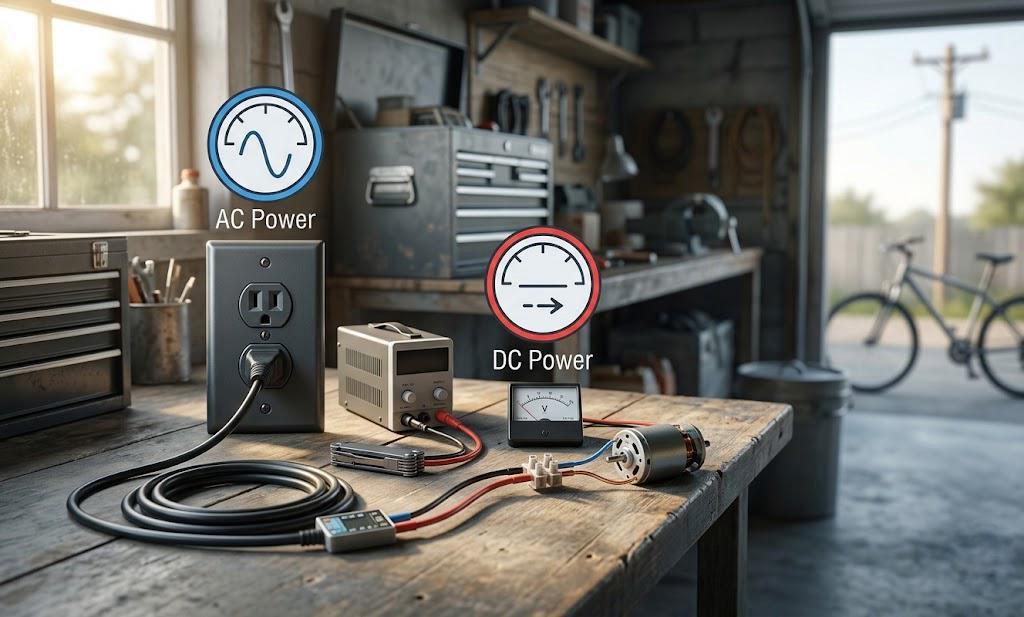
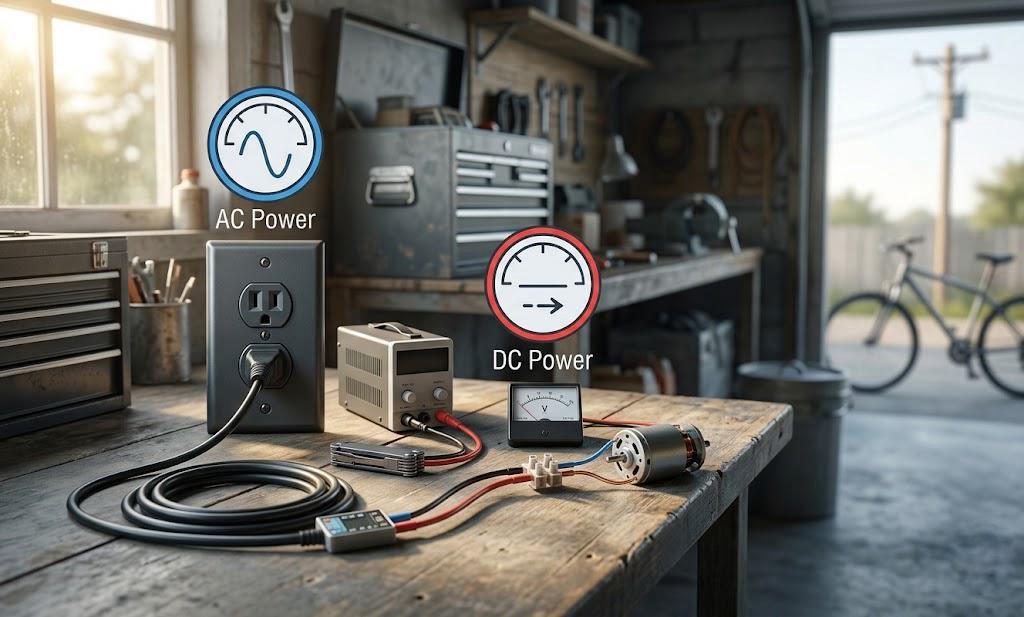
There are two main types of electrical current. These are Direct Current ( DC ) and Alternating Current ( AC ). Knowing how these two kinds of electricity act helps us understand why certain appliances need certain power inputs and why conversion is needed.
Feature | Direct Current (DC) | Alternating Current (AC) |
Direction of Flow | Flows continuously in one single, unidirectional direction | Periodically reverses direction in a sinusoidal waveform |
Primary Sources | Batteries, solar panels, fuel cells, USB ports | Electrical grids, wall outlets, gas generators, alternators |
Main Advantage | Can be efficiently stored in chemical batteries | Transmits efficiently over long distances with minimal heat loss |
Typical Voltage | Low voltage (5V, 12V, 24V, 48V DC baseline) | High voltage (120V, 240V AC in residential power grids) |
Waveform Type | Flat, constant voltage output over time | Smooth sine wave oscillating at 50Hz or 60Hz frequencies |
Homes get AC power from the national electrical grid. AC current is easy to step up to tens of thousands of volts with transformers. That’s why power is transmitted at high voltage. The higher the voltage, the lower the resistance losses over long distances. Then transformers bring the voltage back down to 120V or 240V for safe distribution throughout your house. Exploring AC vs. DC Current Explained gives a detailed breakdown of waveform differences and transmission physics before comparing household and automotive networks. However, chemical power storage in batteries inherently produces a specific directional flow of electrons. DC is the native form for all battery systems, portable electronics and vehicle starter circuits.
Where Else AC and DC Show Up in Your Car
Today’s vehicles are sophisticated micro-grids that use a mix of native DC circuits, voltage step-down converters, and optional AC conversion components to power a variety of electronic systems.
12V Auxiliary Outlets: Previously known as a cigarette lighter receptacle, this port provides 12V DC power directly from the battery and alternator circuit. They are fused, typically at 10A to 15A, limiting total continuous output to about 120W to 180W.
Built-In USB Ports: Vehicle USB ports provide DC power, reducing the native 12V vehicle bus to 5V (or variable voltages up to 20V in accordance with USB Power Delivery standards) to safely charge smartphones, tablets and mobile devices.
Factory AC Outlets: Some newer trucks, SUVs, and adventure vehicles have 120V household wall outlets built into the cab or bed. If your vehicle has a small inverter, factory-installed, it works behind the dash to convert the car’s 12V DC battery supply into standard AC power, but usually only up to lower wattages (150W to 400W).
Vehicle Engine Alternators: When the engine is running, a mechanical belt drives an alternator which generates multi-phase AC electricity. This AC output is then converted to DC by an internal rectifier to operate headlights, climate fans, ECU computers and to keep the battery charged.
How to Charge a Portable Power Station from Your Car Battery
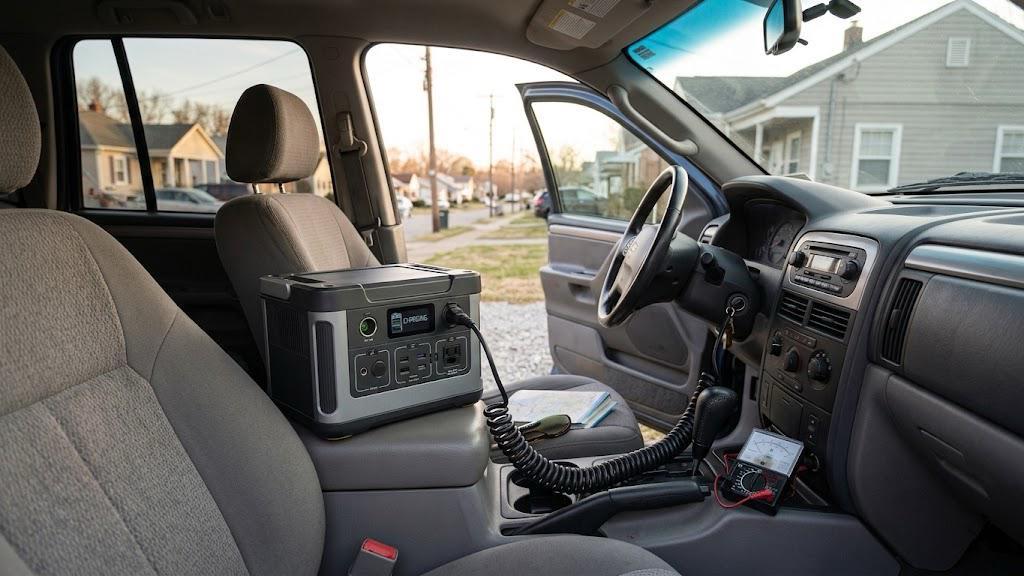
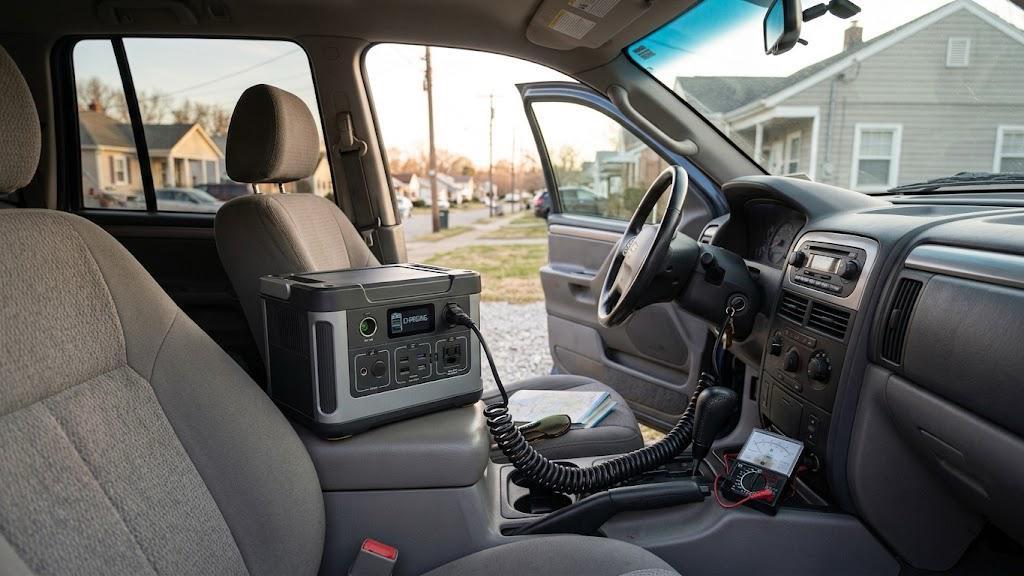
Charging a portable power station directly from your car battery gives you access to mobile energy when the grid is not available. Here are a few key steps and best practices to follow for fast, safe charging without overtaxing your vehicle's electrical system.
Connect via 12V Cable: Connect the included DC car-charging cable to the DC input port on your power station. Then, connect the adapter end to your vehicle’s 12V auxiliary outlet. Ensure a tight and secure fit to avoid resistance heating at the socket contacts.
Keep the Engine Running: Always charge your power station while the engine is idling or during active driving. Reading Can You Charge a Power Station Using a Vehicle Alternator? breaks down alternator load management and thermal considerations to help keep your vehicle running smoothly. Drawing high DC current while the engine is off will rapidly drain your vehicle's starter battery, leaving you unable to turn over the engine.
Expect Steady Charging Rates: Typical automotive outlets are usually limited to about 96W-120W (8A-10A @ 12V). Charging the vehicle with a 12V DC source is slower than plugging into a high-wattage 120V AC wall outlet, so I intend to use vehicle charging for continuous battery topping-up during long drives or overlanding trips..
Utilize Smart Voltage Sensing: EcoFlow portable power stations come with low voltage protection to avoid dead vehicle batteries. If your starter battery voltage drops below a safe level, the power draw will automatically stop.
Conclusion
A battery stores and provides direct current (DC) power at 12 volts nominal. Most common household devices and appliances require alternating current ( AC ) electricity to operate correctly. Portable power stations with built-in pure sine wave inverters are a vital link from the low voltage DC electrical system of a vehicle to the standard 120V AC power requirements of the home, providing clean, portable energy security, wherever your journey takes you.
If you want to be able to run household appliances from your vehicle without the risk of losing your starter battery, overloading your auxiliary circuits, or making a complicated custom install with an inverter, then your best hassle-free solution is a self-contained portable power station. You can plug right into the 12V auxiliary port in your vehicle while driving, keeping it topped up and always being able to reliably deliver clean AC power for your electronics when you need it.
Explore the EcoFlow DELTA 3 Classic for lightweight, highly portable everyday travel power, or step up to the EcoFlow DELTA 3 Max for extended off-grid energy storage and high-wattage device backup on the road.
FAQs
Why does my car have both DC outlets and AC outlets?
The main electrical system in your car is 100 % 12V DC power coming from the battery and alternator. If your vehicle has a 120V wall-style socket, it has a built-in internal inverter to convert that 12V DC current into AC power for standard household electronics.
Can I damage my car battery by charging a power station from it?
Charging a power station while your car engine is running poses minimal risk to your battery under normal conditions, as the alternator supplies electrical power. However, if the power station draws more current than your alternator’s continuous capacity or if you keep it plugged in for long periods with the engine off it can strain your alternator, deeply discharge your 12V battery, and leave you unable to start your vehicle.
Is a car battery the same voltage as a home battery?
No, regular vehicle batteries are 12 volts DC nominal. That’s because homewide battery backup systems and large stationary solar batteries run at much higher voltages (typically 48V DC or higher) to efficiently transmit energy thru the wiring systems in a home with as little resistance loss as possible.
Do all portable power stations support car charging?
Most modern portable power stations like the EcoFlow DELTA 3 Classic come equipped with a dedicated DC input port and are shipped with a 12V car adapter cable so you can charge your vehicle directly on the road.
What's the difference between a car's alternator and its battery?
When the car is off, the car battery stores 12V DC power to start the engine and power electronics. Once the engine starts, the alternator generates AC power. This AC power is then converted to DC power by a rectifier. This DC power is used to power the electrical components of the vehicle. It also recharges the car battery while the car is running.
For press requests or interview opportunities, reach out to our media team
media.na@ecoflow.com