How Many Volts Is a Car Battery? Normal, Low, and Dead Ranges Explained
Most drivers don’t think about their car battery voltage until the engine refuses to start. By then, a battery that was slowly losing charge may already have become a problem. Knowing how many volts is a car battery supposed to show can help you spot trouble before you end up stuck somewhere.
A normal passenger vehicle uses a 12-volt battery, but that doesn’t mean a healthy battery will always show exactly 12.0 volts. For example, the EcoFlow DELTA 3 Plus Portable Power Station can provide backup power when you’re away from a regular outlet and need to keep phones, lights, or other essentials running while dealing with a car battery issue.
So, what should the number on your multimeter actually be? This guide breaks down how many volts is a fully charged car battery, what counts as low, what a dead battery looks like, and how to check the reading yourself.
What Is the Standard Voltage for a Car Battery
Most passenger cars use a 12-volt battery. That’s the standard you’ll find in regular cars, SUVs, and light trucks. Still, the battery won’t necessarily show exactly 12.0 volts when you test it. A healthy battery sitting at rest will usually read a little higher.
The a car battery is how many volts question gets a little more interesting with larger vehicles. Some commercial trucks, buses, and heavy equipment use 24-volt systems, usually with two 12-volt batteries connected together. So for the average car sitting in your driveway, 12 volts is the number to expect.
Electric vehicles are a different story, since they use high-voltage battery packs rather than the standard 12-volt system. Learn more about whether solar panels can charge an electric car.
What a Fully Charged Reading Actually Looks Like
A 12-volt battery doesn’t normally show 12.0 volts when it’s fully charged. In fact, seeing something closer to 12.6 or 12.7 volts with the engine off is a much better sign. If you’re wondering how many volts is a fully charged car battery, the short answer is usually around 12.6–12.8 volts when the battery is resting.
The reading can change depending on when you test it, though. A battery that was just charged or has recently been running may show a slightly higher number for a while. That’s why it’s better to let the car sit before deciding whether the battery is healthy.
Resting Voltage vs Engine Running Voltage
With the engine off, give the battery some time to settle before taking a reading. A healthy, fully charged battery will generally be around 12.6 to 12.8 volts at rest.
Once you start the engine, the number should rise. The alternator is now supplying power and charging the battery, so you’ll normally see somewhere around 13.7 to 14.7 volts. This is one reason you shouldn’t compare an engine-off reading directly with a running one.
If you’re checking how many volts is a car battery when fully charged, make sure you know which situation you’re testing. A reading of 12.7V while parked and around 14V with the engine running can both be normal.
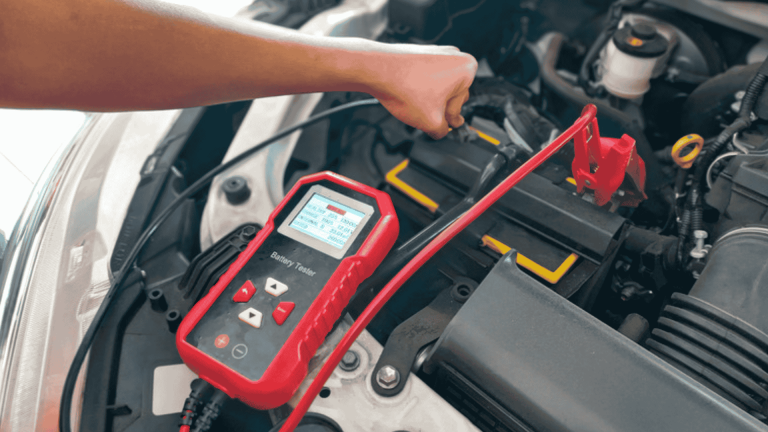
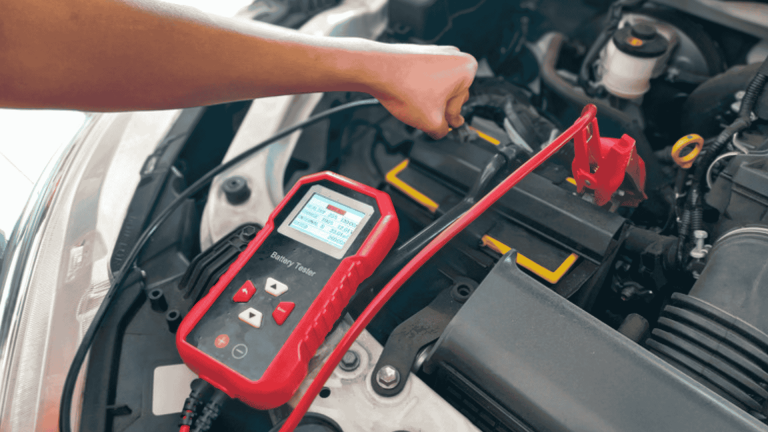
The Numbers to Expect
As a quick guide:
12.6–12.8V: A fully charged battery at rest
13.7–14.7V: Typical reading while the engine is running
Around 12.4V: Battery is partly discharged
Around 12.2V: Battery is getting fairly low
These numbers aren’t a diagnosis on their own. Temperature, recent driving, and the battery’s age can all affect the result. If you’re trying to figure out how many volts is a fully charged car battery, testing it after it has rested for a few hours will give you a more useful picture.
If you’re dealing with a vehicle that sits outside during winter, it’s also worth paying attention to how cold temperatures affect battery performance. Our guide on protecting your car battery in cold weather covers a few practical things you can do before the temperature drops.
When Voltage Starts Signaling a Problem
So, how many volts is a car battery when something is actually wrong? There isn’t one magic number that instantly means “bad battery.” A low reading is a warning, but you also need to look at how the battery behaves after charging and when you try to start the car.
Gray Zone Between Fine and Failing
If a resting battery is somewhere around 12.2 to 12.4 volts, it isn’t necessarily dead. It may simply be partly discharged. This can happen if the car hasn’t been driven much, something was left running, or the battery hasn’t had enough time to recharge.
A reading in this range is worth keeping an eye on. Recharge the battery and test it again after it has rested. If it returns to a healthy range and stays there, you may not have a serious problem. If it keeps dropping, the battery may lose its ability to hold a charge.
That’s why how many volts is a car battery should be treated as a starting point rather than a final diagnosis.
Point of No Return
Once a resting battery drops below roughly 12 volts, it’s heavily discharged. Around 11.9 volts or lower is generally considered a very low reading, and the battery may struggle to start the engine.
That still doesn’t automatically mean it needs replacing. A deeply discharged battery can sometimes be recharged and put back into service. The biggest concern is what happens afterwards. If it reaches a normal voltage after charging but quickly falls again, or the car repeatedly struggles to start, the battery may be near the end of its useful life.
So if you’re asking a car battery is how many volts when it’s completely dead, don’t expect one exact number. A dead or severely failed battery can show very little voltage, but the battery’s ability to hold a charge is just as important as the number on the meter.
How to Check Car Battery Voltage Yourself
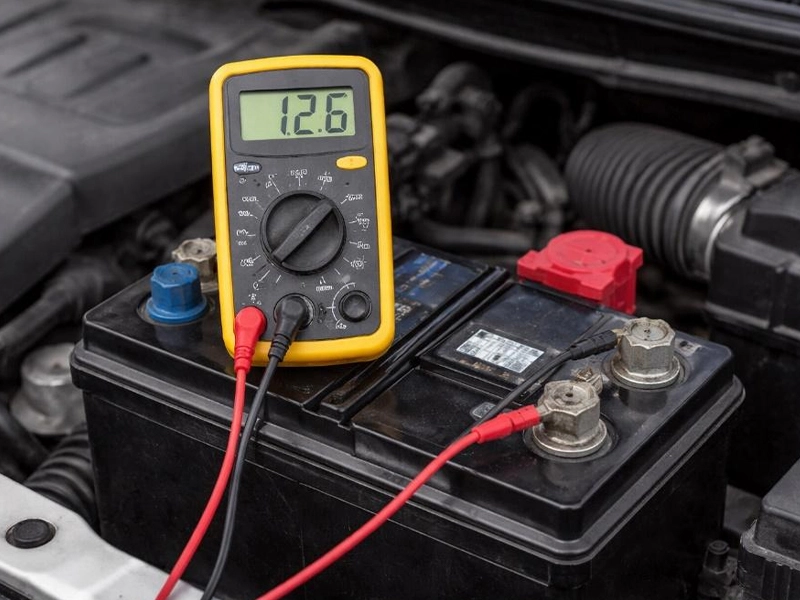
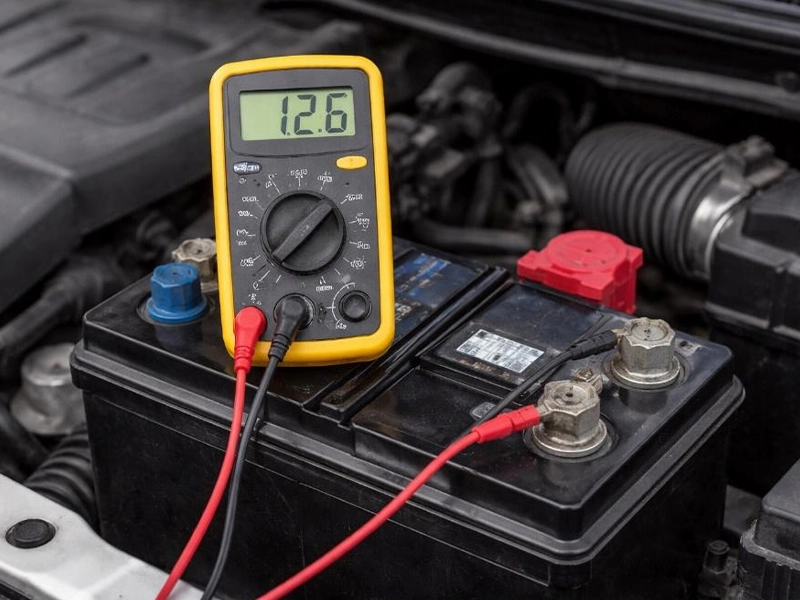
Checking your battery at home is fairly simple if you have a digital multimeter. It only takes a few minutes, but testing it the right way matters if you want useful readings.
Using a Multimeter the Right Way
Turn the car off and let the battery rest for a while after driving. Set the multimeter to DC voltage, place the red probe on the positive terminal and the black probe on the negative terminal, then check the reading. This gives you a better idea of how many volt is a car battery at rest.
Common Mistakes That Skew the Reading
Testing immediately after driving can give you a temporarily higher reading. Loose or dirty terminals can also interfere with the connection, so check that the probes are making good contact before judging the battery.
What to Do When the Battery Is Reading Low
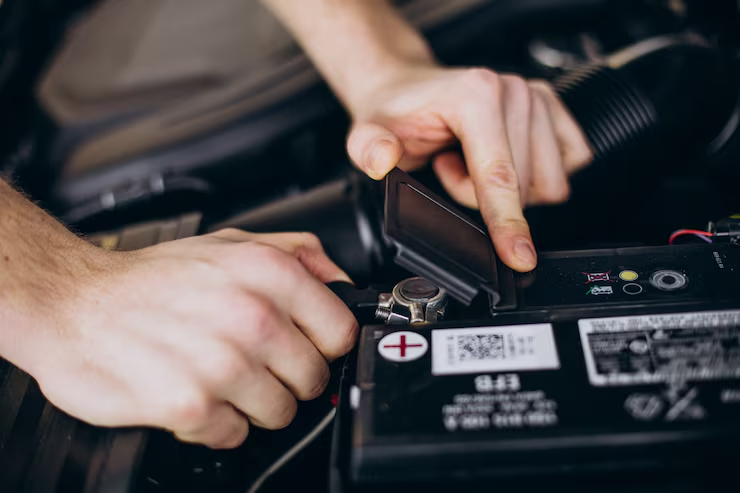
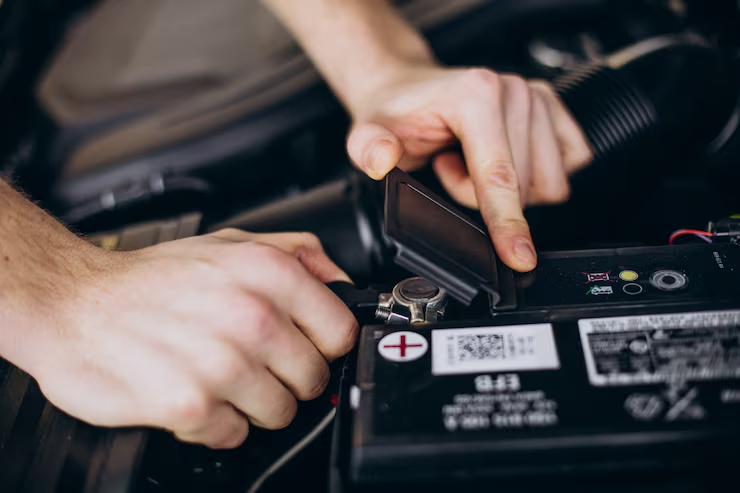
A low reading doesn’t always mean you need a new battery. If it’s only partly discharged, try charging it fully and check the voltage again after it has rested. If it holds a normal reading, you may be able to keep using it.
If you’re thinking about using solar to recharge your car battery, the charger size matters. Here’s a quick guide to choosing the right solar charger size for a car battery.
If the voltage drops again soon after charging, though, the battery may no longer be holding a charge properly. It’s also worth checking whether your car has been sitting unused or exposed to very cold weather. Our guide on protecting your car battery in cold weather covers some simple ways to avoid unnecessary battery drain.
A weak battery can be especially frustrating when you’re away from home. Keeping backup power in the car can help you stay connected while you sort things out. The EcoFlow DELTA 3 Plus can keep phones, lights, laptops, and other essentials running when you don’t have access to a wall outlet.
If you need to power multiple devices or keep essential electronics running for an extended period, the EcoFlow DELTA 3 Classic offers another portable backup power option for your car or road trip. Just remember that a portable power station isn’t automatically a replacement for a proper 12V battery charger or jump starter unless the specific equipment is designed for that job.
FAQs
Is a Car Battery 12 or 24 Volts?
Most regular cars use a 12-volt battery. Some larger vehicles, such as heavy-duty trucks, use 24-volt systems instead. So if you’re wondering how many volts is a car battery in a typical passenger vehicle, 12 volts is the standard.
How Many Volts Is a Dead Car Battery?
There isn’t one exact number that defines a dead battery, but a resting reading below about 12 volts means the battery is seriously discharged. Around 11.9 volts or lower is particularly concerning. If it won’t hold a charge after being recharged, it may need replacing.
How Many Volts Is Too Low for a Car Battery?
A resting reading below 12.2 volts is already low, while anything below 12 volts indicates a heavily discharged battery. If you’re checking how many volts is a car battery supposed to have, remember that the reading should be taken with the engine off and the battery given time to settle.
How Can You Tell If a Car Battery Is Bad?
Check the resting voltage, recharge the battery, and test it again. If the voltage keeps dropping or the car continues to struggle when starting, the battery may be failing. Slow cranking, dim lights, and repeated starting problems are other signs worth paying attention to.
My Car Battery Drops to 9 Volts When I Start It. Is This Normal?
A brief voltage drop during starting is normal because the starter draws a lot of current. However, dropping to around 9 volts or lower can indicate a weak battery, especially if the car is slow to start or the voltage doesn’t recover properly afterwards.
Conclusion
Knowing how many volts is a car battery should have should help you catch problems before they turn into a no-start situation. A healthy battery will usually sit around 12.6–12.8 volts when fully charged, while a running car will normally show a higher reading because the alternator is charging it.
Still, don’t judge the battery from one number alone. If the voltage keeps falling after a full charge, or the car struggles to start, it’s worth having the battery tested properly.
And if you spend a lot of time on road trips or in places where an outlet isn’t easy to find, keeping reliable backup power in the car can make things easier. Products like the EcoFlow DELTA 3 Plus give you another power source for essential devices when you need it.
For press requests or interview opportunities, reach out to our media team
media.na@ecoflow.com